

Filing an injury claim in California involves specific steps, deadlines, and rules that most people don’t understand until they need to navigate them.
We at O’Brien & Zehnder Law Firm help injured people work through the California injury claim process every day. This guide walks you through what happens after an injury, how insurance companies respond, and what rights you actually have.
Understanding the California Injury Claim Timeline
Act Immediately After an Injury Occurs
The hours following an injury determine whether your claim succeeds or fails. Most people waste this critical window by doing nothing, and that inaction costs them money. If you’ve been injured in Sacramento County, seek medical attention first, then document everything about the incident before details fade. Photograph the scene, your injuries, and any hazardous conditions that caused the harm. Write down what happened while it’s fresh, including the date, time, weather, lighting, and your physical state. Collect contact information from anyone who witnessed the incident-names, phone numbers, and addresses matter. If police responded, obtain the report number and file a copy for your records.
Protect Your Claim Before You Communicate
Do not post about the injury on social media or discuss details with anyone except medical providers and your insurance company. Insurers monitor social media and will use casual comments against you during settlement negotiations. Within days of the injury, contact the at-fault party’s insurance company directly. Provide your basic information and a brief description of what happened. Request a claim number and written confirmation of your report in writing. Many people delay this step thinking they need a lawyer first-they don’t. Filing promptly with the insurer shows you’re serious and establishes the official timeline for your claim.
Know Your Deadlines in Sacramento County
California law imposes strict deadlines that you cannot ignore or extend. Under California Code of Civil Procedure Section 335.1, you have two years from the injury date to file a personal injury lawsuit. If the injury involves a government entity or government employee, that deadline shrinks to six months, making immediate action even more critical. These deadlines exist regardless of whether you’ve settled with insurance or are still negotiating. Missing the deadline means losing your right to sue permanently-no exceptions, no second chances.
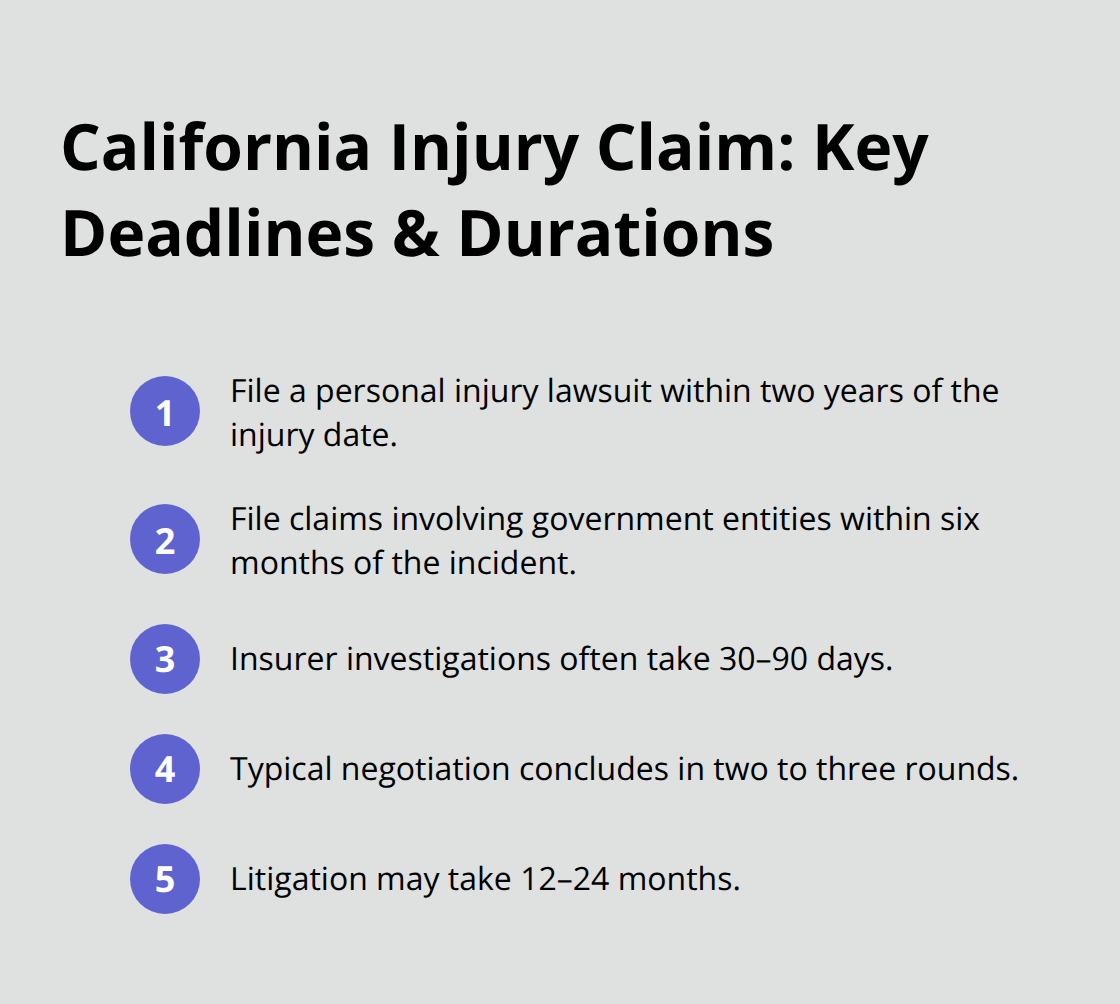
The California Highway Patrol reports more than 3,600 injury collisions annually in Sacramento County alone, yet many injured people don’t understand that time works against them.
Build Your Documentation File Now
Start collecting your complete medical records, pay stubs showing lost wages, receipts for medical expenses, and repair estimates if property was damaged. Insurance companies calculate settlements based on verifiable documentation, and gaps in your records directly reduce what they’ll offer. If you’ve had multiple healthcare visits, obtain records from every provider involved in your treatment. Organize all documents chronologically in a single folder so you can reference them quickly during settlement discussions. This organization also clarifies causation (the connection between the incident and your injuries), which is essential for any claim.
How insurance companies respond to your claim depends heavily on the evidence you’ve already collected and the timeline you’ve established.
How Insurance Companies Investigate and Respond to Your Claim in Sacramento County
The Adjuster’s Investigation Strategy
Insurance adjusters investigate your claim to minimize payouts, not to help you. The moment you file, the insurer assigns an adjuster whose job is to find reasons to reduce your settlement or deny your claim altogether. The adjuster requests your medical records, obtains the police report, photographs the scene themselves, and interviews witnesses. They also pull your social media accounts and prior insurance history to identify anything that undermines your credibility.
This investigation typically takes 30 to 90 days, though complex cases stretch longer. During this window, you have leverage if you’ve already built a strong documentation file. The adjuster reviews your medical records against the incident details, looking for gaps or inconsistencies that suggest your injuries aren’t as severe as claimed. If your treatment records show a two-week gap between the incident and your first doctor visit, the adjuster will argue that your injuries developed from something else entirely.
What Adjusters Look For in Your Records
Insurance Information Institute data shows that Sacramento County motor vehicle claims average between $10,000 and $50,000 in settlements, depending on injury severity. These figures only apply when documentation is complete and liability is clear. Adjusters know that most injured people won’t hire an attorney, so they count on you making mistakes during their investigation.
Don’t volunteer information beyond what they request. Don’t agree to a recorded statement without legal review. Don’t accept their first settlement offer, which typically runs 40 to 60 percent below what your claim is actually worth. The adjuster will test your resolve by offering less than your claim warrants, expecting you to accept quickly.

Negotiating Your Settlement Offer
Once the investigation concludes, the adjuster presents an initial settlement offer. This is where most people fail to negotiate effectively. The initial offer is deliberately low because the insurer expects you to counter. When you receive the offer, reject it in writing and present a detailed counter-demand that includes your total economic damages (medical bills, lost wages, property damage) plus a non-economic multiplier applied to pain and suffering.
For moderate injuries, apply a multiplier of 4 to 6 times your economic damages; for severe injuries, use 8 or higher. Support your counter-demand with copies of your medical records, pay stubs, receipts, and photographs showing injury progression. Most claims settle within two to three rounds of negotiation if your documentation is solid. If the adjuster refuses to budge after three rounds or their offer remains far below your calculated range, that’s the signal to contact an attorney who can evaluate whether litigation makes sense and handle further negotiations on your behalf.
Understanding Claim Denials
Insurers deny claims for specific, preventable reasons: missing the statute of limitations, failure to report the claim promptly, gaps in medical documentation, or ambiguous causation between the incident and your injuries. Some denials stem from policy exclusions, but most result from claimant mistakes rather than legitimate policy violations. If you receive a denial letter, don’t assume it’s final.
Request a written explanation of the specific grounds for denial and review it against your documentation. Many denials can be overturned with additional evidence or a formal appeal. The strength of your response depends entirely on the evidence you collected immediately after the injury occurred-which brings us to the documentation you actually need to gather and organize.
Your Documentation File Determines Your Settlement Value in Sacramento County
Your documentation file determines your settlement value, period. Insurance companies pay for verifiable evidence, not promises or estimates. Start with your medical records from every provider who treated you after the injury. Request complete files including emergency room notes, imaging results, physical therapy records, medication lists, and follow-up visit summaries.
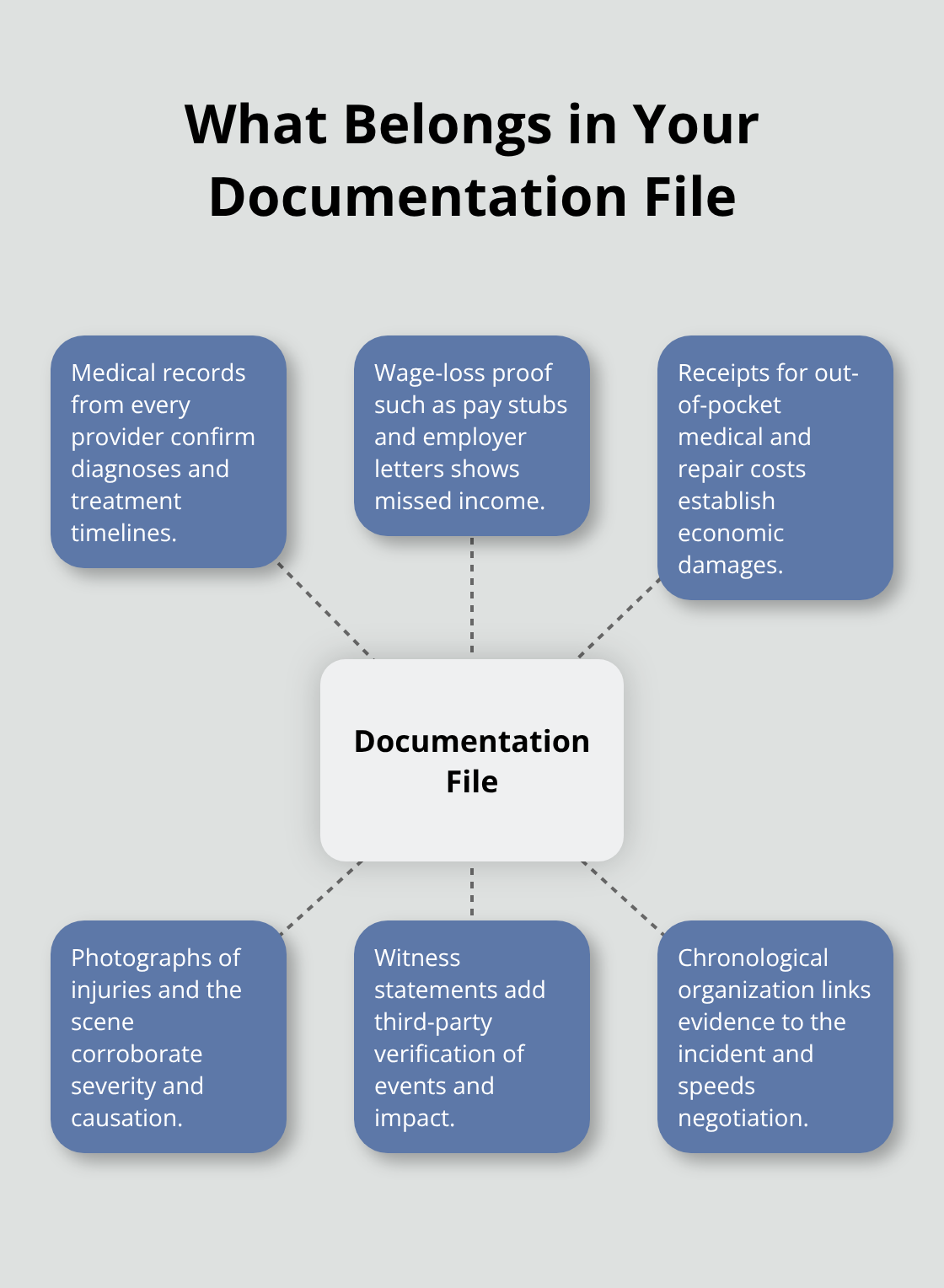
Missing records create gaps that adjusters exploit to argue your injuries weren’t serious or weren’t caused by the incident.
Collect Medical Records and Expense Documentation
If you waited weeks before seeing a doctor, that delay undermines causation. If your treatment stopped abruptly, the adjuster will claim you recovered faster than your damages suggest. Obtain pay stubs or employer letters that document lost wages, including the specific dates you missed work and your hourly rate or salary. Keep all receipts for medical expenses paid out-of-pocket, transportation costs to appointments, and property damage repairs. Photograph your injuries at multiple stages of healing to show progression over time. These images corroborate your treatment records and demonstrate severity that words alone cannot convey.
Build Your Evidence File with Witness Statements
Collect written statements from witnesses who saw the incident or observed your injuries afterward, including their full names, phone numbers, and what they witnessed. Organize everything chronologically in one folder so you reference it quickly during settlement discussions and can demonstrate clear causation between the incident and your damages. This organization also prevents you from overlooking critical evidence when the adjuster requests specific documentation.
When Legal Help Becomes Necessary
Most injury claims settle without an attorney if your documentation is complete and liability is clear. Contact an attorney after two to three rounds of settlement negotiations if the insurer’s offer remains significantly below your calculated range or refuses to move substantially. An attorney evaluates whether your case justifies litigation, handles further negotiations with the insurer’s legal team, and manages the lawsuit process if settlement fails. Litigation extends your timeline considerably, typically twelve to twenty-four months, but some cases require it when insurance companies undervalue severe injuries or deny valid claims. If a government entity caused your injury, that six-month deadline makes early legal consultation even more important because you cannot afford delays.
Economic and Non-Economic Damages Explained
California law recognizes two damage categories: economic and non-economic. Economic damages include medical bills, lost wages, rehabilitation costs, and property damage. Add up every invoice, receipt, and pay stub to calculate your total economic damages precisely. Non-economic damages cover pain and suffering, emotional distress, and loss of enjoyment of life. California does not cap non-economic damages in personal injury cases, unlike many other states. Calculate non-economic damages using a multiplier applied to your economic damages: apply 2 to 3 times your economic damages for minor injuries, 4 to 6 times for moderate injuries, and 8 or higher for severe injuries involving permanent disability or disfigurement. A person with medical bills totaling $15,000 from a moderate injury claim might reasonably demand $60,000 to $90,000 in total compensation when applying the 4 to 6 multiplier. Present this calculation in writing to the adjuster with supporting documentation so your counter-demand appears reasonable rather than inflated.
Final Thoughts
The California injury claim process demands immediate action, thorough documentation, and strategic negotiation. Most injured people in Sacramento County lose money by waiting too long to report their injury, failing to collect evidence, or accepting the first settlement offer without pushback. You now understand that the two-year statute of limitations is absolute, that insurance adjusters deliberately lowball initial offers by 40 to 60 percent, and that your documentation file directly determines your settlement value.
Start collecting evidence today, even if your injury occurred weeks ago. Contact the at-fault party’s insurer within days and request written confirmation of your claim number. Organize your documents chronologically and calculate your total damages using the multiplier method (applying 2–3 times your economic damages for minor injuries, 4–6 times for moderate injuries, and 8 or higher for severe injuries).
We at O’Brien & Zehnder Law Firm help injured people navigate this process every day, handling claims involving car, truck, motorcycle, pedestrian, premises-liability, product-liability, and dog-bite incidents throughout the Sacramento area. A free consultation can clarify whether your case justifies litigation or whether continued negotiation makes sense. Contact us to discuss your specific situation and explore your options for moving forward.