

Injury claims in California can feel overwhelming when you’re dealing with medical bills, lost wages, and insurance companies. We at O’Brien & Zehnder Law Firm created this California injury claim guide to walk you through each step of the process.
This guide covers what happens after an injury, how to build a strong claim in Sacramento County, and when you need legal help. You’ll learn practical strategies that actually work.
How California’s Injury Claim System Actually Works
Insurance Companies Control Your Claim’s Direction
Insurance companies control the initial phase of your injury claim, and understanding their role prevents you from making costly mistakes. When you file a claim, an adjuster investigates the incident, reviews medical records, and calculates what they believe your case is worth. Insurance adjusters work for the insurance company, not for you, and their primary goal is to minimize payouts. California Code of Civil Procedure sections 312-366 establish the framework for how claims must be handled, but insurers often pressure injured people to settle quickly before the full extent of injuries becomes clear.
The adjuster may contact you directly, and anything you say can be used to reduce your settlement. This is why documenting everything from day one matters more than most people realize. Avoid speaking directly with the other party’s insurance company without legal guidance, as statements made during these conversations frequently undermine claim values.
The Two-Year Deadline That Changes Everything
California gives you two years from the date of your injury to file a lawsuit, according to California Code of Civil Procedure. This deadline applies to most personal injury cases in Sacramento County, though some situations have different timelines. Many people assume they have more time and miss this window entirely, which permanently destroys their ability to recover compensation. Beyond the two-year mark, your claim becomes legally unenforceable regardless of how strong your case is.
How Fault and Damages Work in California
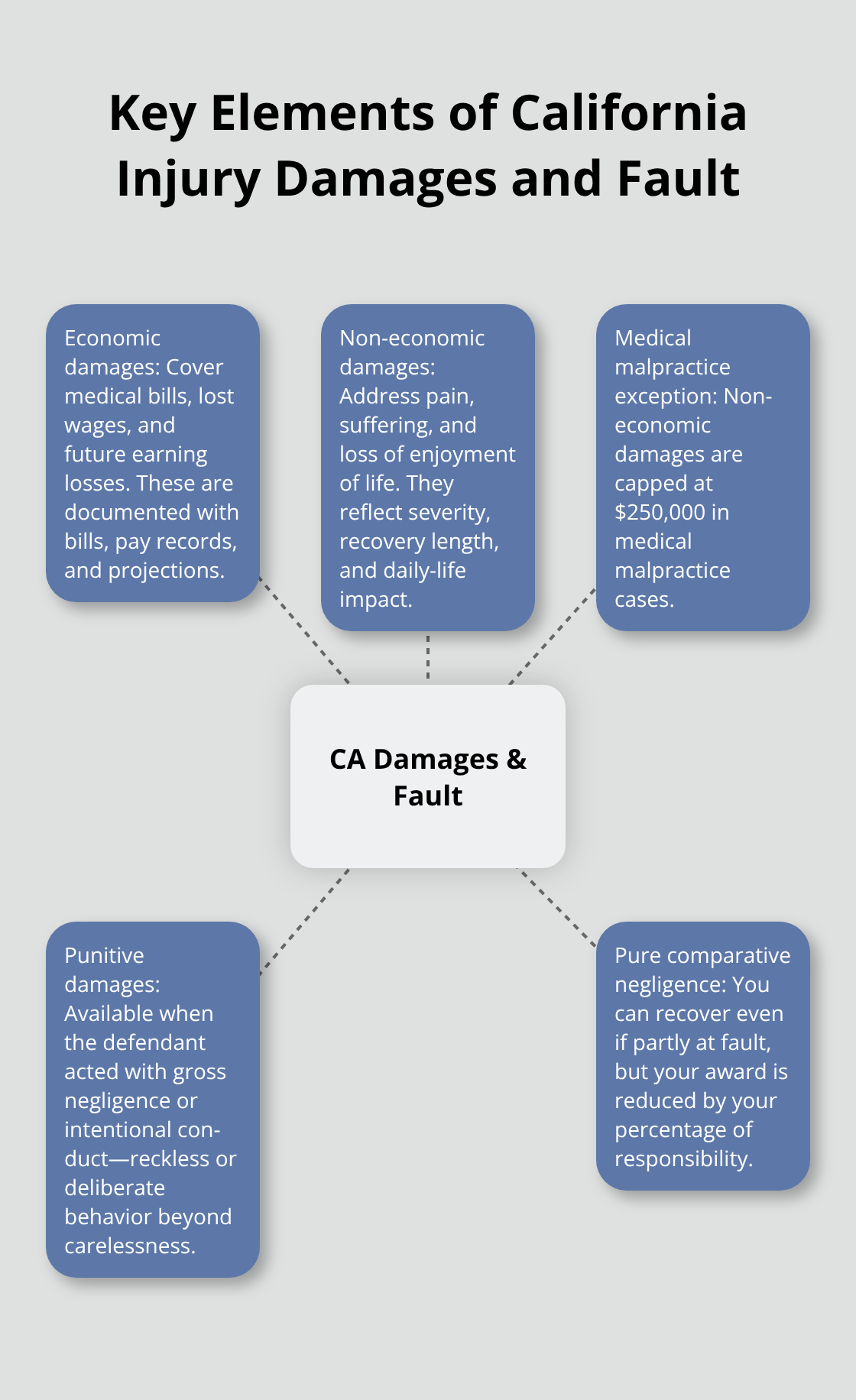
California uses pure comparative negligence, meaning even if you were partially at fault for the incident, you can still recover damages reduced by your percentage of responsibility. Economic damages cover medical bills, lost wages, and future earning losses, while non-economic damages address pain and suffering and loss of enjoyment of life. The only exception to California’s generous damage rules involves medical malpractice cases, where non-economic damages cap at $250,000. Punitive damages become available when the defendant acted with gross negligence or intentional conduct, which means their actions were reckless or deliberate rather than simply careless.
Understanding these rules shapes how you approach the next critical phase: what you do immediately after an injury occurs.
What to Do in the First Hours After Your Injury
Document Everything at the Scene
The decisions you make within the first few hours after an injury determine whether your claim succeeds or fails. Most people focus on their immediate pain and neglect the evidence-gathering that insurers will later scrutinize. Photograph the accident scene from multiple angles, including the surrounding area, any vehicles involved, road conditions, and visible injuries. If you’re injured in Sacramento County, document weather conditions, time of day, and any hazards that contributed to the incident. Collect names, phone numbers, and addresses from every witness present, not just one or two-insurance adjusters contact witnesses weeks or months later when memories fade, so reaching them first gives you a significant advantage.
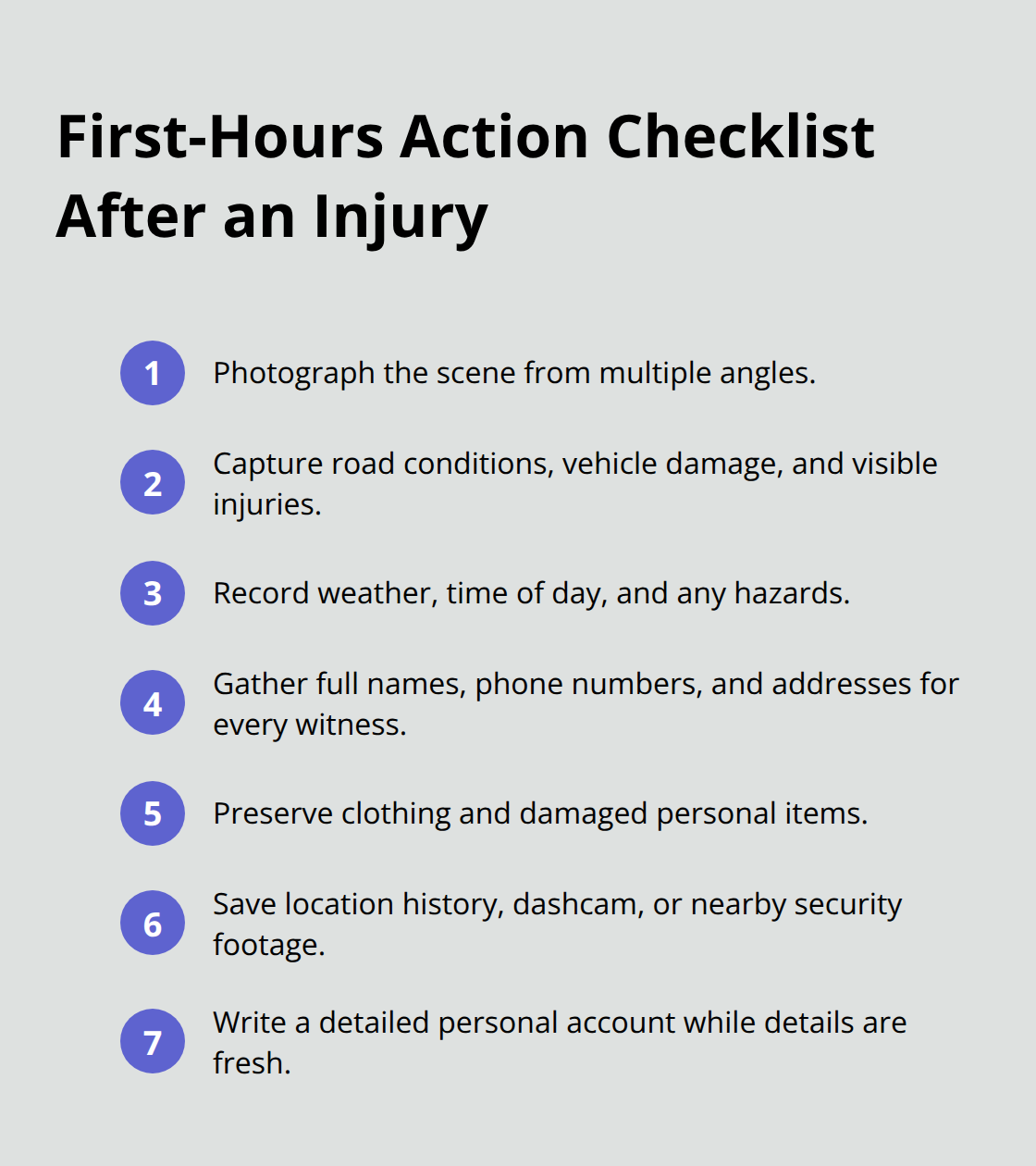
Take photos of clothing and personal items involved in the incident before cleaning or discarding anything, as these details matter during settlement negotiations. Preserve your phone’s location history and any dashcam or security footage from nearby businesses. Write down your own account of what happened while details are fresh, including what you were doing, what you felt, and what you observed.
Seek Medical Attention Without Delay
Medical attention must happen immediately, even if injuries seem minor. Many serious injuries like traumatic brain injuries or internal bleeding show symptoms hours or days after the incident, and medical records created on the day of injury carry substantial weight in settlement calculations. Inform medical providers about every symptom you’re experiencing, not just the most obvious ones. Request copies of all medical records and imaging results, then organize them chronologically.
Continue attending all follow-up appointments and prescribed treatments without interruption, as insurance companies view treatment gaps as evidence that injuries weren’t serious. Stopping treatment significantly weakens your ability to obtain full compensation.
Handle Insurance Communications Strategically
Avoid direct communication with the responsible party’s insurance company entirely. If an adjuster contacts you, provide only your name and claim number, then politely decline further discussion until you’ve consulted with an attorney. Anything you say can reduce your settlement value, particularly statements about fault or how you’re feeling. Insurance adjusters work for the insurance company, not for you, and their primary goal is to minimize payouts.
Having an attorney handle all insurance communications from this point forward prevents misstatements and protects your claim’s value. This approach also positions you to move into the next critical phase: building a strong injury claim in Sacramento County with professional guidance and strategic documentation.
Building Your Sacramento Injury Claim the Right Way
Medical Documentation Forms Your Foundation
Medical documentation forms the foundation of every successful injury claim in Sacramento County, and the quality of your medical records directly determines your settlement value. When you see healthcare providers, inform them about every symptom you experience, no matter how minor it seems, because insurance adjusters scrutinize medical records for gaps or inconsistencies that suggest injuries weren’t serious. Request detailed reports from your doctors that specifically connect your symptoms to the incident-generic notes without this connection carry minimal weight during negotiations. Medical providers often document injuries conservatively, so advocate for thorough descriptions of your pain levels, functional limitations, and how the injury affects your daily activities. A personal injury journal that documents your physical recovery, emotional impact, and activities you can no longer perform supplements medical records and supports claims for non-economic damages like pain and suffering.
Calculate Damages with Precision, Not Guesswork
Calculating your actual damages requires you to itemize both economic and non-economic losses with specificity. Economic damages include medical bills, emergency room visits, imaging studies, physical therapy, lost wages during recovery, and future medical care costs-gather receipts and invoices for everything. If your injury prevents you from working, multiply your daily rate by the number of days missed, then add anticipated lost earnings during your recovery period. For permanent injuries, you’ll need to project lifetime earning losses, which requires documentation of your employment history, salary trajectory, and medical prognosis. Non-economic damages cover pain and suffering and loss of enjoyment of life, and while California places no cap on these damages in most personal injury cases, adjusters often undervalue them significantly. The severity of your injury, length of recovery, permanency of limitations, and impact on quality of life all influence non-economic damage calculations. Comprehensive damage calculations produce stronger results than vague estimates.
Adjust Your Negotiation Strategy Based on Adjuster Tactics
Insurance adjusters employ predictable strategies to lower settlement offers, and recognizing these tactics gives you significant leverage during negotiations. Adjusters frequently request medical authorizations to obtain records directly from providers, which allows them to cherry-pick information supporting their low valuation-instead, provide only the specific records relevant to your claim. When an adjuster offers a settlement, they typically start significantly below what your case is worth, expecting you to counter-offer and eventually meet somewhere in the middle.
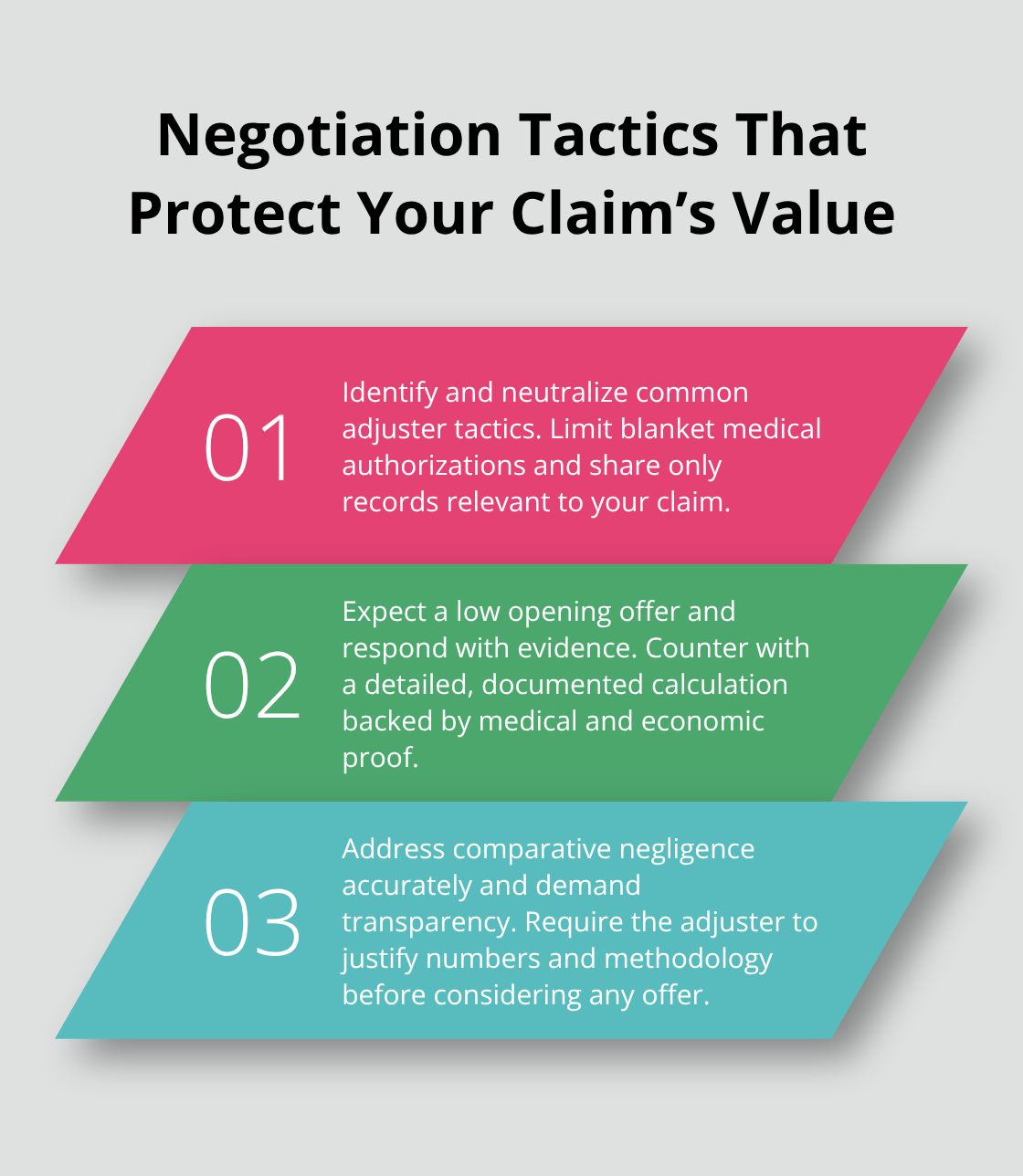
Reject lowball offers immediately and provide a detailed written response explaining why your damages exceed their proposal, supported by medical evidence and economic calculations. Adjusters often claim that comparative negligence reduces your claim value, even in cases where your fault percentage is minimal-California’s pure comparative negligence rule allows you to recover damages reduced only by your actual percentage of fault, not what the adjuster claims. Never accept a settlement offer without understanding how it was calculated, and if the adjuster cannot justify their numbers with specific evidence, their offer lacks credibility. Persistence and documentation win negotiations with insurance companies far more consistently than politeness or cooperation.
Final Thoughts
Your injury claim in Sacramento County succeeds when you act decisively from the moment the incident occurs. The steps outlined in this California injury claim guide-documenting evidence, seeking immediate medical attention, avoiding direct insurance contact, and calculating damages with precision-form the foundation of every strong claim. Insurance adjusters count on injured people making mistakes early, missing deadlines, or accepting inadequate settlements without understanding their true case value.
The two-year statute of limitations in California creates urgency that many people underestimate. Waiting months to take action allows evidence to disappear, witness memories to fade, and medical records to become incomplete. Your claim’s strength depends on how thoroughly you document everything within the first hours and days after your injury.
Legal representation becomes necessary when insurance adjusters refuse reasonable settlement offers, when comparative negligence complicates your case, or when your injuries are severe enough to warrant punitive damages. We at O’Brien & Zehnder Law Firm help clients throughout the Sacramento area with car, truck, motorcycle, pedestrian, and premises-liability incidents, and we provide free consultations to discuss your situation with no obligation. Contact us today to explore your options and receive guidance on pursuing full compensation for your damages.