

A personal injury in California can leave you facing medical bills, lost wages, and uncertainty about what comes next. We at O’Brien & Zehnder Law Firm know that California injury claim guidance isn’t one-size-fits-all, and mistakes early on can cost you thousands.
This guide walks you through the laws, the filing process, and the pitfalls that reduce claim value. You’ll learn exactly what to do-and what to avoid-to protect your compensation.
What Laws Actually Govern Your Sacramento County Injury Claim
Statute of Limitations: Your Hard Deadline
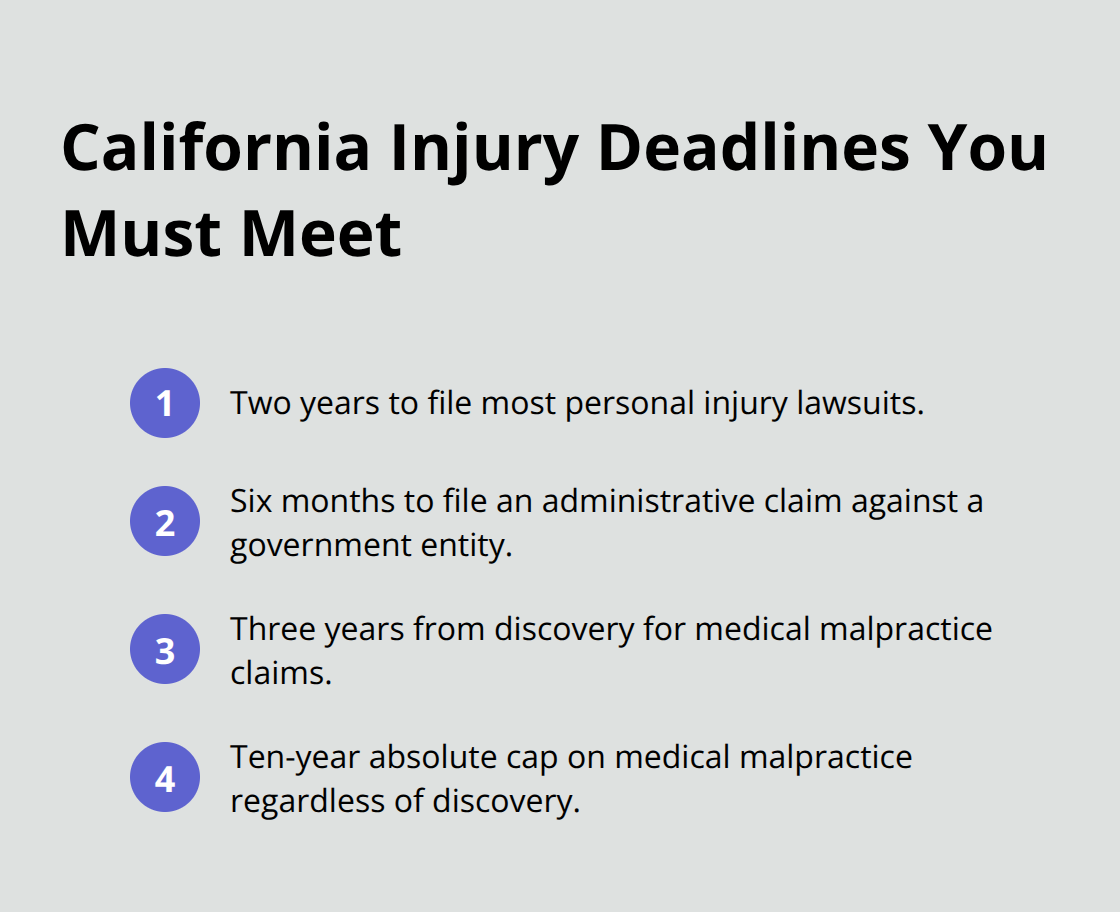
California’s personal injury system operates under specific legal timelines that directly affect how much money you can recover. The state’s two-year statute of limitations for most injury claims means you have exactly 24 months from the date of injury to file a lawsuit in court-courts will dismiss cases filed after this window closes. For claims against government entities like municipalities or county agencies, the timeline shrinks dramatically to just six months to file an administrative claim before pursuing litigation, which is why immediate action matters far more than people realize. Medical malpractice claims follow a different rule entirely with a three-year limit from injury discovery, but the state also imposes a ten-year absolute cap regardless of when you discover the harm, creating a hard deadline that catches many victims off guard.
Economic and Non-Economic Damages Explained
California law recognizes three primary damage categories, and understanding the distinction between them prevents you from leaving money on the table. Economic damages cover quantifiable losses like medical expenses, lost wages, and property damage-these are straightforward to calculate using receipts and pay stubs. Non-economic damages compensate for pain, suffering, emotional distress, and permanent disability, and California courts have no damage caps on these awards in most personal injury cases, meaning a severe injury can result in substantial compensation.
How Comparative Negligence Affects Your Recovery
The state’s comparative negligence rule allows you to recover damages even if you were partially at fault, as long as you were less than 50 percent responsible for the incident. This means a victim who was 30 percent negligent can still collect 70 percent of total damages from the defendant, though California follows a pure comparative negligence standard that reduces your award proportionally based on your percentage of fault. If you were 51 percent or more responsible, you recover nothing, which is why establishing the other party’s primary responsibility becomes essential in claims involving shared fault scenarios (like multi-vehicle accidents or slip-and-fall incidents where premises maintenance and your own actions both played roles).
Understanding these legal frameworks positions you to make informed decisions about your claim. The next section walks you through the practical steps to file your claim and navigate the process successfully.
Building Your Sacramento County Injury Claim From Day One
Document Everything in the First 48 Hours
The first 48 hours after an injury determine whether you’ll recover full compensation or settle for far less. Photograph the accident scene, injuries, and any hazardous conditions from multiple angles-these images become irreplaceable evidence when memories fade and scenes change. Collect contact information from witnesses immediately, not weeks later when they’ve moved or forgotten details; studies on witness reliability show that accounts deteriorate significantly after 72 hours.
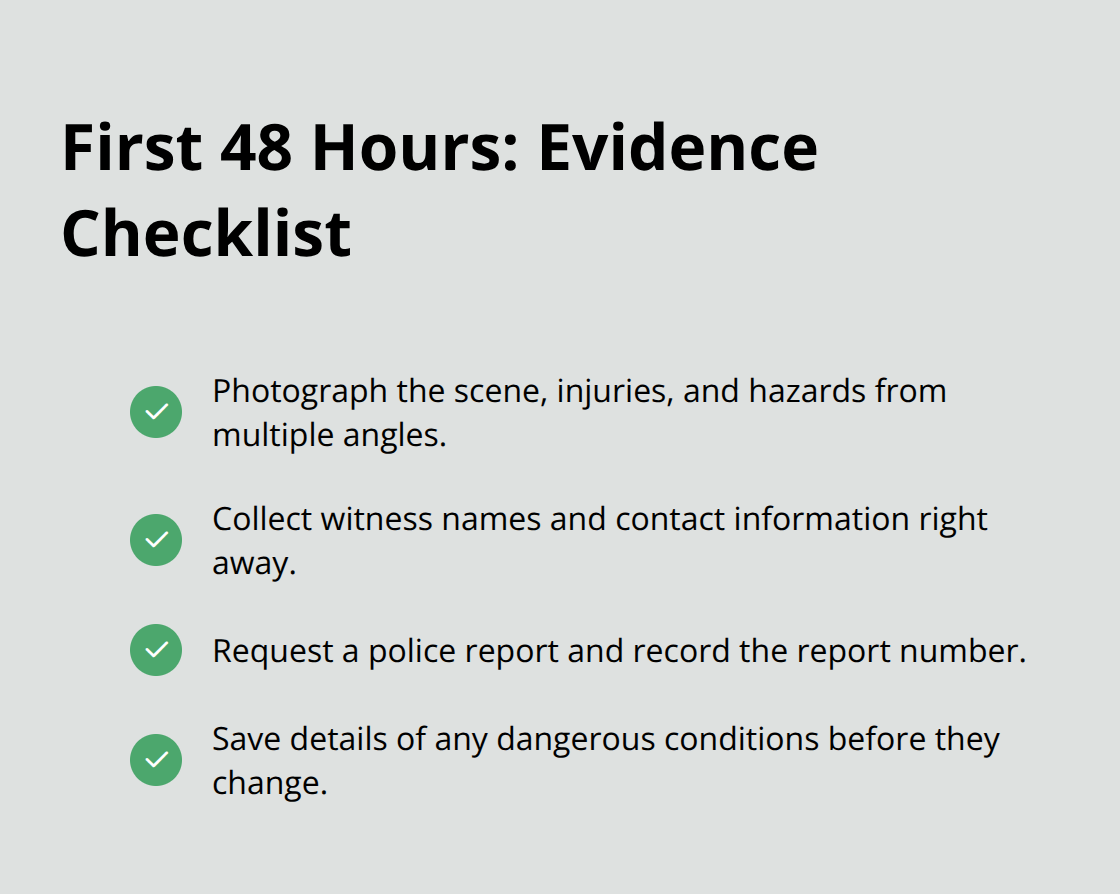
Request a police report if the injury involved a vehicle or occurred on business premises, then obtain the report number for your records.
Organize Medical Records as Your Foundation
Medical documentation begins at your first appointment-keep every receipt, test result, imaging scan, and prescription record, organized chronologically. Insurance adjusters routinely offer 30 to 40 percent below actual claim value to claimants who appear disorganized or unprepared, so your documentation becomes your leverage. This organized file demonstrates the full scope of your injuries and treatment costs to any adjuster or attorney reviewing your case.
Navigate Insurance Communications Strategically
Communication with insurance companies demands a specific strategy that protects your position. Never accept a settlement offer within the first month, regardless of pressure tactics suggesting the offer expires; most insurers retain authority to negotiate for months. Provide only factual responses to questions, avoid recorded statements without legal guidance, and never discuss fault or your injuries beyond what’s necessary to file the claim. Insurance companies train adjusters to identify vulnerable claimants and extract favorable statements; one casual admission about your activities before the injury can reduce your award by thousands.
Recognize When Legal Representation Makes Financial Sense
When injuries involve significant medical costs, lost wages exceeding two weeks, or permanent effects, legal representation becomes financially sensible rather than optional. The difference between handling claims alone versus with representation typically ranges from 25 to 50 percent in additional recovery, depending on injury severity and liability complexity. A Sacramento-area personal injury practice like O’Brien & Zehnder Law Firm guides clients through this process and helps identify settlement offers that undervalue your claim.
The mistakes you avoid during this phase directly impact your final award-and the next section reveals the specific errors that cost claimants thousands in lost compensation.
Errors That Sabotage Your Sacramento County Claim’s Value
The gap between what claimants think their injury is worth and what they actually recover often comes down to three preventable mistakes made in the weeks following an accident. Insurance adjusters depend on claimants making these errors because each one weakens negotiating position and reduces settlement amounts substantially. We at O’Brien & Zehnder Law Firm see these patterns repeatedly, and understanding why they happen helps you avoid thousands in lost compensation.
Settlement Pressure in the First 30 Days
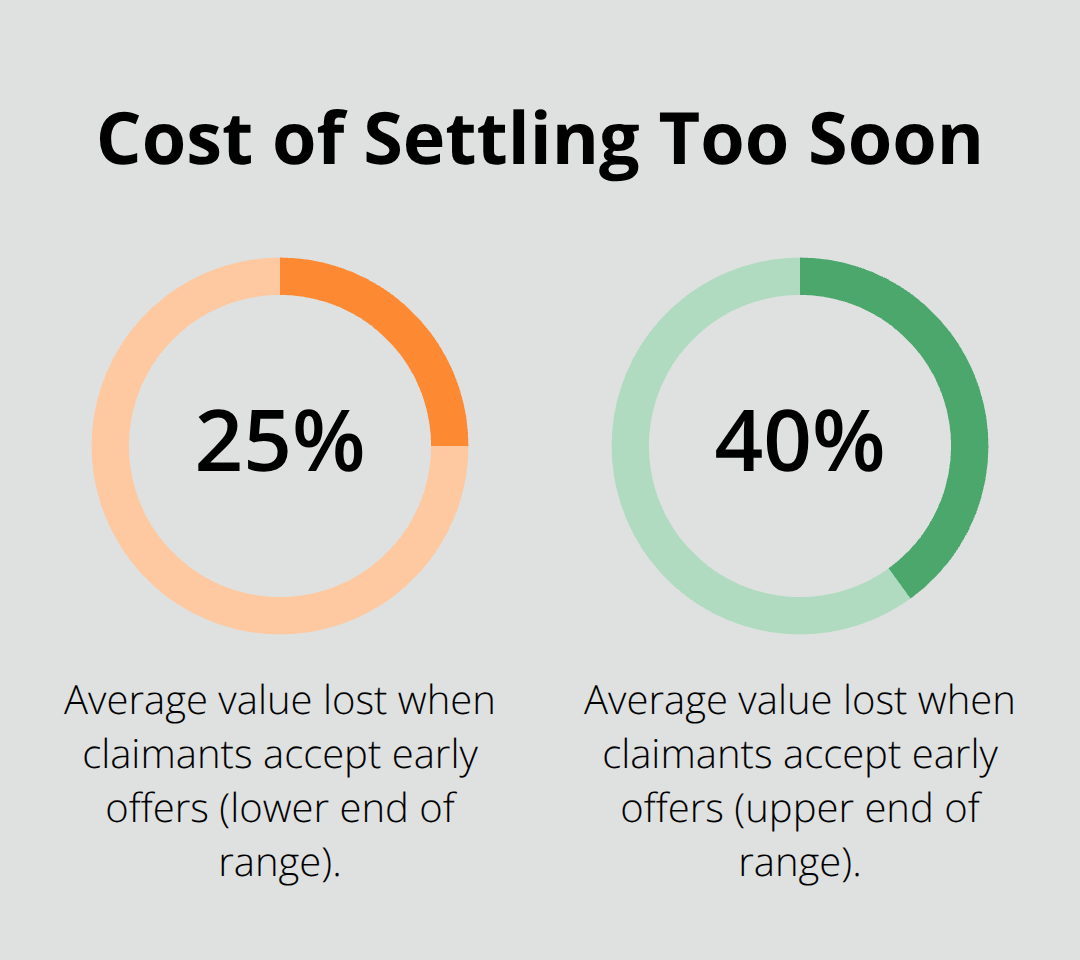
Insurance companies send initial settlement offers deliberately early, when medical treatment remains incomplete and you lack perspective on long-term injury costs. Accepting these early offers costs claimants an average of 25 to 40 percent of their actual claim value according to data from personal injury claim analyses, because permanent effects, ongoing therapy, and wage loss have not yet materialized.
An adjuster calling with a check offer two weeks after your injury is not being generous; they are exploiting the fact that you do not yet know whether you will need six months of physical therapy or ongoing medication. The settlement they present covers only visible expenses and does not account for complications that emerge months later. Request everything in writing, take time to consult with a Sacramento-area personal injury practice before responding, and understand that insurers maintain settlement authority far beyond their initial deadline despite claims that offers expire immediately. Most carriers will negotiate for months if your documentation and communication strategy demonstrate you are serious about your claim’s value.
Digital Evidence That Destroys Your Position
Social media posts during your recovery period create documented contradictions that insurance adjusters use aggressively in settlement negotiations. A photo showing you hiking or at a social event, posted weeks after you claim mobility limitations, gives adjusters grounds to argue your injuries are not as severe as your medical records suggest (even if the activity caused you significant pain afterward). Insurance companies routinely search claimants’ social media profiles and archive posts specifically to find ammunition for reducing offers. The safest approach involves avoiding any posts about your activities, location, or emotional state until your claim resolves completely. Do not discuss your case on any platform, do not accept new social media connections from people you do not know well, and consider adjusting privacy settings to restrict what is visible to the public. This digital restraint protects your credibility when settlement negotiations intensify.
Incomplete Medical Documentation
Gaps in medical records signal to adjusters that your injuries may not be as serious as claimed, or that you are not genuinely committed to recovery. Missing appointments, delayed treatment initiation, or months without follow-up visits give adjusters justification for offering substantially lower amounts because the medical timeline does not support continuous suffering. Maintain consistent treatment throughout your recovery period, attend every scheduled appointment, and document any financial or transportation barriers that delay care. Keep receipts for all medical expenses, pharmacy records, and transportation costs related to treatment (these organized records demonstrate the full scope of your injury’s impact on your life). This documentation prevents adjusters from claiming your injuries resolved faster than your records indicate.
Conclusion
Your Sacramento County injury claim succeeds or fails based on decisions you make in the first weeks after your injury. The legal framework protecting your right to compensation exists, but only if you meet statutory deadlines and avoid the mistakes that systematically reduce settlement amounts. California’s two-year filing window, comparative negligence rules, and damage categories create opportunities for substantial recovery when you document thoroughly, communicate strategically with insurers, and resist pressure to settle prematurely.
You must take three immediate actions to protect your claim. Organize your evidence and medical records now before details fade and documents scatter across multiple providers, avoid social media entirely during your recovery period (one careless post can undermine months of documented treatment), and recognize that insurance companies profit when claimants settle quickly without understanding their claim’s true value.
We at O’Brien & Zehnder Law Firm help Sacramento-area clients navigate car, truck, motorcycle, pedestrian, premises-liability, product-liability, and dog-bite claims through insurance negotiations and the legal process. Contact O’Brien & Zehnder Law Firm to discuss your specific situation and receive California injury claim guidance tailored to your circumstances. Your recovery depends on taking action now rather than waiting until your statute of limitations expires.