
After a personal injury, most people focus on recovery and miss critical documentation steps. Poor record-keeping can weaken your claim significantly, even when liability is clear.
We at O’Brien & Zehnder Law Firm have seen countless cases where missing evidence cost clients thousands in compensation. This guide shows you exactly what California personal injury documentation you need to collect and how to organize it properly.
What to Document at the Scene and Beyond
Photograph and Record Everything Immediately
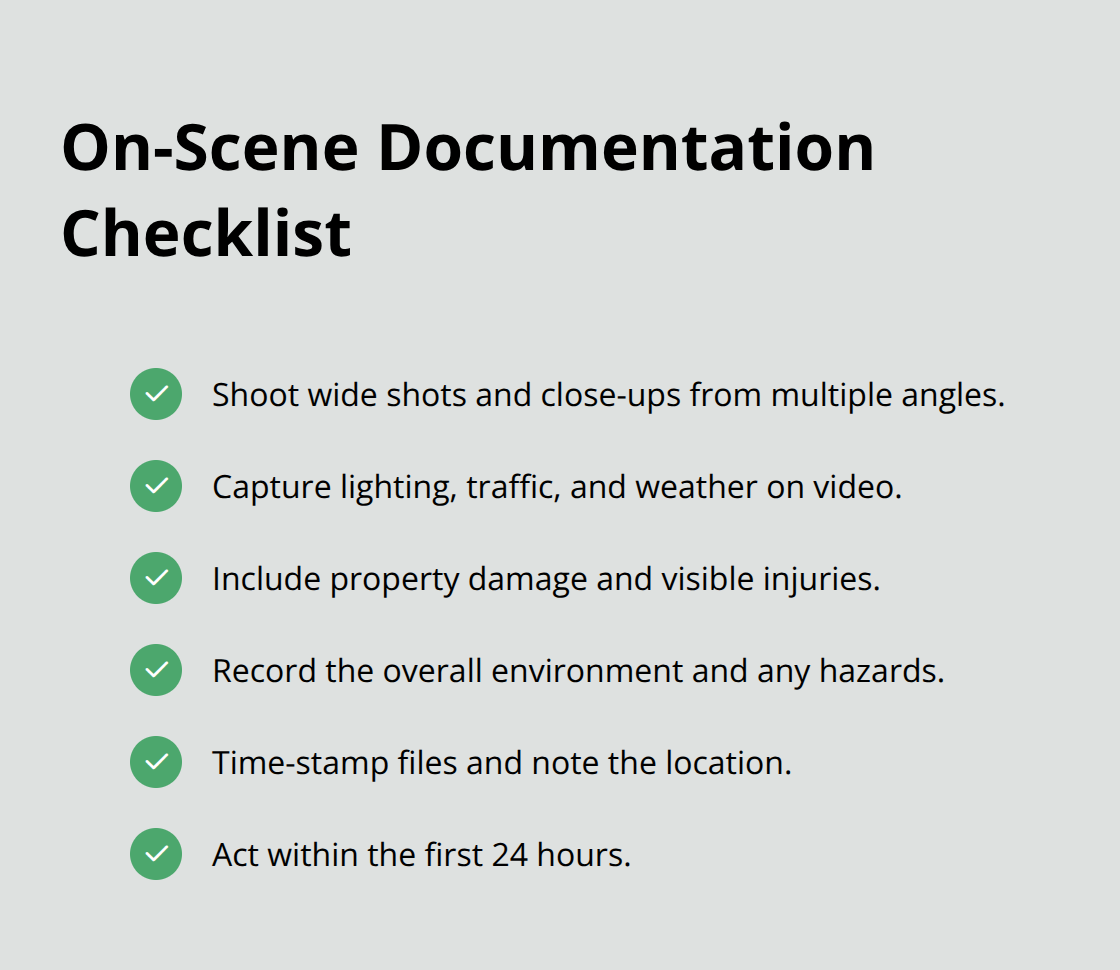
The first 24 hours after an injury offer the freshest evidence and the easiest access to documentation, yet most people fail to gather what they need during this window. Photographs taken immediately show conditions exactly as they were, not how they appeared days later after cleanup or repairs. You should take photos of the accident scene from multiple angles, including wide shots that show the overall environment and close-ups of hazards, property damage, or visible injuries. Video recording captures lighting conditions, traffic patterns, or weather-details that static images miss. These recordings become harder to obtain once scenes change, so act quickly.
Secure Medical Records From Your Initial Treatment
Medical records from your initial treatment create an official timeline of your injuries that insurers use to evaluate claim severity. Emergency room or urgent care documentation includes the doctor’s assessment of your condition, which forms the foundation of your injury claim. You should request copies of these records immediately after treatment rather than waiting weeks, as delays result in lost or incomplete files. Medical facilities sometimes lose early documentation in their archives, so obtaining records promptly protects your case.
Collect Insurance and Police Information
Insurance information and police reports provide the backbone of your claim. You must collect the police report number and officer details at the scene, then obtain the full report from the Sacramento County Sheriff’s Department or local law enforcement agency within days. Insurance policy information from all parties involved (your own coverage and the at-fault party’s insurer) should be documented before memories fade and contact information becomes harder to track down.
Act Before Evidence Disappears
Witnesses scatter, scenes change, and documentation becomes inaccessible when you delay. Many injury victims assume they can gather these details later, but this assumption costs them thousands in lost compensation. The evidence you collect in the first days shapes everything that follows in your claim.
How to Organize Evidence That Insurance Companies Take Seriously
Arrange Your Evidence Chronologically
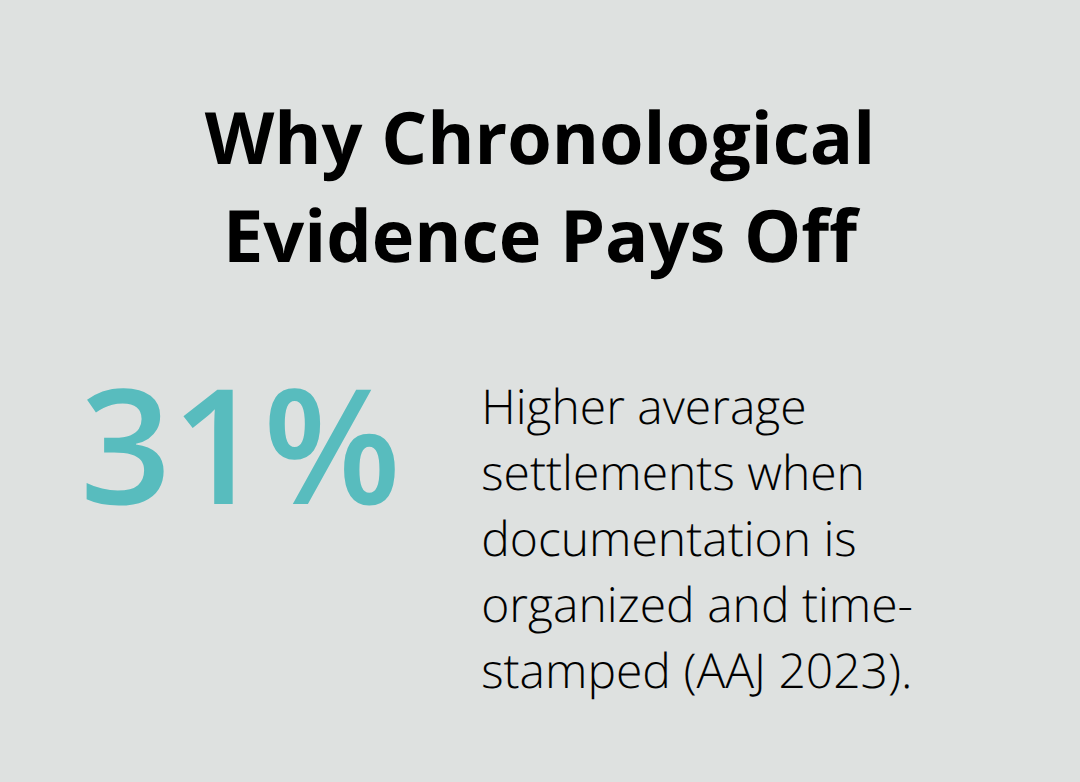
Organization determines whether your case file convinces an insurance adjuster or gets dismissed. Insurance adjusters evaluate claims by timeline, so you must arrange evidence chronologically from the injury date forward. Create a simple document that lists each piece of evidence with its date and a brief description of what it shows. Note the date of your initial emergency room visit, the date you took photographs at the scene, the date each medical appointment occurred, and the date you received billing statements. This chronological structure proves the progression of your injuries and treatment, which directly impacts settlement value. A 2023 study by the American Association for Justice found that cases with organized, time-stamped documentation received settlements 31% higher on average than disorganized cases.
Collect and Preserve Witness Statements
Witness statements carry enormous weight because neutral parties who observed what happened provide them. Contact witnesses at the scene before they leave, and ask for their full name, phone number, email address, and a brief written account of what they saw. Many people hesitate to provide statements later when contacted by phone or email, so getting written statements immediately increases your chances of securing usable testimony. If a witness refuses to write anything, document their exact words about what they observed in your own notes, including the date and time of the conversation. Store these statements with your other evidence to maintain a complete record.
Track Medical Expenses and Lost Wages Meticulously
Medical providers often submit bills months after treatment, so you cannot assume your documentation is complete after a few weeks. Maintain a dedicated spreadsheet that tracks every bill, receipt, and pay stub related to your injury throughout your recovery period. Include the date of each expense, the provider or employer name, the amount, and a description of what the charge covers. Request itemized billing statements rather than accepting summary bills, since adjusters scrutinize detailed charges more favorably than round numbers. Continue adding to this record as new expenses arrive.
Protect Your Documentation
Store all original documents in a secure folder and maintain digital copies as backup (cloud storage works well for this purpose). Losing critical evidence during the claims process forces you to restart your documentation efforts and weakens your negotiating position. A complete, organized file demonstrates that you took your claim seriously and gives adjusters confidence in your injury account. This preparation positions your case strongly as you move toward addressing the mistakes that commonly derail personal injury claims.
What Kills Your Case Before Settlement
Preserve Evidence Before It Vanishes
Evidence disappears faster than most injury victims realize. Accident scenes get cleaned up or repaired within days, security camera footage gets deleted after 30 days at most retail locations, and witnesses move away or forget details within weeks. We at O’Brien & Zehnder Law Firm have encountered cases where clients waited two weeks to request police reports, only to find that dashcam footage from nearby businesses had already been overwritten. Contact the Sacramento County Sheriff’s Department or local law enforcement within 48 hours of your incident, not when you feel ready. Request that all evidence be preserved in writing, and follow up with a second written request two weeks later. This creates a documented trail showing you took preservation seriously, which matters if evidence later vanishes and the other party claims it was never their responsibility to maintain it.
Stop Social Media Posts Immediately
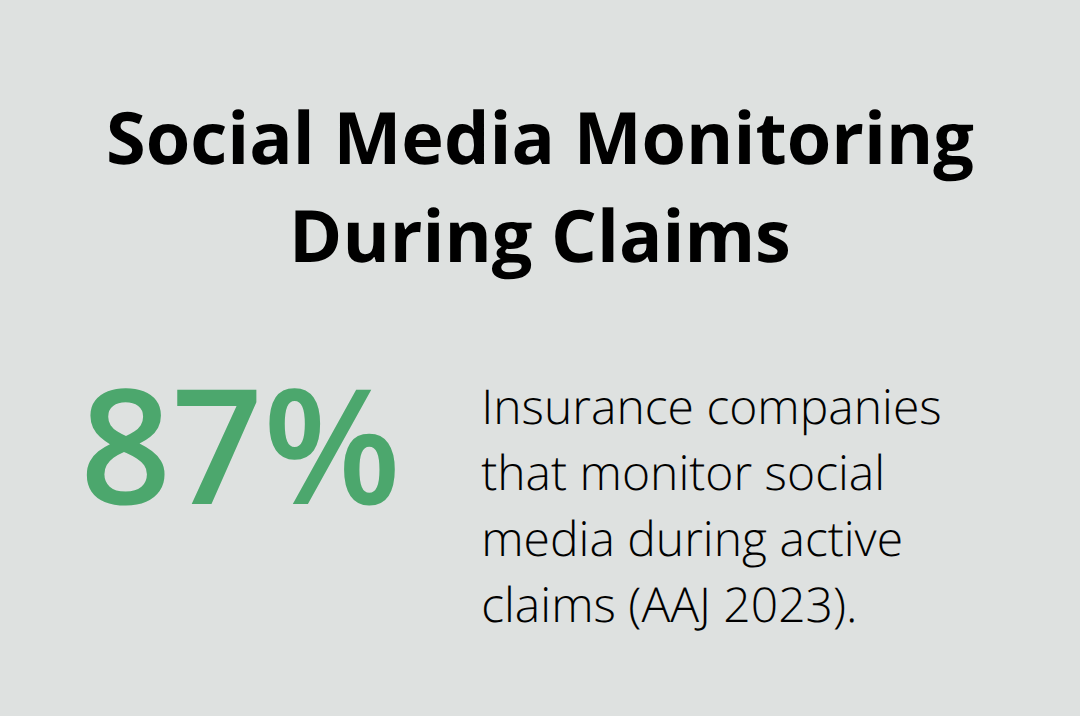
Insurance adjusters now use social media as their primary investigation tool. A 2023 survey by the American Association for Justice found that 87% of insurance companies monitor social media during active claims.
Posts that show you doing activities that contradict your injury claims, photos that suggest you’re recovering faster than your medical records indicate, or vague comments about your case all get screenshot and added to the adjuster’s file. Even deleted posts remain visible to insurers through archived versions or screenshots others have taken. Many clients assume that posts about their case help by generating sympathy, but they accomplish the opposite by creating ammunition for the defense. Stop posting immediately and instruct family members to do the same. If you have existing posts about your injury, make your account private and review what’s already visible.
Document Your Pain and Suffering in Real Time
Insurance adjusters focus heavily on medical bills and lost wages, but they undervalue pain, suffering, and reduced quality of life because these elements lack receipts. Start a pain and suffering journal on the day of your injury that describes your physical symptoms, emotional state, sleep disruption, and activities you can no longer perform. Specific details matter far more than generalizations-instead of writing “I felt terrible,” write “I could not sleep more than two hours without waking due to back pain, which forced me to miss my daughter’s soccer game on Saturday.” Medical providers rarely document this information thoroughly in their charts, so your personal journal becomes the primary evidence of your suffering. Continue this journal throughout your recovery and share it with your attorney when you review your case. Courts and insurance adjusters take these contemporaneous accounts seriously because they show real impact rather than inflated claims made months later.
Final Thoughts
Thorough California personal injury documentation transforms weak claims into strong ones. Insurance adjusters make settlement decisions based on what you can prove, not on what actually happened. The evidence you gather in the first days after your injury determines whether you receive fair compensation or accept a lowball offer.
We at O’Brien & Zehnder Law Firm help Sacramento County clients organize evidence into compelling case files that insurers take seriously. Our team understands how adjusters evaluate claims and what documentation carries the most weight in negotiations. We guide you through the insurance claims process, identify gaps in your evidence, and position your case for maximum value.
Start protecting your case today by gathering evidence immediately and organizing it chronologically. Request police reports and medical records within 48 hours of your injury, stop posting about your case on social media, and begin documenting your pain and suffering in real time. Contact O’Brien & Zehnder Law Firm for a consultation about your personal injury claim.