

If you’re dealing with an injury claim in Sacramento County, California injury claim deadlines are your biggest concern. Miss a single deadline and you could lose your right to compensation entirely.
We at O’Brien & Zehnder Law Firm have seen too many injured people lose their cases because they didn’t understand when they had to act. This guide breaks down every deadline that matters.
How Much Time Do You Actually Have to File Your Injury Claim
The Two-Year Filing Window
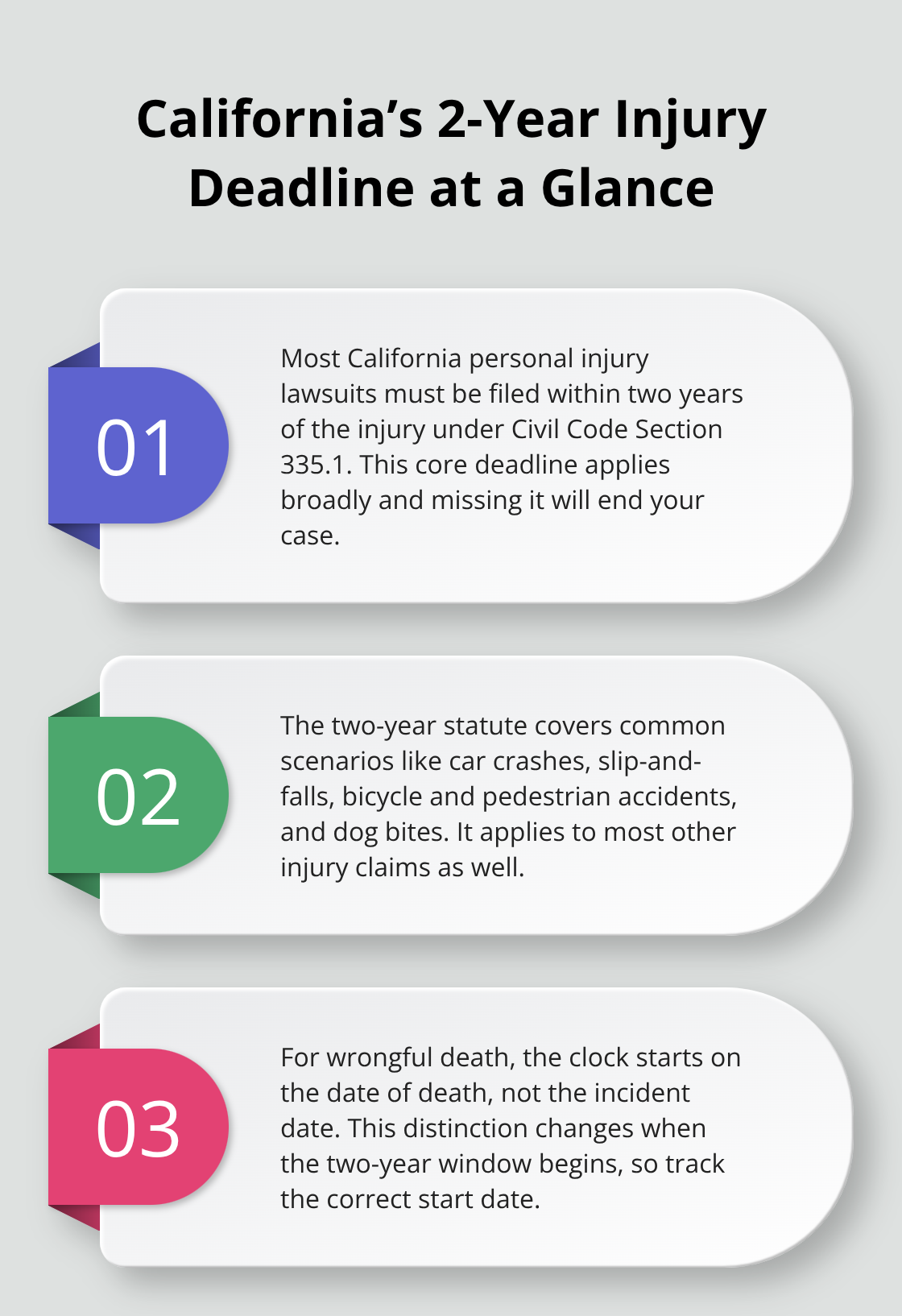
California Civil Code Section 335.1 gives you two years from the date of your injury to file a personal injury lawsuit. This deadline applies to car accidents, slip-and-fall incidents, bicycle and pedestrian accidents, dog bites, and most other injury claims. If your injury resulted in someone’s death, the two-year clock starts from the death date, not the date of the initial incident. Miss this deadline and the court will dismiss your case, period.
At that point, the at-fault party’s insurance company will use the expired statute of limitations as a shield to deny your claim entirely.
When the Discovery Rule Pauses Your Deadline
The two-year rule has critical exceptions that can extend or pause your deadline. If you didn’t know you were injured or didn’t realize someone’s negligence caused your injury, the discovery rule may pause the clock until you reasonably should have discovered the harm. This applies most often in medical malpractice or toxic exposure cases, but the discovery rule is not automatic and requires validation with counsel before you rely on it.
Special Protections for Minors and Government Claims
If you’re under 18, the deadline tolls until you turn 18, typically giving you until around age 20 to file. Government-related injuries follow a completely different path: you must file an administrative claim under the California Government Claims Act within six months of the injury, the government entity has 45 days to respond, and only after rejection can you file a lawsuit within another six months.
Why Acting Fast Protects Your Case
Filing early strengthens your position dramatically by preserving surveillance footage, securing medical records before they’re lost, and keeping witness memories fresh. If the at-fault party leaves California, the statute may pause while they’re out of state. In Sacramento County, these deadlines are enforced strictly, and confirming exact timeframes with a local attorney immediately protects your rights and prevents costly mistakes.
Understanding Insurance Claim Timelines
Insurance claims operate on different timelines than lawsuits. You must notify your insurance company promptly after an injury occurs, even though the statute of limitations governs when you can file a lawsuit. The insurance company will set its own deadlines for responding to your claim and may pressure you to settle quickly. Understanding both the insurance timeline and the legal deadline prevents you from accepting an inadequate settlement offer under false time pressure.
Insurance Deadlines That Control Your Claim
Notify Your Insurer Before Anything Else
Notifying your insurance company immediately after an injury is not optional-it’s the foundation of your entire claim. Most insurance policies require notice within 30 days of the incident, though some policies demand notification within 10 days.
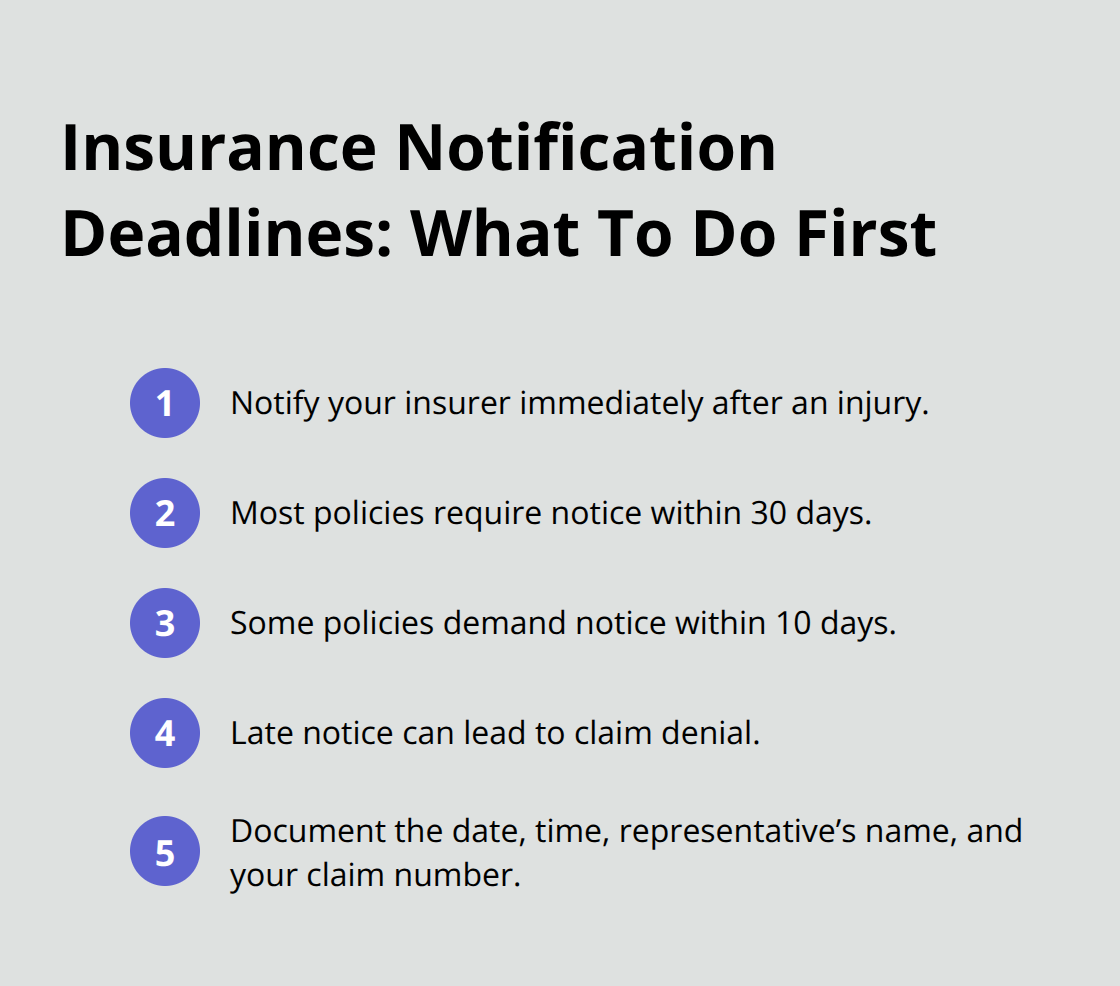
Failing to notify your insurer on time gives them grounds to deny your claim entirely, regardless of whether the delay actually harmed their ability to investigate. Document exactly when you call your insurance company and obtain a claim number in writing.
Write down the date, time, and name of the representative you spoke with. This creates an undeniable record that proves you met the deadline. Many injured people assume they have months to report an accident, but insurance companies exploit this misconception constantly. The moment you realize you’re injured, contact your insurer before doing anything else.
Understand Settlement Pressure Tactics
Insurance companies pressure you to settle quickly, and they do this intentionally. They know that injured people need money fast for medical bills and lost wages, so they offer settlements that look reasonable on the surface but actually undercompensate you significantly. You have no legal deadline to accept a settlement offer from your insurance company-the statute of limitations deadline applies only to filing a lawsuit, not to responding to settlement offers.
This means you can take time to understand the full extent of your injuries before accepting anything. Get medical records documenting your treatment, obtain repair estimates for property damage, and calculate your actual lost wages before responding to any settlement proposal.
Why Accepting Too Quickly Costs You
If you accept a settlement from your insurance company, you typically cannot sue the at-fault party later, even if your injuries prove worse than initially diagnosed. The insurance company knows this and uses it to pressure you into accepting inadequate offers. Artificial urgency should never force you into a bad decision. You have until two years from your injury date to file a lawsuit against the at-fault party, which gives you substantial time to evaluate settlement offers carefully and reject lowball proposals.
The insurance company’s timeline and the legal deadline operate independently. Understanding both prevents you from making irreversible mistakes under pressure. Once you move past the insurance negotiation phase, court deadlines take over and demand strict adherence to procedural rules that courts enforce without exception.
Court Deadlines and Procedural Timelines
Discovery Deadlines Control the First Phase of Your Case
Once your lawsuit is filed, the court takes control and imposes strict deadlines that have no flexibility. Discovery is the longest phase of litigation and typically lasts six to nine months, during which both sides exchange documents, medical records, employment records, and witness statements. You must respond to document requests within 30 days of receiving them, and failure to produce requested materials can result in court sanctions, fines, or even dismissal of your case. California courts take discovery deadlines seriously because they ensure both sides have equal access to facts before trial. Many injured people underestimate how much time discovery requires and end up scrambling to gather documents at the last minute, which weakens their position.
Motion Filing Deadlines Are Non-Negotiable
Motion deadlines follow discovery and these are non-negotiable. Motions to dismiss, motions for summary judgment, and other procedural motions must be filed at least 30 days before trial, and responses are due within 15 days of service.
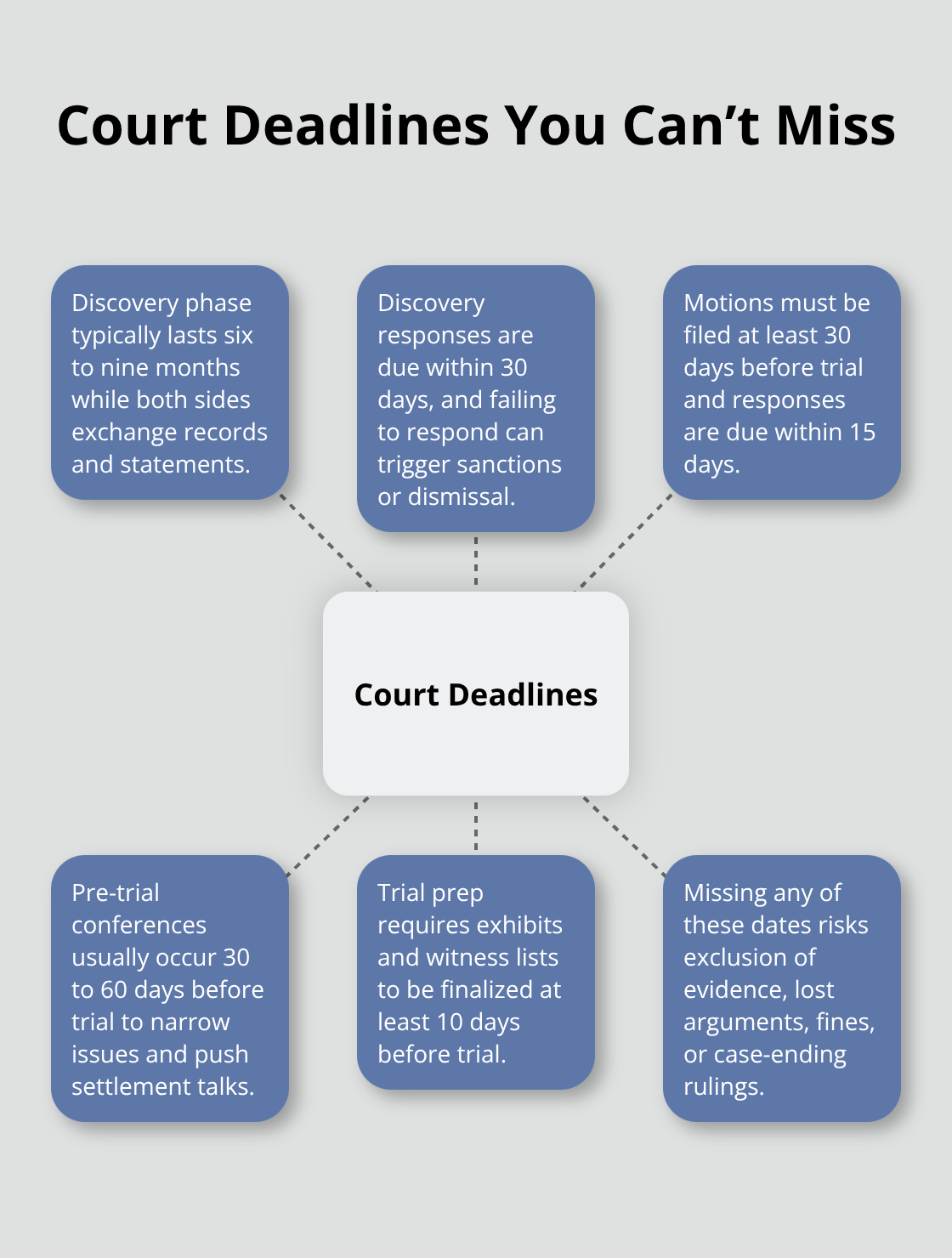
Missing a motion deadline means the court may refuse to hear your argument entirely, which can be catastrophic if that motion addresses a critical legal issue. Unlike insurance negotiations where you can take time to evaluate offers, court procedures demand compliance with specific dates or you lose rights and evidence.
Pre-Trial Conferences Set the Stage for Settlement or Trial
After motions are resolved, the court schedules a pre-trial conference usually 30 to 60 days before trial, where the judge expects both sides to have settlement discussions and narrow down disputed issues. If your case reaches trial, court rules require all exhibits to be submitted and witness lists finalized at least 10 days before the trial date. Sacramento County courts enforce these procedural deadlines without exception because they keep trials moving on schedule. The pre-trial phase (typically lasting weeks to months) separates cases that settle from those that proceed to trial, and missing deadlines during this phase can force unfavorable outcomes.
Final Thoughts
California injury claim deadlines control whether you recover compensation or lose your case entirely. The two-year statute of limitations for most injury claims, the six-month administrative requirement for government entities, and the strict procedural deadlines once you’re in court all demand immediate action. Insurance companies count on injured people missing these deadlines or accepting inadequate settlements under pressure, which is why acting fast protects your rights and strengthens your position.
The timeline matters at every stage-notifying your insurer within 30 days, responding to settlement offers strategically, filing your lawsuit before the statute expires, and meeting discovery and motion deadlines all determine whether you recover what you deserve. In Sacramento County, courts enforce these deadlines without exception, and delays cost you evidence, witness credibility, and legal options. Your exact deadlines depend on your specific situation, which is why confirming them with a local attorney immediately prevents costly mistakes.
Contact O’Brien & Zehnder Law Firm today for a free consultation to confirm your timeframes and identify all deadlines specific to your injury claim. We help clients understand and pursue claims involving car, truck, motorcycle, pedestrian, premises-liability, product-liability, and dog-bite incidents, guiding you through both the insurance and legal claims process so you don’t miss critical deadlines. Protect your rights before time runs out.