A motorcycle crash in Sacramento County can turn your life upside down in seconds. The decisions you make immediately after the accident-and the mistakes you avoid-directly determine whether your claim succeeds or fails.
We at O’Brien & Zehnder Law Firm have seen countless riders lose thousands in compensation because they didn’t know what to do right after impact. This guide walks you through the exact steps that protect your rights and strengthen your case.
What to Do in the First Hours After Your Crash
Photograph and Film Everything at the Scene
The window between the crash and when you leave the scene determines whether you have a winning claim or a weakened one. Most riders in Sacramento County make irreversible mistakes during this critical time, and those mistakes cost them money. Your priority is capturing evidence while it still exists and establishing a clear record of what happened.
Start photographing the scene immediately. Take wide shots showing the road conditions, vehicle positions, skid marks, traffic signals, and weather. Photograph your motorcycle from multiple angles, including damage to specific parts. Get close-ups of any road hazards like potholes, debris, or poor signage that contributed to the crash. If you’re injured but able to move safely, photograph your visible injuries. Record video of your surroundings while you narrate what you see, because video timestamps and your voice create stronger evidence than still photos alone. Most insurance companies and juries weight visual documentation heavily, and smartphone photos and videos are admissible in court. Don’t rely on memory or hope that someone else captured footage.
Collect Witness Information While Memories Are Fresh
Within minutes, bystanders leave, weather changes, and road crews clear debris. Contact information from witnesses matters far less than their actual statements recorded while memories remain sharp. Approach anyone who saw the crash and ask them to describe what they witnessed. Write down their full names, phone numbers, email addresses, and what they specifically saw. Ask them to stay at the scene if police arrive, so officers can document their statements in the police report. If they leave before police arrive, their contact information becomes your only way to reach them later.
File a Police Report and Notify Your Insurance Company
The police report itself carries significant weight in Sacramento County claims, but it’s only as good as the information officers gather at the scene. Call 911 immediately if there are injuries, and stay at the scene until police document everything. When officers arrive, provide a clear, factual account of what happened without admitting fault or apologizing for the crash. Tell them about any contributing factors like another driver’s speed, failure to signal, or road conditions (these details strengthen your claim).
Report the accident to your insurance company within 24 hours, even if you believe the other driver is completely at fault. Provide factual details but avoid speculation about injuries or damages. Insurance companies have strict deadlines for reporting, and missing them can jeopardize your coverage. Document the date and time you reported the accident and the name of the representative who took your call. This creates a paper trail showing you acted promptly and responsibly after the crash.
The mistakes you avoid in these first hours matter as much as the actions you take. What you say to other people at the scene-and what you post online afterward-can undermine everything you’ve documented.
What Kills Your Motorcycle Claim Before Trial
Admitting Fault at the Crash Scene
The moment your motorcycle stops sliding, your claim’s fate hangs on decisions that take seconds to make but years to undo. Most riders in Sacramento County destroy their own cases through three specific actions that insurance adjusters and opposing lawyers weaponize against them. These aren’t gray areas or judgment calls-they’re concrete mistakes that systematically reduce or eliminate your recovery.
Words spoken at the crash scene that sound reasonable in the moment become admissions of fault that follow your claim forever. Telling the other driver you’re sorry, that you didn’t see them, or that you were going too fast hands them evidence they couldn’t obtain any other way. Insurance companies train their adjusters to look for these statements in police reports and witness testimony, and they use them to argue you bear responsibility for the crash. If you admit 20 percent fault through casual conversation at the scene, the insurance company will argue for exactly that reduction or higher.
Say nothing beyond basic facts like your name, insurance information, and where you’re headed for medical care. Don’t explain how the crash happened or what you think caused it. If police ask questions, provide factual answers without editorializing: the other vehicle was traveling at a certain speed, failed to signal a turn, or ran a red light. These facts don’t admit your fault-they establish theirs.
Posting About Your Accident on Social Media
Social media posts after your crash operate as permanent, searchable evidence that courts and juries see years later. Posts about your injuries, photos of your damaged motorcycle, or venting frustration about the other driver create a digital record that opposing counsel uses to undermine your credibility and minimize your damages. Insurance adjusters routinely review social media profiles looking for contradictions between your claimed injuries and your online activity.
If you post about returning to work activities, attending social events, or any physical activity that contradicts your injury claims, adjusters cite these posts to argue your damages don’t justify your settlement demand. The safest approach involves deactivating or privatizing your social media accounts immediately after the crash and maintaining that silence throughout your claim. Don’t discuss the accident with friends online, share recovery updates, or post photos of yourself doing anything that could be misinterpreted as evidence that you’re healing faster than you claim. This discipline matters more than people realize-adjusters count on riders to post incriminating content, and they build their settlement offers around what they find.
Accepting Settlement Money Too Quickly
Insurance companies contact injured riders quickly while they’re overwhelmed by medical bills and lost income, offering fast money that sounds generous until you understand the full extent of your injuries and expenses. Most riders don’t know whether they’ll need surgery, ongoing physical therapy, or whether their injuries will cause permanent limitations until weeks or months after the crash. Accepting settlement money before your treatment stabilizes means you’ve locked in damages based on incomplete medical information.
If you develop complications or require additional surgery after settling, you cannot reopen your claim or ask for more money. Insurance companies count on this-they know most riders will panic and accept early offers rather than wait for clarity. We recommend waiting until your treating physician confirms your treatment plan is complete or substantially complete before discussing settlement figures. This typically takes three to six months for straightforward injuries and longer for serious trauma.
During this waiting period, document every medical appointment, treatment cost, and impact on your daily life. When you finally negotiate, you’ll have complete medical records and a clear picture of your actual damages instead of guessing based on early assumptions. The evidence you preserve during recovery-medical records, receipts, and detailed journals-transforms vague injury claims into concrete, defensible numbers that insurance companies cannot easily dispute.
Building Your Claim on Real Evidence
Obtain Complete Medical Records Immediately
Your medical records form the foundation of your entire claim, and Sacramento County insurance companies won’t increase settlement offers without documented proof of treatment and ongoing care. Request complete medical records from every provider who treated you within 24 hours of your final appointment, including imaging results, surgical reports, physical therapy notes, and provider assessments of your condition. Insurance adjusters scrutinize gaps in treatment records-if you stop seeing a doctor for three months and then resume care, they’ll argue your injuries weren’t serious enough to warrant ongoing attention.
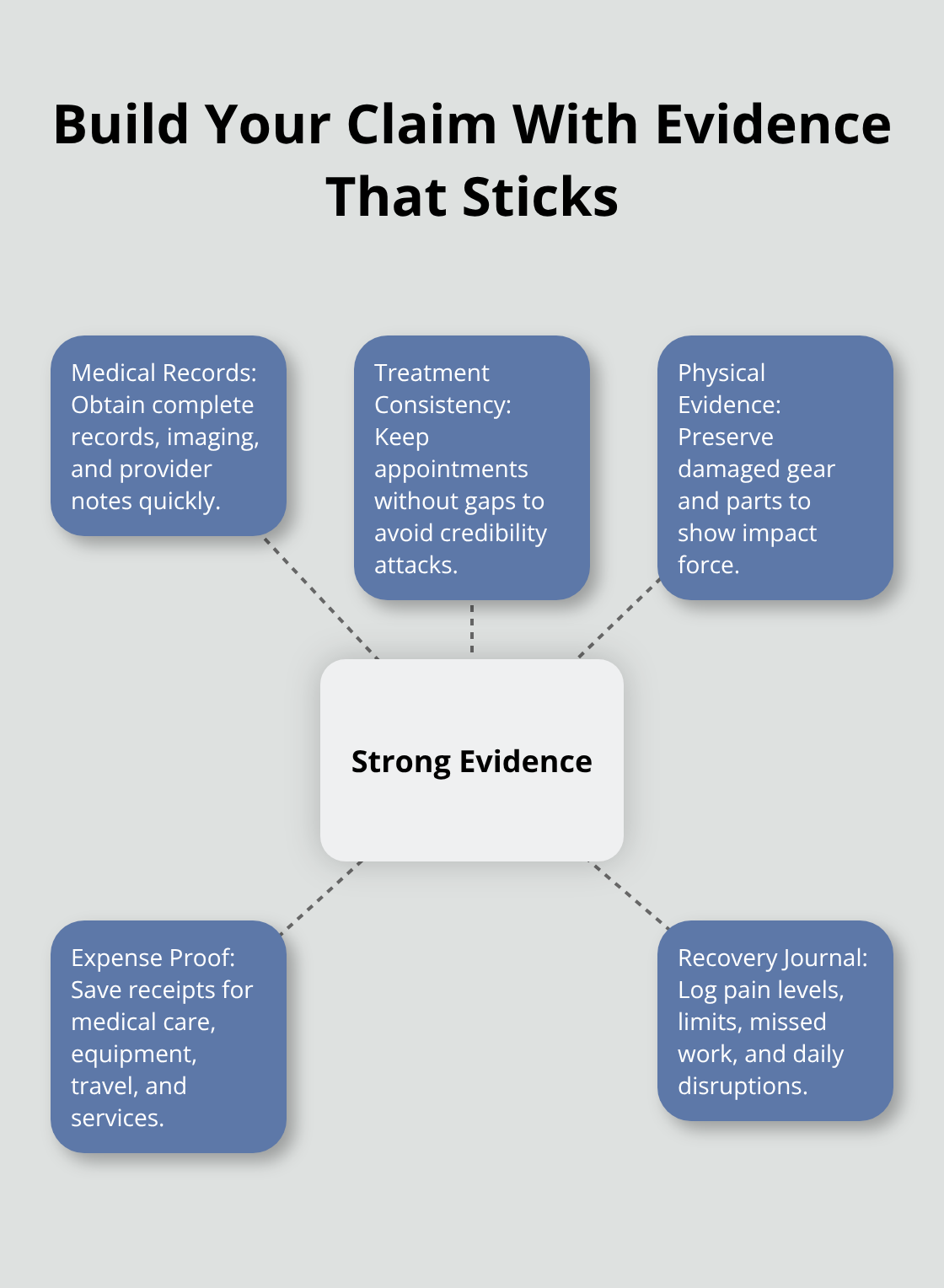
Treatment consistency matters more than the severity of your injuries because consistent documentation defeats the narrative that you’re exaggerating your condition. Obtain a detailed summary from your primary treating physician that outlines your diagnosis, the treatment plan, and any permanent limitations or restrictions resulting from the crash. This physician summary carries substantial weight because courts recognize that treating doctors have direct knowledge of your medical status, unlike insurance adjusters who evaluate your claim from an office hundreds of miles away.
Preserve Physical Evidence of Impact
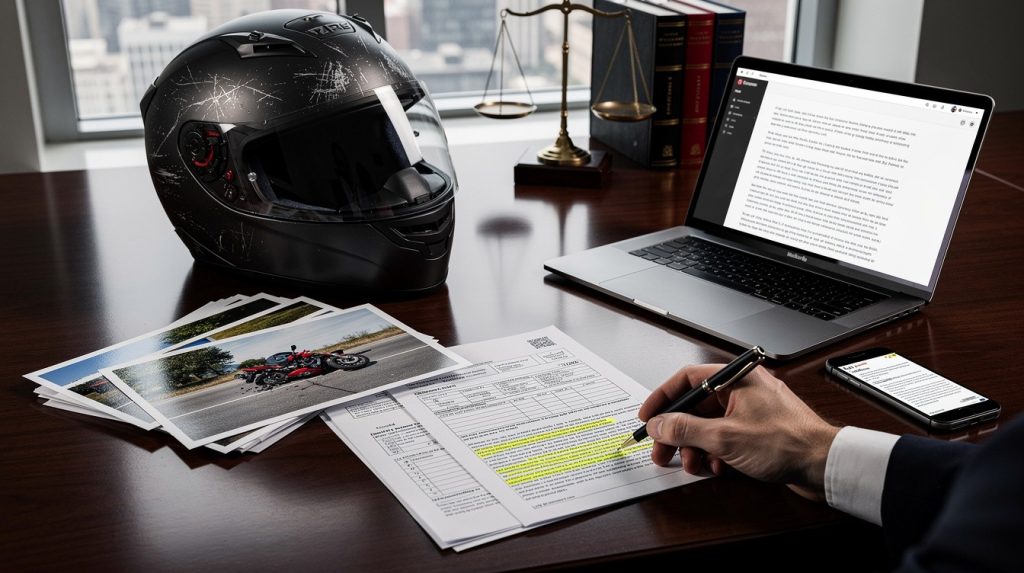
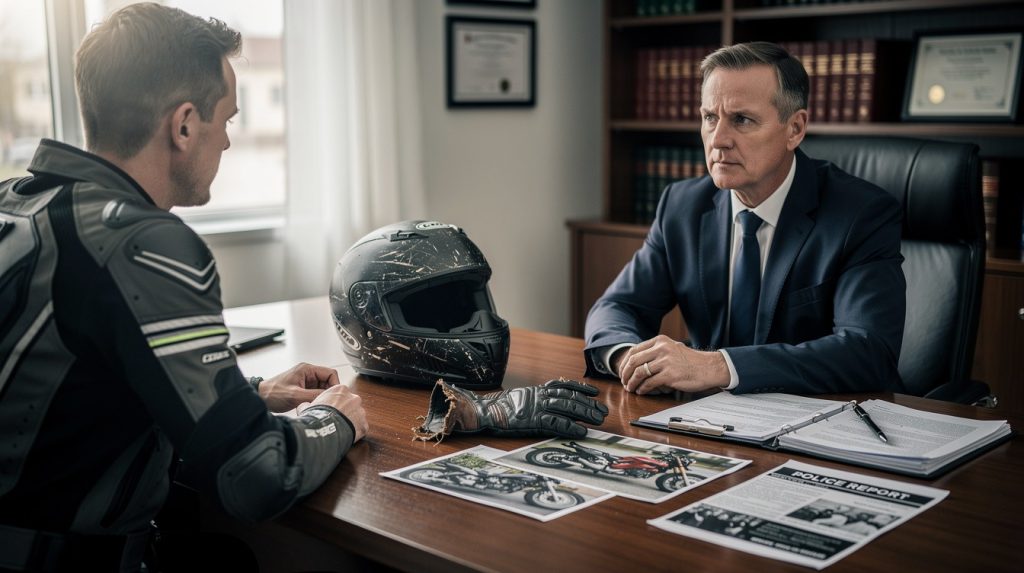
Your damaged motorcycle clothing, helmet, and protective gear tell a story that evidence gathering alone cannot convey. Photographs of torn leather, shattered helmet damage, or destroyed gear demonstrate the violence of the collision in ways that documents cannot match. Store your damaged equipment exactly as it was at the scene, because physical evidence of impact force influences how juries assess injury severity.
Insurance companies know that impact evidence carries persuasive power, so they expect you to preserve it. Keep receipts for every expense related to your recovery (medical copays, prescription medications, medical equipment, transportation to appointments, and household services you hired because you couldn’t perform them yourself). These receipts transform vague injury claims into concrete, verifiable numbers.
Document Your Recovery in Real Time
Create a detailed journal immediately after the crash that records your daily pain levels on a scale of one to ten, specific activities you couldn’t perform, work you missed, and how the injury disrupted your normal routine. Insurance companies know that memories fade and that riders often downplay their suffering months after a crash, so journals written during recovery carry credibility that later recollections cannot match.
After three to six months when your treatment plan stabilizes, compile your complete medical file, expense documentation, and recovery journal into an organized package. This presentation transforms your damages from estimates or assumptions into concrete, verifiable facts that insurance companies cannot easily dispute.
Final Thoughts
The first hours after your motorcycle crash in Sacramento County determine whether you recover fair compensation or accept far less than your claim warrants. Every photograph you take, every witness statement you collect, and every word you avoid speaking builds the foundation for your case. Insurance companies count on riders making reactive decisions under stress, and they structure their settlement strategies around those predictable mistakes.
Acting quickly means you photograph the scene while evidence still exists, report to police and your insurance company within required timeframes, and sidestep the three fatal errors that destroy claims before they gain momentum. Road conditions change, witnesses disappear, and memories fade-the rider who documents the scene within minutes has evidence that the rider who waits three days cannot obtain. You organize everything you’ve gathered into a coherent narrative that demonstrates the other driver’s responsibility and your actual damages (medical records, expense receipts, and recovery journals transform scattered documents into persuasive evidence that adjusters cannot dismiss as incomplete).
Insurance adjusters are trained negotiators who understand California’s comparative fault system and how to minimize your recovery, so navigating this process alone multiplies the complexity quickly. A motorcycle crash lawyer in Sacramento can guide you through each stage, from initial documentation through settlement negotiations or trial. We at O’Brien & Zehnder Law Firm help clients understand and pursue claims involving motorcycle incidents and other personal injury matters-contact us to discuss your specific situation and learn how we protect your rights while you focus on recovery.