A vehicle incident in Sacramento County can turn your life upside down in seconds. Medical bills pile up, insurance paperwork becomes overwhelming, and you’re left wondering what to do next.
We at O’Brien & Zehnder Law Firm know that California vehicle incident claims involve complex steps and tight deadlines. This guide walks you through the entire process, from the accident scene to settlement, with practical tips that actually work.
What Causes Sacramento County Vehicle Incidents and What You Must Do First
Vehicle incidents in Sacramento County stem from predictable patterns that appear repeatedly in crash data. According to the National Highway Traffic Safety Administration, U.S. traffic fatalities totaled 39,345 in 2024, down 3.8% from the previous year, yet pedestrian fatalities climbed 4.3% to 7,148-a troubling upward trend over the past eight years. In Sacramento County specifically, the California Highway Patrol and SWITRS database track these incidents with precision, revealing that distracted driving, speeding, and impaired operation remain the dominant culprits. Distracted driving alone (phones, eating, adjusting controls) accounts for a substantial portion of preventable crashes. Speeding magnifies impact severity and reduces reaction time, while alcohol and drug impairment destroy judgment and coordination. Weather conditions like rain and fog also play a role, though driver behavior typically amplifies their effect. Understanding these patterns matters because they directly shape how fault gets assigned and what evidence proves negligence.
How California Assigns Fault in Vehicle Incidents
California applies pure comparative negligence, meaning both parties can share fault in varying percentages. A driver running a red light might carry 50% fault while another driver with a blood alcohol content of 0.08 carries the remaining 50%. This system differs sharply from most states, which bar recovery entirely if fault exceeds 50–51%. Under California law, injured parties recover damages regardless of their own fault percentage, though their award gets reduced by their fault share.
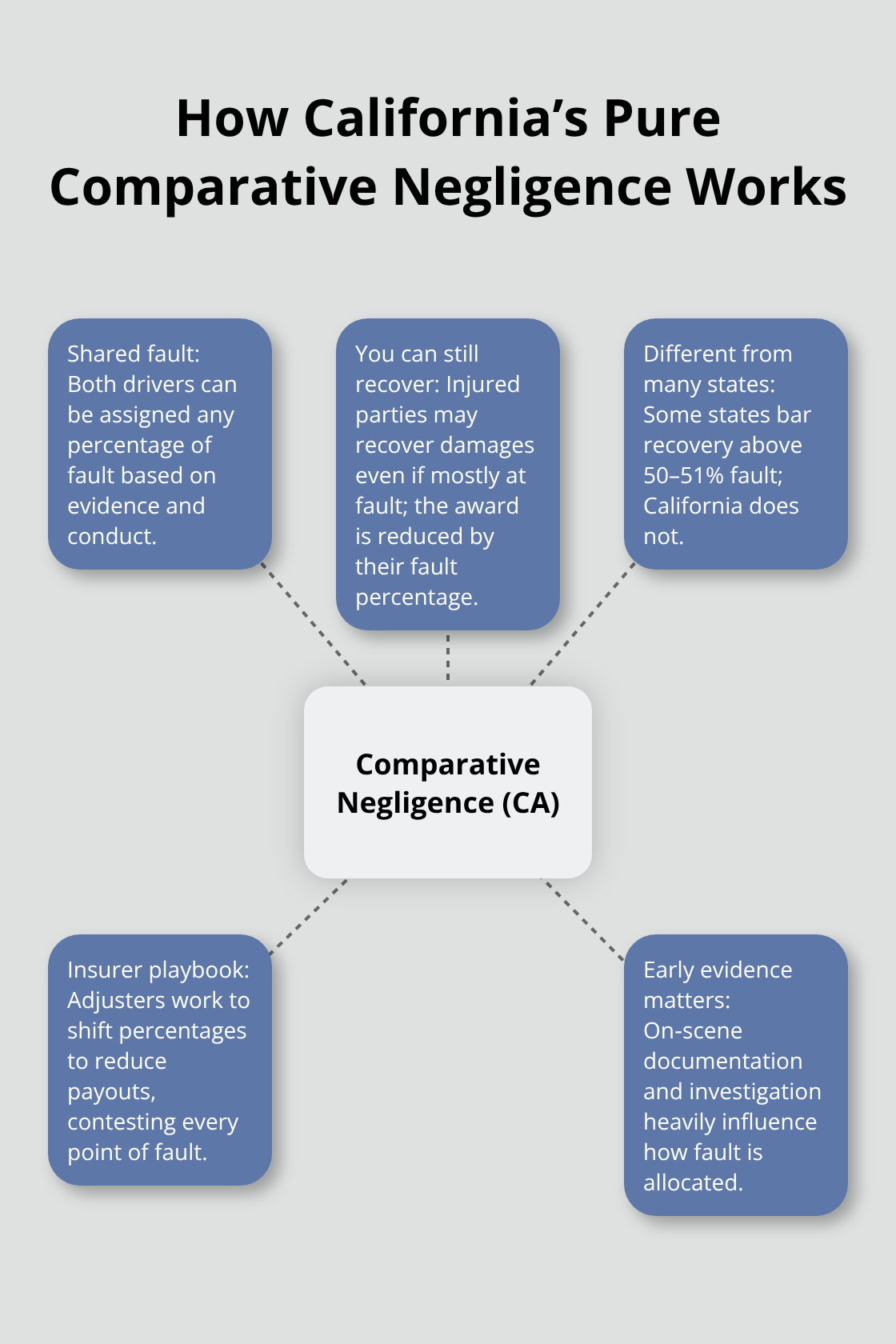
Insurance companies fight hard to prove their client bears less responsibility because every percentage point saved protects their profit margin. The immediate scene investigation determines much of this fault allocation.
What to Document at the Accident Scene
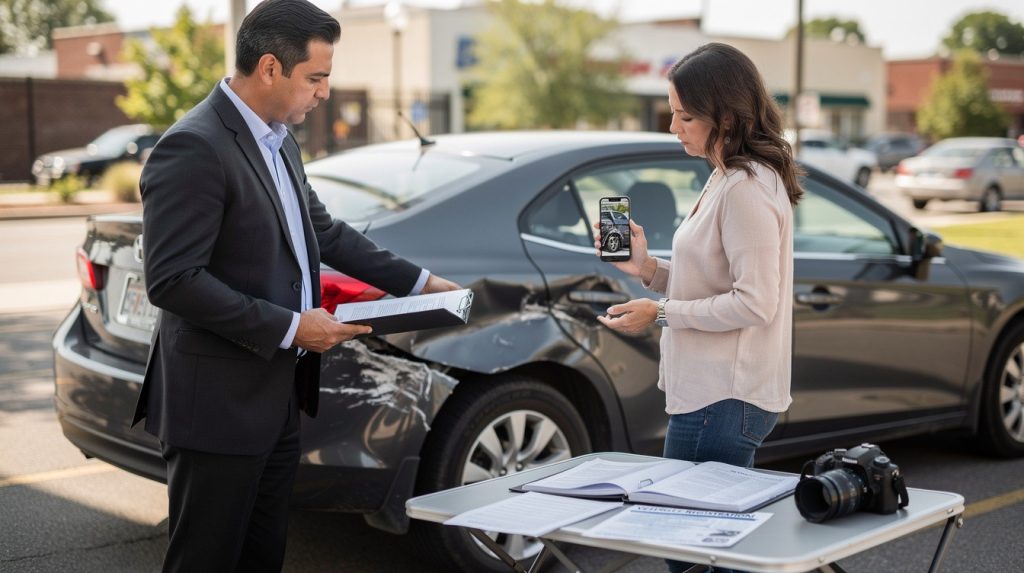
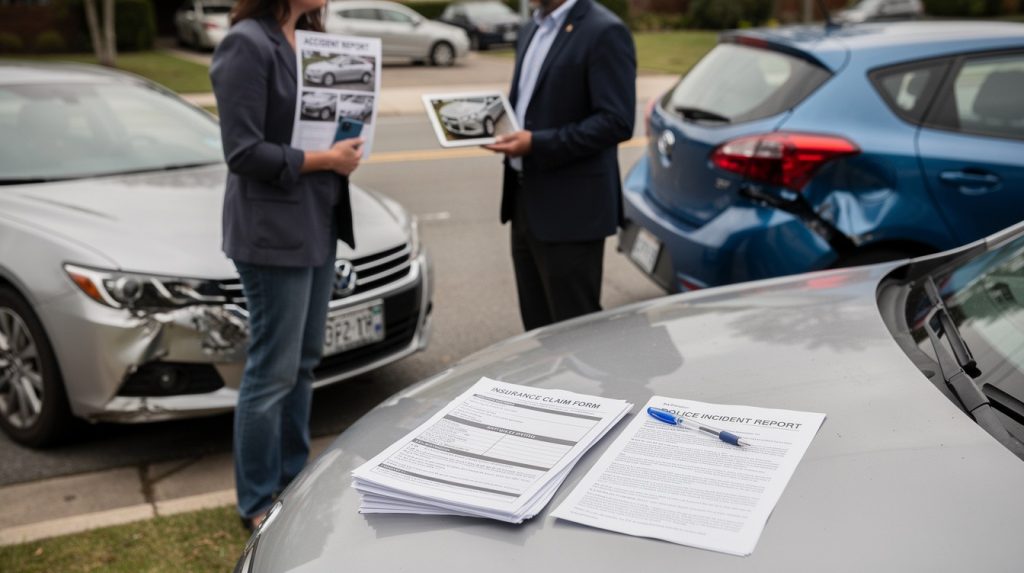
Document the exact vehicle positions, road markings, traffic signals, and weather conditions with photographs and notes before anything moves. Obtain statements from neutral witnesses (not passengers of either driver) since these carry more weight with adjusters and courts. Request the official police report number and follow up within days to verify accuracy, as errors in that report can cascade through your entire claim.
Taking Immediate Action After Impact
Your actions in the first minutes after impact dramatically affect claim strength. Move to safety immediately if vehicles are driveable and no one requires emergency aid; blocking traffic creates additional hazards and complicates liability assessment. Call 911 if anyone shows injury signs, property damage exceeds minor scratches, or the other driver lacks insurance. Police documentation creates an official record that insurance companies and courts rely upon.
Protecting Your Evidence and Health
Take photographs of vehicle damage from multiple angles, the accident scene from various positions, road conditions, and any visible injuries before they worsen. Photograph the other driver’s license, vehicle registration, and insurance card directly (don’t rely on memory or hastily scribbled notes). Exchange contact information and insurance details, but avoid discussing fault, apologizing, or admitting responsibility, as these statements can undermine your position later. Write down the other driver’s exact words about how the incident occurred, noting whether they contradicted themselves. If you sustained any injury-neck stiffness, headaches, back pain-seek medical evaluation within 48 hours, even if symptoms seem mild. Delayed medical treatment weakens claims because insurers argue the injury wasn’t serious or resulted from something else entirely. Keep receipts for all medical visits, prescriptions, and treatments moving forward. These initial steps set the foundation for what comes next: filing your claim and navigating the insurance process.
How to File and Manage Your Insurance Claim in Sacramento County
Contact Your Insurance Company Immediately
File your claim within 24 to 48 hours of the accident, not weeks later, because delays give adjusters reason to question the claim’s legitimacy or suggest you weren’t seriously injured. When you call, have your policy number, the police report number, the other driver’s information, and a clear account of what happened ready to provide. Insurance adjusters process hundreds of claims monthly and move quickly through cases that lack solid documentation. Your first conversation sets the tone for how aggressively the company pursues settlement or defense.
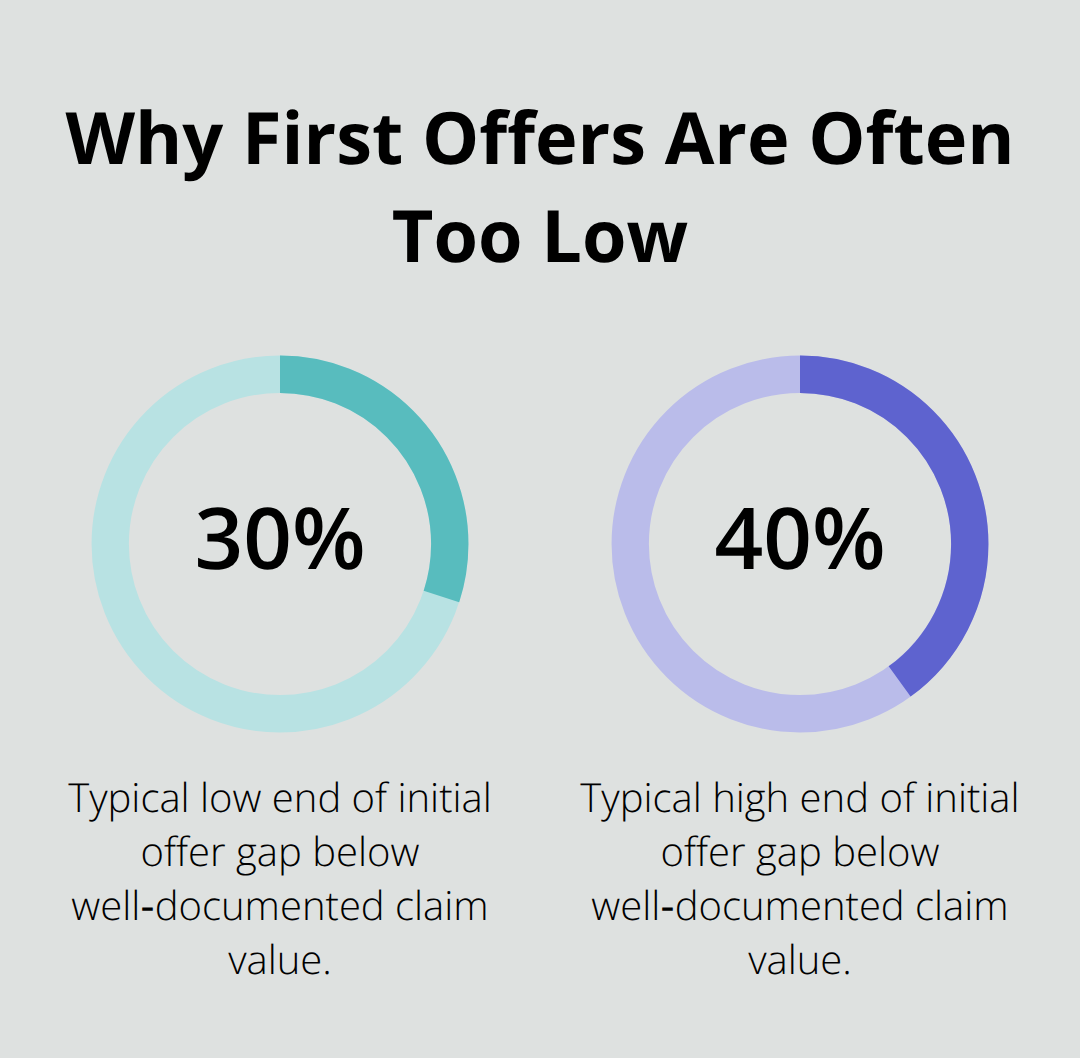
Many drivers accept the adjuster’s initial offer without understanding what their claim is actually worth. Insurance companies are not in the business to pay maximum value for claims; their objective is to protect profits. An adjuster’s first settlement offer typically falls 30 to 40 percent below what a claim should yield when properly documented and negotiated.
Never accept an offer during that first phone call. Instead, tell the adjuster you need time to gather medical records and assess your injuries fully, which is entirely reasonable and expected.
Build Your Documentation Foundation
Documentation transforms a weak claim into a strong one that adjusters take seriously. Gather your medical records from every healthcare provider you visited, including emergency room visits, follow-up appointments, physical therapy sessions, and any specialist consultations. Request itemized bills showing exactly what each treatment cost rather than accepting summary statements. Collect receipts for medications, medical equipment, and travel expenses related to treatment.
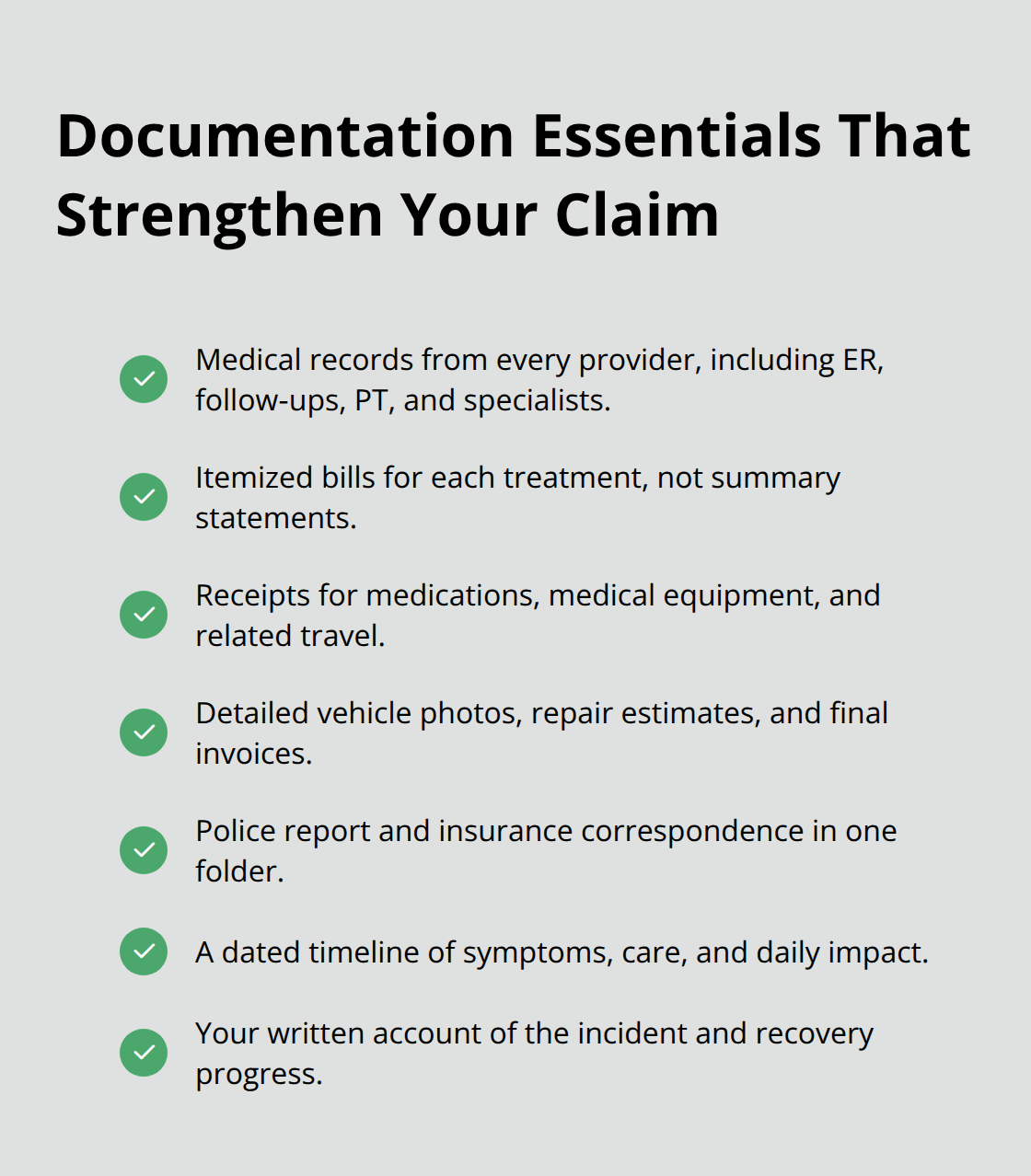
Photograph vehicle damage in detail from multiple angles and distances, showing both the damage and surrounding areas for context. If the vehicle required repairs, obtain the repair estimate and final invoice showing what was actually replaced or fixed. Insurance adjusters scrutinize repair costs against damage photographs, so detailed images prevent them from claiming damage was exaggerated.
Create a timeline documenting when you sought medical care, what symptoms appeared, how they progressed, and how they affected your daily activities. This narrative matters enormously because it demonstrates injury severity and connects the accident directly to your medical treatment. Insurance companies argue that gaps between the accident and medical care indicate the injury wasn’t serious or resulted from something unrelated. Continuous, documented treatment eliminates that argument entirely. Keep a folder with copies of everything: the police report, insurance correspondence, medical records, receipts, photographs, and your own written account of the incident and recovery process.
Navigate Adjuster Negotiations Strategically
Adjusters often claim they need to investigate further or that your injury description doesn’t match the vehicle damage, implying you’re exaggerating. This is standard negotiation posturing designed to make you doubt your own claim. Vehicle damage severity and injury severity are not perfectly correlated because human bodies absorb impact forces differently than metal frames. A rear-end collision at 15 miles per hour can cause significant neck and back injuries even though the bumper damage appears minor. Adjusters know this but use the mismatch as leverage anyway.
When an adjuster says your injuries seem inconsistent with the damage, respond with your medical documentation and explain how those records support your injury claim. Never argue emotionally or become defensive, as adjusters document everything you say and use emotional statements against you later. Keep conversations factual and reference your medical evidence repeatedly.
If the adjuster’s offer remains far below what your claim warrants based on medical costs, lost wages, and pain and suffering, state clearly that you’re willing to pursue litigation if fair settlement cannot be reached. Many adjusters increase their offers substantially when they recognize you’re serious about going to trial, because litigation costs the insurance company far more than a reasonable settlement. This approach shifts the negotiating dynamic in your favor and demonstrates you won’t accept inadequate compensation.
Consider Legal Representation for Complex Claims
Strong documentation and firm negotiation tactics work well for straightforward claims, but more complex situations benefit from professional guidance. A Sacramento car wreck attorney who handles vehicle incident claims understands insurance company tactics and knows how to counter them effectively. We at O’Brien & Zehnder Law Firm help Sacramento County residents navigate the claims process and build stronger negotiating positions when settlements stall or adjusters refuse reasonable offers. The decision to pursue legal representation depends on your claim’s complexity, the severity of your injuries, and whether the insurance company’s offers consistently fall short of what your damages warrant.
Building a Strong Vehicle Incident Claim in Sacramento County
Collect Complete Medical Records
Medical records form the backbone of any credible claim, and most people collect them haphazardly or incompletely. Request records from every provider you visited within 30 days of the incident, not just your primary care physician. Emergency room documentation matters enormously because it creates an official timestamp showing you sought immediate care, which insurers interpret as evidence of serious injury. Follow-up visits to specialists like orthopedists or neurologists demonstrate ongoing treatment and justify higher damage awards. Itemized billing statements prove exactly what treatments cost rather than accepting vague summaries that adjusters might dispute.
Many claimants overlook physical therapy records entirely, yet these documents show objective measurements of your functional limitations and recovery progress. Document everything systematically to create a spreadsheet listing every medical visit, the date, provider name, treatment type, and cost. This organized approach prevents gaps that adjusters exploit to argue your injuries weren’t serious or that you delayed treatment unnecessarily.
Document Vehicle Damage Thoroughly
Vehicle damage documentation requires the same systematic approach as medical records. Obtain detailed photographs showing damage from multiple angles, wide shots establishing context, and close-ups revealing specific impact points. If repairs were completed, request the final invoice itemizing every part replaced and labor hour billed. Insurance adjusters compare these invoices against damage photographs to identify inconsistencies they can use against you.
Professional repair estimates carry more weight than informal assessments, so obtain written estimates from licensed repair shops even if you haven’t completed repairs yet. Preserve the damaged vehicle itself if possible, as adjusters sometimes request in-person inspection. When you’ve gathered comprehensive medical records, treatment documentation, and repair evidence, you’ve eliminated the primary reasons adjusters use to justify low offers.
Strengthen Your Position for Settlement or Trial
At that point, an experienced legal representative can evaluate whether your documented damages support pursuing litigation if settlement negotiations stall. We at O’Brien & Zehnder Law Firm help Sacramento County residents assess whether claims warrant legal action and prepare cases for trial when insurers refuse reasonable settlement offers. The decision to pursue legal representation depends on your claim’s complexity, the severity of your injuries, and whether the insurance company’s offers consistently fall short of what your damages warrant.
Final Thoughts
Vehicle incidents in Sacramento County disrupt your life immediately, but California vehicle incident claims follow predictable patterns once you understand the process. Insurance companies operate on profit margins, not fairness, which means their initial offers typically fall well short of what your damages warrant. Negotiating firmly and referencing your medical documentation shifts the dynamic in your favor and transforms a weak claim into one that adjusters take seriously.
The decision to work with an attorney depends on your claim’s complexity and whether the insurance company’s offers consistently undervalue your damages. When settlement offers remain inadequate despite strong documentation, pursuing legal representation becomes the logical next step. We at O’Brien & Zehnder Law Firm help Sacramento County residents navigate California vehicle incident claims and pursue fair compensation when insurers refuse reasonable settlement offers.
Contact O’Brien & Zehnder Law Firm for a consultation to evaluate whether your claim warrants legal representation and to discuss your next steps forward. The firm serves statewide with offices in Sacramento, Rancho Cucamonga, Pleasanton, Inglewood, and Redwood City. Reach out today at 877-212-6907 or through our online form to get started.