

A car accident in Sacramento County can leave you overwhelmed and unsure about what comes next. The car accident claim process involves multiple steps, from documenting the scene to negotiating with insurance companies.
We at O’Brien & Zehnder Law Firm help accident victims navigate this process and understand their rights. This guide walks you through each stage so you know exactly what to expect.
What to Do Immediately After Your Crash
Capture Evidence Before Vehicles Move
The first hours after a car accident in Sacramento County determine how strong your claim becomes. Most accident victims waste this critical window by failing to capture evidence or by providing inconsistent statements to police and insurers. You need to act with purpose, not panic.
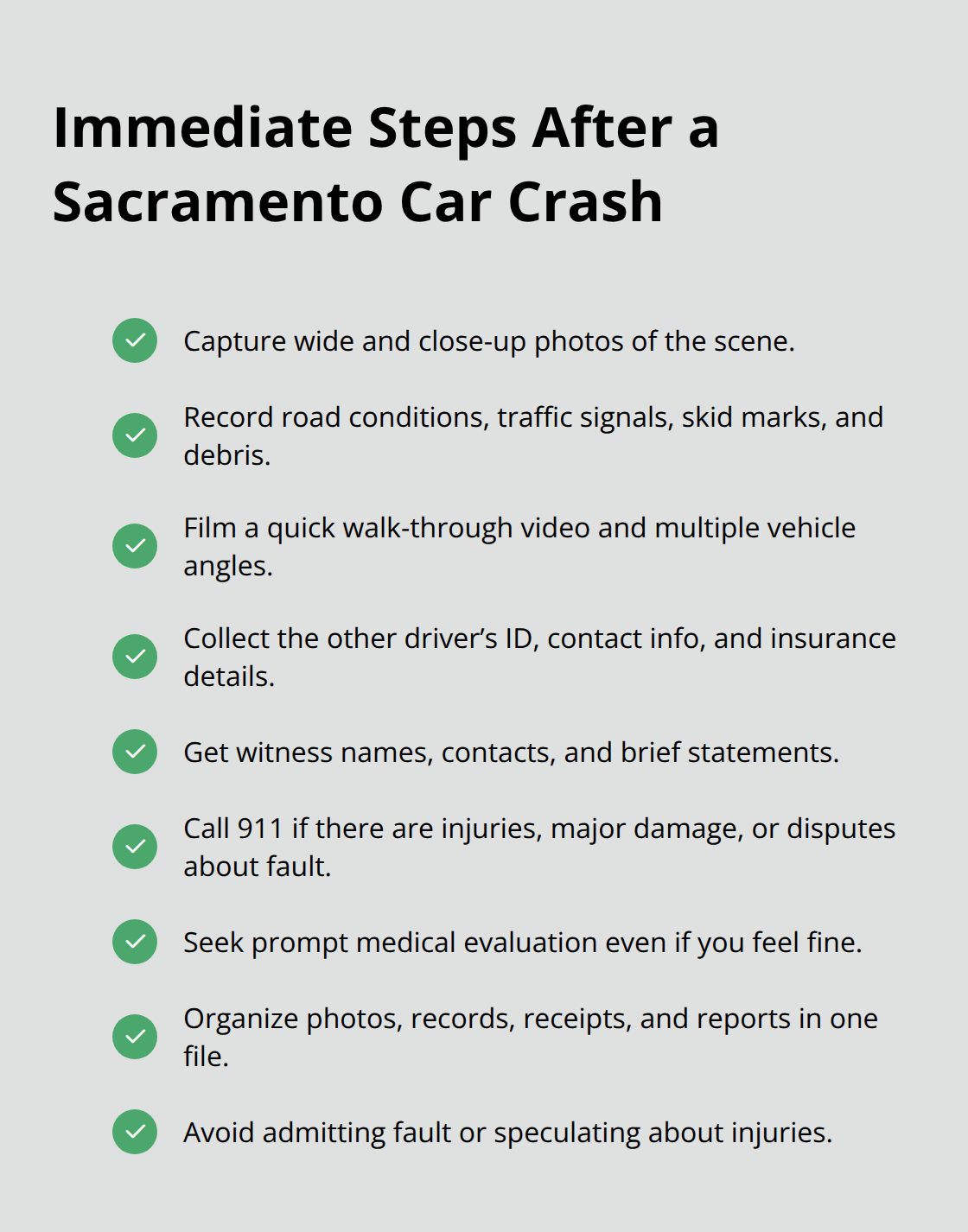
Take photos and videos of everything at the scene before anyone moves vehicles. Photograph the overall crash location, vehicle damage from multiple angles, road conditions, traffic signals, skid marks, debris, and any visible injuries. If you have a smartphone, use it immediately-dashcam and surveillance footage can disappear within days, and scene photos often vanish when vehicles are towed or repaired.
Collect Information from All Parties
Get the other driver’s full name, phone number, address, driver’s license number, vehicle make and model, license plate, and insurance company name and policy number. Ask for their insurance card and photograph it. Obtain contact information and brief statements from any witnesses at the scene; studies show witness recollection degrades significantly after 48 hours, so capturing their account while fresh is invaluable.
Do not admit fault, apologize for the accident, or discuss injuries with the other driver or bystanders-anything you say can be used against you later.
Report to Police and Your Insurer
Call 911 immediately if the crash involves injury, significant property damage, or disputes about fault. Provide a factual account to the officer without speculation. Request the police report number and expected availability date; California law allows you to obtain the report, typically for a small fee, within days of the crash.
Report the accident to your insurance company promptly, as most policies require notification within a specific timeframe, often 24 to 48 hours. Provide your insurer with the basic facts but avoid detailed statements until you understand your full situation-insurers may use detailed early statements to limit your recovery.
Preserve Evidence and Seek Medical Attention
Preserve all evidence by keeping photos, videos, witness contact information, medical records, repair estimates, and receipts in one organized file. If treatment continues or your injuries worsen, document everything with dates and descriptions.
Seek medical attention immediately if you suspect any injury, even if you feel fine initially; injuries like whiplash and internal trauma can emerge days or weeks later, and gaps in medical care weaken your claim. Keep detailed records of all treatment, medication, and symptoms.
Determine Whether You Need Legal Help
Early legal review protects your rights and clarifies whether your case has value beyond what the insurer initially offers. Contact a personal injury attorney within the first few weeks if liability is disputed, injuries are significant, or the insurance company denies your claim. We at O’Brien & Zehnder Law Firm help accident victims in the Sacramento area understand and pursue claims involving car accidents, and we provide consultations to guide you through the insurance and legal claims process.
Understanding how insurance claims work in California and when you may need legal representation shapes your next moves.
How Insurance Claims and Legal Deadlines Work in Sacramento County
California’s insurance claim process operates on two separate tracks that run simultaneously, and most accident victims fail to understand this distinction until it costs them money. The first track is your insurance claim, which you file with your insurer through an administrative process governed by your policy terms and California insurance regulations. The second track is the legal deadline to file a lawsuit, which operates independently and follows California’s statute of limitations rules.
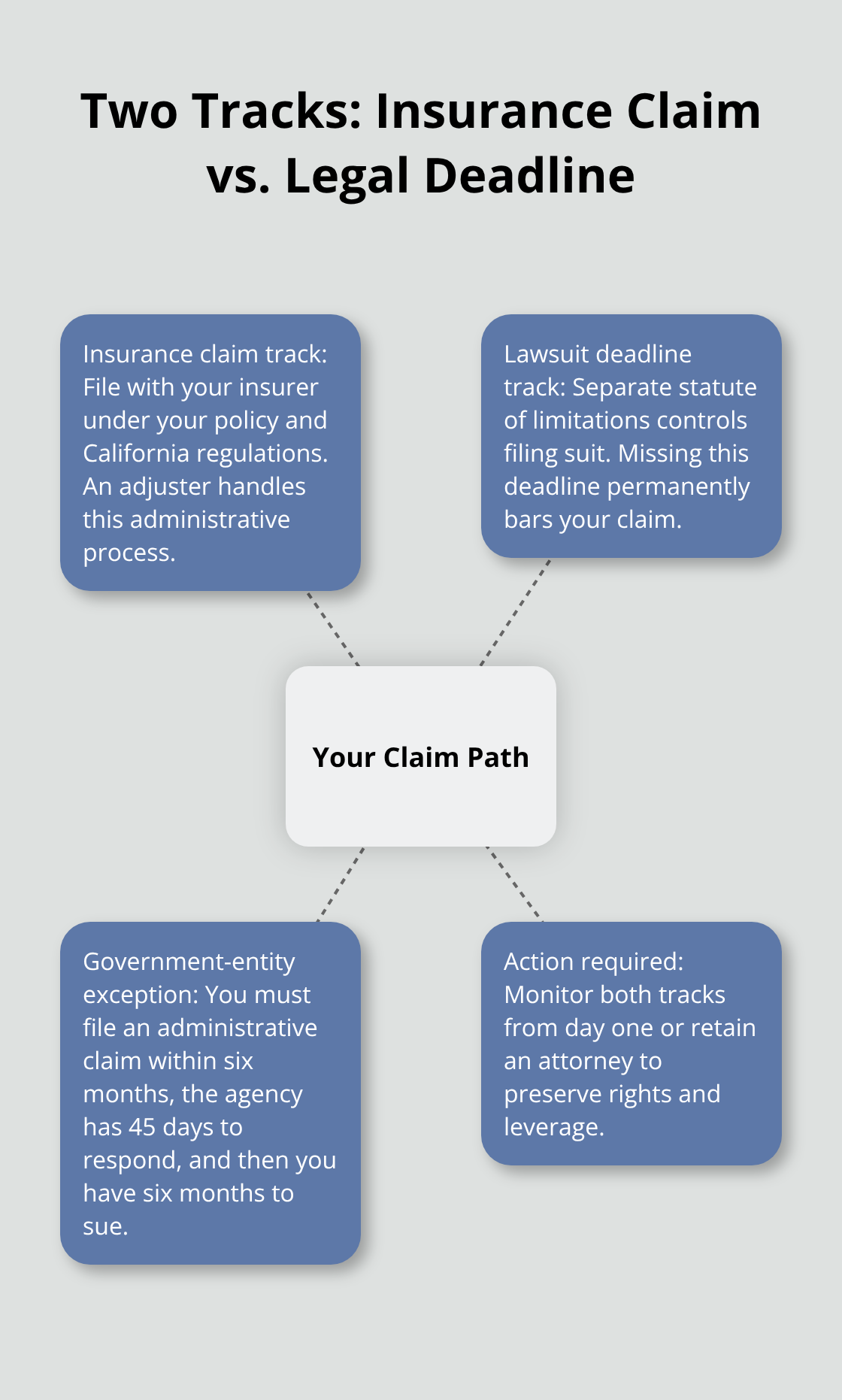
Your insurer’s claims adjuster handles the first track, but the second track requires your attention or a lawyer’s involvement to protect your rights.
How the Insurance Claim Timeline Works
When you file an insurance claim, your insurer typically has 30 to 45 days to acknowledge receipt and begin investigating. The adjuster will request medical records, repair estimates, police reports, and your statement about the accident. Most insurers prefer settling claims without litigation, so they may extend settlement offers within 60 to 90 days if liability is clear and injuries are minor. However, if treatment is ongoing or your injuries remain unclear, you should not accept an early settlement offer because you cannot reverse that decision once you sign the release.
California’s Statute of Limitations: Your Hard Deadline
California law gives you two years from the crash date to file a personal injury lawsuit for injuries and three years to file a claim for vehicle or property damage under California Code of Civil Procedure sections 335.1 and 338. This means you have a hard deadline, and missing it bars your claim permanently. If a government vehicle or public entity caused the crash, the timeline shrinks dramatically: you must file an administrative claim within six months of the crash with the government agency, which then has 45 days to respond. If the agency rejects your claim, you then have six months to file a lawsuit. This compressed timeline catches many accident victims off guard because they assume the standard two-year rule applies, so identifying whether a government vehicle caused the crash is essential within the first weeks after the accident.
When You Should Consult an Attorney
You should consult a personal injury attorney if liability is disputed, the insurance company denies your claim, your injuries require ongoing medical treatment, or the insurer’s initial offer seems disproportionate to your damages. Most personal injury attorneys in California work on contingency fees, meaning they collect roughly one-third of your recovery before a lawsuit and approximately 40 percent if the case proceeds to litigation. This fee structure aligns the attorney’s incentive with yours: they only profit if you recover more than you would have alone. However, medical liens from hospitals and treatment providers can reduce your net payout as substantially as attorney fees, so understanding the full deduction stack matters before you settle.
The Discovery Rule and Delayed Injuries
California’s discovery rule allows the statute of limitations clock to start later if an injury was not immediately apparent and could not have been reasonably discovered at the time of the crash. This rule applies in narrow circumstances: your injury must genuinely have been unknown or undiscoverable on the crash date, and you must have discovered it or reasonably should have discovered it at a later time. Whiplash, internal injuries, and soft-tissue damage sometimes qualify because they emerge days or weeks after the accident. However, courts interpret the discovery rule restrictively, so relying on it as a safety net is risky. The safest approach is to file a lawsuit or a protective filing before the two-year deadline expires if you suspect your injuries may worsen or if you remain uncertain about their full scope. A protective filing preserves your legal rights while you continue medical treatment and gather evidence about the true extent of your damages, setting the stage for settlement negotiations or litigation that follows.
Settling Your Claim or Going to Court in Sacramento County
How Insurance Adjusters Approach Settlement Offers
Insurance adjusters count on accident victims accepting the first settlement offer without understanding what their case is truly worth. Most adjusters follow a predictable script: they acknowledge liability quickly, request medical records and repair estimates, then present an initial offer within 60 to 90 days that favors the insurance company’s bottom line, not your recovery. The adjuster’s job is to close claims cheaply, and they succeed when you lack leverage or feel desperate for quick cash.
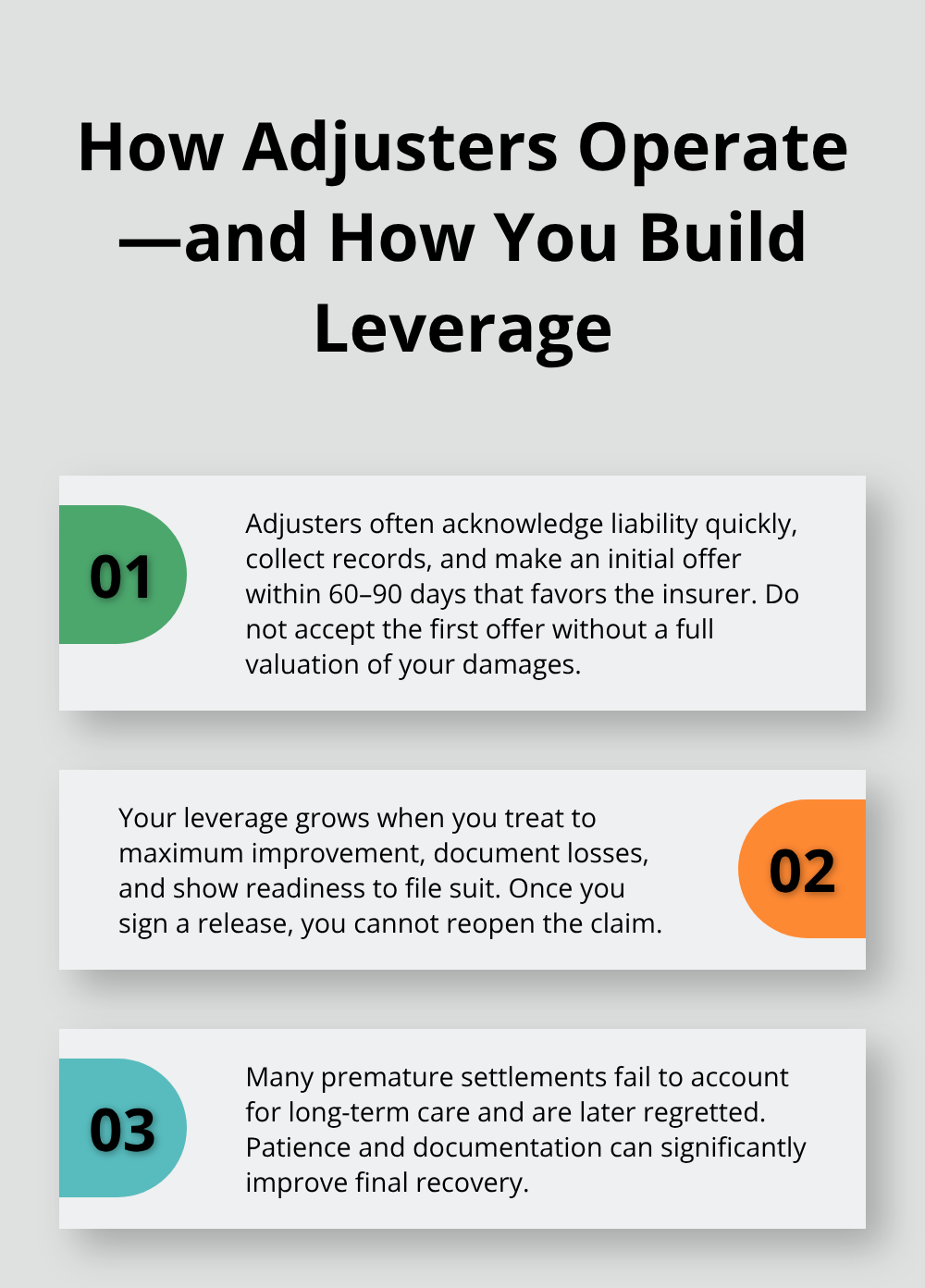
Your leverage increases dramatically once you understand your damages, continue medical treatment until maximum improvement, and demonstrate willingness to file a lawsuit. Do not accept any settlement offer while treatment is ongoing, because you cannot reverse that decision once you sign the release. California courts have rejected hundreds of claims from accident victims who settled prematurely and later discovered their injuries required years of additional care.
Understanding Your Actual Damages
The insurance company’s initial offer typically covers only obvious medical bills and vehicle repair costs, ignoring lost wages, reduced earning capacity, pain and suffering, and future treatment needs. If your medical records show ongoing treatment with a clear prognosis, your case value increases substantially. Adjusters often lowball initial offers by 30 to 50 percent compared to what a jury might award, betting that you will not pursue litigation.
We at O’Brien & Zehnder Law Firm recommend gathering all medical records, repair invoices, wage loss documentation, and witness statements before responding to any settlement proposal. A written demand letter outlining your damages and requesting a specific amount gives the adjuster a clear target and demonstrates that you understand your claim’s value. Most insurers respond to professional demand letters within 30 days with a counteroffer, beginning genuine negotiation rather than one-sided lowballs.
When Litigation Becomes Necessary
If settlement negotiations stall or the adjuster refuses to move beyond an unreasonable figure, filing a lawsuit becomes your most powerful tool. Taking a case to court in Sacramento County typically costs between 2,000 and 8,000 dollars in filing fees, deposition costs, and expert witness fees, but your attorney advances these expenses and recovers them from the final judgment or settlement. The litigation timeline extends 12 to 24 months from filing to trial, depending on court schedules and case complexity, giving the insurance company strong incentive to settle rather than face jury trial.
Most cases settle during discovery, the phase where both sides exchange evidence and depose witnesses, because the insurance company gains clarity about the strength of your claim and the risk of a larger jury verdict. If your case reaches trial, a jury decides liability and damages based on evidence presented by both sides.
Trial Outcomes and Cost Considerations
Sacramento County juries award damages at rates consistent with California statewide data, with average verdicts for permanent injury claims ranging from 150,000 to 500,000 dollars depending on injury severity, though minor injury cases settle for considerably less. Your attorney’s contingency fee of approximately 40 percent in litigation is earned only if you recover, aligning their interest with yours. Medical liens from hospitals and treatment providers reduce your net payout, sometimes by 20 to 35 percent of total recovery, so understanding this deduction before settlement is essential. Filing a lawsuit signals seriousness to the insurance company and shifts the cost-benefit analysis in your favor, because litigation becomes more expensive and risky for them than a reasonable settlement offer.
Final Thoughts
The car accident claim process in Sacramento County demands action within specific timeframes and attention to details that most accident victims overlook. Your first priority is preserving evidence immediately after the crash, because photos, witness statements, and dashcam footage disappear quickly and cannot be recovered later. Your second priority is understanding that two separate deadlines run simultaneously: your insurance company’s claims timeline and California’s statute of limitations for filing a lawsuit. Missing the two-year deadline for personal injury claims or the six-month deadline for government entity claims permanently bars your recovery, so early legal review protects your rights regardless of whether you ultimately need a lawyer.
Insurance adjusters deliberately present lowball offers early, betting that you will settle quickly without knowing what your case is worth. Accepting that offer locks you into a permanent decision that cannot be reversed, even if your injuries worsen months later, so you should continue treatment until your condition stabilizes and gather all medical records and wage loss documentation before responding to any settlement proposal. Another frequent error is failing to identify whether a government vehicle caused the crash, because government entity claims follow a compressed six-month administrative timeline that differs dramatically from the standard two-year rule, and misidentifying the defendant can destroy your claim entirely.
Contact O’Brien & Zehnder Law Firm for a consultation to confirm your deadlines, understand your claim’s value, and determine whether filing a lawsuit strengthens your negotiating position. We help accident victims in the Sacramento area navigate the car accident claim process, and we work on contingency fees so you pay nothing unless we recover compensation for you. Your claim’s success depends on the decisions you make now, not on luck or the insurance company’s goodwill.