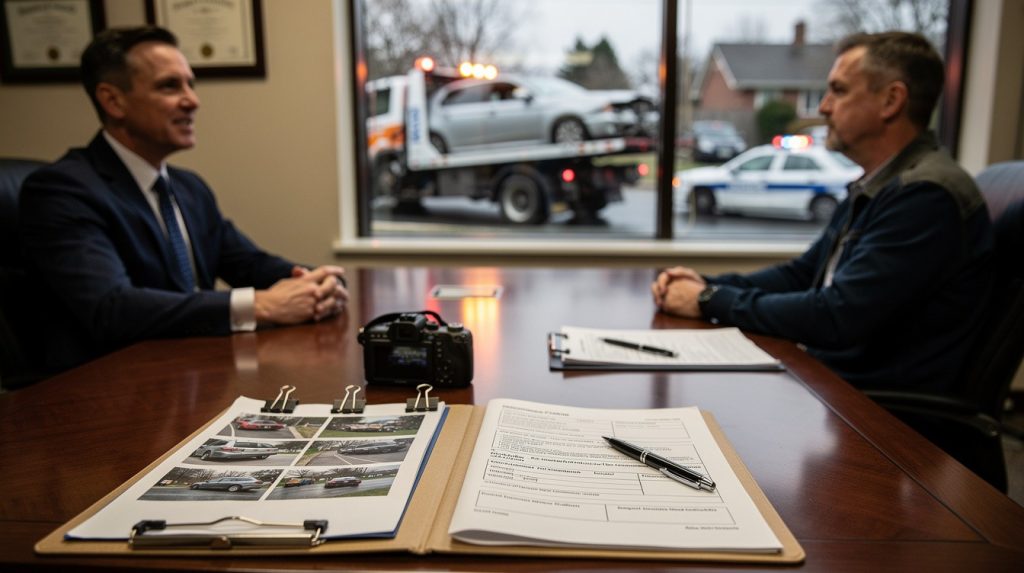

A personal injury in Sacramento County can turn your life upside down. Medical bills pile up, lost wages add stress, and dealing with insurance companies becomes overwhelming.
We at O’Brien & Zehnder Law Firm help clients navigate California personal injury claims from the first conversation through final settlement. This guide walks you through each stage of the process so you know what to expect.
Understanding California Personal Injury Law
California personal injury law grants you the right to recover damages when someone else’s negligence causes you harm. The state recognizes several categories of claims that we at O’Brien & Zehnder Law Firm help clients pursue: car accidents, truck collisions, motorcycle incidents, pedestrian injuries, premises liability cases where unsafe property conditions cause injury, product liability when defective items cause harm, and dog-bite incidents. Each category carries specific legal requirements and evidence standards that shape your claim’s strength.
How Different Injury Types Affect Your Claim
In a car accident claim, you must show the other driver violated traffic laws or acted unreasonably. In a premises liability case, you must prove the property owner knew or should have known about the dangerous condition and failed to fix it or warn visitors. Dog-bite claims in California operate under strict liability, meaning the owner bears responsibility even if the dog never bit anyone before, as long as the bite occurred in a public place or on private property where you had a right to be. These distinctions matter because they determine what evidence you need to gather and what arguments will succeed.
The Two-Year Deadline You Cannot Miss
California gives you exactly two years from the injury date to file a personal injury lawsuit in court, according to California Code of Civil Procedure Section 335.1. This deadline applies to most personal injury cases, including car accidents and dog bites. If you miss this deadline, you lose your right to sue permanently. Filing an insurance claim has no legal deadline, so you can contact insurers immediately after an injury without rushing into court. The statute of limitations clock starts on the date of injury, not when you discover the injury or its cause. If you were injured on September 1, 2024, your two-year deadline is September 1, 2026. Acting quickly matters even if you’re still recovering.
Meeting the Four Elements of Negligence
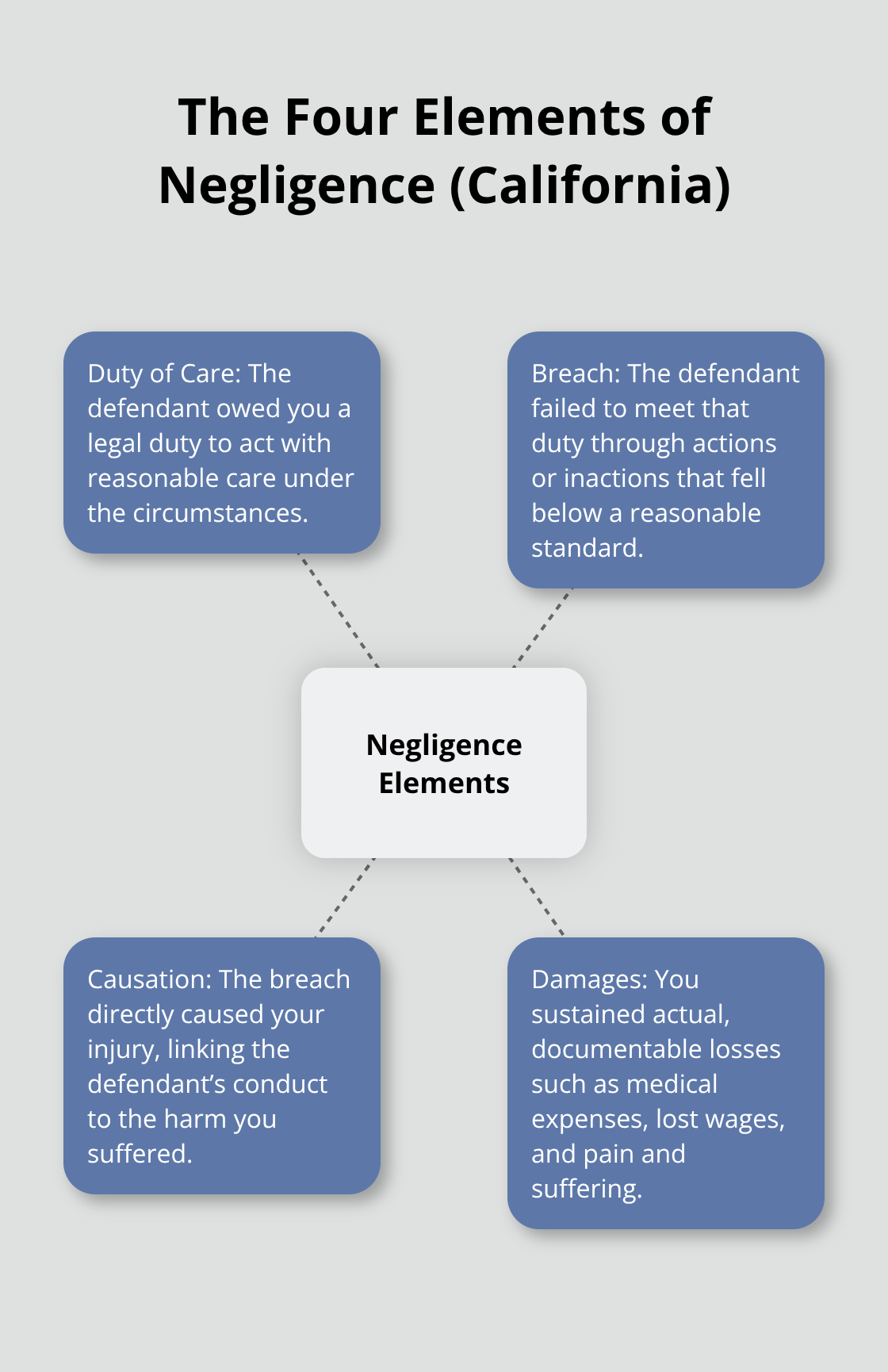
California requires you to prove four elements to win a personal injury case: the defendant owed you a duty of care, they breached that duty through their actions or inactions, their breach caused your injury, and you suffered actual damages. The burden falls on you to prove each element by a preponderance of the evidence, meaning it’s more likely than not that your version of events is true. This standard requires solid documentation rather than speculation or assumptions.
How Comparative Negligence Reduces Your Recovery
California’s comparative negligence rule complicates recovery significantly. If you were partially at fault for your injury, your compensation reduces by your percentage of fault. The state allows you to recover even if you’re 99% at fault, as long as the defendant bears at least 1% responsibility. If you were 40% at fault in a car accident and the other driver was 60% at fault, and your total damages equal $100,000, you can only recover $60,000. Insurance companies exploit this rule aggressively, inflating your share of blame to reduce their payout. Medical records, police reports, witness statements, and photographs of accident scenes directly support your negligence claim and counter false blame-shifting. These documents form the foundation of your defense against comparative negligence arguments, making evidence collection your first priority as you move forward.
The Claims Process: What to Expect
Document Everything Immediately After Your Injury
The moment you report an injury to an insurance company, a clock starts ticking and the insurer assigns an adjuster to your case. Most insurers respond within 24 to 48 hours.
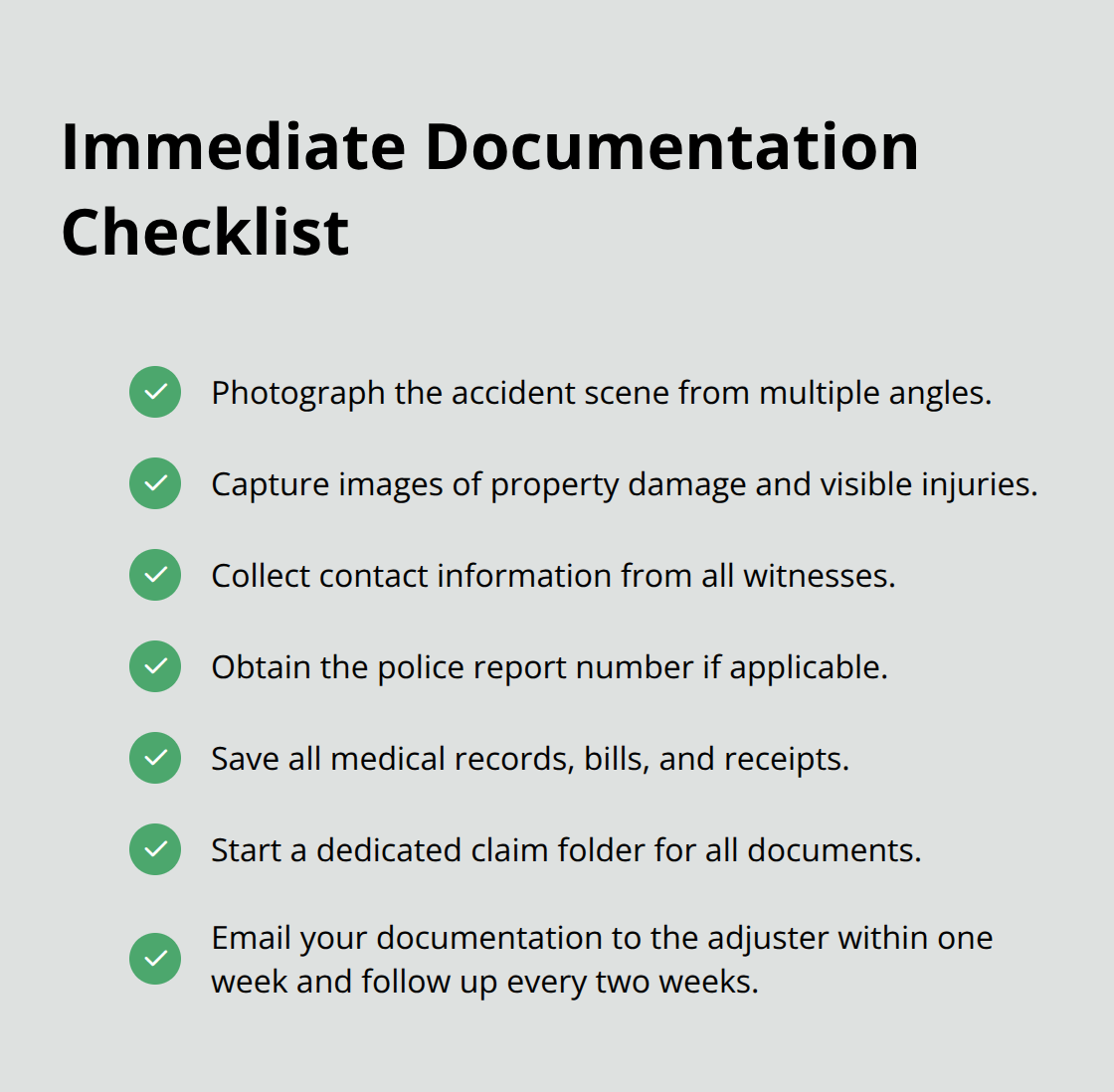
Your first task is documenting everything immediately: photograph the accident scene, property damage, and visible injuries; collect contact information from witnesses; obtain the police report number if applicable; and save all medical records and receipts. Insurance adjusters review claims systematically, and gaps in your documentation create opportunities for them to deny or minimize your claim.
The National Association of Insurance Commissioners reports that insurers close approximately 85% of claims within 30 days, but this speed often works against claimants who haven’t gathered sufficient evidence. Don’t assume the insurer will conduct a thorough investigation on your behalf. Start a dedicated folder for your claim containing medical bills, prescription receipts, pay stubs showing lost wages, repair estimates for vehicle damage, and a detailed injury timeline. Email this documentation to the adjuster within one week of your initial report, then follow up in writing every two weeks requesting a status update. This creates a paper trail showing you acted promptly and seriously.
Navigate the Investigation Phase Strategically
The investigation phase typically lasts 30 to 60 days, though complex cases extend longer. During this period, the adjuster contacts witnesses, reviews medical records, and calculates damages. Insurance companies employ specific tactics to reduce payouts: they request authorization to review your entire medical history rather than just injury-related records, hoping to find pre-existing conditions they can blame instead; they delay requesting records from healthcare providers to extend the investigation artificially; they pressure you to settle quickly before you fully understand your injury’s long-term effects; and they make lowball settlement offers early, betting you’ll accept out of financial desperation.
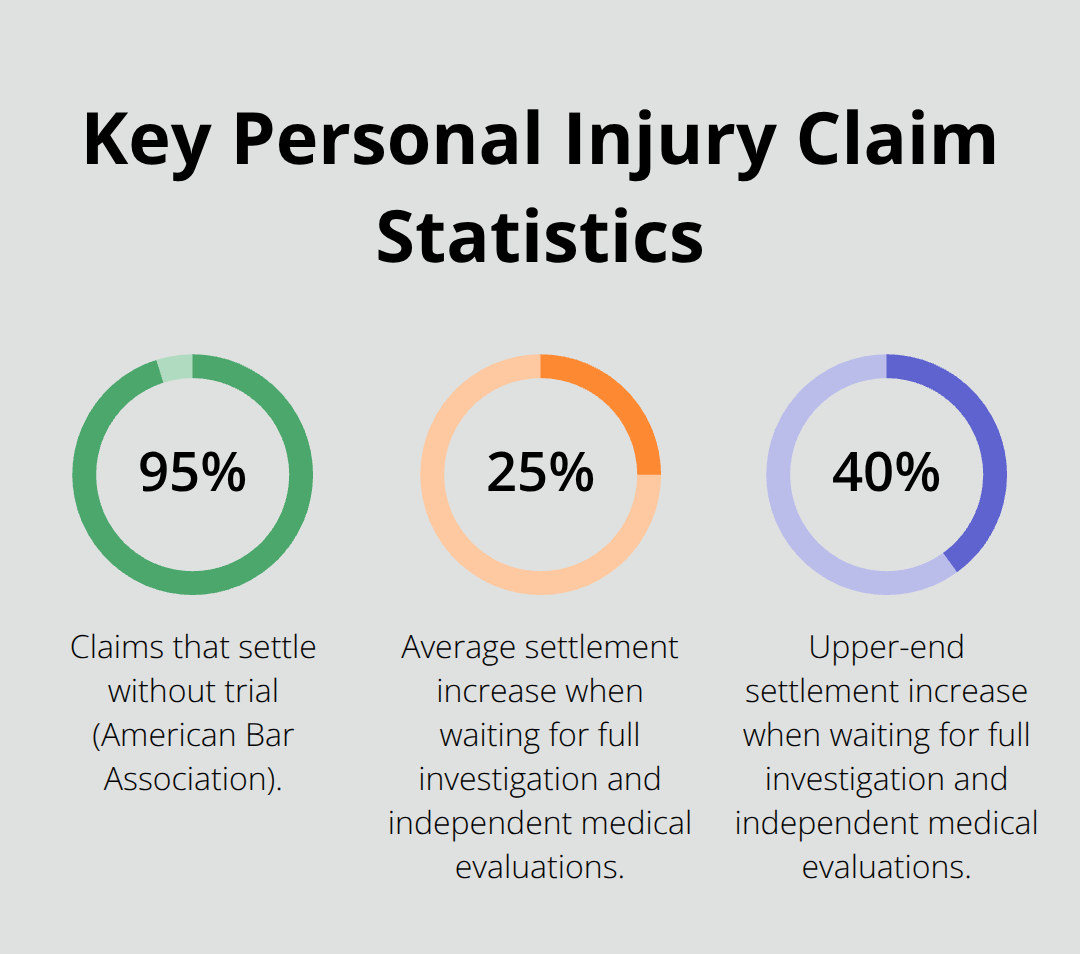
Approximately 95% of personal injury claims settle without trial, according to the American Bar Association, but settling too early costs you significantly. Never accept an initial settlement offer. The average personal injury settlement increases 25% to 40% when claimants wait for the full investigation to conclude and obtain independent medical evaluations.
Request an independent medical examination if the insurer’s doctor disputes your injury severity. This examination costs $500 to $2,000 but frequently justifies higher settlements when it contradicts the insurer’s position.
Build Your Evidence Record Daily
Document your pain levels, limitations, and treatment progress daily in a journal; this contemporaneous record contradicts insurer claims that you’re exaggerating your injuries. Medical records, police reports, witness statements, and photographs of accident scenes directly support your negligence claim and counter false blame-shifting. These documents form the foundation of your defense against comparative negligence arguments, making evidence collection your first priority. As your investigation progresses and settlement discussions begin, the strength of your documentation determines whether you receive fair compensation or accept a reduced offer.
What Stops You From Getting Fair Compensation
Lowball Settlement Offers Arrive Too Early
Insurance adjusters count on your desperation and incomplete evidence to reduce what you actually deserve. Within the first two weeks of your claim, expect a lowball settlement offer designed to close your case before you understand your injury’s true cost. The Insurance Information Institute reports that the average personal injury claimant accepts settlements 35% below what comparable cases ultimately receive when taken further in the process. Adjusters frame these early offers as final, creating artificial urgency by claiming the settlement window closes soon.
This pressure tactic works because medical bills arrive immediately while long-term complications remain unclear. Reject any settlement offer made before you’ve completed medical treatment and obtained a comprehensive damage calculation that includes future care costs, lost earning capacity, and pain and suffering. The average personal injury settlement increases 25% to 40% when claimants wait for the full investigation to conclude and obtain independent medical evaluations.
Medical History Requests Become Fishing Expeditions
Insurance companies request blanket authorization to review your entire medical history, not just records related to your injury. They dig through decades of healthcare visits searching for pre-existing conditions they can blame for your current symptoms, deliberately misrepresenting the connection between old injuries and your present claim. Provide only injury-specific medical records and deny requests for your complete medical history unless your attorney advises otherwise.
This tactic shifts focus away from the defendant’s negligence and toward your past health issues. The insurer hopes to convince you that your current problems stem from previous conditions rather than the accident. Stand firm on limiting disclosure to injury-related records only.
Comparative Negligence Claims Require Solid Evidence
California’s comparative negligence system gives insurers another weapon to slash your recovery. Even when another party bears clear responsibility, adjusters claim you share fault to reduce their liability proportionally. They’ll argue you didn’t check mirrors before changing lanes, didn’t maintain proper distance between vehicles, or weren’t paying adequate attention despite clear evidence you acted reasonably.
This blame-shifting requires you to build an ironclad documentation record immediately after your injury. Photographs of accident scenes, witness statements collected on scene, police reports, and medical records showing immediate injury treatment all counter the insurer’s narrative that you contributed to the accident. Without this contemporaneous evidence, it becomes your word against the adjuster’s interpretation weeks or months later when memories fade. Dashcam footage, security camera recordings from nearby businesses, and cell phone records showing you weren’t distracted provide objective proof that defeats comparative negligence arguments. Start requesting these materials within 48 hours of your injury because surveillance footage typically gets deleted after 30 days.
Medical Documentation Gaps Undermine Your Claim
Medical documentation gaps create a final opening for insurers to minimize your claim. When you delay seeking treatment or skip appointments, adjusters claim your injuries weren’t serious enough to warrant immediate care, suggesting you’re exaggerating for financial gain. Seek medical attention the same day as your injury whenever possible, and maintain consistent treatment throughout your recovery. This unbroken medical record directly contradicts insurer arguments that you’re fabricating or inflating symptoms for settlement leverage.
Final Thoughts
You now understand how California personal injury claims work, what obstacles insurers create, and why documentation matters from day one. The path from injury to settlement requires strategy, persistence, and often professional guidance to counter insurance company tactics designed to minimize your payout. Deciding when to involve an attorney depends on your claim’s complexity and the insurer’s responsiveness-if the adjuster denies your claim, disputes liability, or offers significantly less than your documented damages, legal representation becomes essential.
The settlement process accelerates once you have legal representation because insurers take claims more seriously when they know you’re prepared to litigate. Most cases still settle, but from a position of strength rather than desperation. We at O’Brien & Zehnder Law Firm guide Sacramento County clients through each stage of California personal injury claims, handling car accidents, truck collisions, motorcycle incidents, pedestrian injuries, premises liability cases, product liability claims, and dog-bite incidents.
Your recovery deserves compensation that covers medical bills, lost wages, and the genuine impact your injury caused. Contact O’Brien & Zehnder Law Firm for a consultation to discuss your claim and learn how we can help you move toward resolution and fair compensation.