

If you’ve been injured in Sacramento County, you’re racing against the clock. Sacramento injury claim deadlines are strict, and missing them means losing your right to compensation permanently.
We at O’Brien & Zehnder Law Firm know that most people don’t understand how these timelines work. This guide breaks down exactly when you need to file, what stops the clock, and what happens if you wait too long.
How Sacramento County’s Two-Year Deadline Works
The Hard Two-Year Clock
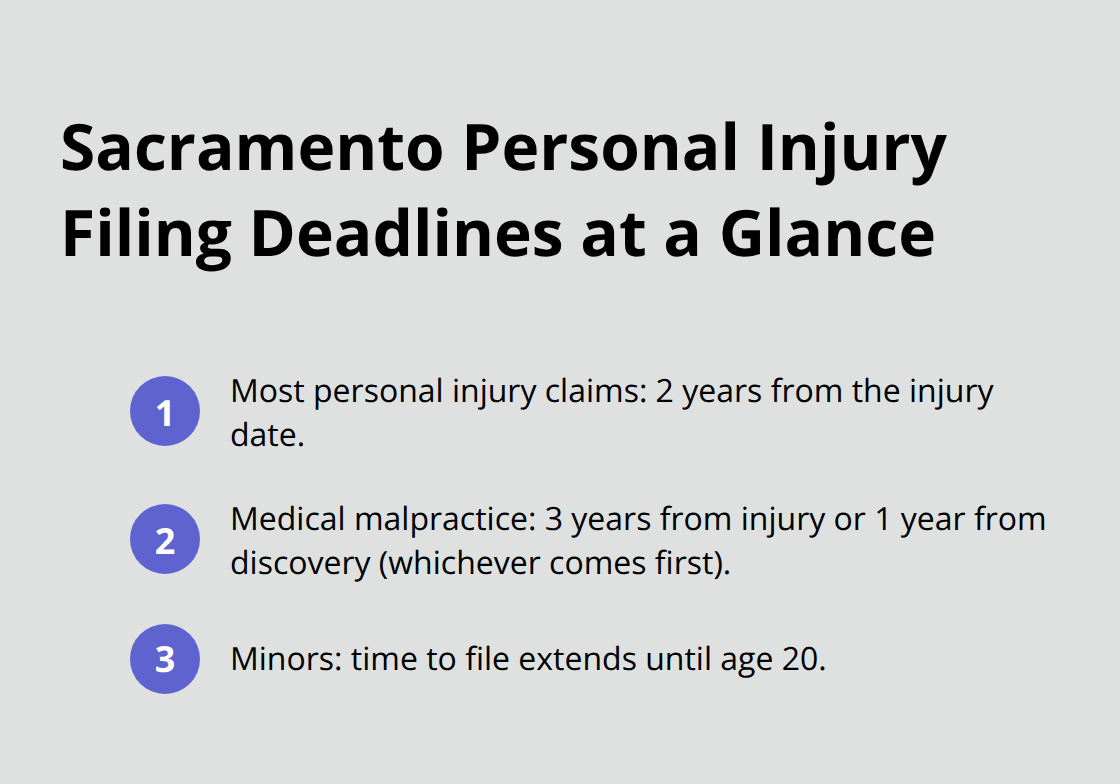
California Civil Code Section 335.1 sets a hard two-year deadline for most personal injury claims in Sacramento County. This clock starts on the date of your injury, not the date you discover the harm. If you suffer an injury on January 15, 2026, your deadline to file is January 15, 2028-regardless of when you realized the full extent of your damages. Missing this date means the court will dismiss your case, and you lose all rights to compensation.
The statute of limitations is absolute; courts do not grant extensions beyond what the law allows. Insurance companies often exploit this by dragging out negotiations, banking on the fact that many injured people don’t file suit in time.
When the Clock Pauses
The clock pauses only in specific situations. If you’re a minor, the deadline extends until you turn 20, giving you extra years beyond the standard two-year window. If you lack mental capacity, the deadline may toll as well. However, tolling does not apply to most adults, and the law does not pause the clock because you’re waiting for insurance settlements or gathering medical records. The discovery rule applies narrowly in California-it extends the deadline only if you could not reasonably discover the injury and its cause by the injury date itself.
Medical Malpractice and the Discovery Rule
Medical malpractice claims follow a different rule entirely. You have three years from the injury or one year from discovery, whichever comes first. If you discovered a surgical error two years after the procedure, you’d have only one year from discovery to file, and that one year is capped by a three-year maximum from the original injury date. For car accidents and dog bites, discovery happens immediately, so this exception rarely helps. The takeaway is stark-waiting costs you money. Filing early preserves evidence, keeps witnesses’ memories sharp, and gives your attorney time to build a strong case without racing against expiration. Understanding these timelines now determines whether you protect your rights or forfeit them entirely.
Common Injury Types and Their Specific Deadlines in Sacramento County
Car and Truck Accidents: The Two-Year Clock Starts at Impact
Car and truck accident claims in Sacramento County follow the standard two-year deadline, but the clock mechanics differ from what many people assume. The injury date is when your car was hit or when you crashed, not when you first visited a doctor or realized you had whiplash. If you were rear-ended on March 10, 2026, your deadline is March 10, 2028, even if you didn’t feel neck pain until weeks later. This matters because insurance adjusters know the timeline and use it against you. They’ll delay settlement offers, hoping you’ll miss the filing deadline and lose leverage.
File a lawsuit within the first year if negotiations stall, giving yourself a one-year buffer before the absolute deadline. For truck accidents specifically, federal regulations under the Federal Motor Carrier Safety Administration apply, which can create additional liability layers and complicate your claim. Documenting the accident scene, obtaining police reports, and collecting witness statements immediately protects your case. Waiting months to hire an attorney means evidence deteriorates, witnesses move away, and your credibility weakens in settlement discussions.
Premises Liability and Dog Bites: Evidence Wins These Cases
Premises liability claims, including slip-and-fall incidents and dog bites, also operate under the two-year rule but require different evidence strategies. If you slipped on a wet floor at a Sacramento County business on June 5, 2026, you must file by June 5, 2028. Dog bite claims follow identical timelines. The critical difference is that property owners and their insurers aggressively defend these cases by claiming you were negligent or that the hazard was obvious.
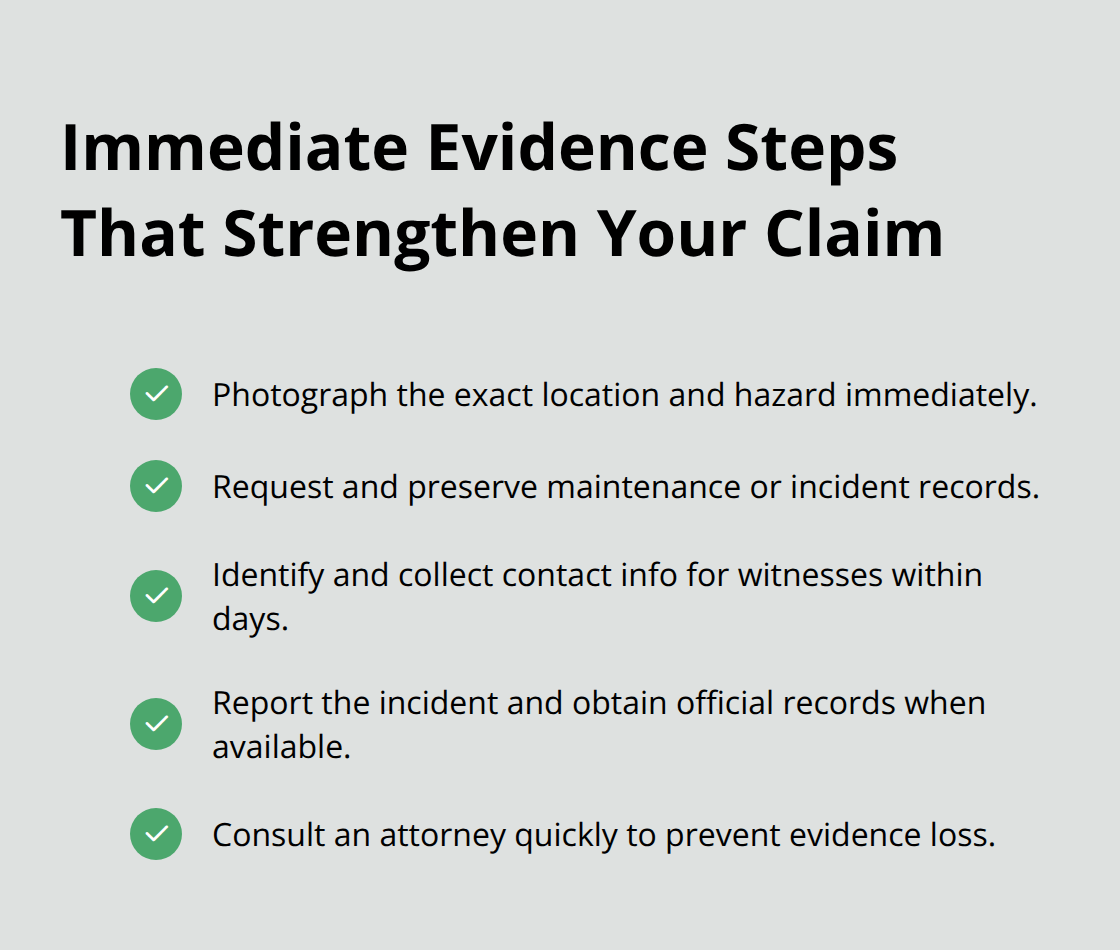
Photograph the location where you fell, obtain maintenance records that show negligence, and identify witnesses within days of the incident. These actions become vital to your claim’s strength. Property owners often argue that you should have noticed the hazard, so contemporaneous documentation undermines their defense before litigation even begins.
Product Liability: Defects Hide, Deadlines Don’t
Product liability claims, such as injuries from defective consumer goods, also have a two-year deadline from the injury date. However, product liability cases often involve manufacturer defects that aren’t immediately apparent. If a faulty power tool caused your hand injury, you might not know the defect existed for months. California’s discovery rule rarely helps here because the injury itself is obvious even if the product defect isn’t.
File early to give your attorney time to retain product engineers who can analyze the defect and establish liability before trial or settlement. Early action also preserves the product itself and any manufacturing records that manufacturers might otherwise destroy. The difference between filing in month one versus month twenty-three often determines whether critical evidence still exists when your case reaches court.
What Happens When You Miss the Deadline in Sacramento County
Missing Sacramento County’s two-year deadline doesn’t just delay your case-it erases it entirely. Once the statute of limitations expires, courts have no authority to hear your claim, regardless of how strong your evidence is or how severe your injuries are. California Code of Civil Procedure Section 335.1 creates an absolute bar; judges cannot override it, and no sympathetic circumstances change the outcome. If you were injured on January 15, 2026, and file your lawsuit on January 16, 2028, the defendant’s attorney will immediately file a motion to dismiss based on the expired deadline. The court will grant that motion, and your case terminates before any jury ever hears what happened. Insurance companies know this rule works in their favor, which is why they have no incentive to settle quickly when you’re approaching the deadline. They calculate that many injured people will procrastinate, miss the filing date, and lose all leverage. The financial reality is brutal: a six-figure injury claim becomes worthless the moment the clock expires.
Rare Exceptions That Almost Never Apply
California law provides narrow exceptions to the two-year rule, but they apply to such specific circumstances that most injured people cannot use them. Minors have until age 20 to file, which extends the timeline only if you were under 18 at the time of injury. Individuals declared mentally incompetent may have the deadline tolled, but this requires a formal court determination before the statute expires. If you left California immediately after your injury and remained out of state for years, the clock pauses only during your absence, and only if you can prove you left before the deadline began running. Equitable tolling, which pauses the deadline when someone pursues an alternative remedy in good faith, rarely applies to personal injury cases in Sacramento County. Courts have consistently rejected arguments that settlement negotiations, insurance claim processing, or medical treatment delays should stop the clock. The discovery rule, which extends deadlines in medical malpractice cases, does not help with car accidents, dog bites, or premises liability because the injury itself is discovered immediately. Relying on these exceptions is dangerous; if your situation doesn’t fit precisely, you lose your claim anyway.
Why Early Filing Protects Your Claim
Filing within the first year of injury, rather than waiting until month twenty-three, creates strategic advantages that directly affect settlement value and trial success. Evidence degrades rapidly: security camera footage from retail stores is typically deleted after 30 to 90 days, medical records become harder to obtain as years pass, and property conditions change. Witnesses relocate, their memories fade, and some become unwilling to testify years later. Defense attorneys routinely argue that delayed filing indicates a weak claim, and juries unconsciously agree with this narrative.
Early filing also gives your attorney months to negotiate from a position of strength rather than desperation. Insurance adjusters offer higher settlements when they know litigation is imminent and you have years to pursue the case, not weeks. The difference between settling for 60 percent of your claim’s value versus 100 percent often hinges on whether you filed suit early or waited until the deadline loomed. Delaying also creates scheduling conflicts; courts have limited trial slots, and filing near the deadline may force you into a trial date before your attorney has completed discovery or retained necessary experts.
The number 100% seems to be not appropriate for this chart. Please use a different chart type. None of these advantages matter if you miss the deadline entirely.
Final Thoughts
Sacramento injury claim deadlines are absolute, and the two-year window from your injury date will not extend for any reason courts find acceptable. The statute of limitations erases your legal rights permanently once it expires, regardless of how severe your injuries are or how clear the defendant’s liability is. Minors, individuals with mental incapacity, and rare equitable tolling situations may qualify for extensions, but these exceptions apply to almost no one pursuing a standard car accident, dog bite, or premises liability claim.
Acting quickly transforms your claim’s value and success rate because evidence deteriorates rapidly and witnesses relocate or forget details. Filing within the first year allows your attorney to preserve security footage (which most businesses delete within 30 to 90 days), interview witnesses while their memories remain sharp, and negotiate from strength rather than desperation. Insurance companies exploit delay because they know many injured people procrastinate until the deadline passes, and they have no incentive to settle when time works in their favor.
We at O’Brien & Zehnder Law Firm help clients navigate Sacramento injury claim deadlines and pursue claims involving car, truck, motorcycle, pedestrian, premises-liability, product-liability, and dog-bite incidents. Contact us for a consultation to understand your specific deadlines and protect your rights before time runs out. Visit our website to learn how we guide clients through the insurance and legal claims process from start to finish.