Evidence gathering for California injuries can make or break your claim. The difference between a strong settlement and a weak one often comes down to what you document in those first critical hours after an injury occurs.
We at O’Brien & Zehnder Law Firm have seen firsthand how proper evidence collection changes outcomes. This guide walks you through exactly what to gather and how to preserve it.
What Evidence Actually Matters in Sacramento County Injury Claims
Medical Records Build Your Foundation
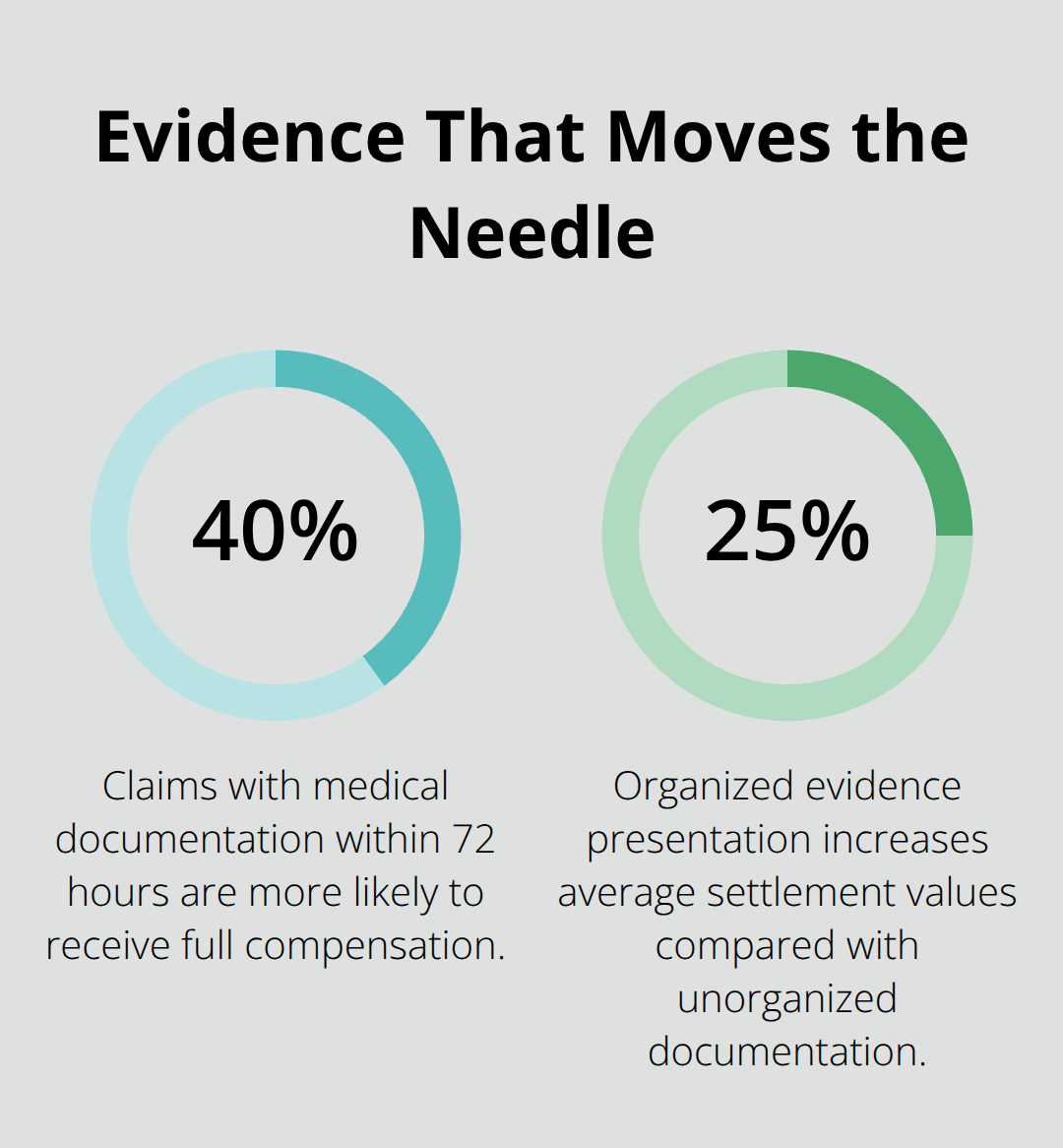
Medical records form the foundation of any credible injury claim, and they need to be comprehensive from day one. Don’t wait weeks to see a doctor and expect insurers to take your injuries seriously. The National Association of Insurance Commissioners reports that claims with medical documentation within 72 hours of injury are 40% more likely to receive full compensation. Get treated immediately, then obtain copies of every medical record-including emergency room reports, imaging results, lab work, and follow-up visit notes.
Request these records directly from healthcare providers rather than relying on memory or summaries.
Insurance adjusters scrutinize gaps between injury dates and first medical contact, interpreting delays as signs that injuries weren’t severe. Contemporaneous notes from your healthcare provider carry far more weight than statements made months later. This timing difference can shift settlement outcomes significantly.
Photographs and Video Capture What Words Cannot
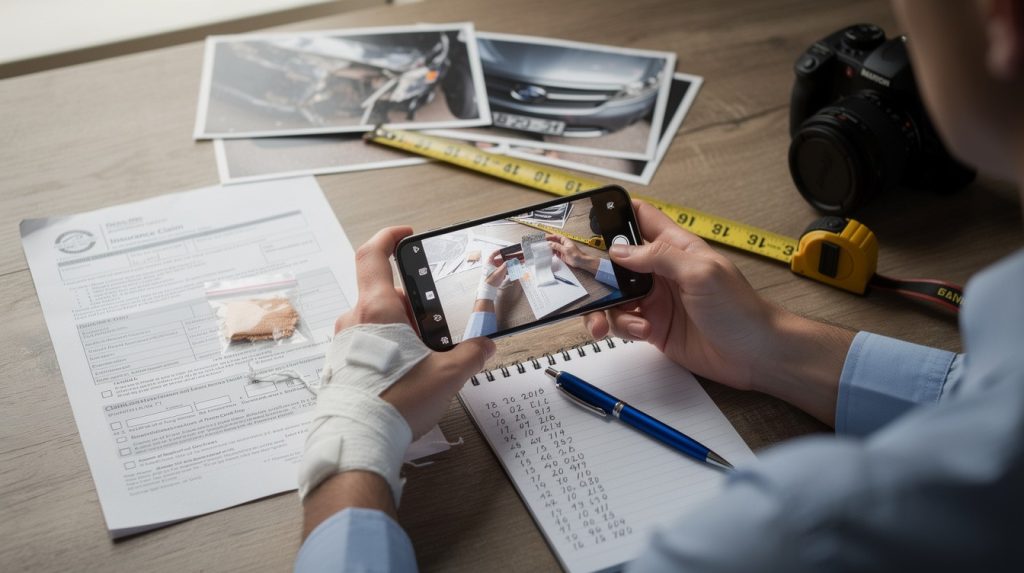
Photographs and video footage from the accident scene provide visual proof of conditions that contributed to your injury. Take multiple photos from different angles showing the hazard, environmental conditions, and any visible damage. If you’re injured on someone else’s property, capture images of poor lighting, broken equipment, wet surfaces, or inadequate warnings.
Video footage proves particularly valuable because it shows movement and context that still photos cannot convey. Motion reveals how quickly hazards develop or how inadequate warnings fail to protect people in real situations. Detailed investigations gather these materials along with accident reports and witness statements to establish liability.
Witness Statements Corroborate Your Account
Many people assume witness statements matter less than medical records, but they hold equal importance in Sacramento County injury cases. Collect full names, phone numbers, email addresses, and physical addresses from anyone who saw what happened. Ask witnesses to write down what they observed while details remain fresh, not weeks later when memory fades.
Their written account, signed and dated, becomes far more persuasive evidence than a verbal recollection offered during a deposition. Insurance companies recognize that witnesses who independently corroborate your account of events significantly strengthen your position during settlement negotiations. This independent verification shifts the balance in your favor when discussions turn to compensation amounts.
Acting Fast at the Injury Scene
Record Video Immediately
The first hour after an injury determines how strong your evidence foundation becomes. Most people freeze, feel overwhelmed, or focus solely on their pain rather than documentation. This instinct costs them thousands in settlements. If you’re physically able, start recording immediately. Use your phone to capture video of the hazardous condition, the surrounding area, and any visible injuries. Video footage from the scene carries more credibility than photographs because it shows the actual conditions without editing or staging.
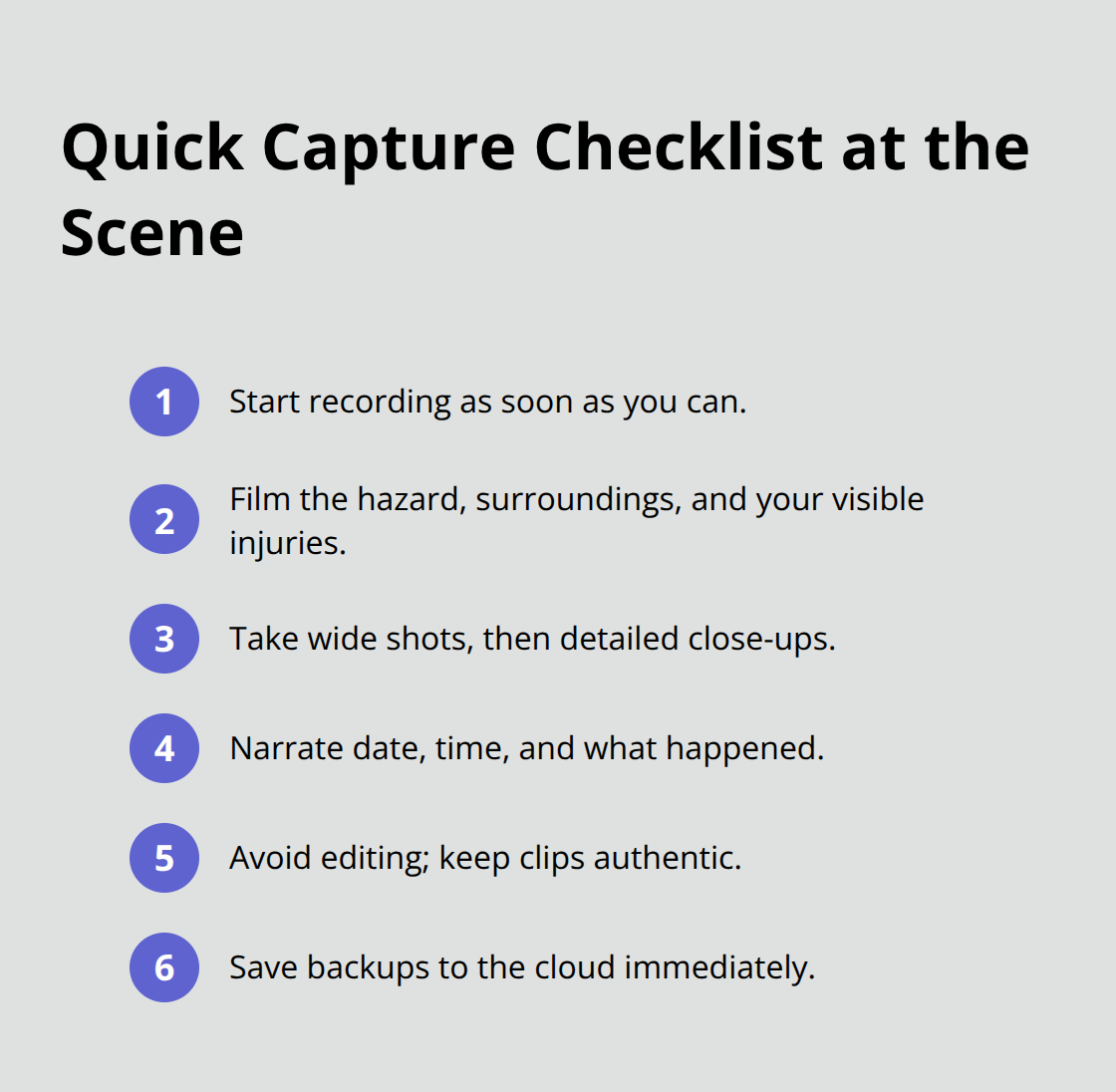
Take wide shots showing the overall environment, then close-ups of specific hazards. The American Journal of Public Health found that scene documentation within the first two hours of an incident results in significantly more detailed and accurate records than delayed documentation. Insurance adjusters care about content, not cinematography.
Collect Physical Evidence Before It Vanishes
Physical evidence deteriorates fast. Wet surfaces dry. Broken equipment gets removed or repaired. Debris gets cleaned up. If you’re at a business, management often clears accident scenes within hours to resume operations. Collect and photograph any physical objects related to your injury before they disappear. If you slipped on a wet floor, photograph the floor and note whether warning signs were posted. If a product failed, photograph the defect and take the product itself if possible.
Write down the exact time, date, and weather conditions. These details anchor your claim to specific circumstances that contributed to your injury. Environmental factors (lighting conditions, temperature, precipitation) often prove liability later during settlement discussions.
Gather Witness Information and Statements
Get the names and contact information of every witness present, not just one or two. Write down their relationship to the incident, what they saw, and their exact words about what happened. Ask them to write a brief statement and sign it. Many people forget details within days, so their contemporaneous written account becomes invaluable later.
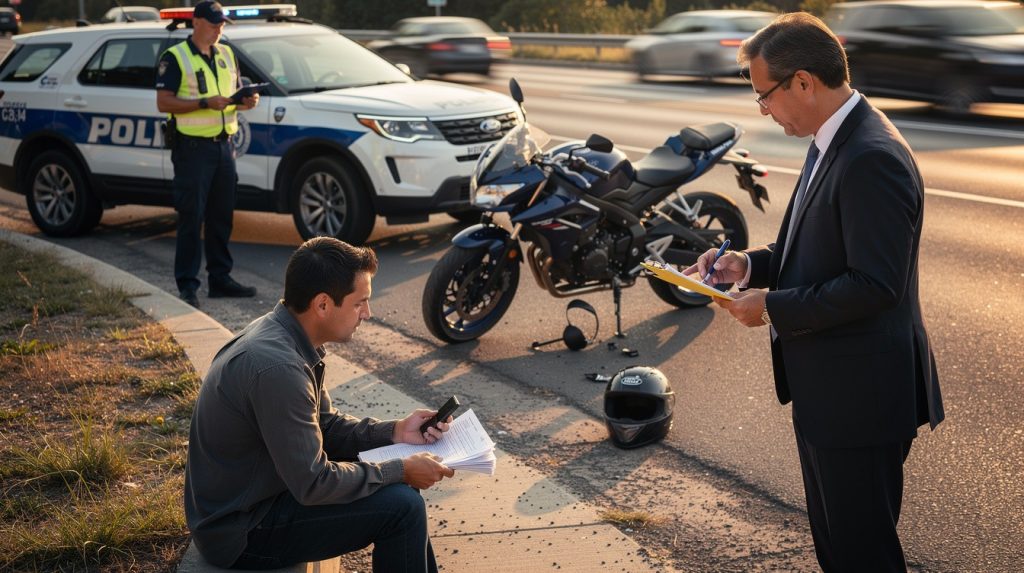
Document the name of any business involved, the manager on duty, and request an incident report. Take photographs of any signage, warnings, or safety equipment present at the location. If law enforcement responded, get the officer’s name and badge number and request the report number.
Organize Your Documentation
Medical attention should happen immediately, but while waiting for treatment or afterward, compile your scene documentation in one place. Store photos and videos in cloud storage, not just on your phone, so they can’t be lost if your device gets damaged or stolen. This organized collection of evidence (medical records, photographs, witness statements, and incident details) forms the foundation that we use to guide you through the claims process and coordinate with insurance companies on your behalf.
Building Your Case With Professional Evidence Support in Sacramento County
Why Professional Investigation Changes Settlement Outcomes
Once you collect initial scene documentation and medical records, the real work of building a strong claim starts. We at O’Brien & Zehnder Law Firm handle the evidence that individual claimants typically cannot access alone. Insurance companies employ investigators who examine accident scenes, interview witnesses independently, and reconstruct timelines. Without professional representation, you negotiate against their findings with only your personal documentation.
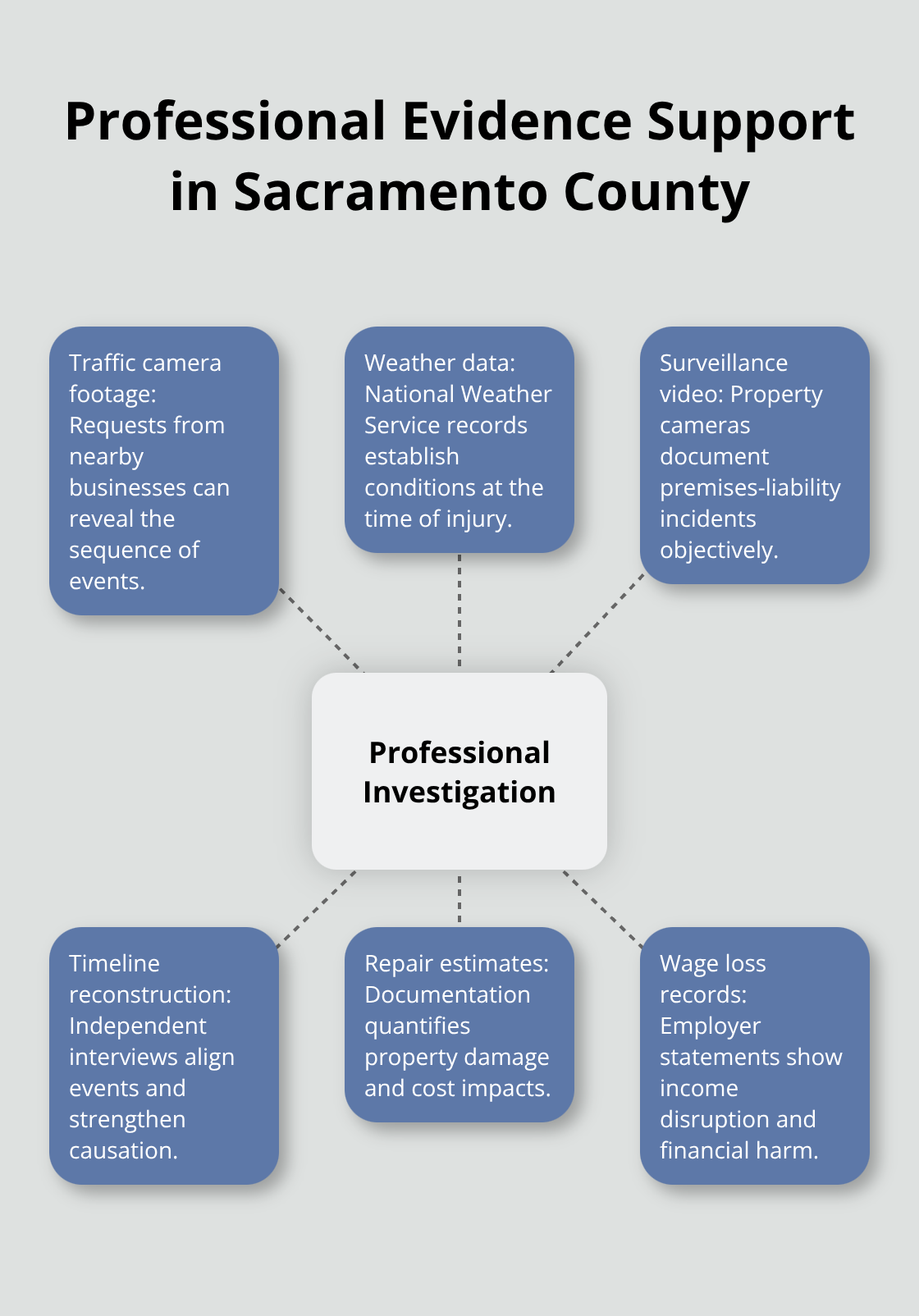
Professional investigators challenge insurer narratives and uncover evidence they may overlook. Our process includes obtaining traffic camera footage from nearby businesses, retrieving weather data from the National Weather Service to establish conditions at the time of your injury, and securing surveillance video from properties where premises-liability incidents occurred. These materials rarely surface without someone actively requesting them.
How Insurance Adjusters Evaluate Your Claim
Insurance adjusters know which claimants have legal representation and which don’t. Those without representation typically receive lower settlement offers because adjusters recognize the imbalance in investigative resources. The American Association for Justice reports that organized evidence presentation increases settlement values by an average of 25 percent compared to unorganized documentation.
We organize every piece of evidence into a narrative that establishes liability and damages clearly. Rather than presenting scattered documents, we create a chronological timeline showing how your injury occurred, what harm resulted, and why the responsible party bears accountability. This structured presentation shifts settlement discussions dramatically in your favor.
Building a Comprehensive Evidence Package
We coordinate with medical providers to obtain detailed causation statements linking your injuries directly to the incident. We request repair estimates and damage assessments that quantify property damage, and we compile wage loss documentation from employers showing income impact. Insurance companies respond to comprehensive, professionally assembled cases differently than to informal claim submissions.
When settlement negotiations begin, insurers face a choice between paying a reasonable offer or proceeding toward litigation where our organized evidence becomes trial-ready immediately. This positioning gives you genuine leverage rather than hoping the adjuster feels generous.
Final Thoughts
Evidence gathering for California injuries determines whether you receive fair compensation or accept a lowball settlement. The actions you take in the first hours after an injury-documenting the scene, collecting witness information, and seeking immediate medical care-establish the foundation that either strengthens or weakens your entire claim. Insurance adjusters recognize organized, comprehensive evidence immediately, and they adjust their settlement offers accordingly.
Early action matters because memories fade, physical evidence disappears, and witnesses become harder to locate. A photograph taken at the scene carries weight that a description offered weeks later cannot match. Medical records dated within 72 hours of injury signal to insurers that your injuries were genuine and serious, while witness statements collected while details remain fresh prove far more credible than recollections gathered during depositions months later.
The gap between what you can document alone and what professional investigators can access is substantial. Traffic camera footage, weather records, surveillance video, and repair estimates rarely surface without someone actively requesting them. We at O’Brien & Zehnder Law Firm handle this investigative work on your behalf, transforming scattered documentation into a compelling narrative that supports your claim-contact us today to schedule your consultation and take control of your injury claim.