Property owners in Sacramento County have a legal obligation to maintain safe premises. When they fail to do so, injured visitors may have grounds for California premises liability claims.
We at O’Brien & Zehnder Law Firm help people understand their rights after accidents on someone else’s property. This guide walks you through what these claims involve, how to build a strong case, and what steps to take next.
What Makes Property Owners Liable in Sacramento County
A premises liability claim in California rests on a straightforward principle: property owners must maintain reasonably safe conditions for visitors. California law recognizes three categories of visitors, and the level of care owed depends on which category applies. Invitees (such as customers at a store) receive the highest duty of care. Licensees (like social guests) receive a moderate duty of care.
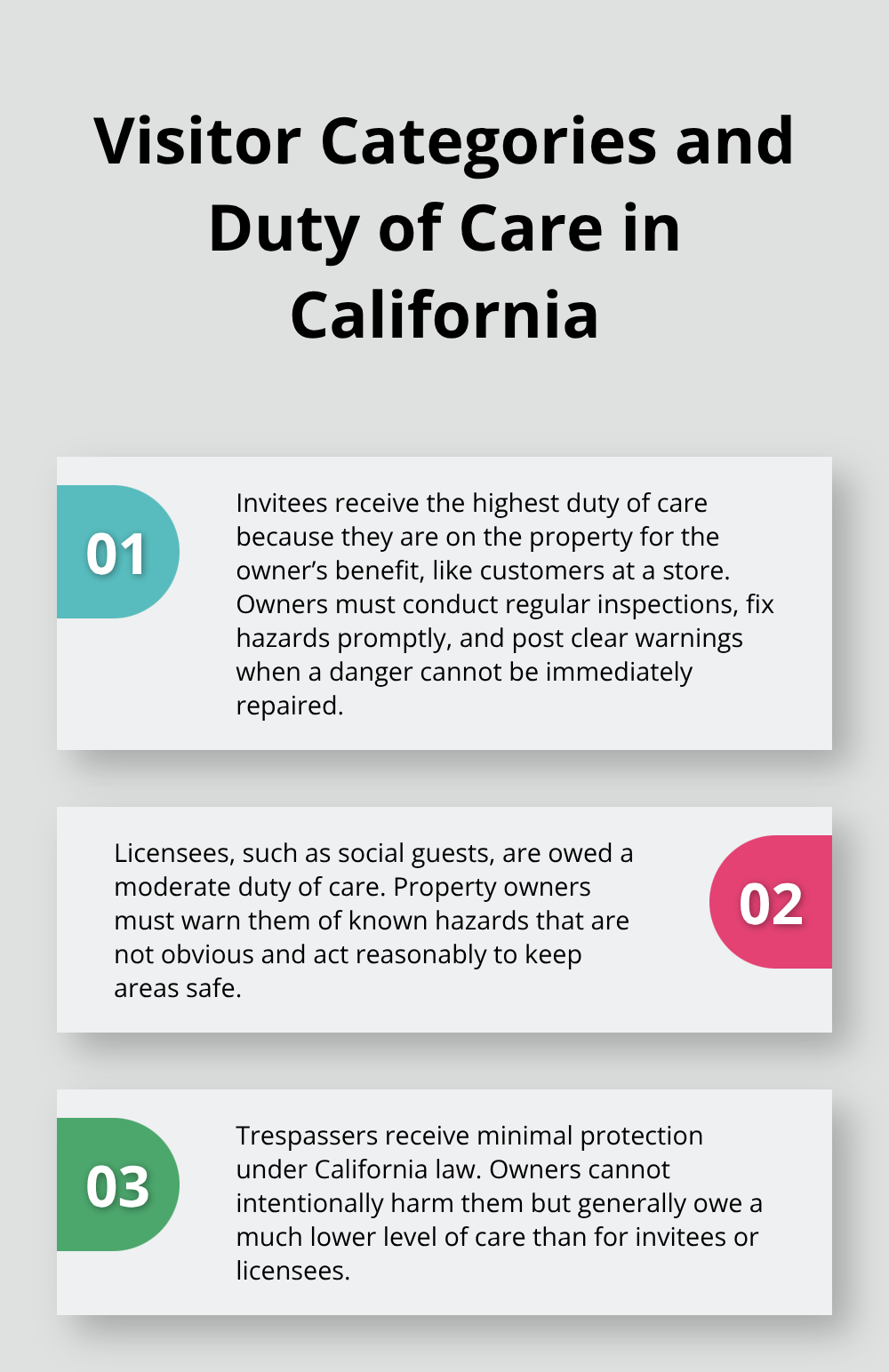
Trespassers receive minimal protection, though property owners still cannot intentionally harm them. The property owner’s responsibility includes conducting regular inspections, making prompt repairs of known hazards, and warning visitors of dangers that cannot be immediately fixed. If a hazard exists and the owner knew or should have known about it, liability can attach. This standard applies across Sacramento County properties, from retail establishments to apartment complexes to private residences.
Hazards That Create Legal Responsibility
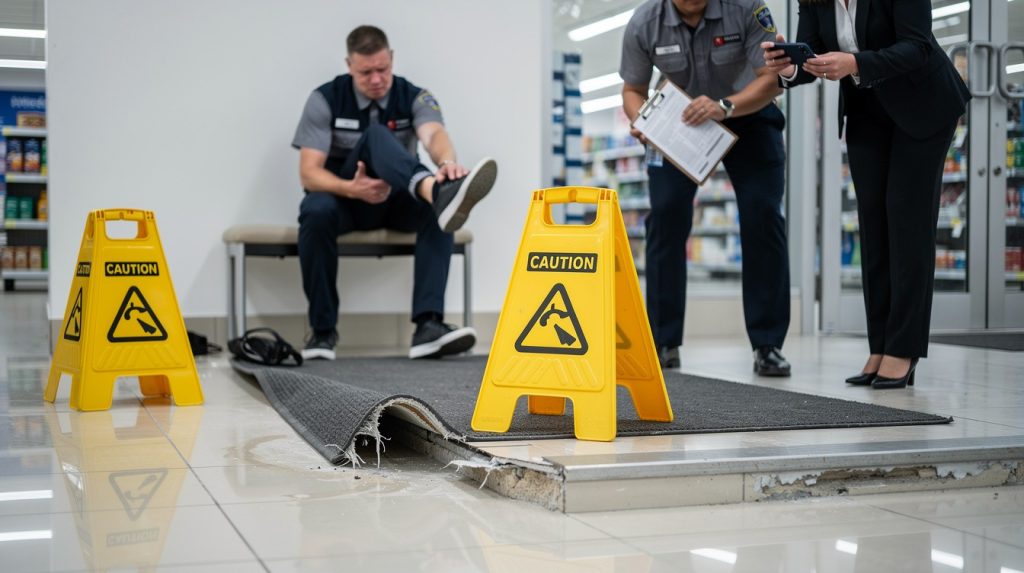
Wet floors, broken stairs, inadequate lighting, and debris in walkways represent the most common hazards that trigger liability claims. According to the National Floor Safety Institute, slips and falls account for over one million hospital visits annually in the United States, making them the leading cause of unintentional injury-related deaths for people aged 65 and older. Property owners must address these conditions promptly. A wet floor without warning signage, a loose handrail on stairs, or a pothole in a parking lot all create actionable hazards. Poor maintenance of common areas in apartment buildings frequently leads to claims. Inadequate security that allows criminal acts to occur on the property can also trigger liability, though this requires showing the owner knew of the risk. Unsafe conditions caused by weather (such as ice accumulation on walkways) must be addressed within a reasonable timeframe. Property owners cannot simply claim ignorance; they must conduct regular inspections to identify hazards before someone gets hurt.
Where Claims Most Often Arise
Retail stores, grocery markets, apartment complexes, and commercial office buildings generate the majority of premises liability claims in California. Retail environments pose particular risk because owners must maintain safe conditions for hundreds or thousands of visitors daily. Grocery stores face liability for produce displays, spilled items, and slippery floors. Apartment complexes frequently face claims related to stairwell maintenance, hallway conditions, and common area upkeep. Parking lots present hazards from potholes, inadequate lighting, and lack of security measures. Restaurants and bars deal with spilled beverages and food debris. Property owners in these locations must maintain documented inspection schedules and repair logs. The fact that a hazard existed does not automatically mean liability attaches; the owner must have had actual or constructive knowledge of the condition. Constructive knowledge means the hazard existed long enough that the owner should have discovered it through reasonable inspections.
Building Your Case After an Injury
Once you suffer an injury on someone else’s property, the steps you take immediately afterward significantly impact your claim’s strength. Gathering evidence at the scene, documenting your injuries, and identifying witnesses all matter when you later pursue compensation. The next section walks you through these critical actions and shows you how to preserve your rights throughout the process.
Building Your Sacramento County Premises Liability Case
Document the Scene Immediately
The moment you’re injured on someone else’s property, your actions determine whether you’ll have a winnable claim. Most people make critical mistakes in the first hours and days after an incident that undermine their case months later. Photograph everything at the scene before you leave-the hazard itself, surrounding areas, lighting conditions, and any warning signs that were or weren’t present. Take photos from multiple angles and distances. If you’re too injured to do this, ask someone with you to document conditions immediately.
Write down the exact date, time, and location while details are fresh. Note weather conditions, foot traffic volume, and how long the hazard likely existed. Don’t rely on memory; property owners will argue the hazard appeared moments before your fall, so contemporaneous documentation defeats that claim.
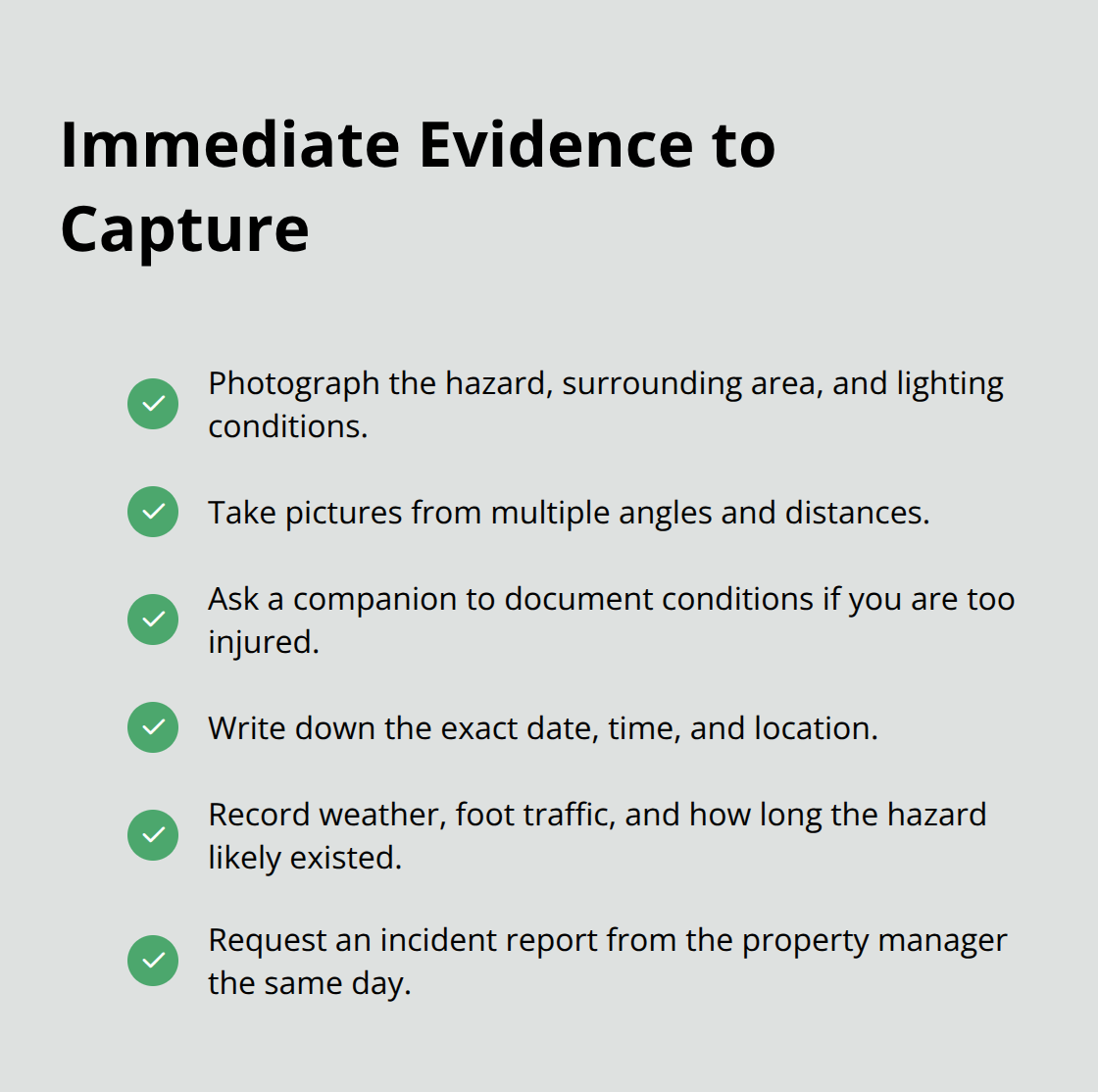
Request incident reports from the property manager or owner that same day. Many facilities maintain these reports, and California law may require them to preserve evidence once they know an injury occurred.
Gather Witness Information
Get the names and contact information of anyone who witnessed your fall or the hazardous condition. Witnesses provide invaluable testimony because they can confirm the hazard existed before your incident and that the owner had time to address it. Contact witnesses within 24 hours while their memories remain sharp. Ask them to write down what they saw and sign their statement. Property owners will later claim the hazard appeared moments before your injury, but witness accounts establish the timeline and contradict that defense.
Build Your Medical Record
Seek immediate medical attention even if injuries seem minor-emergency room or urgent care visits create official records that connect your injury directly to the incident. Photograph visible injuries, including bruises and cuts, over the following days as they evolve. Keep all medical bills, prescription receipts, and treatment notes in one folder. Document lost wages by obtaining statements from your employer showing dates you missed work. Request detailed medical records from your healthcare providers that specify the injury mechanism and how the fall or hazardous condition caused your specific injuries.
Preserve Physical Evidence
Preserve anything that touched the property during your fall-damaged clothing or shoes can show how the incident occurred. Insurance companies scrutinize claims, and liability claims take an average of 18 months to resolve. Your documentation must be meticulous because property owners will dispute both the hazard’s existence and whether it caused your injuries. The stronger your evidence, the faster claims typically settle.
What Happens Next
Once you’ve gathered this evidence, you’ll face decisions about reporting the incident to property management and navigating settlement discussions. The next section covers these critical steps and shows you how to protect your rights as your claim moves forward.
What to Do Immediately After an Injury on Someone Else’s Property
Report the Incident Promptly
You must report the incident to property management or the property owner within 24 hours, even if your injuries seem minor. Most property owners or managers will complete an incident report, and you want your account documented while details remain fresh. Request a copy of this report immediately and keep it with your evidence file. Do not downplay your injuries or suggest the incident was your fault during this conversation-property owners record these statements and use them against you later. Stick to factual details: where you were, what caused your fall, and that you were injured.
If management refuses to complete a report or claims they have no incident report form, write down the date and time you made the request and who you spoke with. This creates a record that you attempted to report the incident officially. California premises liability cases average 18 to 24 months from incident to settlement, according to data from the American Bar Association. The longer your case takes, the more critical your early documentation becomes.
Establish a Timeline of Knowledge
Property owners will argue that you failed to report the hazard promptly or that conditions changed between your incident and their inspection. Your incident report creates an official record that contradicts these defenses. If you reported a wet floor to a manager and they documented it, you’ve established they knew about the hazard. This knowledge is central to proving liability in Sacramento County premises liability claims.
Organize Your Documentation Before Negotiations
Preserve every document and photograph related to your incident before settlement negotiations begin. Insurance adjusters will request medical records, incident reports, photos, and witness statements-having these organized accelerates the process and prevents you from missing deadlines. Many property owners or their insurance companies request settlement discussions within 90 days of your injury, and you cannot negotiate effectively without complete documentation.
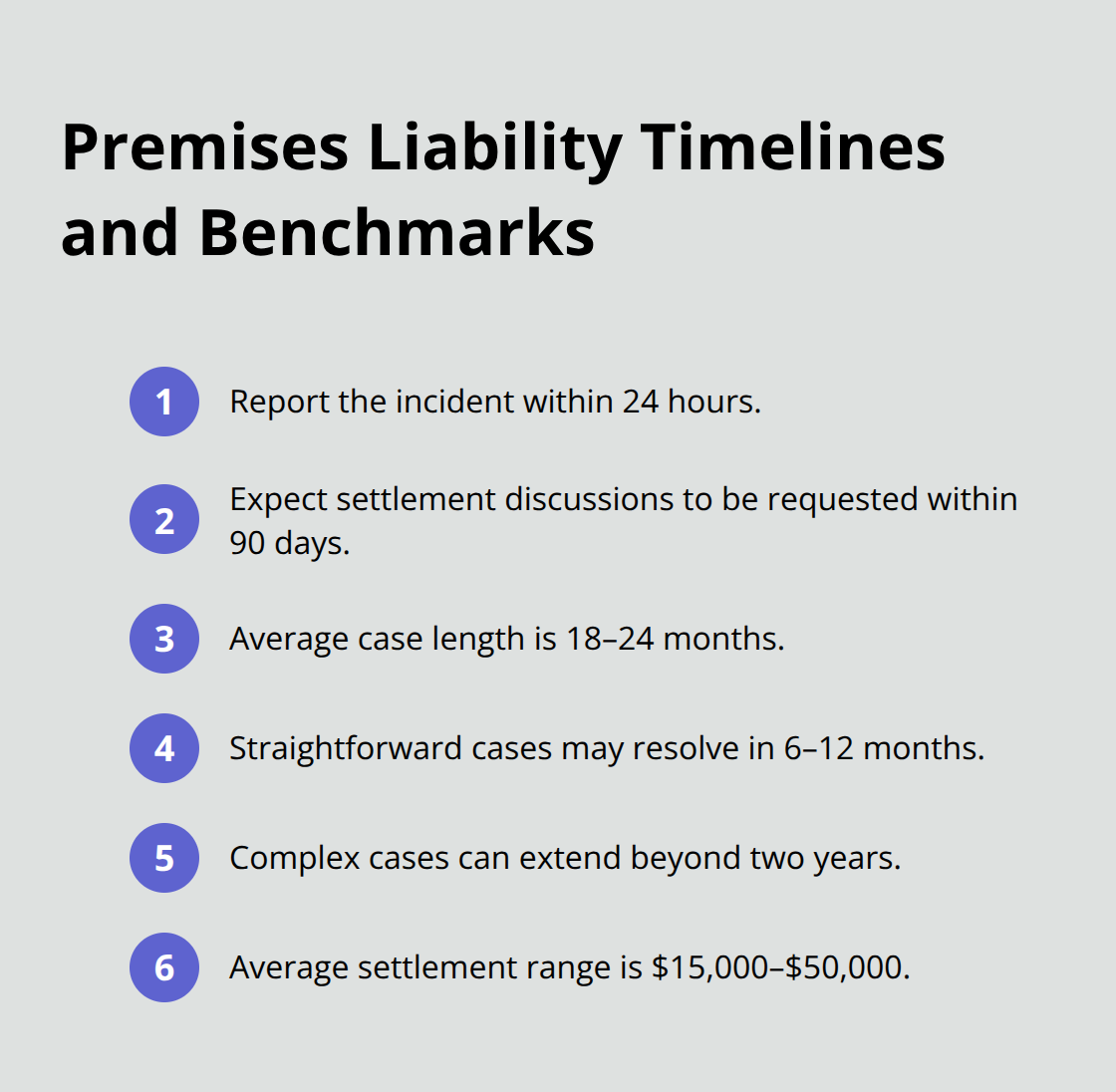
Photograph the hazard if you return to the property and conditions remain unchanged, as this shows the owner did nothing to address the danger. The Insurance Information Institute reports that the average premises liability settlement ranges from $15,000 to $50,000 depending on injury severity, though catastrophic injuries command significantly higher amounts.
Evaluate Settlement Offers Carefully
Do not accept the first settlement offer unless it covers all your medical expenses, lost wages, and pain and suffering. Property owners count on injured people accepting quick payouts without understanding their claim’s true value. Settlement timelines vary widely-straightforward cases with clear liability and documented injuries may resolve in 6 to 12 months, while complex cases involving multiple parties or disputed liability extend beyond two years. Having your claim reviewed before accepting any settlement protects your rights, as signing a release typically prevents you from pursuing additional compensation later.
Final Thoughts
Sacramento County premises liability claims succeed when you document everything immediately after an injury. The steps outlined in this guide-photographing the scene, gathering witness information, preserving medical records, and reporting the incident promptly-form the foundation of a strong case. Property owners will challenge your account and argue the hazard appeared moments before your fall, so your contemporaneous documentation defeats these defenses before they gain traction. Settlement offers typically arrive within 90 days, but accepting the first offer often means leaving compensation on the table.
The average premises liability settlement ranges from $15,000 to $50,000 depending on injury severity, yet many injured people accept far less because they lack proper documentation or understand their claim’s true value. Your organized evidence file becomes your negotiating tool, showing the property owner’s insurance company that you have a winnable case. California premises liability claims involve complex legal standards about what property owners knew or should have known about hazards on their property, and these standards vary depending on whether you were an invitee, licensee, or trespasser.
If you’ve been injured on someone else’s property and want your claim reviewed before accepting any settlement offer, contact us for a consultation. We at O’Brien & Zehnder Law Firm help Sacramento-area residents understand and pursue premises liability claims through the insurance and legal claims process.