A Sacramento auto crash claim can feel overwhelming when you’re dealing with injuries, vehicle damage, and insurance paperwork all at once. The path to fair compensation requires knowing exactly what steps to take and when to take them.
We at O’Brien & Zehnder Law Firm have helped countless accident victims navigate this process successfully. This guide walks you through each stage, from the accident scene to receiving your settlement.
Immediate Actions After a Sacramento Car Accident
Document the Scene with Photos and Video
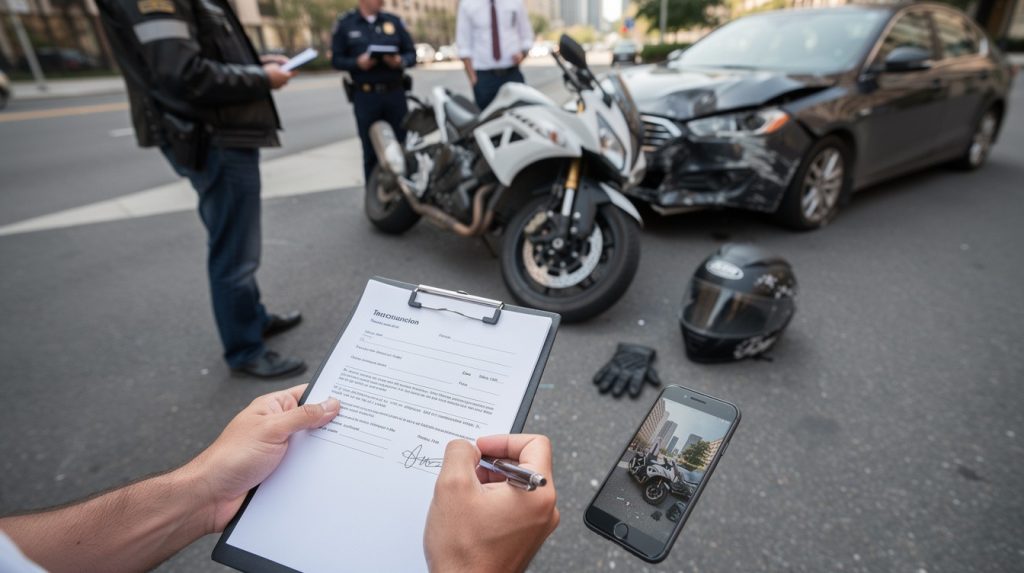
The first few minutes after a Sacramento car accident determine whether you’ll have strong evidence for your claim. Most people focus on safety and calling 911, which is correct, but they often miss critical documentation steps that insurance adjusters will later scrutinize. Your phone becomes your most valuable tool at the scene.
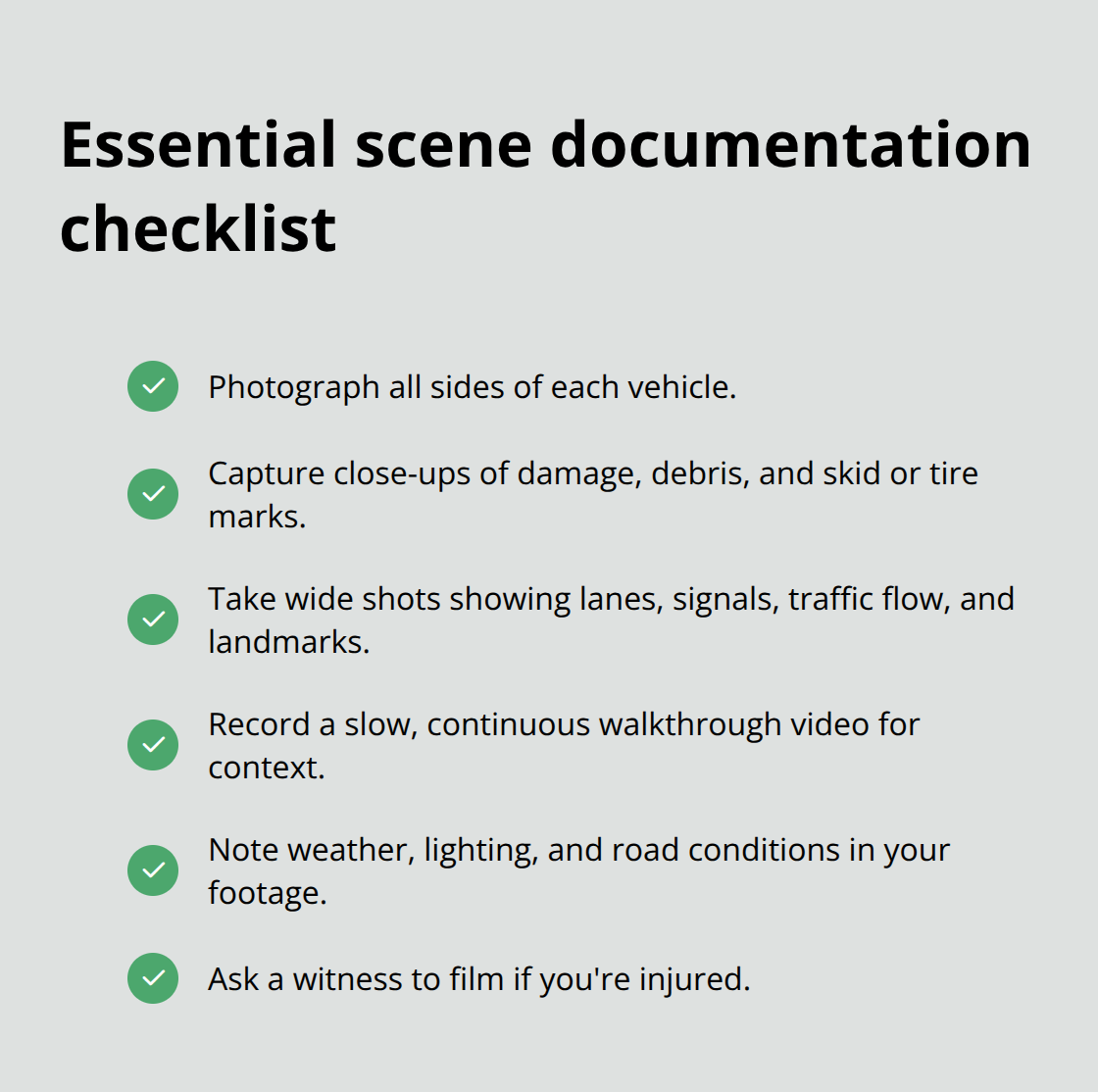
Photograph the vehicle damage from multiple angles, including close-ups of dents, broken glass, and tire marks. Take wide shots showing the accident location, road conditions, weather, and traffic signals or signs. Video footage proves even more powerful than still images because it captures context and movement. If you’re injured, have a witness record the scene while you receive medical attention.
According to the National Highway Traffic Safety Administration, dash cam and smartphone footage has become standard evidence in claims, and adjusters now expect visual documentation. Don’t rely on your memory or the other driver’s account of what happened. Police reports, while important, often contain errors or incomplete details because officers arrive after the fact and must rely on witness statements that may conflict.
Gather Contact Information from Other Parties and Witnesses
Photograph the other vehicle’s license plate, registration, and insurance card. Write down the driver’s full name, phone number, address, and driver’s license number. Get the same information from at least two independent witnesses (not passengers in either vehicle).
Ask witnesses for their contact information before they leave the scene, as tracking them down later becomes significantly harder. The Insurance Information Institute reports that claims with witness statements settle faster and for higher amounts because insurance adjusters view third-party accounts as more credible than either driver’s version.
Report the Accident to Local Police and Your Insurance Company
Report the accident to local Sacramento police immediately if there’s any injury or significant property damage. California law requires reporting within 24 hours if someone is injured. Get the police report number and the officer’s name and badge number.
Call your insurance company within the timeframe specified in your policy, typically within 24 to 72 hours. Provide factual information only, and don’t admit fault or speculate about what caused the accident. Many people inadvertently harm their claims by saying things like “I think the other driver ran a red light” or “I may not have seen them.” Insurance adjusters record these calls and use casual statements against you during settlement negotiations.
If you’re injured, seek medical attention even if you feel fine initially. Some injuries, particularly soft tissue damage and internal injuries, don’t appear immediately. Medical records create a documented timeline that directly links your injuries to the accident, which is essential for calculating damages. This documentation foundation positions you well as you move forward with understanding your insurance coverage and claim options.
Understanding Your Sacramento County Insurance Claim
Review Your Policy Coverage and Limits
Your insurance policy is a contract filled with specific coverage limits that most people don’t understand until they need to file a claim. California requires minimum liability coverage of 15,000 dollars per person and 30,000 dollars per accident, but this baseline coverage leaves you severely underprotected if you cause serious injuries. Many Sacramento drivers carry only these minimums, which means a single accident could wipe out their personal assets.
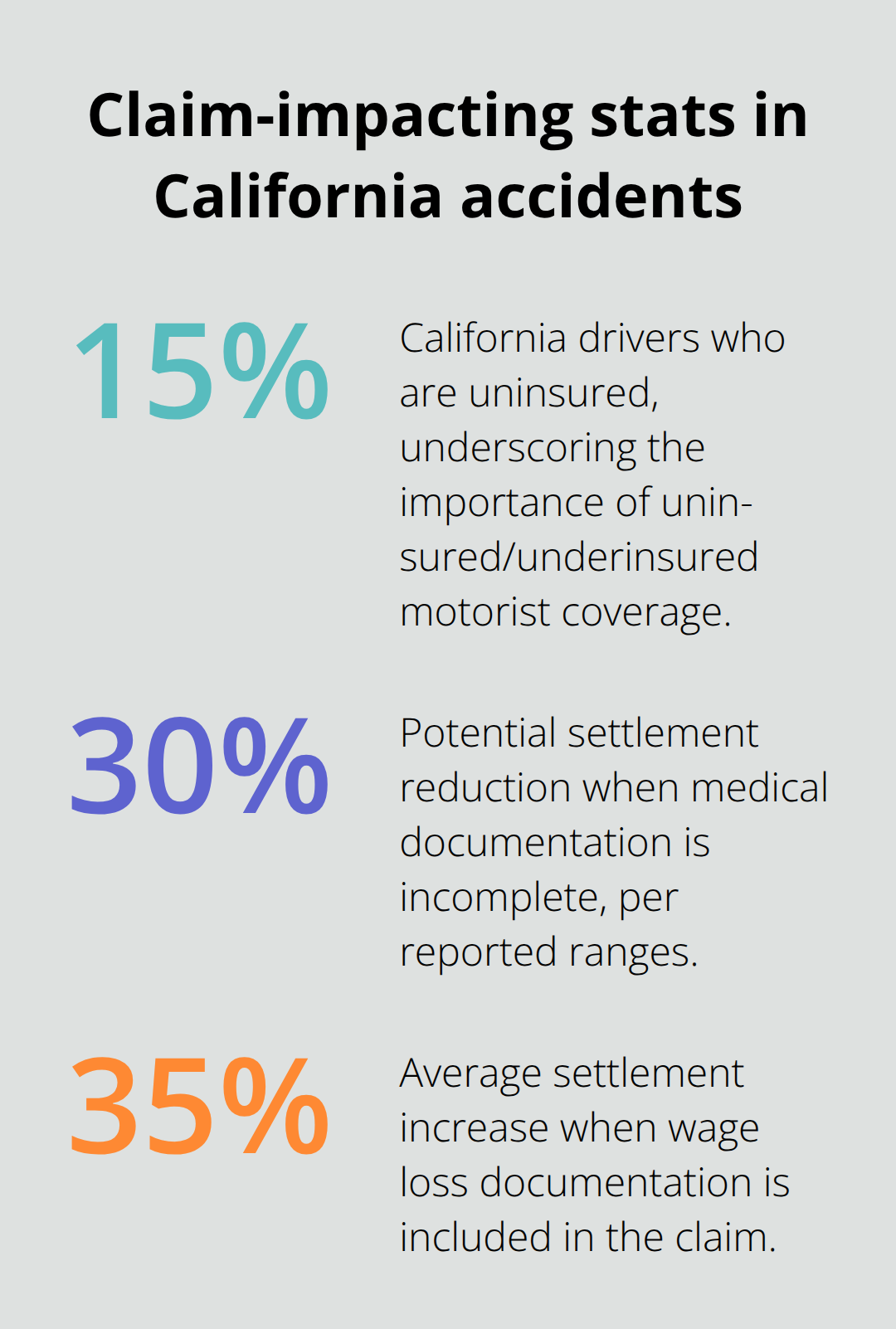
Collision coverage pays for damage to your vehicle regardless of fault, while comprehensive coverage handles theft, weather, and vandalism. Your policy also includes uninsured and underinsured motorist coverage, which protects you when the other driver lacks adequate insurance or carries no insurance at all. According to the California Department of Insurance, approximately 15 percent of drivers on California roads are uninsured, making this coverage critical for your financial protection.
Pull out your actual policy document right now and locate the declarations page, which lists your coverage types and limits in clear dollar amounts. Don’t rely on memory or assumptions about what you think you have.
Know the Difference Between Liability and Collision Coverage
Insurance adjusters exploit gaps between what people think they’re covered for and what their policy actually covers. Settlement negotiations hinge on this precise language, and adjusters count on you not knowing the difference between your policy limits and actual payouts.
If your policy has a 50,000 dollar liability limit but your medical bills and lost wages total 75,000 dollars, the adjuster will push hard to settle within that 50,000 dollar cap. Some policies include stacking provisions that allow you to combine coverage from multiple vehicles, while others strictly limit payouts to single-vehicle amounts.
Understand Settlement Negotiations with Insurance Adjusters
Deductibles also matter enormously, as a 1,000 dollar deductible on collision coverage means you pay that amount out of pocket before insurance covers the rest. When the adjuster presents a settlement offer, they’ll anchor their number to what benefits them most within your policy limits, not what fairly compensates your actual losses.
Document all your medical expenses, repair costs, and lost income from the accident scene forward-this documentation becomes non-negotiable when negotiating with the adjuster. Many accident victims accept inadequate settlements because they didn’t fully understand their coverage options or failed to properly calculate their total damages before negotiating. The next step involves collecting the specific documentation that transforms your claim from a rough estimate into a compelling financial case.
Building Your Documentation File
Collect Medical Records from All Providers
Your claim’s strength depends entirely on the completeness of your documentation file. Insurance adjusters review thousands of claims annually, and they immediately recognize which files contain thorough records and which ones lack critical evidence. Start collecting documents the moment you receive medical treatment, not weeks later when memories fade and paperwork gets lost. Medical providers generate records automatically, but you must request copies and organize them chronologically.
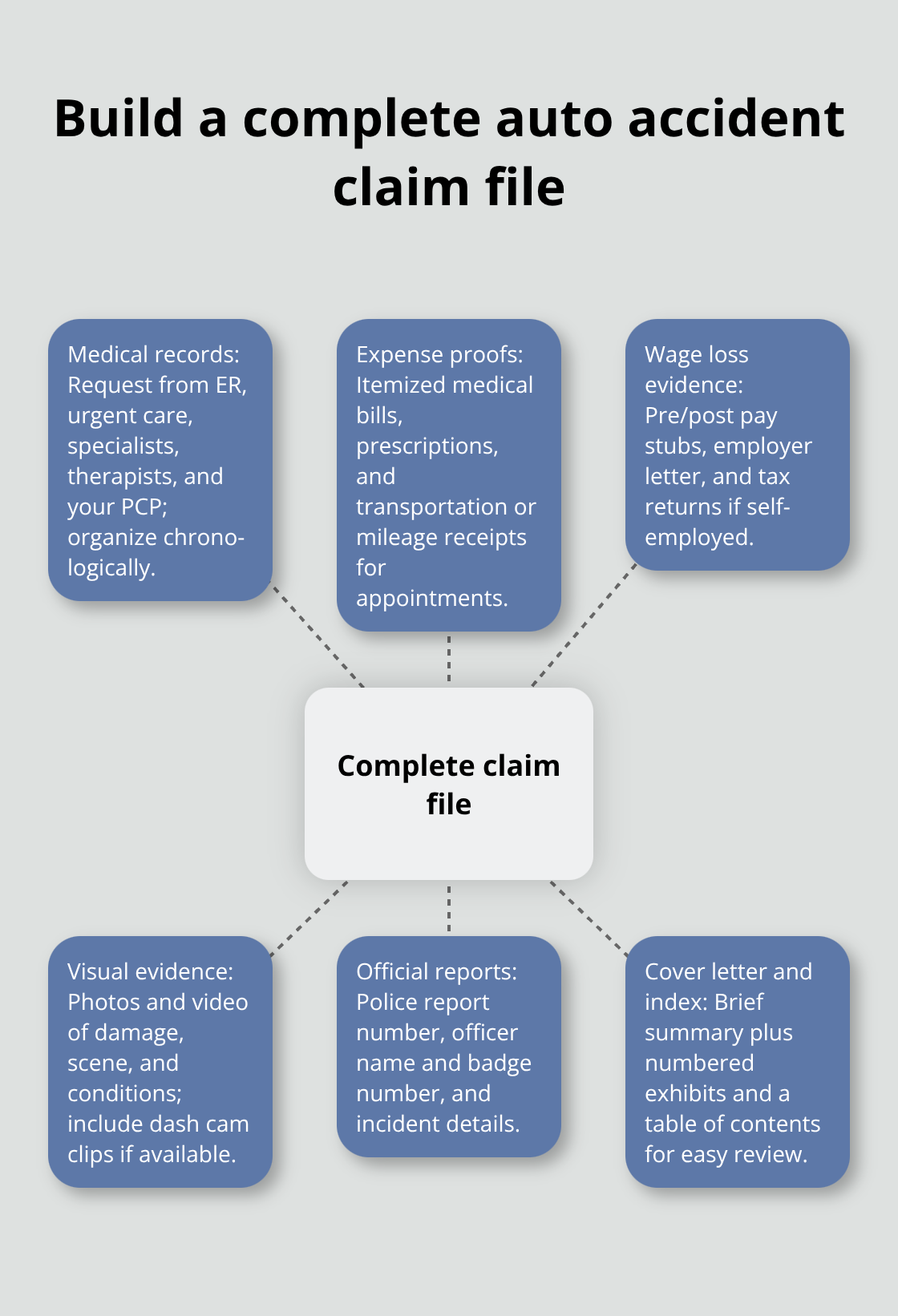
Request records from every healthcare provider who treated you, including emergency rooms, urgent care centers, physical therapists, and primary care physicians. The American Medical Association reports that incomplete medical documentation causes claim delays averaging 45 days and results in settlement reductions of 20 to 30 percent compared to fully documented claims. Create a spreadsheet listing each provider’s name, contact information, date of service, and the specific records you need.
Document All Expenses Related to Your Accident
Include itemized bills showing exactly what services were provided and what each one cost. Insurance adjusters scrutinize medical expenses heavily, so bills without clear service descriptions give them room to dispute charges. Photograph or scan every document you receive and maintain both digital and physical copies.
Keep all receipts related to the accident, including medication costs, transportation to appointments, and any equipment you purchased for recovery. Lost wages documentation requires pay stubs from before and after the accident, tax returns if you’re self-employed, and a signed letter from your employer confirming the dates you missed work and your hourly rate or salary. The National Association of Insurance Commissioners found that claims including wage loss documentation settle for an average of 35 percent higher amounts than claims without this information.
Calculate Your Total Damages Accurately
Calculate your total damages by adding medical expenses, vehicle repair or replacement costs, lost wages, and additional expenses like childcare needed during recovery or travel to medical appointments. Insurance adjusters will low-ball this calculation, so research comparable repair costs using multiple body shops or replacement vehicle values using Kelley Blue Book or NADA Guides.
Submit your complete claim package to the insurance company with a cover letter that briefly summarizes the accident and lists every enclosed document. Number your documents and create a table of contents so the adjuster can locate information quickly. Disorganized claims get assigned to junior adjusters who process them quickly with minimal attention, while organized claims receive thorough review from experienced adjusters who recognize legitimate damages.
Present Facts, Not Interpretations
Include a written statement describing the accident in your own words, focusing on facts rather than emotions or legal language. State the date, time, location, weather conditions, traffic conditions, and exactly what happened. Avoid phrases like the other driver was reckless or they clearly violated traffic laws. Instead, write the other driver ran the red light or the other driver’s vehicle crossed the center line into my lane (stick to observable facts that support your version of events).
Final Thoughts
The path from accident scene to fair settlement requires discipline and attention to detail at every stage. Documentation, policy understanding, and organized claim submission directly impact the compensation you receive. Insurance adjusters process claims faster and offer higher settlements when they encounter thorough, well-organized evidence rather than scattered paperwork and incomplete records.
Your Sacramento auto crash claim succeeds or fails based on the foundation you build immediately after the accident. The photos you take, the witness information you gather, and the medical records you collect become the building blocks of your financial recovery. Many accident victims leave thousands of dollars on the table simply because they didn’t understand their coverage limits or failed to calculate their damages accurately before negotiating with adjusters.
When your claim involves significant injuries, substantial medical expenses, or disputes about fault, legal representation becomes invaluable. Insurance companies employ adjusters trained to minimize payouts, and they count on injured people accepting inadequate settlements out of frustration or financial desperation. Contact O’Brien & Zehnder Law Firm for a consultation to discuss your specific situation and determine whether pursuing your claim independently or with legal support makes sense for your circumstances.