Auto accidents create immediate chaos and long-term consequences that most people aren’t prepared to handle. The decisions you make in the first hours and days after a crash directly impact your ability to recover fair compensation.
We at O’Brien & Zehnder Law Firm help Sacramento County residents navigate this process. A Sacramento crash claim attorney can guide you through each step, from documenting the scene to negotiating with insurance companies.
What to Do Right After Your Crash
Document the Scene Immediately
The first 30 minutes after an accident determine whether you’ll have strong evidence for your claim or face an uphill battle later. Most people focus on their injuries and vehicle damage, but insurance companies scrutinize what happened at the scene. Your phone becomes your most valuable tool immediately after impact.
Take photos of vehicle positions before anything moves, including skid marks, debris patterns, and road conditions. Photograph both vehicles from multiple angles, capturing license plates, damage severity, and the surrounding environment. If weather involvement exists-rain, fog, or darkness-photograph that too, since it affects liability assessment.
Videos work even better than photos because they establish sequence and context that still images miss. Walk around the accident area and film the intersection or road section to show sight lines, traffic signals, and any obstructions that contributed to the crash. Don’t rely on memory; document everything while details are fresh.
Collect Information Before People Leave
Collecting information from other parties and witnesses happens before people leave the scene, and this window closes fast. Get the other driver’s full name, phone number, address, driver’s license number, license plate number, vehicle identification number, and insurance company details. Don’t accept partial information or vague answers.
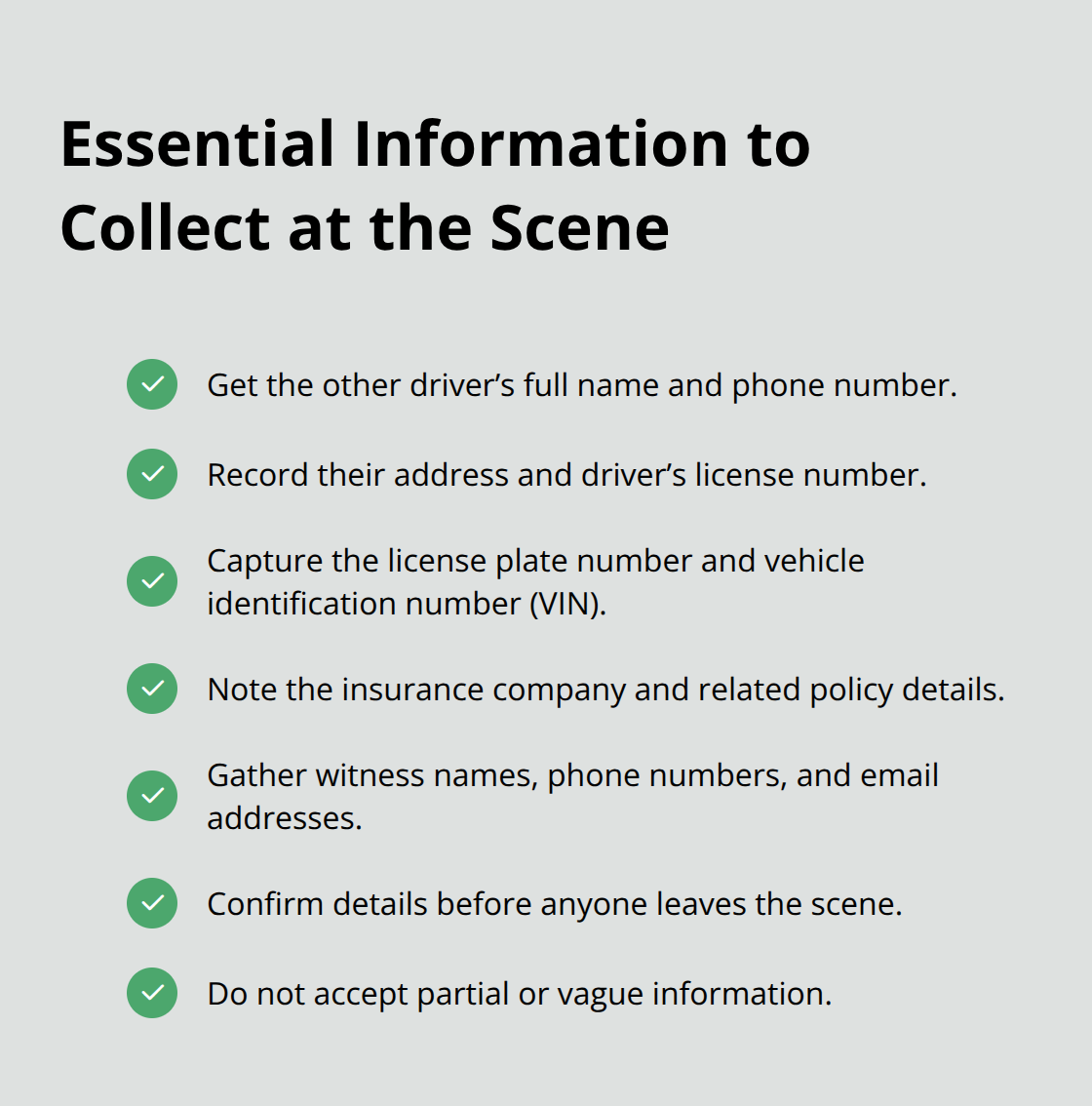
Ask witnesses for their names, phone numbers, and email addresses before they disappear-witness cooperation drops dramatically after 48 hours. If a business nearby has exterior cameras, note the business name and location so your attorney can request footage later.
File a Police Report
Call law enforcement to file an official report, which creates a neutral third-party record that insurance companies cannot dispute. The police report number becomes critical documentation for your claim.
When officers arrive, be factual about what happened but don’t speculate about fault or accept blame for anything. Stick to observable facts: speed, directions of travel, traffic signal status, and what you saw happen. Insurance adjusters and opposing counsel will use your words against you if you guess or admit fault prematurely.
The scene investigation ends when the last vehicle leaves. These immediate actions separate strong claims from weak ones-and they also establish the foundation that your attorney will need to navigate the insurance claim process that follows.
How to Handle Your Insurance Claim After an Accident
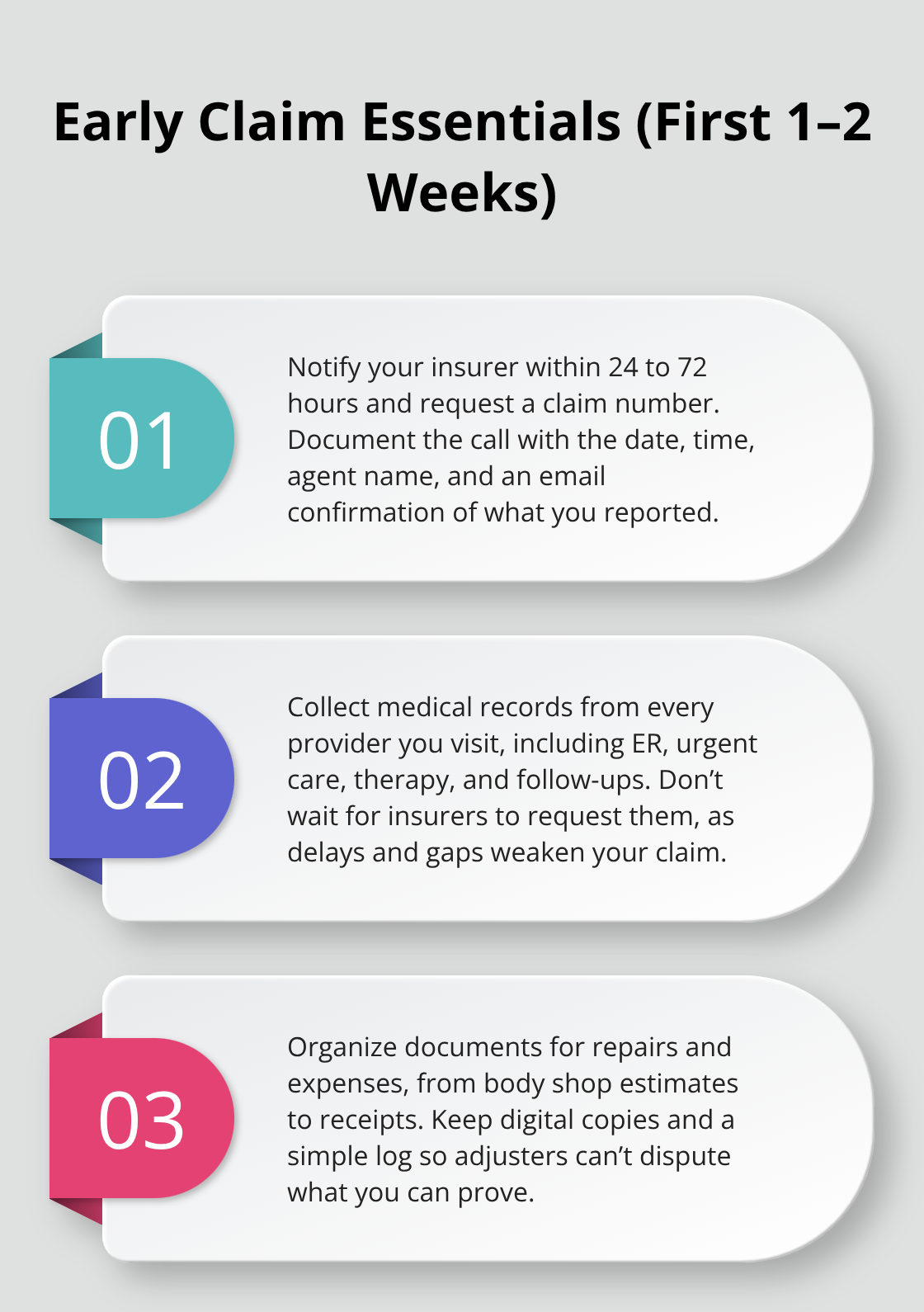
Your insurance company expects notification within 24 to 72 hours of the accident, though most policies require prompt reporting without specifying exact timing. The longer you wait, the more suspicious the claim appears to adjusters, and delays can give insurers grounds to deny coverage. Call your insurance agent immediately and have your policy number, accident date, time, location, and the other driver’s information ready. Document this conversation by noting the date, time, agent name, and what you reported. Insurance companies record these calls, but your own written record protects you if disputes arise later. Request a claim number and email confirmation of everything discussed during the call.
Gather Medical Records Immediately
Medical records form your foundation for injury claims, and you need to collect them aggressively within the first two weeks. Every healthcare provider you visit after the accident generates records that document your injuries and treatment-emergency room visits, urgent care visits, physical therapy sessions, and follow-up doctor appointments. Request these records directly from each provider rather than waiting for your insurance company to obtain them, since this process moves slowly and gaps in medical documentation hurt your claim.
Obtain Repair Estimates and Documentation
Repair estimates from body shops should be collected immediately as well; get at least two estimates if your vehicle damage exceeds $5,000, since this creates leverage during settlement negotiations. Take photos of your repair estimates and keep digital copies in a folder labeled by date. This documentation protects you when adjusters question repair costs or attempt to minimize damage assessments.
Track All Accident-Related Expenses
Accident-related expenses extend far beyond medical bills and vehicle repairs. Track rental car costs, rideshare expenses, prescription medications, medical equipment like braces or crutches, and even mileage to doctor appointments at the IRS rate of 21 cents per mile for 2024. Create a spreadsheet with date, description, amount, and receipt for every expense connected to the accident. Insurance adjusters scrutinize expense claims, so receipts matter more than your word.
Maintain a Complete Communication Record
Save all written communications with your insurance company-emails, text messages, claim portal messages-because these create a record of what was promised and what was delivered. Never rely on phone calls alone for important information; follow up every verbal conversation with an email summarizing what was discussed. This documentation becomes critical if your claim enters dispute or if you need legal representation to challenge an inadequate settlement offer. The stronger your paper trail, the harder it becomes for adjusters to deny legitimate expenses or minimize your claim value.
Why Insurance Companies Push Low Settlement Offers
How Profit Margins Drive Settlement Tactics
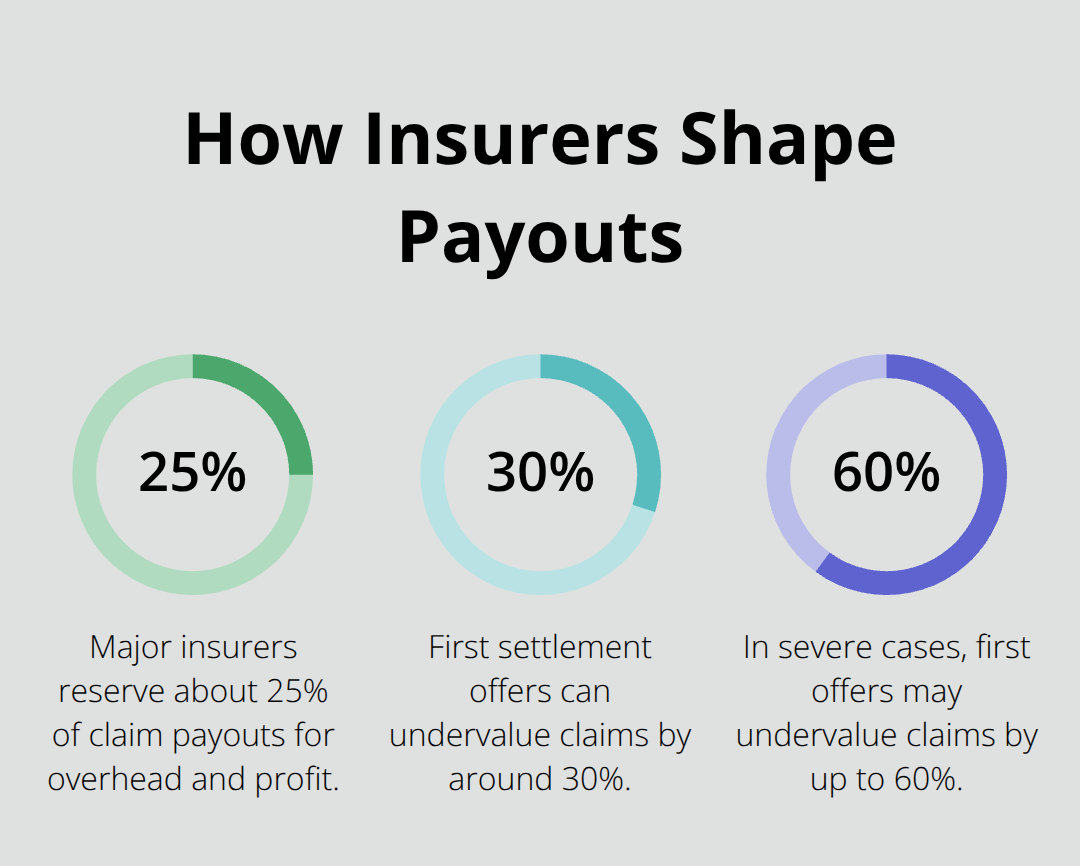
Insurance adjusters operate within profit margins that depend on paying claims below their actual value. The National Association of Insurance Commissioners reports that major insurers reserve approximately 25% of claim payouts for overhead and profit, which means your settlement directly affects their bottom line. Adjusters face internal quotas to close claims quickly and cheaply, and they exploit the fact that most accident victims lack documentation or legal guidance to challenge their offers.
An initial settlement offer rarely reflects your actual damages because adjusters calculate offers based on incomplete information and aggressive assumptions about your injuries and future costs.
Timing and Pressure Tactics
Insurance adjusters contact you within days of the accident when you’re still in pain and emotionally overwhelmed, offering quick settlements that seem reasonable at that moment but prove insufficient months later when medical bills continue arriving. They request recorded statements and ask leading questions that contradict your later medical evidence. They minimize your injuries by suggesting pre-existing conditions caused your symptoms, or they argue that your treatment was excessive compared to industry standards they invented. They delay responding to your documentation requests, hoping you’ll lose patience and accept their lowball offers.
Why Documentation Matters
Without legal representation, you negotiate alone against professionals trained in settlement psychology while managing recovery from your injuries simultaneously. People who lack proper documentation accept first offers that undervalue their claims by 30% to 60% because they don’t understand how insurance companies structure negotiations or what their claim is actually worth. An attorney handles all communication with adjusters, eliminating the pressure tactics that cloud your judgment and ensuring your claim reflects actual damages rather than what insurers think they can get away with paying.
Final Thoughts
The steps you take immediately after an accident determine whether your claim succeeds or fails. Documenting the scene with photos and videos, collecting contact information from witnesses, and filing a police report create the foundation that insurance adjusters cannot ignore. Notifying your insurance company promptly, gathering medical records within two weeks, and tracking every accident-related expense prevents adjusters from denying legitimate damages later.
Insurance adjusters contact you when you’re injured and overwhelmed, requesting recorded statements and offering quick settlements that undervalue your claim by 30% to 60%. They delay responding to documentation requests and manufacture arguments about pre-existing conditions or excessive treatment. Without legal representation, you negotiate alone against professionals trained in settlement psychology while managing recovery simultaneously.
A Sacramento crash claim attorney handles the negotiations that most people lose on their own. We at O’Brien & Zehnder Law Firm help Sacramento County residents pursue claims involving car, truck, motorcycle, and pedestrian incidents, guiding you through the insurance and legal claims process while handling all communication with adjusters. Contact O’Brien & Zehnder Law Firm for a consultation about your accident claim.