Vehicle accidents happen fast, but the decisions you make afterward shape your entire claim. At O’Brien & Zehnder Law Firm, we help Sacramento County residents navigate insurance disputes, liability questions, and courtroom battles.
This guide covers what to do immediately after an accident and how a Sacramento County vehicle attorney can protect your rights.
Types of Vehicle Accidents and Claims
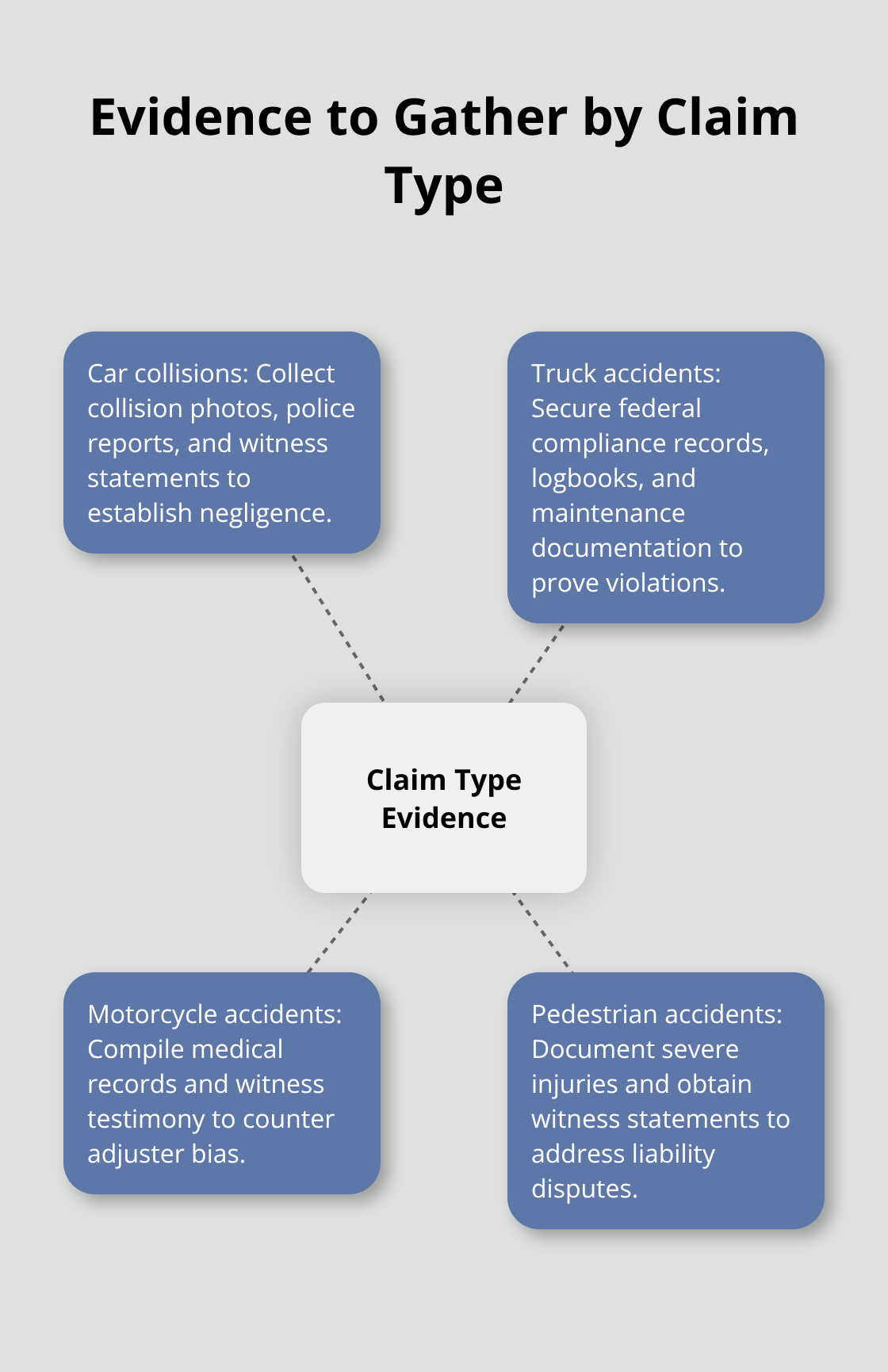
Sacramento County experiences roughly 25,000 vehicle accidents annually, according to California Highway Patrol data, and each type carries distinct claim complexities. Car collisions remain the most common, accounting for the majority of insurance claims in the region. These incidents range from rear-end collisions at traffic lights to multi-vehicle pile-ups on Highway 50, and liability often hinges on proving negligence through police reports, witness statements, and vehicle damage patterns. Insurance companies scrutinize these claims heavily because collision frequency means they’ve refined their denial tactics over decades. When you file a car accident claim, insurers will request medical records, repair estimates, and sometimes hire their own investigators to minimize payouts.
Truck Accidents Require Federal Compliance Evidence
Commercial vehicle incidents operate under federal trucking regulations, which means liability investigations become exponentially more complex. Truck operators must maintain logbooks, and federal rules cap driving hours at 11 consecutive hours per day according to the Federal Motor Carrier Safety Administration. When a truck driver violates these regulations and causes an accident, you have a strong foundation for a negligence claim. You’ll need to request the driver’s logbook, vehicle maintenance records, and employment history from the trucking company. These accidents frequently result in serious injuries because of the weight differential between commercial trucks and passenger vehicles. Trucking companies deploy aggressive defense strategies and carry substantial insurance policies, which means settlements can be significantly higher than standard car accident claims if you document violations properly.
Motorcycle Accidents Face Persistent Adjuster Bias
Motorcycle accidents present a persistent problem in Sacramento County insurance claims: bias against riders. Insurance adjusters often assume motorcyclists bear responsibility due to stereotypes about riding behavior, even when police reports contradict this assumption. Both claim types require meticulous documentation because witness accounts become your strongest evidence against these biases. Pedestrian accidents face similar prejudice, with adjusters questioning whether the pedestrian was jaywalking or distracted. Pedestrian injuries typically result in higher medical costs and permanent disabilities compared to vehicle occupant injuries, which means settlement values should reflect long-term care needs. Medical records documenting the severity of injuries matter more in these cases than in standard collision claims because adjusters use injury severity to justify lower offers.
Why Claim Type Determines Your Next Steps
The accident type you experienced shapes what evidence you’ll need to gather and what legal strategy works best. Car accident claims require collision documentation and witness statements. Truck accidents demand federal compliance records and logbook violations. Motorcycle and pedestrian claims need medical evidence and witness testimony to counter adjuster bias. Understanding these distinctions now helps you prepare stronger documentation before you contact an attorney.
The decisions you make in the hours and days following your accident directly impact your claim’s strength, regardless of which category your incident falls into.
What to Do Immediately After a Vehicle Accident
Photograph and Document the Scene
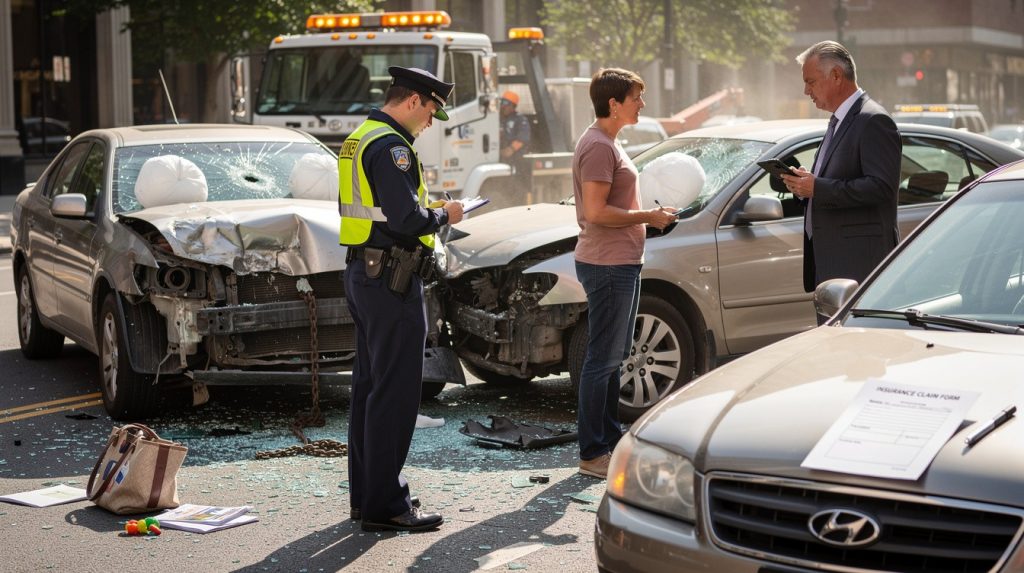
The first hour after an accident determines whether your claim succeeds or fails. Police officers in Sacramento County will arrive within minutes of a serious accident, and their report becomes the foundation document that insurance adjusters and judges reference. Before police arrive, photograph everything: vehicle damage from multiple angles, road conditions, traffic signals, skid marks, and the overall scene. Take at least 15 to 20 photos with your phone camera because adjusters scrutinize visual evidence heavily. Capture wide shots showing the accident location and close-ups showing specific damage points on both vehicles.
Collect Witness Information Immediately
Get the names, phone numbers, and addresses of at least two independent witnesses, not passengers in either vehicle. Ask them directly: What did you see happen? Write down their exact words. Insurance companies know that witness statements fade within days, so adjusters contact witnesses immediately after learning about a claim. If witnesses disappear, your claim weakens dramatically. Witnesses who provide written statements (even brief ones) carry more weight than verbal accounts because adjusters can reference them later in disputes.
Exchange Information Without Admitting Fault
Exchange information with the other driver, but do not admit fault or apologize for the accident. Insurance adjusters will use any statement you make against you later. Instead, stick to factual observations: I was traveling at the speed limit when the other vehicle entered my lane. Do not discuss your injuries at the scene because adjusters use minimization tactics, claiming you seemed fine immediately after the accident to justify lower settlement offers later. Keep conversations brief and factual.
Report to Insurance and Obtain Medical Records
Report the accident to your insurance company within 24 hours, not days or weeks. California law requires prompt notification, and delays give insurers grounds to deny your claim entirely. When you call, provide only facts: date, time, location, vehicles involved, and police report number. Do not speculate about liability or describe your injuries in detail during the initial call because insurance companies record these conversations. Request a claim number in writing via email so you have documentation of when you reported the accident.
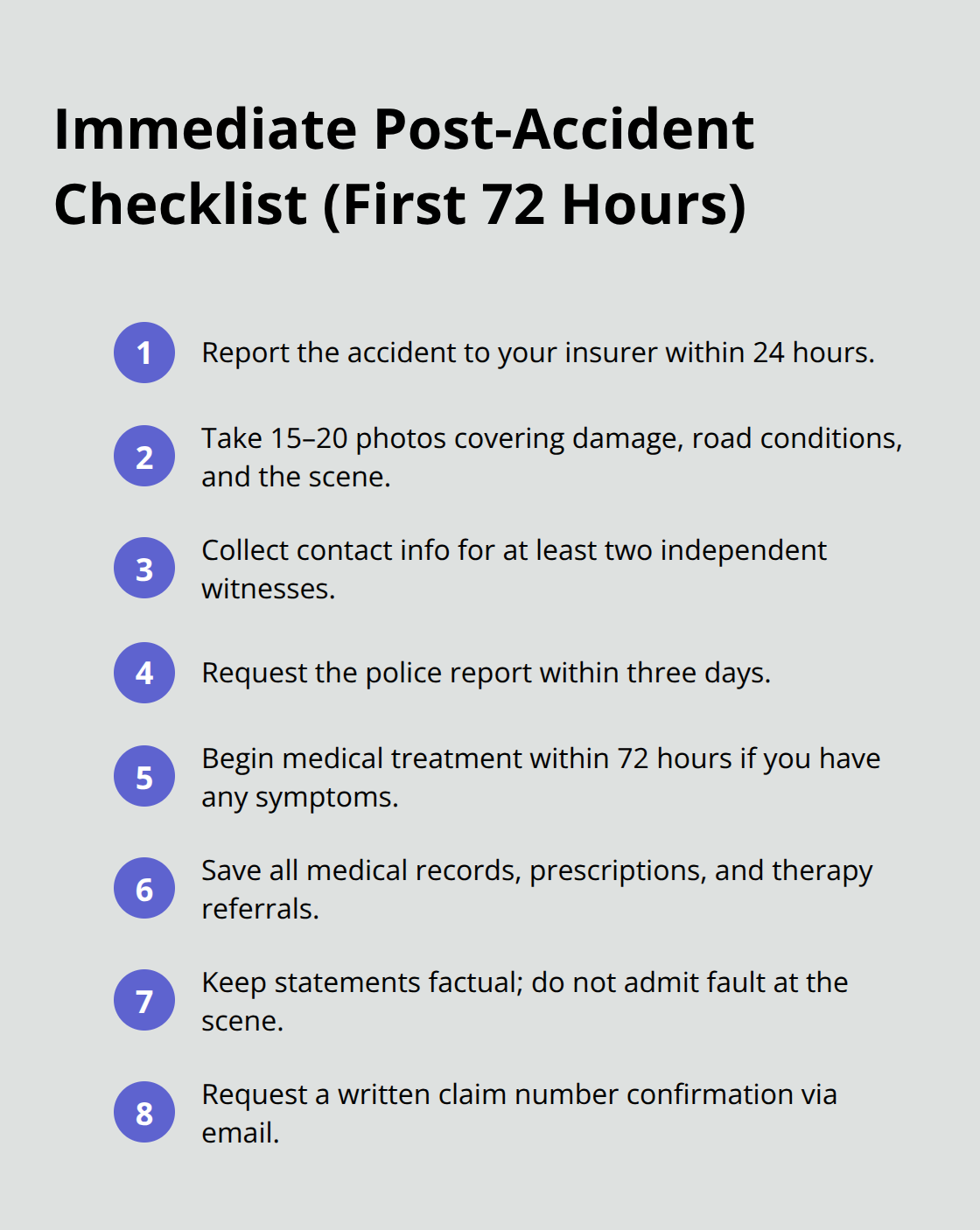
Obtain a copy of the police report from the Sacramento Police Department or California Highway Patrol within three days because report details shape how adjusters evaluate fault. Medical treatment must start within 72 hours of the accident if you experienced any pain, numbness, or visible injury. Insurance adjusters use treatment delays to argue your injuries were minor or unrelated to the accident. Document every medical visit, every prescription, and every treatment recommendation, even physical therapy or chiropractic care. These medical records prove causation between the accident and your injuries.
Understanding Your Legal Rights Requires Professional Guidance
The evidence you gather in these critical first days shapes settlement negotiations and potential courtroom outcomes. Insurance companies deploy trained adjusters who know how to minimize payouts, and they count on accident victims making documentation mistakes. Understanding what evidence matters most and how to present it strategically requires knowledge of California insurance law and local court procedures. This is where legal representation becomes valuable-an attorney can review your documentation, identify gaps, and guide you through the claims process before settlement discussions begin.
What a Sacramento County Vehicle Attorney Actually Does
How Attorneys Review and Strengthen Your Evidence
Insurance adjusters count on you making mistakes during settlement negotiations, and they’re trained to exploit documentation gaps you created in those first chaotic hours after your accident. An attorney reviews your evidence systematically, identifies what’s missing, and contacts witnesses or medical providers to fill those holes before negotiations start. This matters because adjusters make initial settlement offers based on incomplete information, and once you accept an offer, you forfeit the right to pursue additional compensation. A Sacramento-area personal injury attorney examines police reports for inconsistencies, cross-references medical records with injury timelines, and determines whether the adjuster’s liability assessment matches what evidence actually shows. Adjusters rely on speed to close claims cheaply, but an attorney slows that process down strategically, requesting additional documentation and asking questions that force adjusters to justify their offers with specific evidence rather than assumptions.
Negotiating Settlement Offers With Strategic Counteroffers
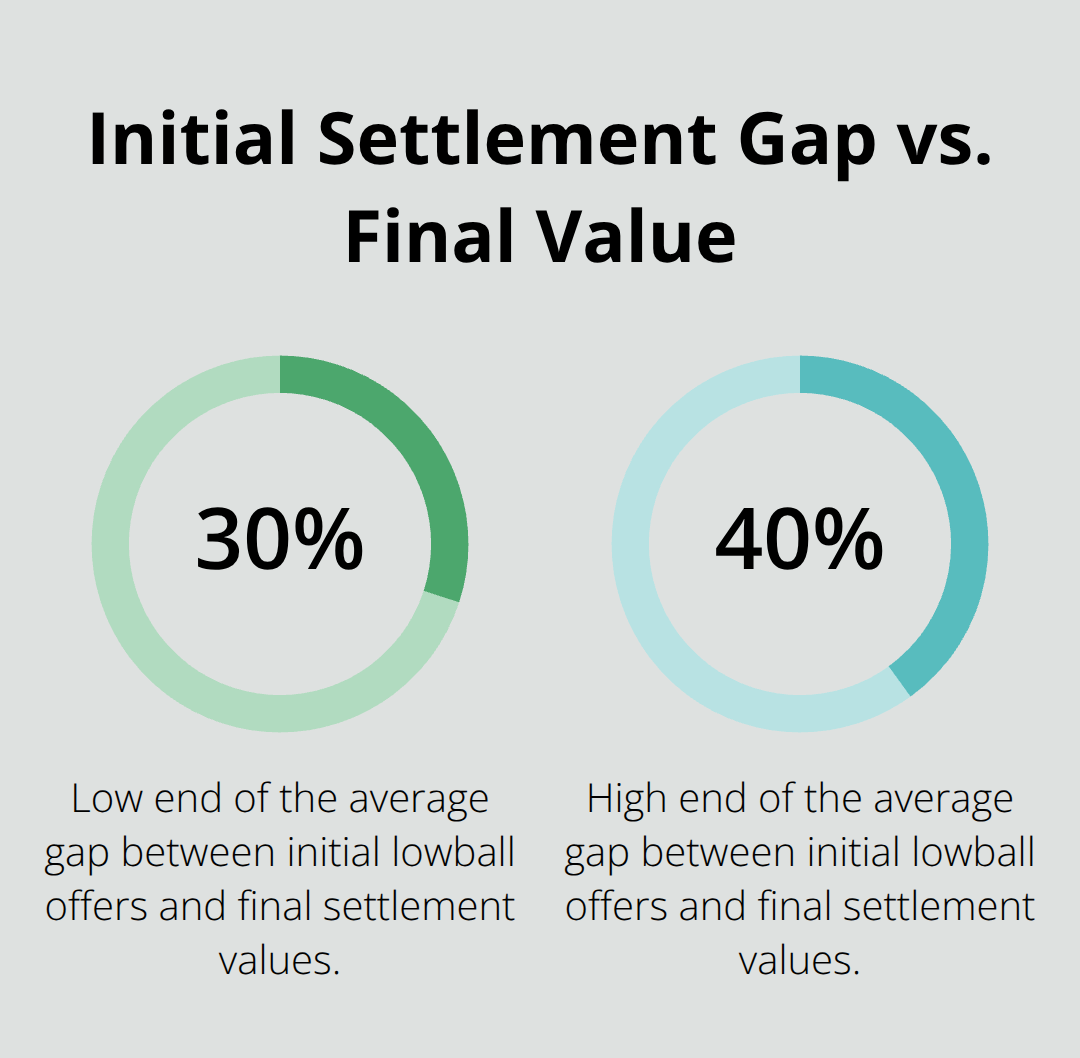
Settlement offers typically come in two phases: the initial lowball offer (which averages 30-40% below what claims ultimately settle for according to insurance industry data) and the negotiated settlement after back-and-forth communication. An attorney knows that responding to the first offer with a counteroffer backed by specific evidence shifts power in your favor. For truck accident claims, this means presenting federal logbook violations and maintenance records that prove negligence clearly.
For motorcycle or pedestrian cases, this means medical documentation showing permanent injury alongside witness statements that counter adjuster bias. Insurance companies often resist fair offers when they think you lack legal representation, but attorney involvement changes their calculation immediately.
Preparing Evidence for Court Representation
If the insurance company refuses to negotiate fairly, court representation becomes necessary, and this is where preparation matters enormously. Judges in Sacramento County Superior Court see vehicle accident cases regularly, and they expect both sides to present organized evidence with clear causation between negligence and injury. An attorney structures evidence presentation so judges understand liability and damages without confusion, and this organization often determines case outcomes more than the facts themselves. Medical records, witness statements, and accident scene photographs all require proper sequencing and explanation. A well-prepared case presentation demonstrates to the court that your injuries resulted directly from the defendant’s negligence, not from pre-existing conditions or unrelated factors.
Final Thoughts
Vehicle accident claims in Sacramento County follow a predictable pattern: initial chaos, documentation mistakes, lowball settlement offers, and acceptance of unfair compensation. Breaking this pattern requires understanding what evidence matters most and recognizing when insurance companies exploit gaps in your documentation or knowledge of California law. The decisions you make in the first hours after your accident determine whether you recover fair compensation or accept whatever the insurance adjuster offers.
Photographing the scene, collecting witness information, and obtaining medical records within 72 hours create the foundation for a strong claim, but documentation alone does not guarantee fair treatment. Insurance adjusters are trained to minimize payouts, and they count on accident victims lacking the knowledge to challenge their offers effectively. A Sacramento County vehicle attorney changes this dynamic by reviewing your evidence systematically, identifying what’s missing, and presenting a counteroffer backed by specific documentation rather than assumptions.
The gap between initial settlement offers and fair compensation averages 30-40% according to insurance industry data, which means legal representation often recovers far more than attorney fees cost. Contact O’Brien & Zehnder Law Firm for a consultation about your vehicle accident claim and let us guide you through settlement negotiations or courtroom representation.