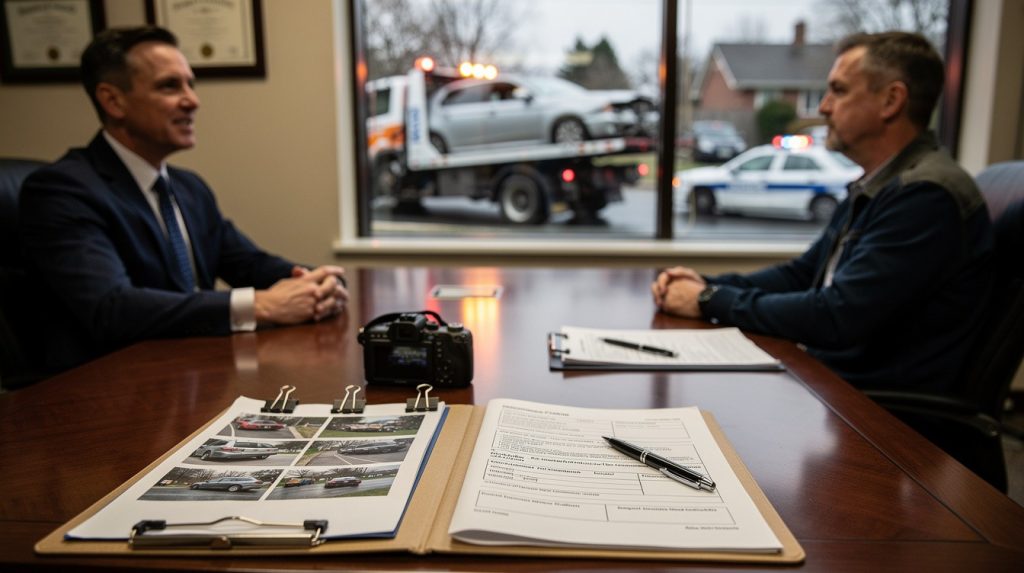

A personal injury in Sacramento County can turn your life upside down fast. Medical bills pile up, lost wages add stress, and you’re left wondering what your rights actually are.
We at O’Brien & Zehnder Law Firm know the California personal injury process inside and out. This guide walks you through each step-from proving your claim to avoiding costly mistakes that could tank your case.
Understanding California Personal Injury Law
What You Must Prove to Win a Personal Injury Case
California law requires you to establish four specific elements to recover compensation for a personal injury claim. First, the defendant owed you a legal duty of care-this is straightforward in most situations because property owners must maintain safe premises, drivers must follow traffic laws, and product manufacturers must design safe goods. Second, the defendant breached that duty through negligence or intentional misconduct. Third, that breach directly caused your injury. Fourth, you suffered measurable damages like medical expenses, lost income, or pain and suffering.

Courts apply these requirements consistently across Sacramento County under the California Code of Civil Procedure. Missing even one element means your claim fails, so you need to understand what you must prove before you file. Many people assume their injury alone guarantees compensation, but common mistakes trip up countless claims-you must show the defendant’s specific actions caused your specific harm, not just that both existed.
Damages You Can Recover
California recognizes two main categories of damages in personal injury cases. Economic damages cover quantifiable losses: medical bills, rehabilitation costs, lost wages, and future earning capacity if your injury prevents work. A Sacramento County resident earning $50,000 annually who misses six months of work has a clear $25,000 economic damage claim before medical expenses even factor in.
Non-economic damages compensate for pain, suffering, emotional distress, and loss of enjoyment of life-these lack receipts but carry real value. California courts allow substantial non-economic awards when injuries are severe; a permanent disability or disfigurement generates higher non-economic damages than a minor fracture. Punitive damages are available only in rare cases involving gross negligence or intentional harm, requiring proof that the defendant acted with deliberate disregard for safety. Most personal injury settlements in California combine economic and non-economic damages, with the ratio depending heavily on injury severity and medical evidence.
The Two-Year Deadline That Changes Everything
California’s statute of limitations gives you two years from the injury date to file a lawsuit, according to the California Code of Civil Procedure. This deadline applies to car accidents, slip-and-falls, dog bites, defective products, and wrongful death claims. If your injury occurred on June 1, 2026, you must file by June 1, 2028 or lose the right to sue permanently.
The clock starts on the injury date itself, not when you discovered the injury or its cause-this catches many people off guard. Filing an insurance claim does not extend this deadline, and settlements with insurance companies do not stop the clock either. Claims against government agencies follow different rules with much shorter deadlines (sometimes as little as six months), making speed critical in those situations. Minors receive special protection; the deadline typically does not begin until they turn eighteen, but this varies by claim type.
Acting quickly preserves evidence like medical records, witness memories, and surveillance footage that weakens over time. Delaying also reduces your negotiating leverage with insurance companies, who know you have limited time remaining and may offer less to pressure settlement. The sooner you take action, the stronger your position becomes as you move forward with your claim.
Building Your Evidence and Moving Forward With Your Claim
Capture Evidence Immediately After Your Injury
The moment after an injury occurs, most people focus on medical treatment while evidence preservation happens simultaneously. Sacramento County residents who photograph accident scenes, road conditions, or property hazards within hours capture details that fade from memory and disappear from the environment. Photos of vehicle damage, visible injuries, weather conditions, and hazards that contributed to your accident create a visual record that no description can replicate. In car crashes, document the final resting positions of vehicles, skid marks, and traffic signals. For slip-and-fall cases at businesses or rental properties, photograph the exact spot where you fell, including flooring conditions and any lack of warning signs. This visual documentation becomes invaluable when insurance adjusters or opposing counsel question what actually happened.
Build a Medical Record That Proves Your Injury
Medical records form the backbone of your claim’s credibility and value. Seek treatment immediately after your injury, even if pain seems minor or you feel pressured to move forward quickly. Emergency room visits create timestamped medical documentation that establishes causation between the incident and your injury. Subsequent visits to your primary care physician, specialists, and physical therapists build a chronological narrative showing treatment progression and ongoing impact. Insurance companies scrutinize gaps in medical treatment; if you wait weeks or months before seeing a doctor, adjusters assume your injury was not serious enough to warrant immediate attention. Keep detailed records of all medical expenses, prescription costs, and transportation to appointments. Maintain a personal injury journal documenting daily pain levels, activity limitations, and how your injury affects work performance and personal relationships-this written record supports non-economic damage claims that lack receipts but carry substantial value.
Collect Witness Statements and Surveillance Footage
Witness statements carry enormous weight because they come from neutral third parties rather than the injured person. Collect names, phone numbers, and email addresses from anyone who witnessed your accident or injury. Ask each witness to provide a brief written account of what they saw, signed and dated. Insurance companies weight eyewitness testimony heavily, and multiple consistent statements significantly strengthen your negotiating position. Obtain surveillance footage from nearby businesses, traffic cameras, or home security systems within days of the incident-footage retention policies vary widely, and waiting weeks means permanent loss. Police reports for car accidents create official documentation of fault determination and injury claims; request a copy from the Sacramento County Sheriff’s Office or local police department.

Gather receipts for all expenses related to your injury including medical bills, prescription medications, medical equipment, and transportation costs. These concrete financial records demonstrate economic damages that settlement offers must address.
Report Your Injury Strategically to Insurance Companies
Report the incident to your own insurance company first, as most policies require timely notice. Provide factual information about what happened without admitting fault or speculating about causes. Keep communication brief and stick to verifiable facts. When contacting the at-fault party’s insurance company, provide notice of your injury and intent to pursue a claim, but avoid detailed statements or recorded interviews without legal representation present. Insurance adjusters are trained to minimize claim values, and statements you make early can be used against you later. Document all communication with insurance companies by keeping copies of emails, letters, and notes summarizing phone conversations (including the date, time, and adjuster’s name). Do not accept settlement offers within the first few weeks of your injury-claims typically gain value as medical treatment continues and the full extent of injury becomes clear. Insurance companies count on injured people accepting quick lowball offers out of financial desperation.
Negotiate Your Settlement Based on Actual Claim Value
Settlement negotiations require understanding what your claim is actually worth. Economic damages are straightforward: add up medical expenses, lost wages, and other quantifiable losses. Non-economic damages depend on injury severity, age, occupation, and permanent impact on quality of life. A 35-year-old construction worker with a permanent back injury that ends his career has vastly higher non-economic damages than a 65-year-old office worker with a temporary ankle sprain. Insurance companies often use multipliers, calculating non-economic damages as two to four times your economic damages (though serious cases justify higher multiples). Research comparable settlements for similar injuries in Sacramento County to establish realistic expectations. Reject any settlement offer that fails to cover your documented medical expenses plus reasonable compensation for pain and suffering. Most settlements in California personal injury cases range from $3,000 to $75,000 depending on injury severity, with catastrophic injuries commanding substantially higher awards. The insurance company will make its best offer when it believes you are serious about litigation and have the evidence to back your claim. Understanding your claim’s true value positions you to move into the final stages of your case with confidence and clarity about what comes next.
What Mistakes Destroy Your Personal Injury Claim
Admissions of Fault at the Scene Cost You Compensation
The statements you make in the first hours after an injury often determine whether you win full compensation or lose your case entirely. Saying “I’m sorry,” “I didn’t see you,” or “It was my fault” creates a recorded admission that insurance companies use against you in settlement negotiations. Even partial admissions like “I should have been paying more attention” weaken your position because adjusters interpret these statements as acceptance of responsibility. Many Sacramento County residents do not realize that anything they say at the scene becomes evidence that insurance companies quote back to them months later when settlement discussions begin.
Insurance companies train their adjusters to document every word, and they will use your own statements to reduce what they owe you. The safest approach is to provide only factual information: what happened, who was involved, and basic details about injuries. Avoid speculation about fault, causation, or what you could have done differently. If police respond to the scene, they create an official report that documents the incident objectively without your emotional statements clouding the record.
Social Media Posts Provide Ammunition to Insurance Companies
Social media posts about your injury create a permanent digital record that persists indefinitely and causes more damage than scene admissions. Insurance companies routinely search social media profiles of injured claimants, and posts showing you at restaurants, traveling, or engaging in activities contradict claims that your injury prevents work or causes severe limitations. A Facebook photo of you at a Sacramento County park two weeks after a back injury claim can devastate your non-economic damages award, even if that single outing caused you significant pain.
Defense attorneys use social media content in litigation to argue that your injury impact is exaggerated or fabricated. Do not post about your injury, avoid tagging your location, and make your social media accounts private during the claims process. Reject the urge to vent about insurance companies, adjusters, or the accident itself online. These posts provide ammunition for the other side and give them insight into your strategy and emotional state. Insurance companies and their investigators find ways to access content regardless of privacy settings. Complete social media silence until your case resolves remains the safest strategy.
First Settlement Offers Exploit Your Vulnerability
Accepting the first settlement offer without independent review guarantees that you receive less than your claim is worth. Insurance companies structure their initial offers deliberately low, counting on injured people to accept quickly due to financial pressure and medical stress. Research on settlement behavior shows that most claimants who accept first offers receive 30 to 50 percent less than comparable claims ultimately recover through negotiation or litigation.

Your initial offer might be $15,000 when your documented medical expenses alone total $8,000 plus reasonable pain and suffering compensation that should total $25,000 or more. Insurance adjusters know you are desperate, injured, and uncertain about your rights, so they exploit that vulnerability with lowball numbers. Always request a detailed written explanation of how the insurance company calculated their offer, including their breakdown of economic and non-economic damages. Compare their figures to your actual expenses and research what similar injuries in Sacramento County typically settle for. Waiting at least 60 days after your injury before engaging settlement discussions allows your medical picture to become clearer and your leverage to increase as the statute of limitations deadline approaches.
Final Thoughts
The California personal injury process demands speed, documentation, and strategic thinking from the moment injury strikes. Sacramento County residents who act quickly to preserve evidence, maintain detailed medical records, and avoid costly mistakes recover full compensation. The two-year statute of limitations is not a suggestion-it is a hard deadline that erases your right to sue permanently if missed.
Insurance companies exploit injured people’s uncertainty and financial desperation, which is why understanding your claim’s actual value before accepting any settlement offer matters enormously. Admissions at the scene, social media posts, and accepting first offers without review cost thousands in lost compensation. Evidence deteriorates rapidly, and waiting weeks or months weakens your negotiating position with insurance companies who know your deadline approaches.
We at O’Brien & Zehnder Law Firm help Sacramento County residents navigate car accidents, truck collisions, motorcycle crashes, pedestrian injuries, premises liability, product defects, and dog bites through the insurance and legal claims process. Contact us for a free consultation to discuss your specific situation, and we will review your case and explain what your claim is actually worth.