
Motorcycle accidents happen fast, and the aftermath can feel overwhelming. We at O’Brien & Zehnder Law Firm know that understanding your motorcycle insurance claim guidance is the first step toward protecting yourself.
This guide walks you through coverage types, the claims process, and what affects your settlement amount.
What Coverage Do You Actually Need on Your Motorcycle
California’s Liability Coverage Minimums
California requires all motorcycle riders to carry liability coverage, and the state’s minimum is $15,000 for injury to one person, $30,000 for injury to multiple people, and $5,000 for property damage. These minimums sound adequate until you face a serious accident. A single hospitalization for severe road rash and broken bones can exceed $50,000 in medical costs alone, leaving you personally liable for anything above your policy limits. We recommend carrying at least $100,000 in liability coverage, which costs only slightly more than the state minimum but protects your assets if you cause significant injuries.
Collision and Comprehensive Coverage
Many riders ignore collision and comprehensive coverage because they assume their motorcycle is old or because they want to save on premiums, but this creates real financial risk. Collision coverage pays for damage to your bike after an accident regardless of fault, while comprehensive covers theft, weather, and vandalism. If you financed or leased your motorcycle, your lender requires both. Even if you own it outright, a single accident can total your bike, and replacement costs for even mid-range motorcycles run $8,000 to $15,000 or more.
Uninsured and Underinsured Motorist Protection
Uninsured and underinsured motorist coverage protects you when the other driver has no insurance or insufficient coverage, which happens frequently on Sacramento County roads. According to the National Association of Insurance Commissioners, roughly one in eight drivers nationally carries no insurance, and in some regions that number climbs higher. This coverage pays your medical bills and property damage when an uninsured or underinsured driver hits you, and it operates independently of your liability coverage. Without it, you absorb the full cost of injuries and repairs yourself, even though the accident was not your fault. California law does not require this coverage, but skipping it leaves you exposed to catastrophic financial loss.
Understanding your coverage options sets the foundation for what happens next-when you actually file a claim and navigate the settlement process.
Filing and Settling Your Motorcycle Claim in Sacramento County
Contact Your Insurer Immediately
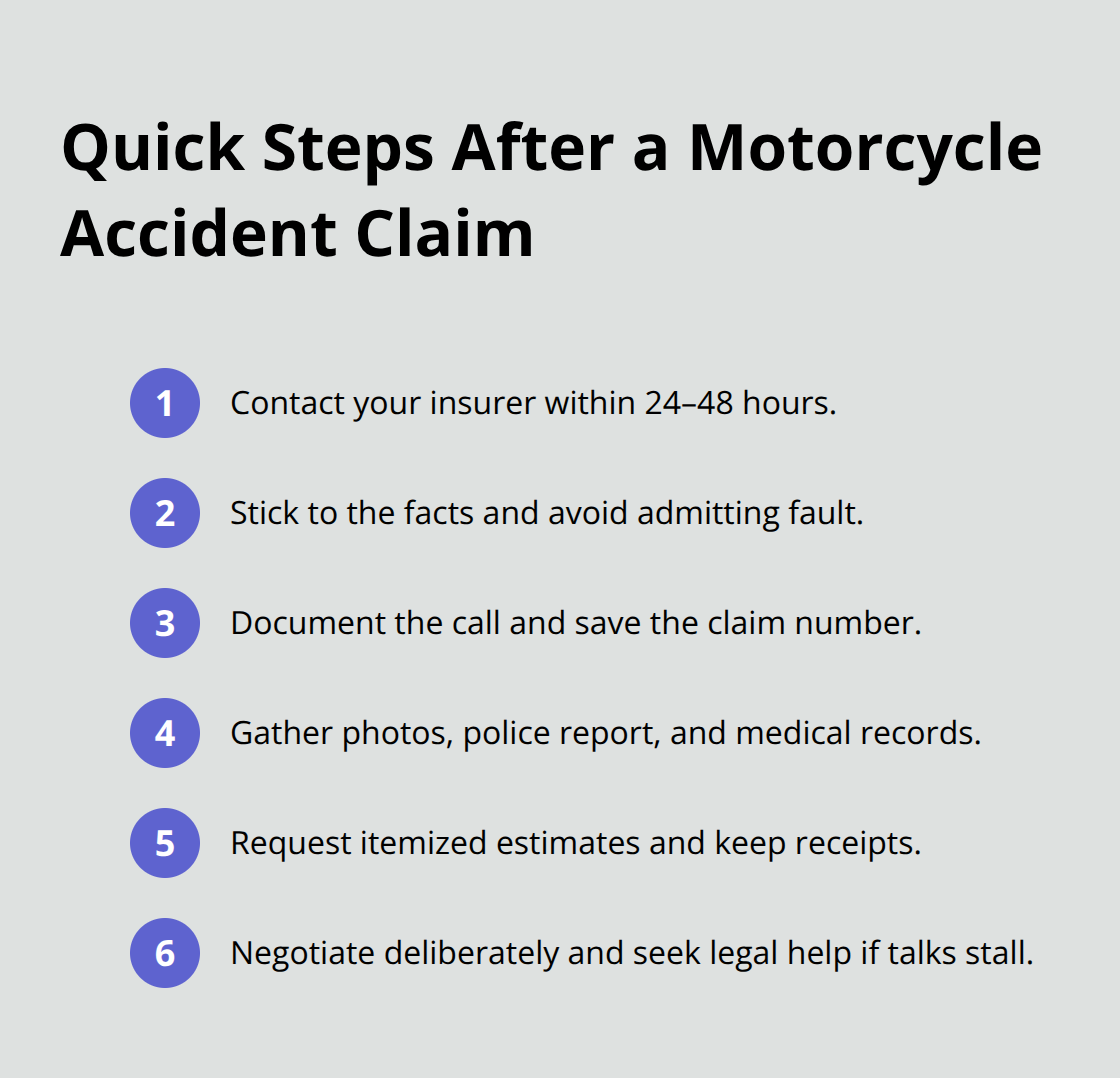
After a motorcycle accident, contact your insurance company within 24 to 48 hours, even if you’re unsure about fault. Most policies require prompt notification, and delays can give insurers grounds to deny your claim. When you call, stick to the facts: date, time, location, and a basic description of what happened. Do not admit fault or speculate about injuries. Write down the name and claim number of the person you speak with, then follow up with written documentation through your insurer’s online portal or email. This creates a paper trail that protects you later if disputes arise about what you said during that initial call.
Collect Evidence That Strengthens Your Claim
Evidence gathered immediately after the accident determines how much your settlement will be. Photograph your damaged motorcycle from multiple angles, the accident scene, road conditions, traffic signals, and any visible injuries. Collect the other driver’s insurance information, driver’s license, and vehicle registration-not just their word about coverage. Request a copy of the police report once filed, which typically carries significant weight with insurance adjusters. Medical records prove the connection between the accident and your treatment, even for injuries that seem minor; road rash, concussions, and soft tissue damage often worsen over days or weeks. Keep receipts for all accident-related expenses including emergency room visits, medications, physical therapy, and rental transportation while your bike is repaired. Insurers scrutinize claims without this documentation and often offer lower settlements when medical evidence is sparse or delayed.
Negotiate Beyond the Initial Offer
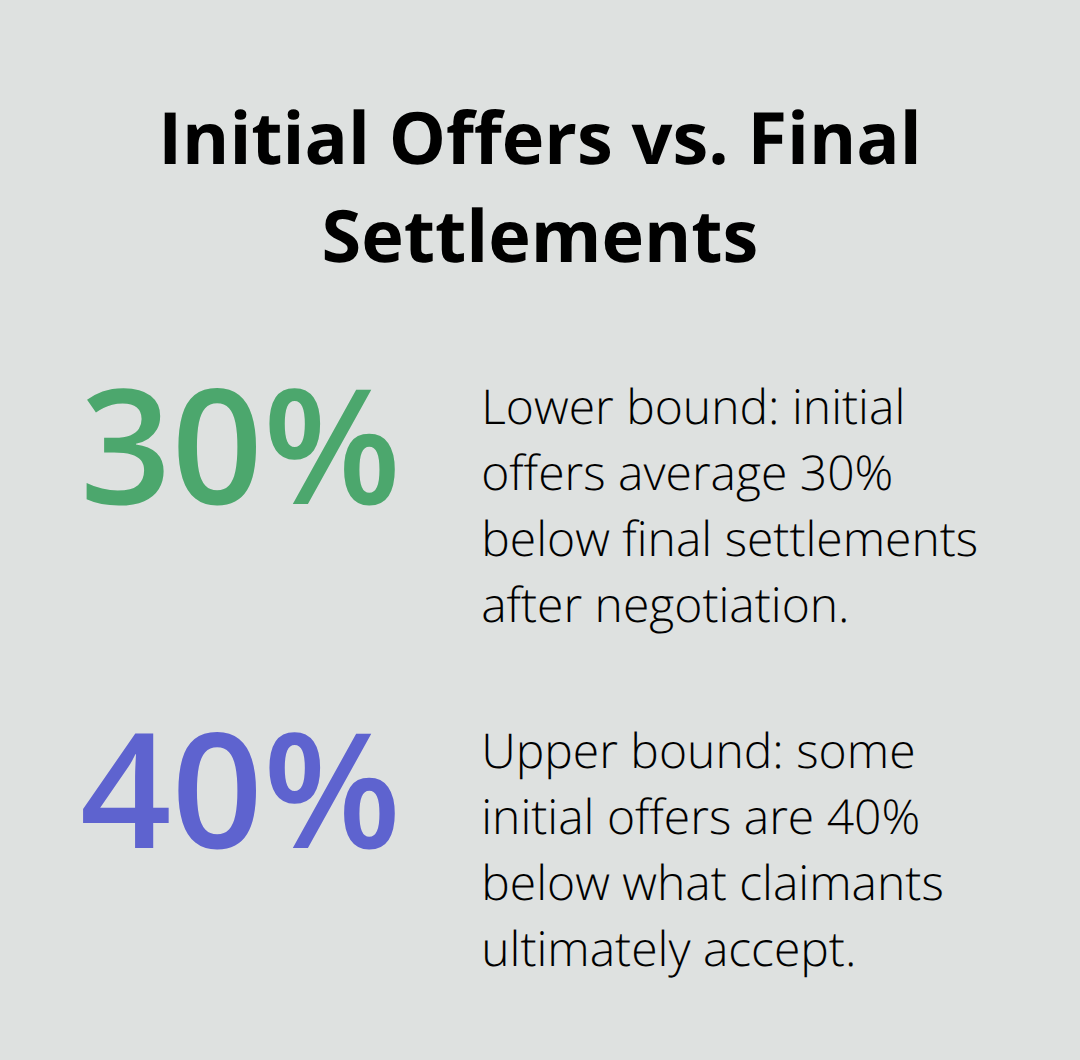
The insurance company’s first offer is rarely their final number. According to the National Association of Insurance Commissioners, initial settlement offers average 30 to 40 percent below what claimants ultimately accept after negotiation. Request an itemized breakdown of how the adjuster calculated your offer-medical expenses, lost wages, property damage, and pain and suffering should all appear separately.
If the offer seems low, provide written counter-documentation including updated medical bills, wage loss statements from your employer, and repair estimates from independent shops, not just the insurer’s preferred vendors. Some insurers deliberately undervalue motorcycle damage because they assume riders won’t push back. Do not accept an offer under pressure or within days of filing. Legitimate claims typically take 30 to 60 days to settle properly.
Know When Legal Representation Becomes Necessary
If you reach an impasse after multiple exchanges with your insurer, consulting with a personal injury attorney shifts the dynamic significantly. Insurers know that litigation costs them far more than reasonable settlements, and they adjust their offers accordingly. We at O’Brien & Zehnder Law Firm guide clients through the insurance and legal claims process, helping them understand their options when negotiations stall. An attorney reviews whether your settlement offer reflects the true value of your injuries, lost income, and property damage-areas where insurers frequently underpay motorcycle accident victims.
What Really Determines Your Settlement Amount in Sacramento County
Fault Determines Your Final Payment
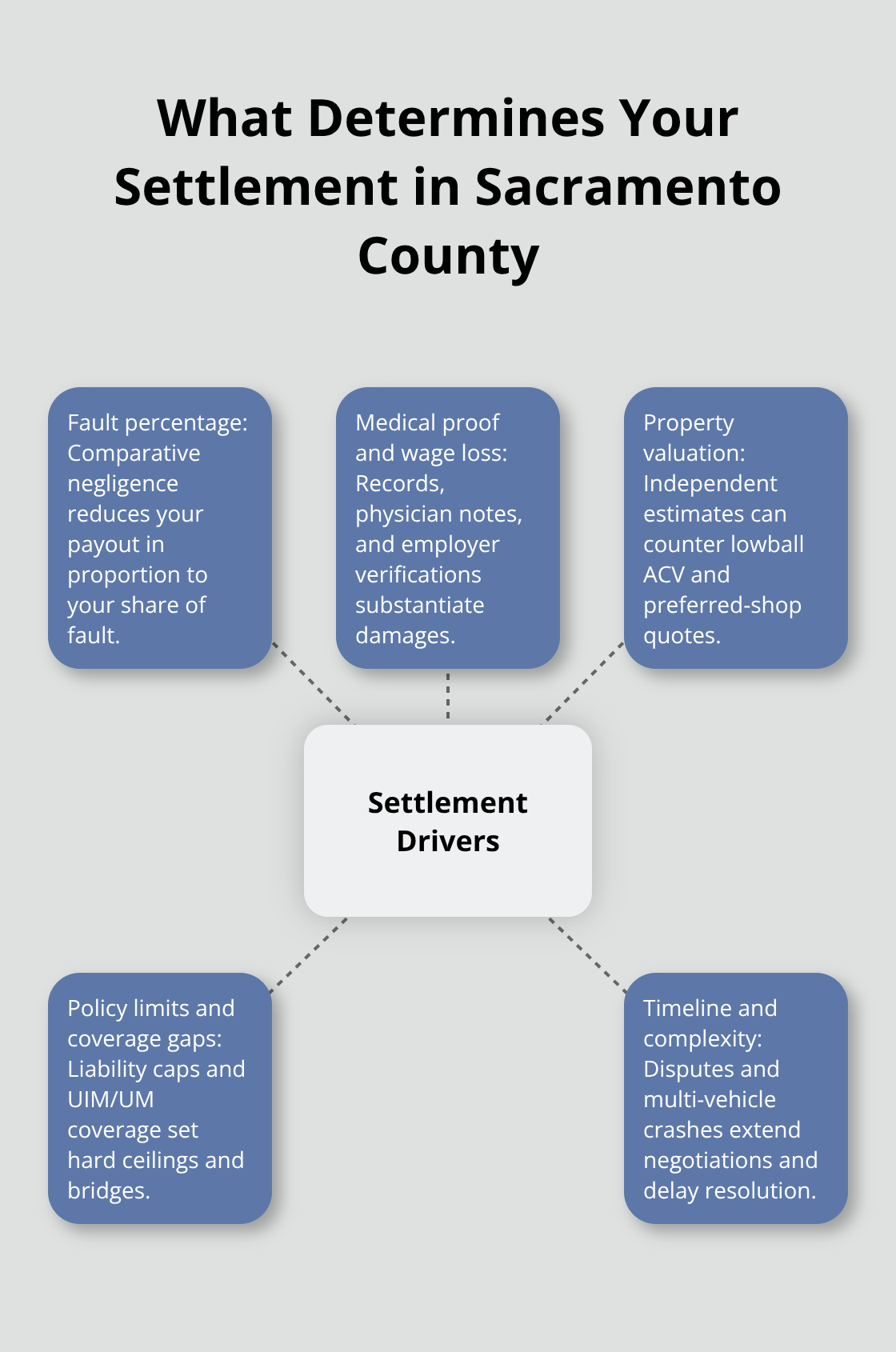
Fault determination dominates settlement calculations, and California’s comparative negligence rule means your settlement shrinks proportionally to your assigned fault percentage. If you’re deemed 20 percent at fault for a collision, your settlement reduces by 20 percent regardless of how serious your injuries are. Insurance adjusters scrutinize motorcycle accidents heavily because riders often lack the physical protection of car occupants, yet some adjusters assume riders take unnecessary risks.
This bias means you need documentation that proves the other driver caused the accident: dashcam footage, witness statements, police reports showing traffic violations by the other party, and photographs of road conditions.
Medical Records and Lost Wages Shape Damages
Medical records directly impact settlement value, and the California Civil Jury Instructions suggest that past medical expenses, future medical treatment, lost wages, and pain and suffering all factor into damages. A broken collarbone with three weeks of physical therapy settles differently than the same injury requiring surgery and six months of rehabilitation. Insurers calculate lost wages by multiplying your daily rate by days unable to work, so employment verification and doctor’s notes stating work restrictions matter enormously. Without these documents, insurers offer lower settlements because they question whether injuries actually prevented you from working.
Property Damage Valuations Often Fall Short
Property damage settlements depend on your bike’s actual cash value before the accident, not what you paid for it years ago or what it would cost to replace today. An insurance adjuster will reference the National Automobile Dealers Association guideline or Kelley Blue Book valuation, and these databases often undervalue motorcycles compared to specialty dealers. Request multiple independent repair estimates rather than accepting the insurer’s preferred shop estimate, which frequently lowballs costs to reduce claim payouts. Specialty motorcycle shops typically provide higher estimates than general repair facilities because they understand the true cost of parts and labor for your specific model.
Policy Limits and Coverage Gaps Create Ceilings
Your policy limits create a hard ceiling on what you receive, meaning a $100,000 liability policy cannot pay more than $100,000 even if damages exceed that amount. This is why higher limits than California’s minimums protect you far better. Underinsured motorist coverage becomes critical when the at-fault driver carries minimal liability protection, because it bridges the gap between their policy limits and your actual damages. If you carry $50,000 in underinsured motorist coverage and the other driver has only $15,000 in liability, your underinsured coverage pays up to $50,000 for your injuries. Comprehensive and collision deductibles also affect your net recovery-a $1,000 deductible on collision coverage means you absorb that cost before insurance pays anything, reducing your settlement by that amount.
Settlement Timelines Vary by Complexity
Settlement timelines vary based on claim complexity, but straightforward single-vehicle accidents with clear liability typically settle within 30 to 60 days, while multi-vehicle incidents or disputes over fault can stretch to several months. Accepting a settlement within days of the accident almost always results in underpayment because your full injury picture hasn’t emerged yet. Serious injuries often worsen over weeks as swelling increases, nerve damage becomes apparent, or complications develop. Insurance companies know this and pressure claimants to settle quickly before they understand the true scope of their injuries.
Final Thoughts
Motorcycle insurance claim guidance requires you to understand three critical layers: what coverage protects you, how to navigate the claims process, and what factors determine your settlement value. California’s liability minimums leave you financially exposed, so carrying higher limits costs little but shields your assets from catastrophic loss. Collision, comprehensive, and uninsured motorist coverage fill gaps that state minimums ignore, and skipping these protections transforms a manageable claim into a financial disaster.
When an accident happens, speed matters but accuracy matters more. Contact your insurer within 24 to 48 hours, document everything immediately, and resist pressure to settle quickly. Insurance companies count on riders accepting their first offer without negotiation, but initial offers typically run 30 to 40 percent below final settlements, and your medical records, repair estimates, wage loss documentation, and photographs of the accident scene determine whether you receive fair compensation or leave money on the table.
Fault percentages, injury severity, and policy limits create the framework for your settlement amount, but these factors interact in ways that require careful analysis. If negotiations stall or your insurer’s offer seems unreasonably low, consulting with a personal injury attorney changes the equation. O’Brien & Zehnder Law Firm helps Sacramento-area clients pursue motorcycle insurance claims and guides you through both the insurance process and legal options when settlements fall short.