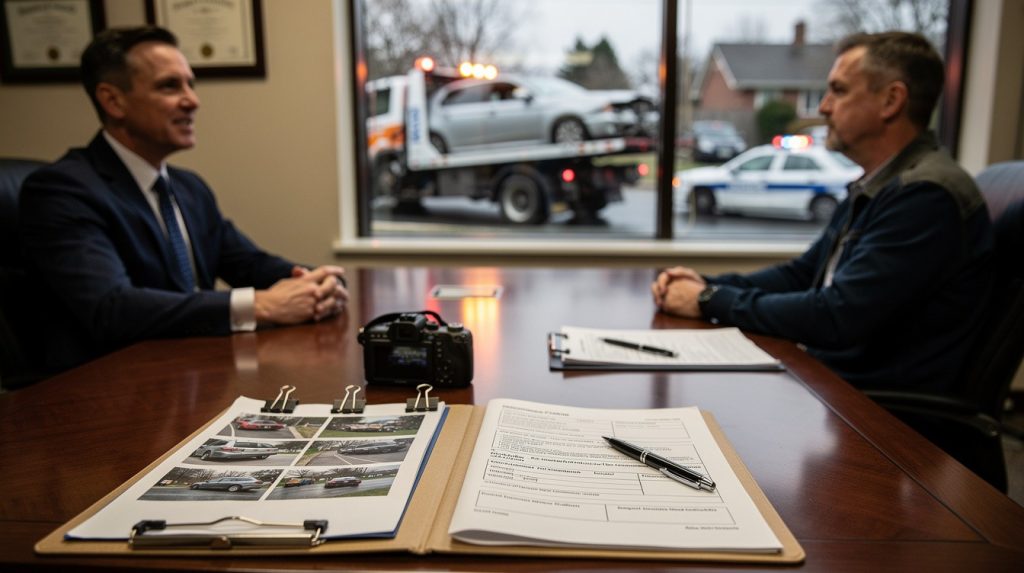

Motorcycle crashes in Sacramento County leave riders facing serious injuries, mounting medical bills, and complex legal battles. Insurance companies often undervalue these claims because they don’t understand how differently motorcycles behave on the road compared to cars.
We at O’Brien & Zehnder Law Firm know what it takes to build a winning motorcycle crash lawyer case in Sacramento. This guide walks you through the exact steps to maximize your claim and protect your rights.
Understanding Motorcycle Accident Liability
Why Motorcycles Face Unique Liability Challenges
Motorcycle accidents in Sacramento County don’t follow the same liability playbook as car crashes. Insurance adjusters and juries often misunderstand motorcycle physics, which directly impacts how they evaluate your claim. A motorcycle requires active balance and counter-steering, meaning a rider’s positioning and speed management differ fundamentally from how a car driver operates their vehicle. When a car driver makes a mistake, the vehicle’s mass and structure provide protection. A motorcycle offers no such buffer, so injuries from identical impact speeds are catastrophically worse.
This reality matters legally because adjusters frequently blame riders for crashes that stem from driver error, underestimating how quickly a motorcycle can be thrown off balance by a car’s sudden lane change or failure to yield.
Sacramento County’s Dangerous Motorcycle Routes
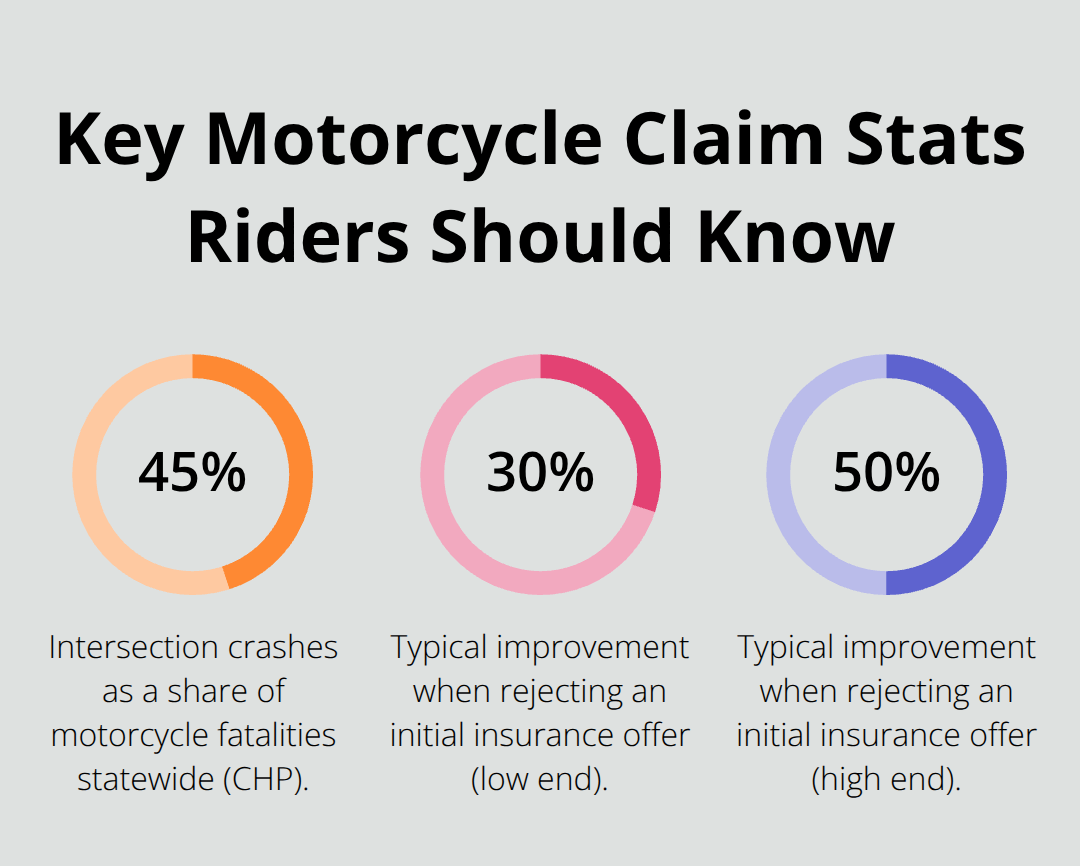
Certain roads in Sacramento County produce more motorcycle crashes than others. Highway 50, particularly near the Business District and through the American River Parkway corridor, sees consistent motorcycle accidents involving cars failing to check blind spots. Local data from the California Highway Patrol shows that intersection crashes account for roughly 45 percent of motorcycle fatalities statewide, and Sacramento’s grid-pattern streets with heavy commuter traffic create predictable collision points.
Folsom Boulevard, Fair Oaks Boulevard, and Power Inn Road experience frequent motorcycle-versus-car incidents where drivers turning left across traffic fail to detect approaching riders. These aren’t random locations-they’re predictable hazard zones where liability patterns repeat. When you build your claim, identifying that your crash occurred at a known trouble spot strengthens arguments about driver negligence and visibility issues.
How Negligence Gets Misinterpreted in Motorcycle Cases
Determining fault in a motorcycle accident requires understanding that negligence doesn’t require intentional wrongdoing-it only requires that someone failed to exercise reasonable care. A driver who didn’t see you isn’t automatically off the hook legally; they may still be negligent for failing to look properly.
Many insurance companies wrongly assume motorcycle riders accept greater risk through their vehicle choice, then use this assumption to reduce payouts. This thinking is legally flawed. A negligent driver remains negligent whether they hit a car, truck, or motorcycle. Your claim’s value depends on what the defendant actually did wrong, not on your vehicle choice.
Building Evidence That Proves Negligence
Collect witness statements immediately after the crash. Photograph road conditions and sight lines from the driver’s position (this shows whether they had a reasonable opportunity to see you). Document any traffic control devices that were present. These specifics prove whether the other driver had a reasonable opportunity to avoid the crash and establish the foundation for your negligence argument.
Immediate Steps After a Motorcycle Accident
Photograph Everything Before Anything Moves
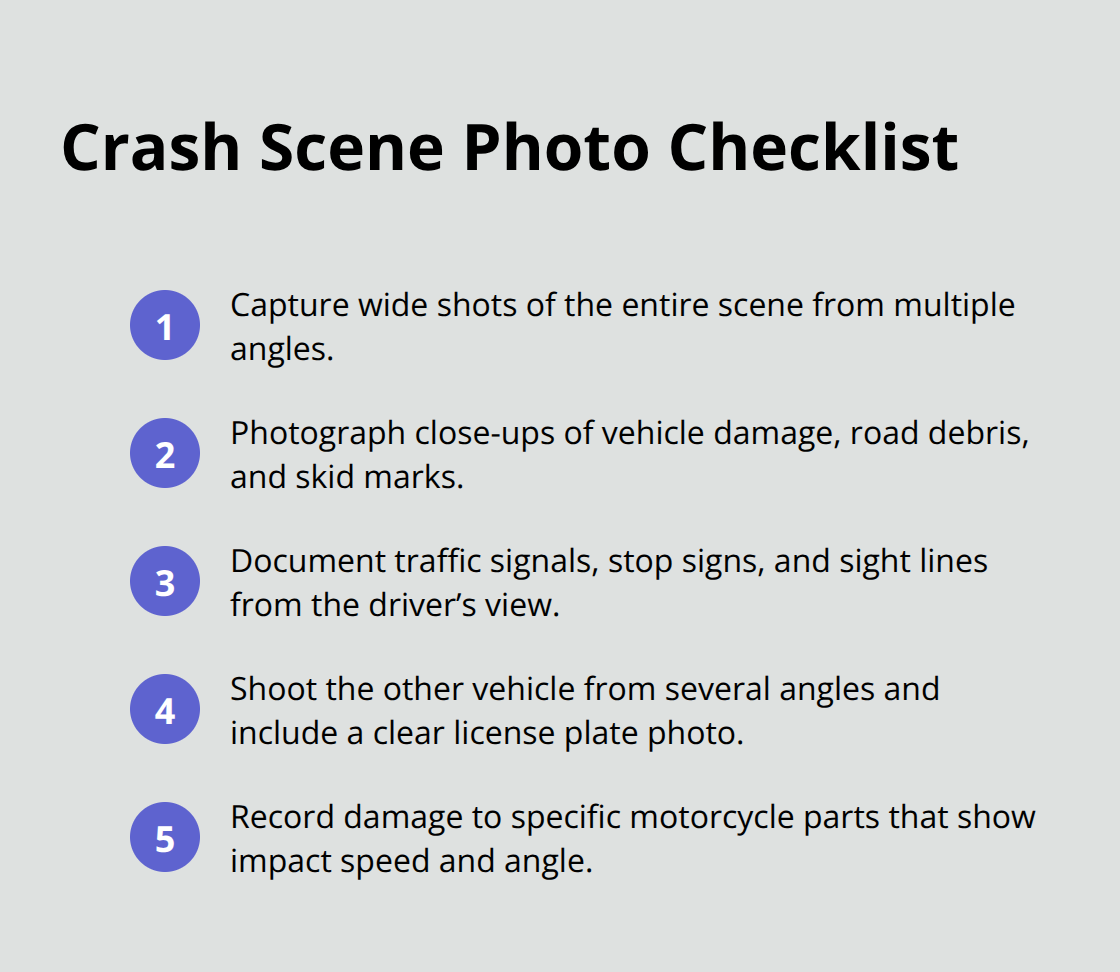
The first hours after a motorcycle crash determine whether you’ll have a strong claim or a weakened one. Most riders focus on pain and shock, but the actions you take at the scene directly impact how much money you recover. Photograph everything before anything moves. Take wide shots of the entire crash location, close-ups of vehicle damage, road debris, skid marks, and traffic signals. Photograph the other driver’s vehicle from multiple angles and capture their license plate clearly. If your motorcycle sustained damage to specific parts, photograph those too because insurance companies use damage patterns to argue about impact speed and angle.
Position yourself safely away from traffic before taking these photos, or ask a witness or emergency responder to help. The California Highway Patrol responds to serious motorcycle crashes in Sacramento County, and their accident report becomes critical evidence, but that report reflects only what officers observed in those first minutes. Your photos provide the complete visual record that adjusters and attorneys need.
Collect Witness Information at the Scene
Collect witness information before people leave the scene. Get their full names, phone numbers, email addresses, and what they actually saw. Ask them to describe the other driver’s actions in the seconds before impact, whether the driver checked mirrors or blind spots, and the weather conditions. Take a photo of their driver’s license if they’re willing. These statements carry weight because witnesses have no stake in the outcome, unlike the at-fault driver or their insurance company.
Seek Medical Attention Immediately
Medical attention comes next, and this step separates strong claims from weak ones. Seek treatment immediately, even if you feel okay. Adrenaline masks serious injuries, and the National Highway Traffic Safety Administration reports that motorcycle crash victims often underestimate injury severity in the immediate aftermath. Get a complete medical evaluation and tell providers everything that hurts, even minor aches.
Request copies of all medical records, imaging results, and treatment notes before you leave the facility. Keep these organized in a folder with dates clearly marked. Medical documentation creates the foundation for your damages claim because it establishes what injuries the crash actually caused.
Report the Crash and Protect Your Rights
Report the crash to police and your insurance company within 24 hours, but do not accept any settlement offer or admit fault in these conversations. Provide factual information only: what happened, where it happened, and that you were injured. Tell your insurer you’re consulting with an attorney about your claim, which signals that you’re serious and prevents them from using your statements against you later.
Insurance adjusters will contact you repeatedly, and each conversation they record can be used to reduce your payout. Once you’ve reported the accident, direct all future communication through an attorney. This protects you from making statements that seem innocent but actually undermine your claim’s value. The next step involves calculating exactly what your injuries and losses are worth.
Building Your Motorcycle Injury Claim
Calculate Your Economic and Non-Economic Damages
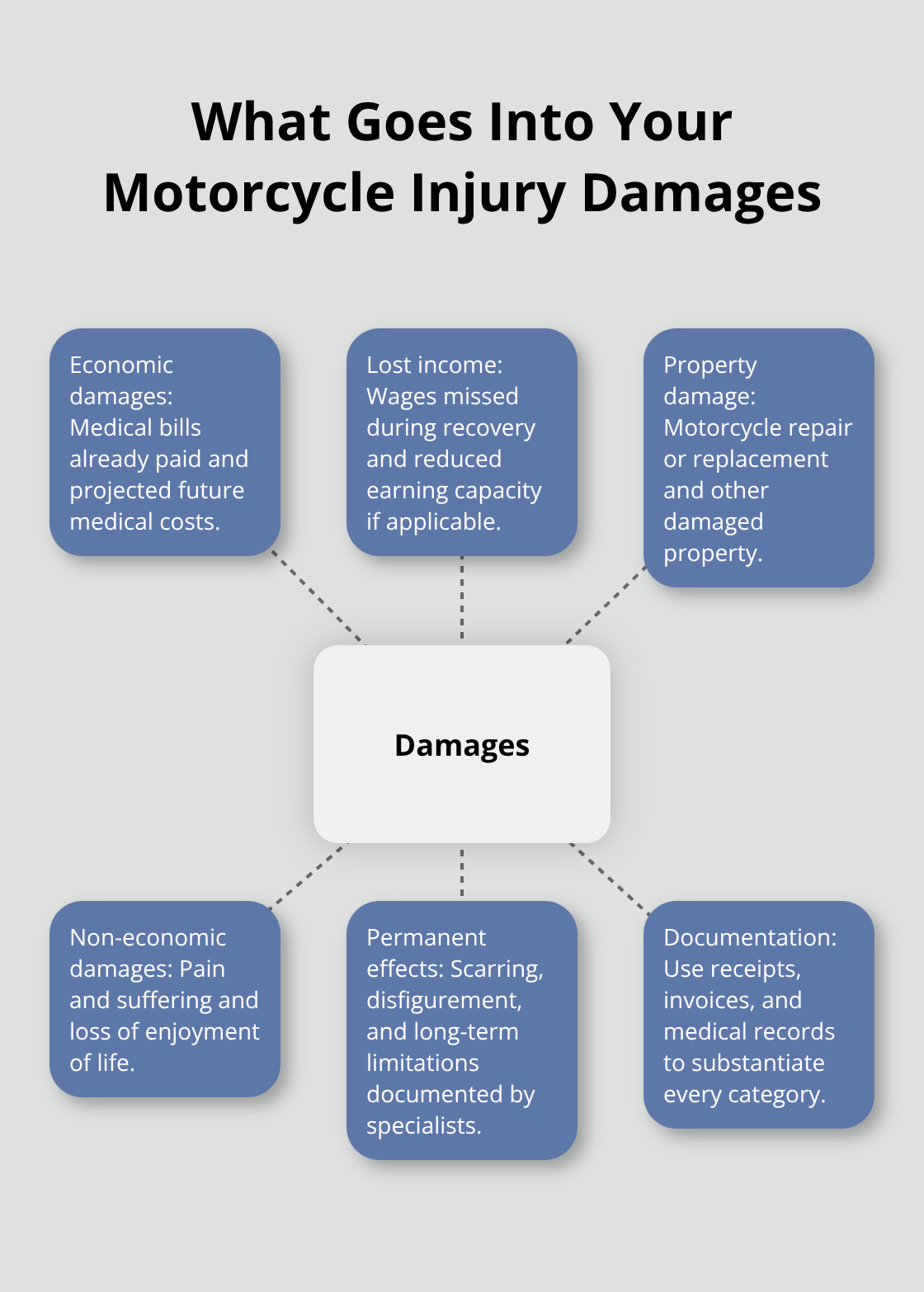
Your damages calculation determines your settlement floor, and most riders dramatically underestimate what they’re actually owed. Start by listing economic damages: medical bills paid and future medical costs, lost wages from time off work, motorcycle repair or replacement costs, and any property damage. These are straightforward to document with receipts and invoices. Then add non-economic damages, which courts recognize as pain and suffering, permanent scarring or disfigurement, loss of enjoyment of life, and emotional distress.
The National Highway Traffic Safety Administration reports that the average hospitalization cost for motorcycle crash injuries exceeds $35,000, yet many riders accept settlements that barely cover their medical bills alone. This gap between actual costs and accepted settlements reveals how undervalued most motorcycle injury claims are.
Obtain Medical Records and Expert Testimony
Medical records become your primary weapon because they document injury severity, treatment duration, and prognosis. Request not just bills but also detailed clinical notes showing what providers observed, how your condition changed over time, and what limitations remain. If you sustained permanent injuries, obtain an independent medical evaluation from a physician who specializes in motorcycle trauma.
Insurance companies respect expert testimony that establishes long-term consequences because it prevents them from arguing your injuries were minor or temporary. A specialist’s report carries significant weight in settlement negotiations and demonstrates that your injuries warrant substantial compensation.
Counter Insurance Company Tactics During Negotiations
Settlement negotiations with insurance adjusters require understanding their playbook: they’ll offer lowball figures early, claim your medical treatment was excessive, and suggest pre-existing conditions caused your injuries. Counter each tactic with documentation. If they claim treatment was unnecessary, provide your doctor’s clinical notes explaining the medical necessity. If they mention pre-existing conditions, obtain medical records from before the crash proving your baseline health.
Request a detailed written explanation for any settlement offer they make, which forces them to justify their valuation rather than relying on vague negotiating tactics. Many adjusters will pressure you to accept quickly, claiming the offer expires or won’t improve, but this is standard negotiation pressure without legal weight.
Reject Initial Offers and Document Everything
Never accept a first offer. The Insurance Information Institute reports that claimants who reject initial offers typically recover 30 to 50 percent more than those who accept immediately. This statistic reflects the reality that insurance companies build negotiating room into their opening positions.
Document every communication with adjusters in writing, whether through email or follow-up letters confirming what they said. This creates a record that protects you if disputes arise later about settlement terms or conditions. Written documentation also prevents adjusters from misrepresenting what they offered or promised during phone conversations.
Conclusion
Motorcycle accident claims in Sacramento County demand aggressive representation because insurance companies systematically undervalue them. You’ve now learned how to document your crash, calculate your actual damages, and counter the tactics adjusters use to minimize payouts. The difference between accepting a lowball offer and fighting for fair compensation often exceeds tens of thousands of dollars.
We at O’Brien & Zehnder Law Firm guide clients through this entire process, handling communication with insurance companies so you can focus on recovery instead of fighting adjusters who profit from undervalued claims. Our team understands motorcycle physics, Sacramento County’s dangerous roads, and how negligence actually works in these cases. We obtain medical expert testimony, challenge pre-existing condition arguments, and reject initial offers that don’t reflect your injuries’ true cost.
Contact O’Brien & Zehnder Law Firm for a free consultation where we’ll review your crash details, explain what your claim is actually worth, and outline exactly how we’ll maximize your recovery. We work on contingency, meaning you pay nothing unless we win your case. Call today to stop accepting what insurance companies offer and start fighting for what you actually deserve.