Motorcycle accidents in Sacramento County often leave riders facing complex insurance claims and liability questions. We at O’Brien & Zehnder Law Firm know that filing a Sacramento motorcycle accident claim requires careful documentation and understanding of California’s specific laws.
This guide walks you through the essential steps to strengthen your claim, from immediate actions at the accident scene to gathering evidence that supports your case.
What to Do Immediately After Your Motorcycle Accident
Photograph and Document the Scene
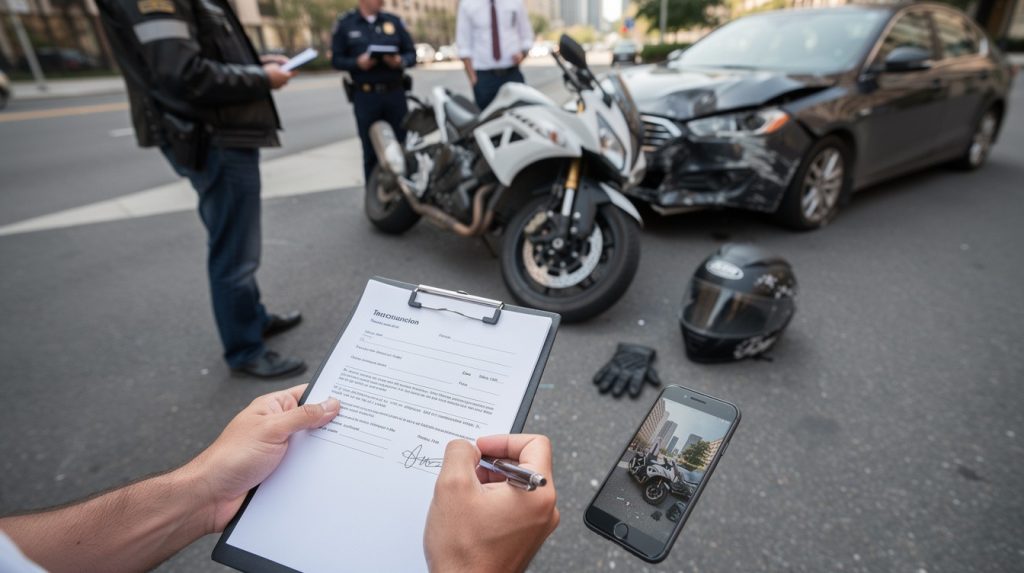
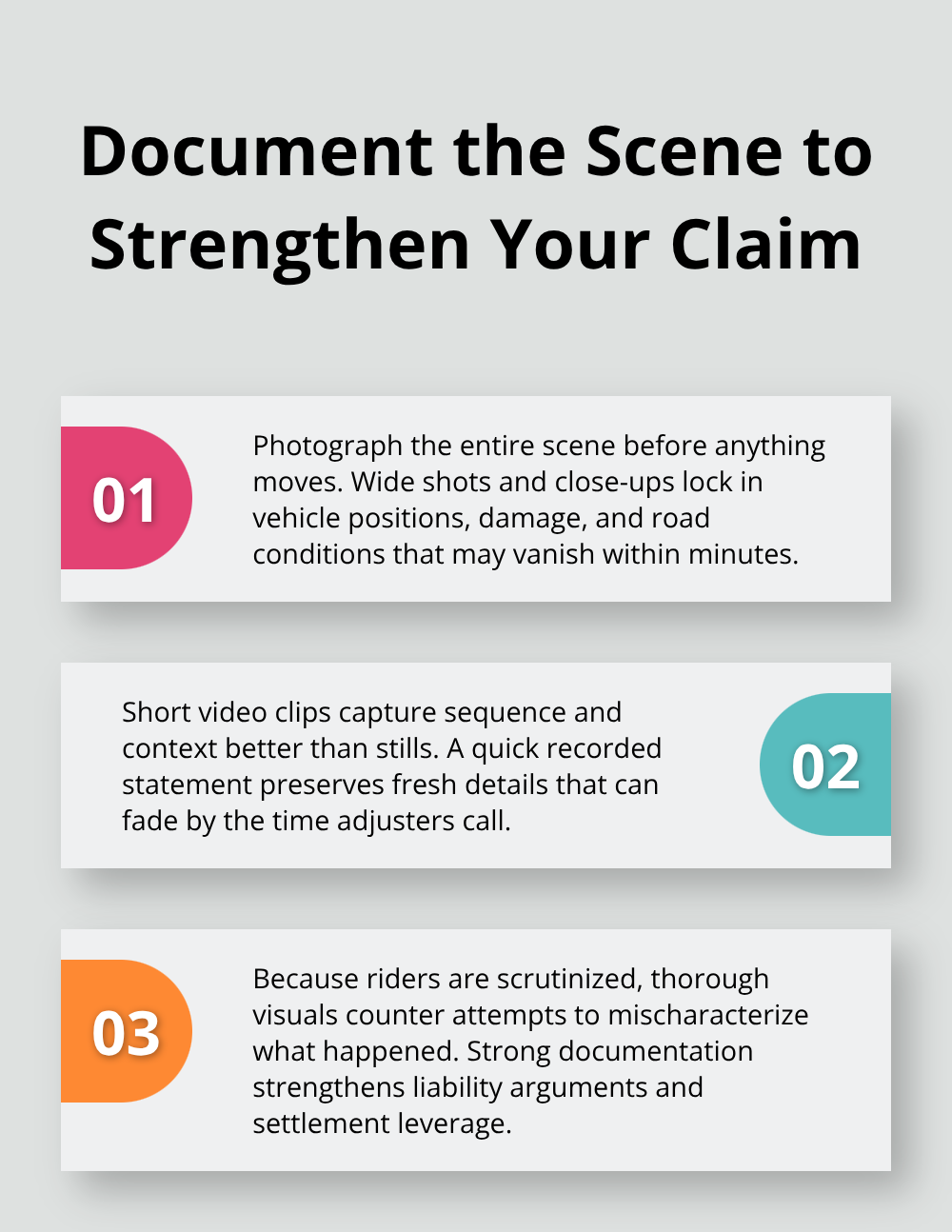
The first 24 hours after a motorcycle accident determine whether you build a strong claim or leave money on the table. Your actions at the scene directly affect how much compensation you recover. Start by photographing everything before vehicles move. Take photos of the accident scene, including wide shots showing the overall scene, close-ups of vehicle damage, tire marks on the pavement, road debris, traffic signals, and street signs. Capture your motorcycle from multiple angles and photograph any visible injuries. If weather or road conditions contributed to the crash, document those too.
Video footage proves even more valuable than still photos because it establishes the sequence of events and vehicle positions. Use your phone to record a brief statement describing what happened while details remain fresh. National Highway Traffic Safety Administration data shows motorcyclists are 28 times more likely to die per mile traveled than car occupants, which means insurance companies scrutinize motorcycle claims more heavily. Your visual evidence counters any attempts to mischaracterize what occurred.
Collect Critical Information from Witnesses and Drivers
Collect the other driver’s name, phone number, address, insurance company, policy number, and driver’s license number. Ask for their vehicle identification number and license plate. Get the same information from every witness present, including people who stopped to help. Witnesses disappear quickly, and their contact information becomes worthless if you wait. Write down what each witness observed and ask permission to contact them later if questions arise.
Seek Medical Attention and Preserve Records
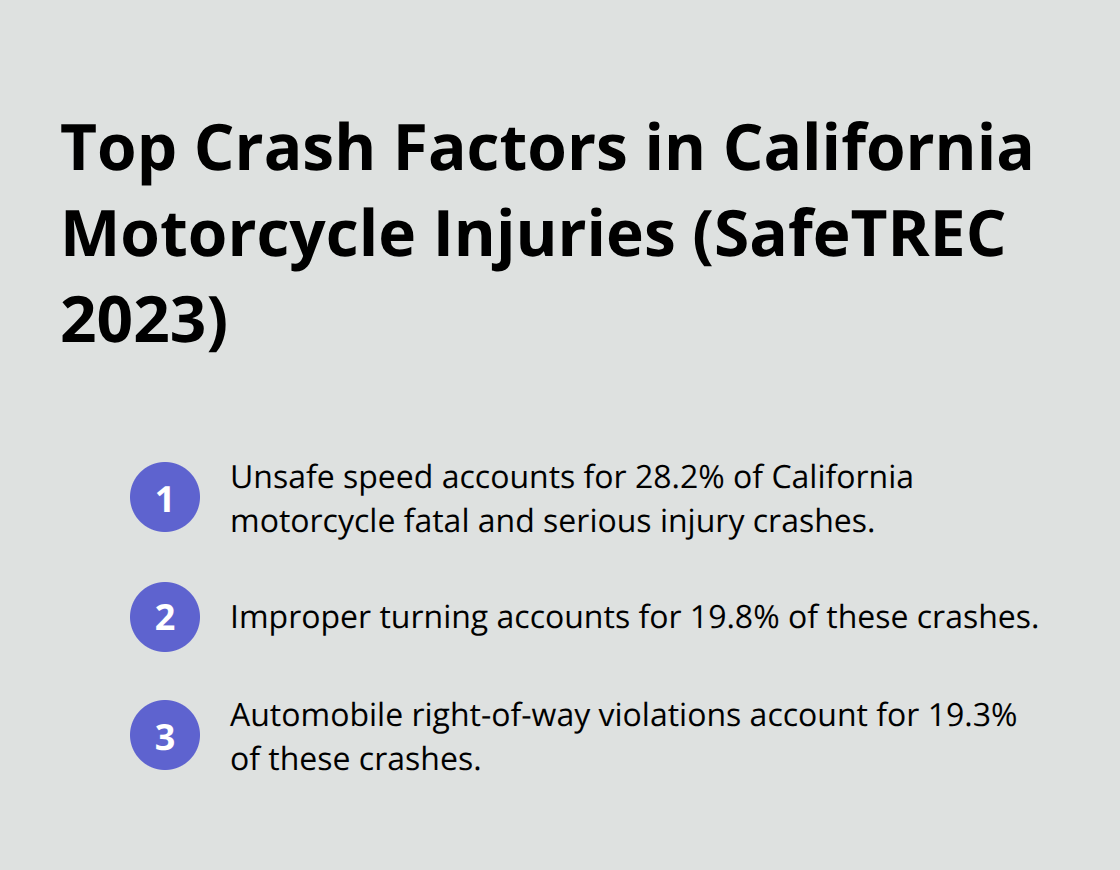
Seek medical attention immediately, even if you feel fine. Adrenaline masks serious injuries that surface hours or days later. A medical evaluation creates documentation linking your injuries directly to the accident, which is essential for your claim. Keep every receipt, medical record, and bill related to treatment. According to UC Berkeley SafeTREC data, unsafe speed, improper turning, and automobile right-of-way violations account for the majority of fatal and serious injury crashes in California. This means the other driver’s actions matter significantly in establishing liability.
Obtain Official Documentation
Request a police report and obtain the report number at the scene. The police report provides official documentation of fault and creates a record that insurers cannot easily dismiss. Contact an attorney within days of your accident because evidence degrades quickly and witness memories fade. The statute of limitations gives you two years to file a claim, but waiting that long weakens your position substantially. Understanding how California’s comparative negligence rules apply to your specific situation requires immediate attention to preserve all available evidence.
How California’s Fault Rules Shape Your Motorcycle Claim
California’s pure comparative negligence rule, where your recovery gets reduced by your percentage of fault, allows you to recover compensation even if you share fault for the accident. If you’re found 30% at fault, you receive 70% of your damages. This rule creates both opportunity and risk in motorcycle claims because insurers frequently overstate rider fault to minimize payouts. Sacramento County courts apply this standard consistently, so understanding how fault allocation works in your specific scenario determines your actual recovery amount.
What the Data Reveals About Motorcycle Crash Liability
The leading crash factors in California motorcycle fatal and serious injury crashes are unsafe speed (28.2%), improper turning (19.8%), and automobile right-of-way violations (19.3%), according to UC Berkeley SafeTREC data from 2023. These statistics matter because they establish baseline expectations about who typically bears fault. If the other driver made a left turn in front of you, that violates California Vehicle Code 21801’s yield requirements, and you likely bear minimal or no fault regardless of your speed.
Conversely, if you were speeding or lane splitting improperly, the insurer will use that against you to reduce your award.
Minimum Coverage Limits Create Underinsurance Problems
California mandates specific insurance coverage that directly affects how your claim gets handled, with minimum liability coverage of $15,000 per person and $30,000 per accident for bodily injury, plus $5,000 for property damage. Most riders carry only these minimums, which creates severe underinsurance problems when serious injuries occur. Medical costs from a moderate motorcycle injury easily exceed $50,000, leaving a gap between the at-fault driver’s coverage and your actual damages. If you carry uninsured or underinsured motorist coverage on your own policy, you can claim through your UM/UIM coverage to bridge that gap. This coverage is not optional if you want realistic protection.
Motorcycle-Specific Policies Offer Better Protection
Motorcycle-specific policies offered by major insurers typically cost 15 to 25 percent more than standard coverage but include higher liability limits and better injury protection. You should review your policy limits immediately after an accident because your coverage decisions directly affect settlement leverage and your net recovery.
Insurance Adjusters Lock in Fault Quickly
Insurance adjusters make preliminary fault determinations within 7 to 10 days of your claim, and that initial decision often sticks throughout settlement negotiations. They review the police report, photos, and initial statements to assign fault percentages before either party has gathered comprehensive evidence. This speed works against riders because adjusters lack time to understand motorcycle-specific crash dynamics. A left-turning vehicle may appear equally at fault in photos alone, but vehicle code analysis and witness statements often prove otherwise.
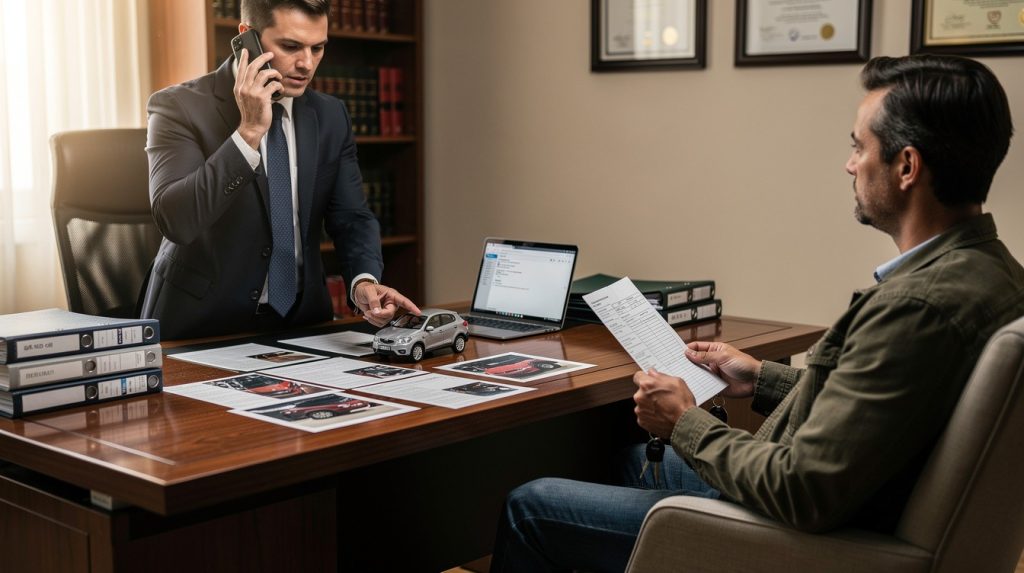
Contacting an attorney within the first week after your accident ensures independent investigation happens before the insurer’s narrative solidifies. Sacramento County adjusters regularly undervalue motorcycle injuries compared to car accidents, partly because riders face unconscious bias and partly because insurers assume riders accept lower settlements. Your documentation from the scene, combined with professional legal guidance, overcomes these biases and establishes accurate fault allocation that reflects California law rather than insurer assumptions. The evidence you preserve and the legal strategy you pursue now directly influence how much compensation you ultimately recover-which makes the next step of building your claim through medical records and accident reconstruction absolutely essential.
What Evidence Wins Motorcycle Claims
Medical Records Form Your Damages Foundation
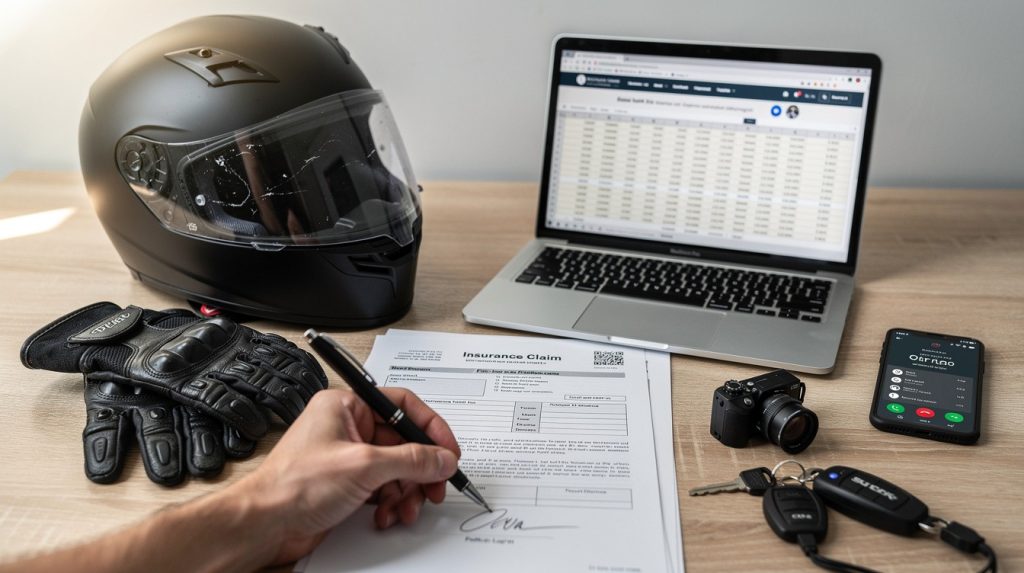
Medical records form the foundation of your damages claim, and the quality of documentation directly determines how much compensation you receive. Start collecting records immediately after treatment begins, including emergency room reports, imaging results, surgical notes, physical therapy evaluations, and prescriptions. Insurance adjusters scrutinize motorcycle injury claims far more heavily than car accident claims because riders face unconscious bias about injury severity. Your medical file must show a clear timeline connecting each treatment to the accident date. If you wait weeks before seeking care, insurers claim your injuries resulted from something else entirely.
Request copies of all records from every provider within 30 days of treatment, then organize them chronologically. Many riders fail at this step and lose thousands in compensation because gaps in medical documentation allow adjusters to deny injury claims. Include future medical projections from your treating physician if your injuries require ongoing care, as these projections support claims for future medical expenses that often exceed current bills by substantial amounts.
Police Reports Establish Official Liability Records
Police reports carry enormous weight in Sacramento County claims because they establish an official record that insurers cannot easily dismiss. Obtain the report number at the accident scene and request the full report within 72 hours through the Sacramento Police Department or California Highway Patrol. Review the report carefully for errors because inaccurate details hurt your claim. If the officer misidentified who caused the crash, request a supplemental report with corrections.
Accident Reconstruction Proves Liability in Complex Crashes
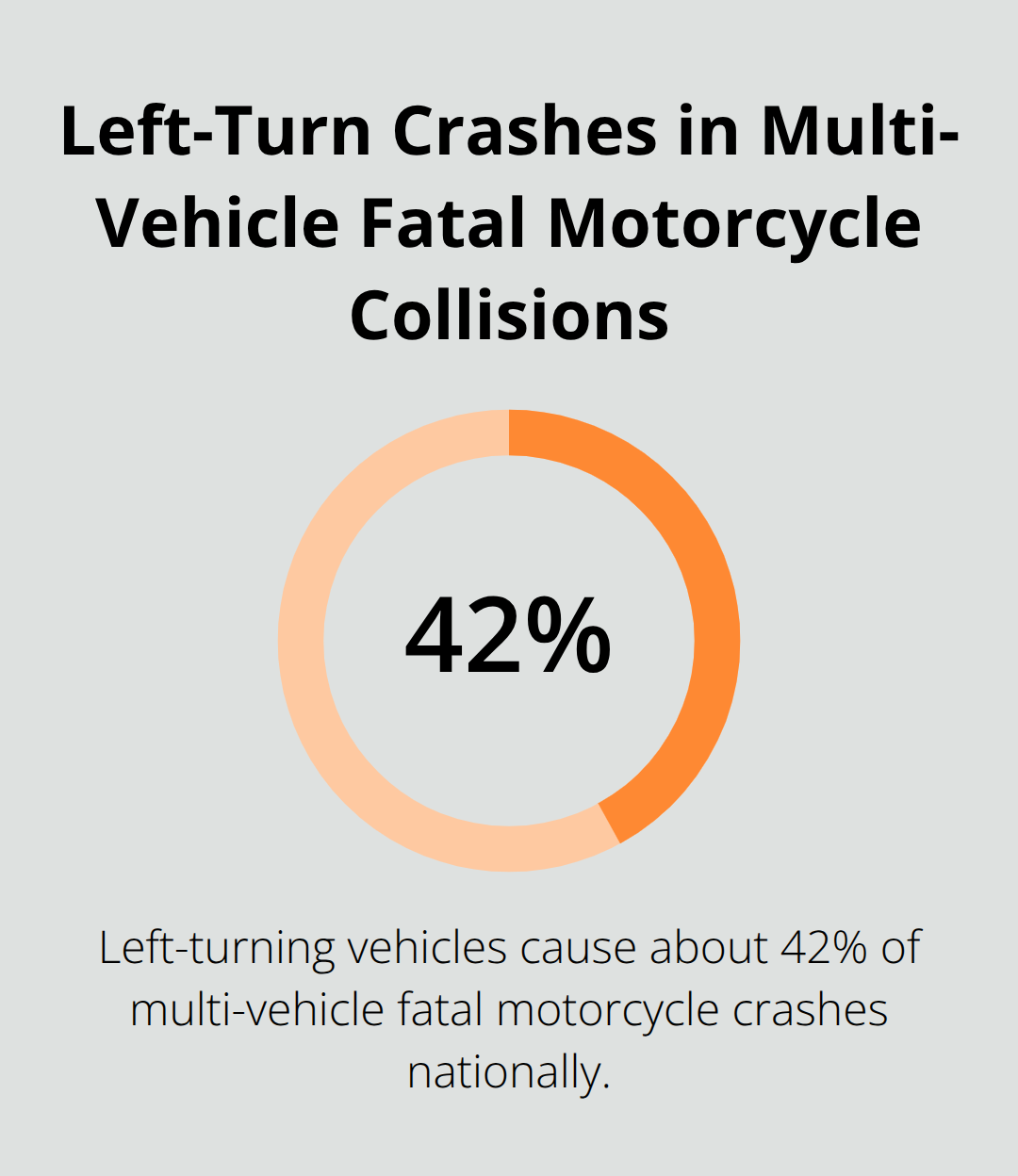
Accident reconstruction experts become necessary when liability remains contested or when the police report lacks detail about vehicle speeds, sight lines, or road conditions. These experts cost $2,000 to $5,000 but often prove invaluable in complex intersections where a left-turning vehicle’s liability depends on sight line analysis and traffic signal timing. According to UC Berkeley SafeTREC data, left-turning vehicles cause about 42 percent of multi-vehicle fatal motorcycle crashes nationally, yet adjusters frequently dispute liability in these scenarios without technical analysis.
Having experienced legal representation early in the process can help preserve evidence and protect your rights.
Property Damage Documentation Protects Your Motorcycle Value
Repair estimates for your motorcycle establish property damage value, but try multiple estimates because initial quotes often undervalue specialized repairs. Insurance companies sometimes pressure riders to accept diminished value settlements without accounting for long-term mechanical issues that emerge after frame damage. Document your motorcycle’s pre-accident condition with photos and maintenance records, then compare repair quotes carefully to identify which estimate addresses all damage comprehensively.
Final Thoughts
Filing a Sacramento motorcycle accident claim successfully requires three immediate actions that determine your actual recovery amount. You must photograph everything at the scene with video before vehicles move, collect witness contact information while people remain present, and seek medical attention within hours regardless of how you feel. These steps create the foundation that insurance adjusters cannot easily dismiss or undervalue.
California’s comparative negligence rule allows you to recover even if partially at fault, but only if you have solid evidence supporting your liability position. Insurance adjusters make preliminary fault decisions within days, so contacting an attorney early ensures independent investigation happens before the insurer’s narrative solidifies. Left-turning vehicles cause roughly 42 percent of multi-vehicle fatal motorcycle crashes, yet adjusters frequently dispute liability without technical analysis-your documentation from the scene, combined with professional legal guidance, overcomes these biases and establishes accurate fault allocation.
Medical records, police reports, and accident reconstruction (when necessary) build your claim and determine your damages recovery. We at O’Brien & Zehnder Law Firm help clients pursue Sacramento motorcycle accident claims through the insurance and legal process from start to finish, and most cases settle within months when handled properly. Contact us for a free consultation to review your evidence, discuss liability theories specific to your crash, and understand what fair compensation looks like for your injuries and damages.