

Filing an insurance claim in California can feel overwhelming, especially if you’re dealing with property damage or injuries after an incident. The California insurance claims process has specific rules and timelines that you need to follow to protect your rights.
We at O’Brien & Zehnder Law Firm help Sacramento County residents navigate these claims successfully. This guide walks you through each step and shows you the mistakes that could cost you money.
Understanding California Insurance Requirements
Mandatory Coverage Types in California
California mandates specific insurance coverage that directly affects how your claim gets handled. State law requires all drivers to carry liability insurance with minimum limits of $15,000 for bodily injury per person, $30,000 per accident, and $5,000 for property damage. These minimums have remained unchanged since 1987, which means they often fall short for serious injuries or significant property damage. If you’re involved in an incident and the at-fault party carries only minimum coverage, you’ll face a coverage gap that your own insurance may need to fill through underinsured motorist protection.
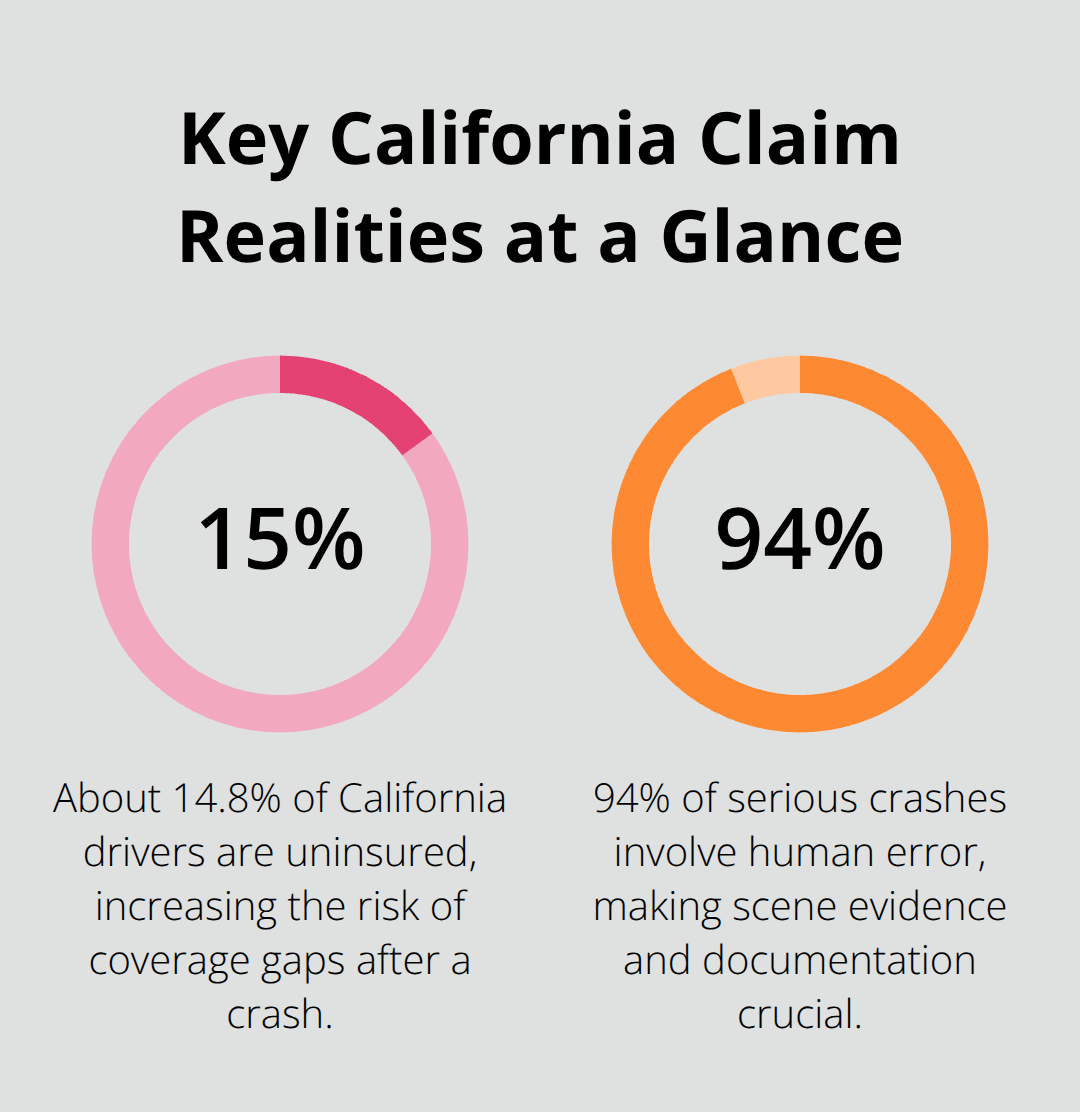
California also requires uninsured motorist coverage unless you explicitly reject it in writing, protecting you when the other driver lacks insurance entirely. Homeowners and renters insurance follows different rules-California doesn’t mandate these policies, but if you have a mortgage, your lender will require homeowners coverage. The California Department of Insurance reports that about 14.8 percent of California drivers remain uninsured despite legal requirements, so protecting yourself with uninsured motorist coverage isn’t optional thinking but essential preparation.
How Insurance Claims Work in the State
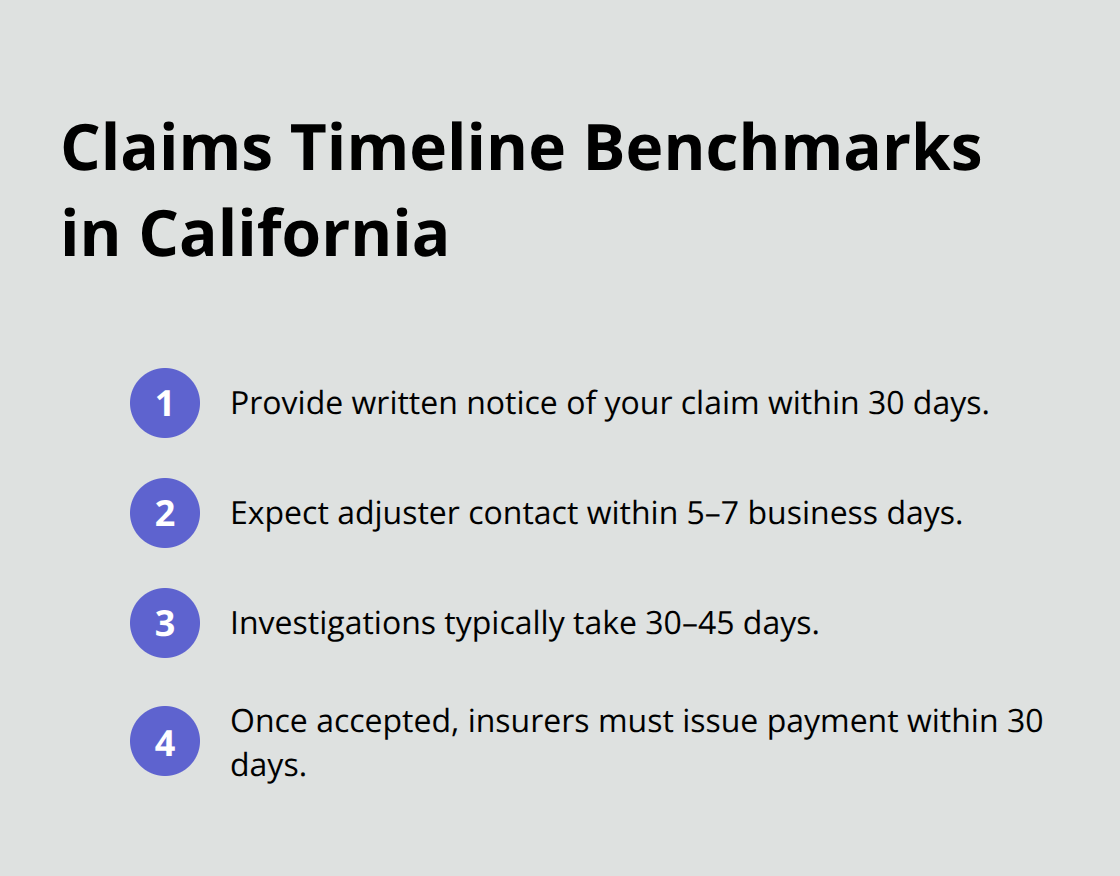
The claims process operates on strict timelines that Sacramento County residents must follow to preserve their rights. You have two years from the date of injury or property damage to file a personal injury lawsuit under California’s statute of limitations, but this deadline applies only after settlement negotiations fail. Your insurance company, however, expects notice of a claim within days of an incident, not months. Most insurers require written notice within 30 days, and delaying beyond this window gives them grounds to deny coverage.
Adjusters typically contact you within five to seven business days of your claim filing to schedule an inspection or request documentation. The investigation phase usually takes 30 to 45 days, during which adjusters examine medical records, police reports, and repair estimates. California law prohibits insurance companies from unreasonably delaying payments, and once an insurer accepts your claim as valid, state regulations require payment within 30 days.
Timeline for Filing Claims After an Incident
If your claim involves significant injuries or complex liability questions, the timeline extends considerably-some cases take six months or longer to resolve. Understanding these deadlines helps you avoid costly mistakes that could jeopardize your entire claim. The next section covers the specific steps you must take when you report your claim to your insurance provider and what happens during each phase of the process.
Navigating the Claims Process Step by Step
Report Your Claim Immediately
The moment you contact your insurance company sets the tone for your entire claim. Call your insurer within 24 hours of an incident, not the 30-day window some people assume they have. Most insurers staff their claims lines around the clock, and early notification shows good faith while giving adjusters time to preserve evidence and interview witnesses while memories remain fresh. When you call, have your policy number ready and write down the claim number, adjuster’s name, phone number, and email before ending the conversation. Request written confirmation of your claim filing via email or mail, as this creates documentation that you reported timely. Many Sacramento County residents make the mistake of assuming a verbal report counts as official notice, but insurers can dispute this later if paperwork goes missing.
Document Everything From Day One
Documentation separates successful claims from denied ones, and starting this process immediately after your incident matters far more than most people realize. Photograph everything at the scene if you’re physically able: vehicle damage from multiple angles, property damage, accident scene conditions, road signs, and visible injuries. Take photos of medical records, prescription receipts, repair estimates, and any communication with the other party. Keep these files organized in a single folder on your phone or computer, timestamped and labeled. Insurance adjusters expect to see medical documentation within two weeks of your claim filing, and delays signal to them that your injuries may be less serious than claimed. If you’re injured and cannot document the scene yourself, ask a family member or friend to photograph everything later that day. The National Highway Traffic Safety Administration reports that 94 percent of serious crashes involve human error, meaning liability often becomes clear through scene evidence rather than witness statements alone.
Handle Settlement Discussions Strategically
When your adjuster contacts you, resist the urge to accept their first settlement offer or sign anything immediately. Adjusters typically propose settlements 30 to 45 days after claim filing, betting that injured claimants will accept quick payment rather than wait for full medical clarity. Tell your adjuster you need time to complete medical treatment and gather all documentation before discussing settlement figures. Provide your adjuster with medical records, bills, and repair estimates promptly, but never agree to record a statement without reviewing the questions in advance. Insurance companies train adjusters to ask leading questions that can undermine your claim, so take time before each statement to consider how your answers might be used. For serious injury cases, contact an attorney before giving recorded statements, as these statements become permanent evidence that opposing counsel will scrutinize for any inconsistencies or admissions.
The mistakes you make during these early stages can haunt your claim for months, which is why the next section focuses on the specific errors that cost Sacramento County residents thousands of dollars.
Common Mistakes That Derail Insurance Claims
The gap between what claimants think they’re doing right and what actually protects their claims runs wide in Sacramento County. Most people file insurance claims only once or twice in their lifetime, which means they operate without real experience when stakes are highest. The three biggest errors-delayed reporting, premature settlement acceptance, and inadequate documentation-cost claimants thousands of dollars collectively. These aren’t accidents or unavoidable circumstances.
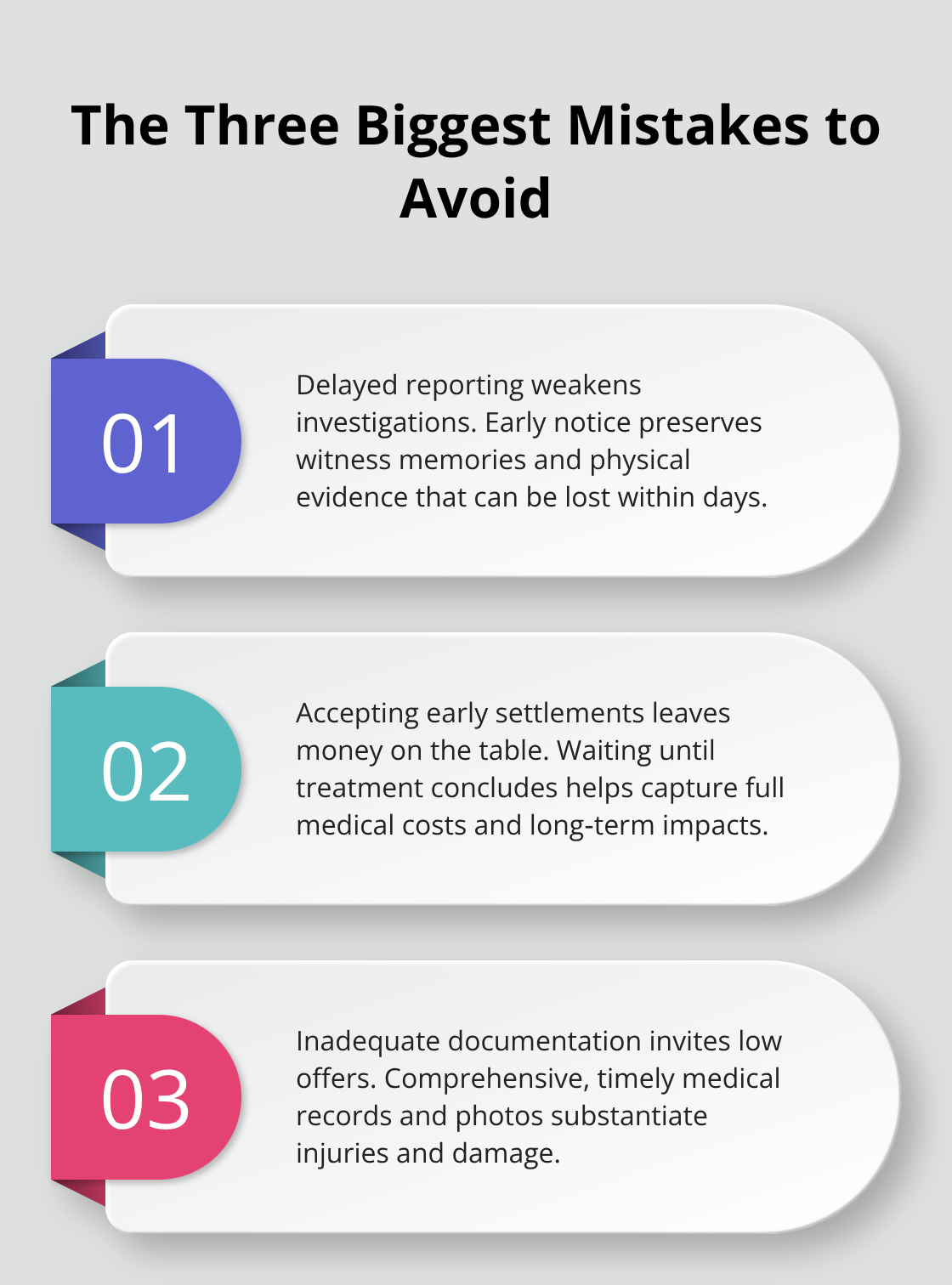
They’re preventable mistakes that happen because people don’t know the specific rules California insurers enforce.
Report Your Claim Within Hours, Not Days
Waiting more than a few days to report your claim creates immediate problems with your insurer’s investigation timeline. California law doesn’t give you 30 days to report casually-that deadline represents the maximum acceptable delay, not a grace period to think things over. When you wait two weeks to call your insurer, adjusters cannot interview witnesses whose memories have faded, cannot preserve scene evidence that weather or cleanup crews have destroyed, and cannot establish liability as clearly. Insurance companies document these delays in their files, and if your claim later involves disputes over fault or injury severity, your delayed reporting becomes ammunition they use against you.
The moment you realize an incident will result in property damage or injury claims, you should call your insurer immediately-not something you handle after work or when you feel less stressed about the situation. Adjusters process thousands of claims annually, and they notice which claimants prioritize notification immediately and which ones don’t, shaping how thoroughly they investigate your specific case.
Resist Early Settlement Offers
Accepting settlement offers within the first 45 days almost guarantees you leave money on the table. Insurance companies structure their offer timelines deliberately-they contact you early, before you complete medical treatment or fully understand your injury’s long-term effects. A herniated disc might seem minor at week six after your accident, but six months later when you’re still in physical therapy or facing surgery, you realize your quick settlement payment doesn’t cover your actual costs.
Medical expenses from car accidents in California average $3,500 to $5,000 for moderate injuries according to data from the Insurance Institute for Highway Safety, yet claimants frequently settle for amounts far below their actual treatment needs. Tell your adjuster explicitly that you won’t discuss settlement until your medical treatment is complete and you’ve received final medical reports. Document this in writing by sending an email to your adjuster stating you’re still receiving treatment and will contact them when you’re ready to negotiate. This creates a paper trail showing you acted reasonably and prevents adjusters from claiming you delayed settlement discussions.
Document Injuries and Damage Immediately
Failing to document injuries and property damage from the first day forward creates situations where your word becomes the only evidence supporting your claim. Photographs taken immediately after an incident show conditions exactly as they existed, while photos taken days later show recovery progress that minimizes the initial damage. Medical records must be comprehensive and timely-gaps between your incident and your first medical visit give adjusters grounds to argue your injuries weren’t serious.
If you injured your back in a car accident but didn’t see a doctor for three weeks, adjusters will claim something else caused your back pain. Start medical treatment within 72 hours of your incident whenever possible, and maintain consistent treatment throughout your recovery. Keep every receipt, every prescription bottle, every medical bill, and every communication with healthcare providers. Organize these documents chronologically in a single folder accessible to your adjuster. The more complete your documentation appears, the less room adjusters have to question your claim’s legitimacy or propose artificially low settlement figures.
Final Thoughts
The California insurance claims process rewards those who act quickly and document thoroughly. Sacramento County residents who report claims within 24 hours, gather evidence immediately, and resist early settlement offers protect themselves far better than those who delay or accept the first offer. Your policy limits, your state’s statute of limitations, and your insurer’s investigation timeline all work against you if you don’t understand the rules governing claims in California.
Three core principles separate successful claims from disappointing outcomes: notification within 24 hours of an incident gives adjusters the best chance to investigate fairly, documentation from day one creates the evidence that supports your claim when disputes arise over injury severity or property damage amounts, and patience during settlement discussions prevents you from accepting payments that fall short of your actual medical costs and repair expenses. For claims involving significant injuries, property damage, or liability disputes, working with an attorney protects your interests in ways that handling claims alone cannot.
We at O’Brien & Zehnder Law Firm help Sacramento County residents navigate car, truck, motorcycle, pedestrian, and premises-liability claims by guiding them through the insurance and legal claims process. Contact us for a consultation to discuss your specific situation and learn whether legal representation makes sense for your claim.