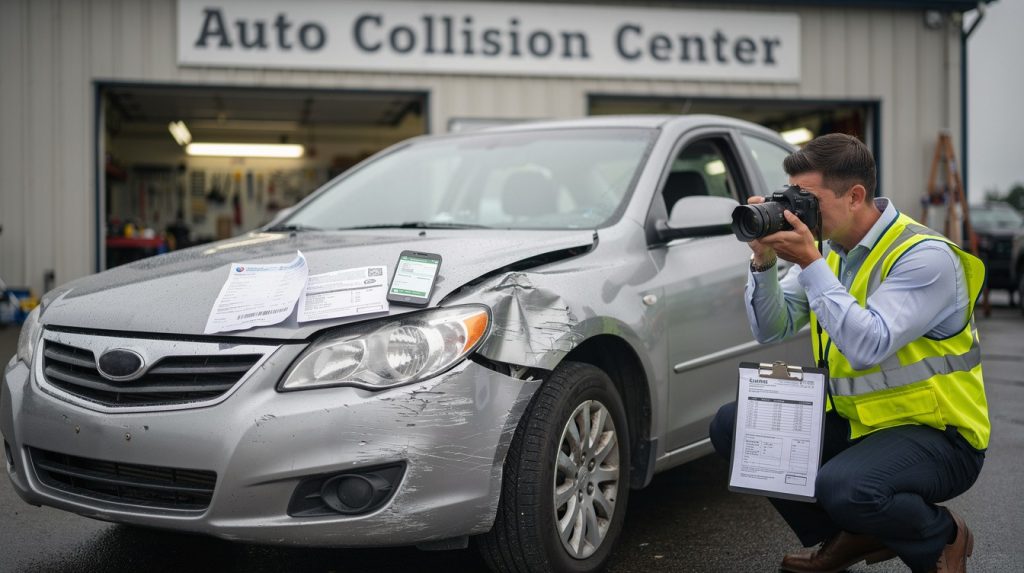
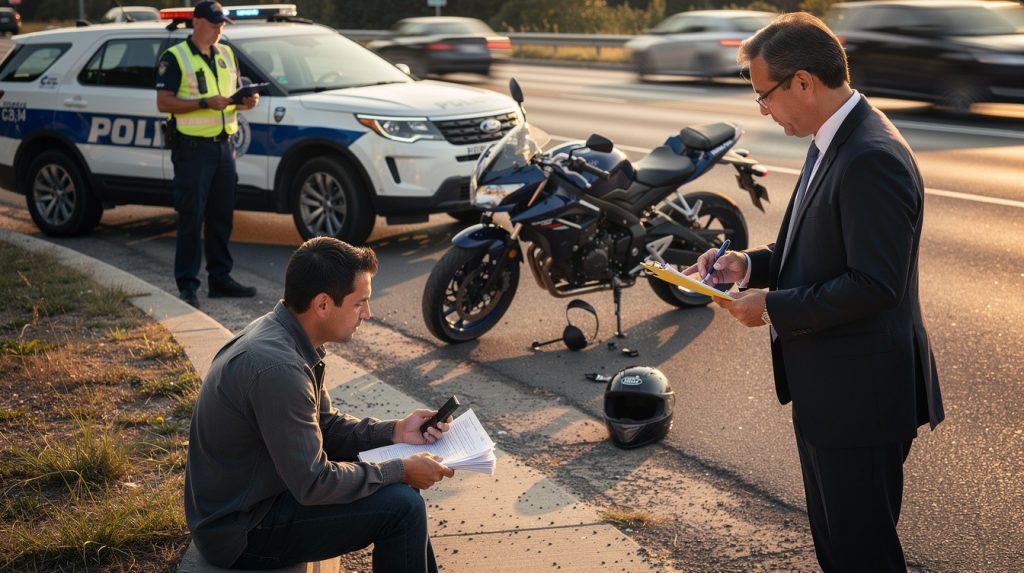
Motorcycle accidents in Sacramento County carry unique legal and financial consequences that differ significantly from standard vehicle collisions. Understanding your rights and responsibilities after a crash is the first step toward protecting yourself.
We at O’Brien & Zehnder Law Firm have guided countless riders through California motorcycle accident guidance and the claims process. This guide walks you through the laws, common liability issues, and practical steps to take after an accident.
California Motorcycle Accident Laws and Regulations in Sacramento County
Helmet Requirements and Their Impact on Claims
California imposes strict helmet requirements that go beyond what many riders realize. All motorcycle operators and passengers must wear helmets that meet Department of Transportation standards, regardless of age or experience level. Violating this requirement creates immediate safety risks and gives insurance companies grounds to deny or reduce claim payouts. If you were involved in an accident without a helmet, insurers will argue you contributed to your injuries, potentially cutting your compensation significantly. California Vehicle Code Section 27803 mandates this protection, and courts consistently uphold insurer denials when helmets were absent at the time of collision.
How Comparative Negligence Affects Your Claim
Liability in motorcycle accidents operates under California’s comparative negligence rule, which means fault can be split between multiple parties. A court or jury will assign percentage responsibility to each party involved. If you were 30 percent at fault and the other driver was 70 percent at fault, you can recover 70 percent of your damages. However, motorcyclists face an uphill battle in these determinations. The National Highway Traffic Safety Administration found that car drivers fail to detect motorcycles in approximately 60 percent of accidents, yet insurance adjusters often blame riders for inadequate visibility or lane positioning. Insurance companies bank on this bias and will pressure you to accept lower settlements.
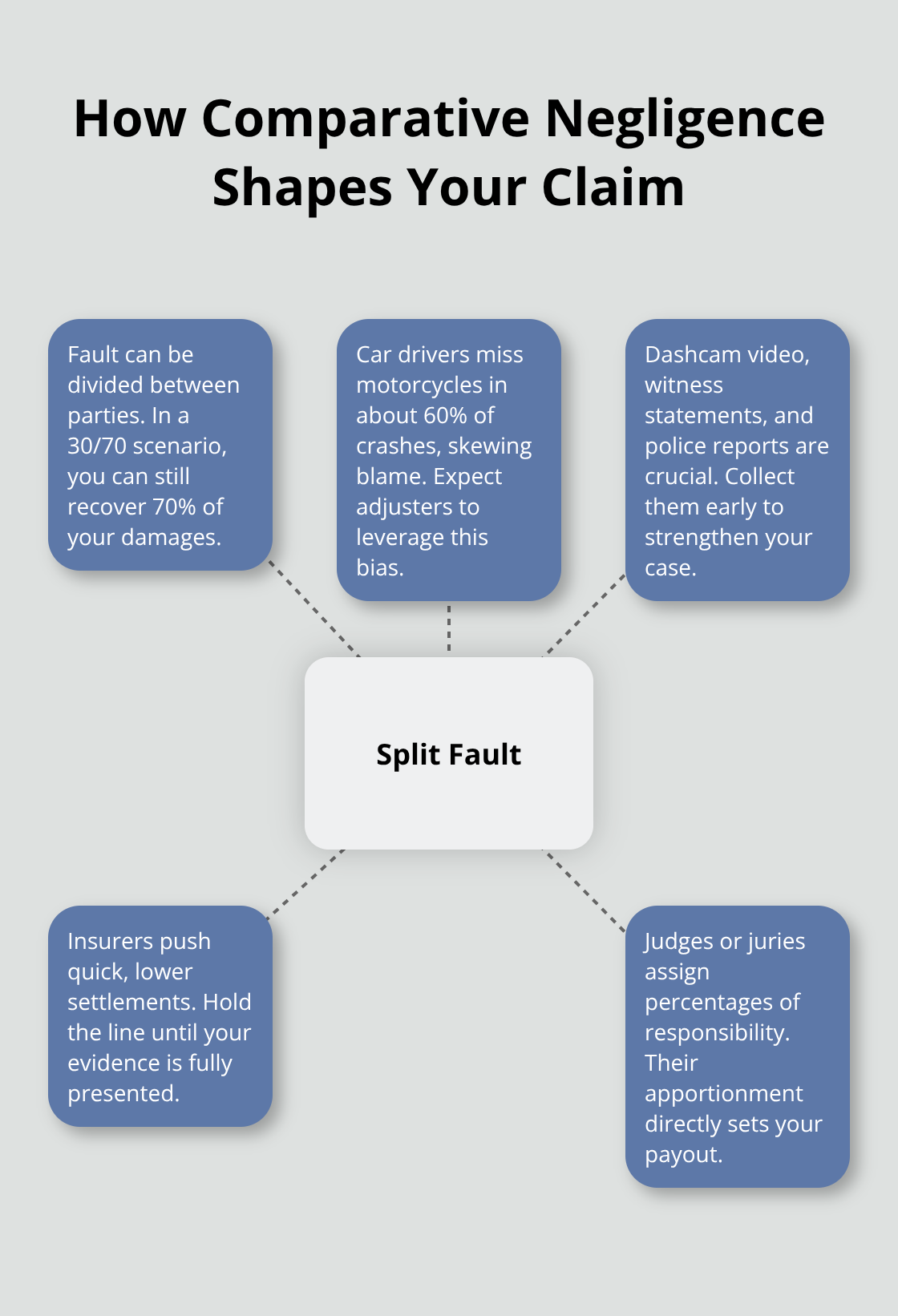
You must gather evidence proving the other driver’s negligence-dashcam footage, witness statements, and police reports become your strongest tools.
Minimum Insurance Requirements and Coverage Gaps
California requires all motorcycle riders to carry minimum liability insurance of 15/30/5, meaning 15,000 dollars for bodily injury per person, 30,000 dollars total per accident, and 5,000 dollars for property damage. These limits are dangerously low given that serious motorcycle injuries routinely exceed 100,000 dollars in medical costs alone. If your injuries surpass your policy limits, you face a gap that the at-fault driver’s insurance may not fully cover. Uninsured and underinsured motorist coverage becomes your safety net, yet many riders skip this optional protection to save money on premiums. This decision creates substantial financial exposure. Sacramento County accident data shows that roughly one in eight drivers carries no insurance whatsoever, making additional coverage a practical necessity rather than an optional luxury.
Understanding these legal frameworks sets the stage for recognizing how accidents actually happen and where liability truly lies in real-world collisions.
What Actually Causes Motorcycle Accidents in Sacramento County
Lane Splitting and Right-of-Way Conflicts
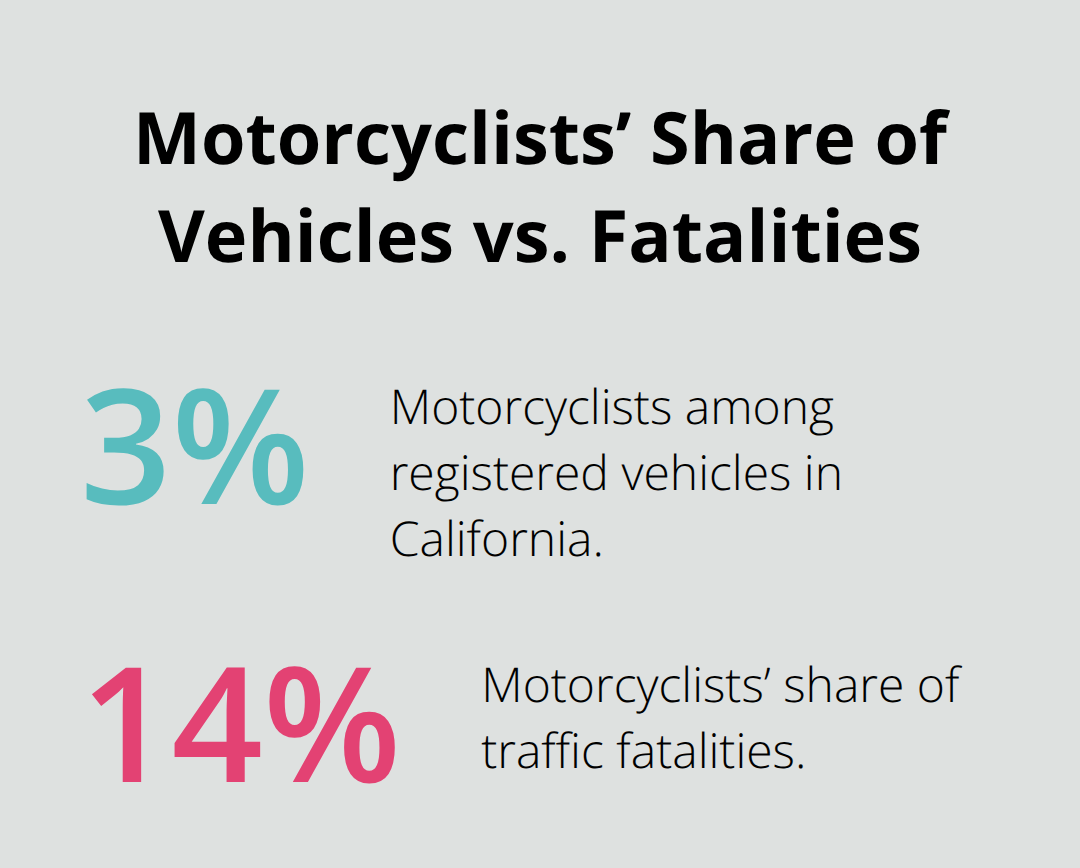
Lane splitting creates one of the most misunderstood liability factors in California motorcycle accidents. California Vehicle Code Section 21658.1 permits lane splitting, yet this legal protection vanishes the moment a collision occurs. Insurance adjusters routinely blame riders for splitting lanes, even when the other driver violated right-of-way rules. The California Highway Patrol reports that motorcyclists represent only 3 percent of registered vehicles but account for roughly 14 percent of traffic fatalities, yet this disproportionate risk gets weaponized against claimants. When you file a claim after lane splitting, the insurance company will argue you positioned yourself in an unsafe manner, regardless of whether the other driver saw you or failed to maintain their lane.
Dashcam footage showing the exact moment of impact becomes critical-it either proves the other driver drifted into your lane or it becomes evidence insurers use against you. Photograph sightlines from the other driver’s position and from your position to establish what each party should have seen. Request the police report immediately, as it often contains officer observations about visibility and road conditions that support your claim.
Road Hazards and Environmental Factors
Road conditions amplify liability disputes considerably. Gravel, potholes, and debris create hazards that passenger vehicles easily navigate but that force motorcyclists into unstable positions. If you swerved to avoid road damage and were hit, you must document the road condition immediately with photographs and video before road maintenance crews repair it. These images provide concrete proof that environmental factors, not rider error, triggered the accident.
Vehicle defects also play a significant role in Sacramento County accidents. Faulty motorcycle brakes, worn tires, or steering failures can trigger crashes that courts classify as your responsibility despite manufacturer defects. Obtain your service records and have a qualified mechanic inspect your motorcycle before settlement negotiations begin.
Driver Negligence and Visibility Failures
Driver negligence remains the leading cause of motorcycle accidents, and visibility failures rank highest among negligent acts. The National Transportation Safety Board found that car drivers fail to see motorcycles at intersections in the majority of left-turn collisions. This happens because drivers scan for large vehicles and their eyes literally skip over motorcycles in their field of vision. Insurance companies count on riders accepting blame quickly, before evidence collection begins.
When documenting an accident scene, photograph everything from multiple angles. Capture the position of both vehicles, traffic signals, road markings, and any obstructions that would have blocked the other driver’s view. These details transform abstract liability arguments into visual proof of what actually happened. The evidence you gather at the scene determines whether you recover fair compensation or accept an insulting settlement offer.
Understanding how accidents actually occur positions you to recognize negligence when it happens and to gather the right evidence immediately. The next step involves taking concrete action at the accident scene itself-documentation that protects your claim from the moment the collision ends.
Protecting Your Claim After a Motorcycle Accident in Sacramento County
Document the Scene Immediately
The first 24 hours after a motorcycle accident determine whether you recover fair compensation or hand the insurance company ammunition to deny your claim. Most riders focus on medical treatment and miss the documentation window that makes or breaks settlement negotiations. You must photograph the accident scene from multiple angles before leaving the location, capturing vehicle positions, traffic signals, road markings, skid marks, and any debris or road damage. Take close-ups of both motorcycles showing damage patterns that reveal impact direction and force. You should document weather conditions, time of day, and lighting that affected visibility for both parties. Obtain contact information from every witness present, not just those who seem sympathetic to your position. The National Safety Council reports that witness statements corroborate accident reconstructions in roughly 70 percent of cases, making them invaluable when insurance adjusters challenge your version of events.
Request the police report number at the scene and obtain the full report within 48 hours. Police observations about fault, traffic violations, and scene conditions carry weight that your personal statements alone cannot match. You should photograph your injuries immediately if visible, then continue documenting them daily for the first two weeks. Medical records alone often fail to capture soft tissue damage and psychological impact that photographs reveal to adjusters reviewing your file.
Communicate Strategically with Insurance Companies
Working with insurance companies requires aggressive documentation and clear communication boundaries. File your claim within 30 days of the accident, but do not provide recorded statements to the at-fault driver’s insurance company without legal counsel present. Insurance adjusters are trained to extract admissions that reduce your settlement value, and anything you say on record gets weaponized during negotiations. You should provide only factual information: date, time, location, and basic accident description.
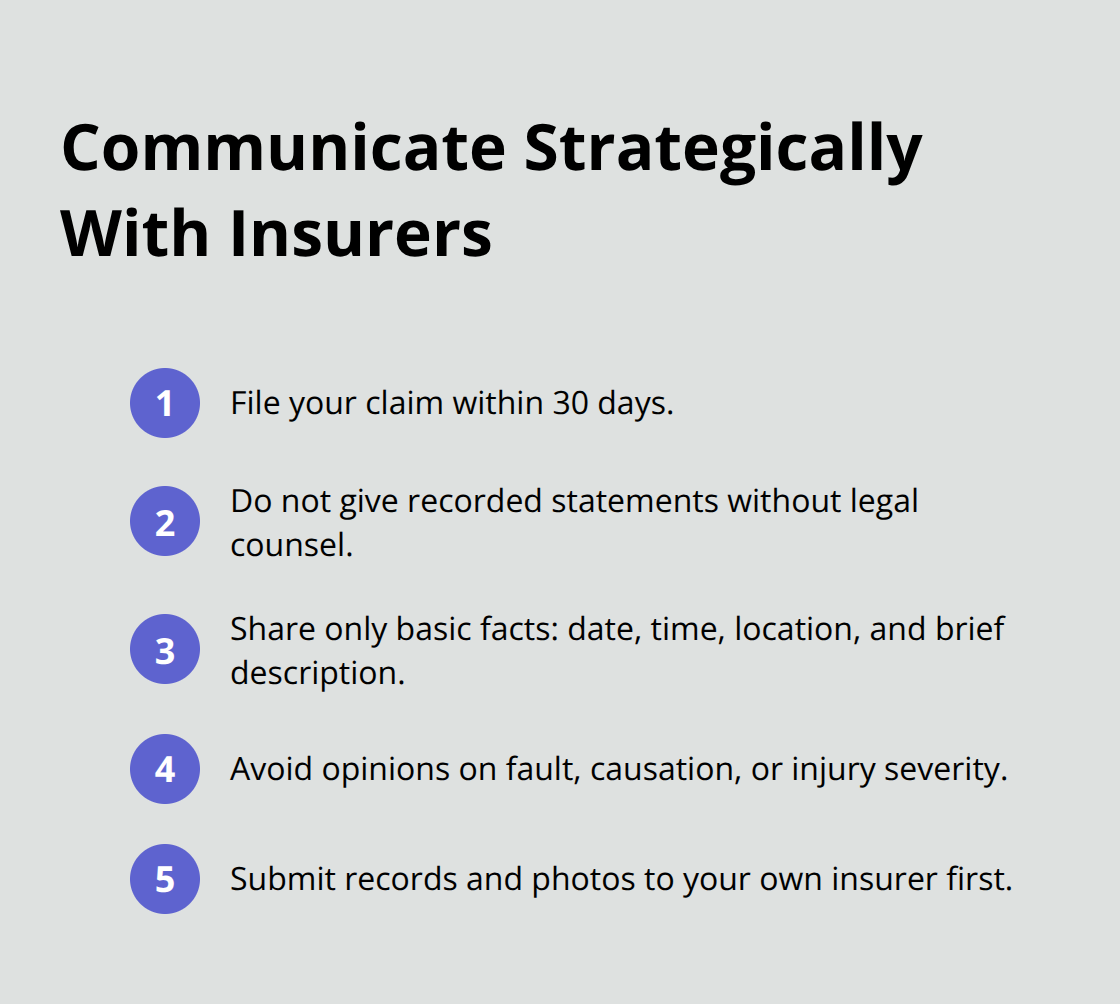
Withhold opinions about fault, causation, or injury severity until your claim is valued. Submit your medical records, repair estimates, and photographs to your own insurance company first, establishing your documentation trail.
Request itemized repair quotes from at least two shops, as insurers routinely undervalue damage assessments. When the at-fault driver’s insurance offers settlement, reject the initial offer immediately. According to the Insurance Information Institute, first settlement offers average 25 to 40 percent below actual claim value. You should provide a counter-offer with supporting documentation: medical bills, wage loss documentation, and photographs of injuries and vehicle damage.
Escalate When Negotiations Stall
If negotiations stall after three rounds of counter-offers, the claim has likely reached its settlement ceiling under insurance company authority. This is when legal action becomes necessary-filing a lawsuit shifts negotiating power dramatically. Insurance companies settle faster and for higher amounts when they face litigation, knowing that jury verdicts for motorcycle accident injuries frequently exceed policy limits in Sacramento County. Legal action becomes necessary when injuries exceed your policy limits, the at-fault driver is uninsured or underinsured, or the insurance company denies your claim outright based on comparative negligence arguments. We at O’Brien & Zehnder Law Firm help clients understand and pursue claims involving motorcycle incidents, guiding you through the insurance and legal claims process when settlement negotiations reach an impasse.
Final Thoughts
Motorcycle accidents in Sacramento County demand immediate action and strategic documentation. The evidence you collect at the scene, your factual communication with insurance companies, and your willingness to pursue legal action when settlements stall determine whether you recover fair compensation or accept inadequate offers. Insurance adjusters count on riders accepting quick payouts without understanding California motorcycle accident guidance or their actual claim value.
Document everything with photographs and witness statements before you leave the accident scene, communicate only factual information to insurance companies without admissions about fault, and escalate to legal action when negotiations reach their ceiling. Your initial settlement offer will undervalue your claim by 25 to 40 percent, making counter-offers with supporting documentation essential. If the at-fault driver carries minimum liability coverage and your injuries exceed those limits, you face a coverage gap that requires aggressive negotiation or litigation to close.
Contact O’Brien & Zehnder Law Firm for a consultation to review your claim and determine whether your case warrants legal action. We help clients understand and pursue claims involving motorcycle incidents, guiding you through the insurance and legal claims process when settlement negotiations stall. Your next step is protecting your rights by collecting evidence today and refusing to settle for less than your claim actually worth.