
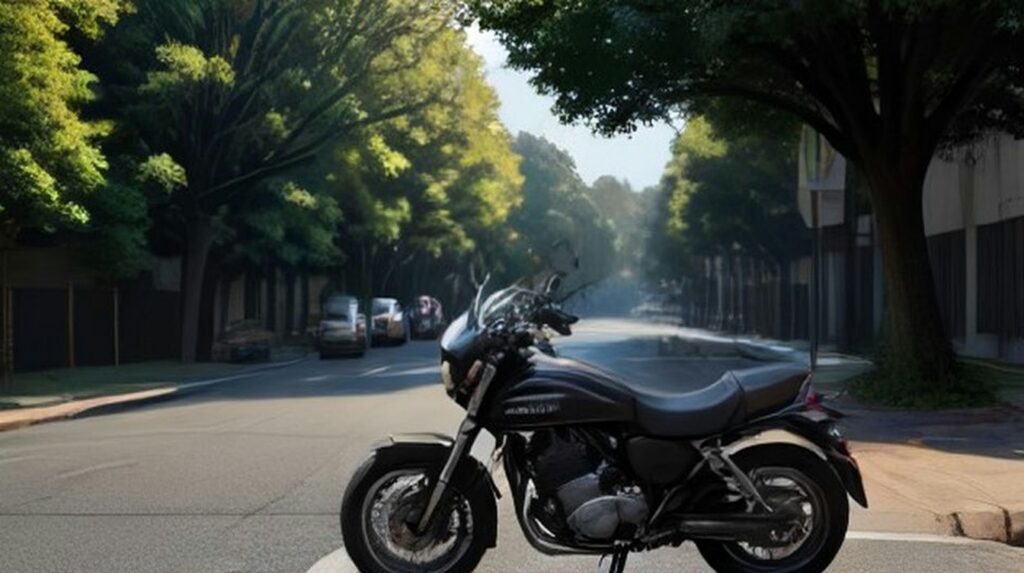
Sacramento County motorcycle accident claims often turn on a handful of questions that riders hear again and again: Was the rider lane splitting? Was the rider wearing a helmet? Who really caused the crash? Insurance companies sometimes rely on assumptions about motorcyclists to shift blame, even when another driver made the dangerous choice. Understanding how California law treats lane splitting, helmet use, and shared fault gives you real control over your claim and helps you push back against unfair arguments.
At O’Brien & Zehnder Law Firm, we help injured riders and their families throughout Sacramento County pursue full accountability after motorcycle crashes, so you can move forward with confidence. This guide explains how California’s lane splitting and helmet rules actually work, how fault is proven in a motorcycle claim, and the mistakes that can weaken a rider’s case.
How Lane Splitting and Helmet Rules Actually Work in California
Motorcycles share the same roads as cars and trucks, but California law includes rules written specifically for riders. Two of the most important for injury claims address lane splitting and helmets. Knowing exactly what these rules say, and what they do not say, helps keep the focus of a claim on how the crash actually happened.
What the Vehicle Code Says About Lane Splitting
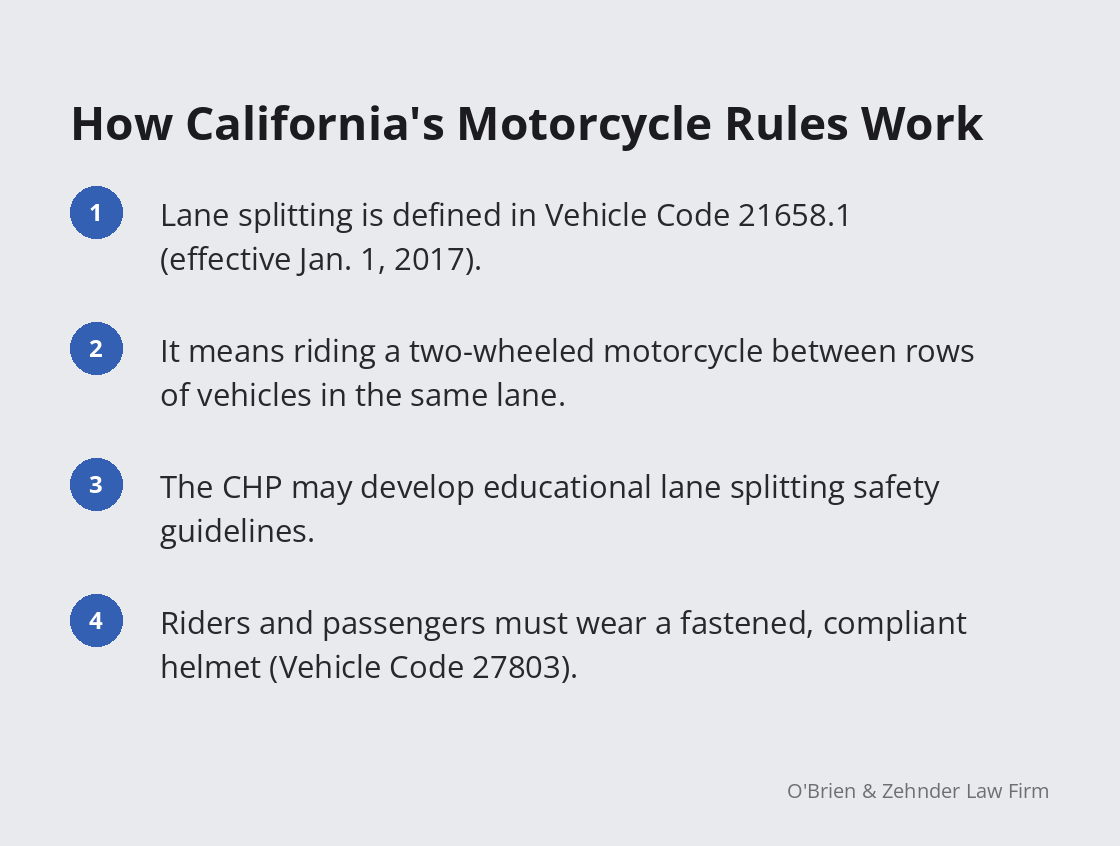
California Vehicle Code section 21658.1 defines lane splitting as driving a motorcycle that has two wheels in contact with the ground between rows of stopped or moving vehicles in the same lane, including on both divided and undivided streets, roads, or highways. The section was added by Assembly Bill 51 and took effect on January 1, 2017. It also authorizes the California Highway Patrol to develop educational guidelines relating to lane splitting in a manner that would ensure the safety of the motorcyclist and the drivers and passengers of surrounding vehicles.
Safety Guidelines and Reasonable Care
Section 21658.1 directs the Highway Patrol, when developing lane splitting guidelines, to consult with agencies and organizations that have an interest in road safety and motorcyclist behavior, including the Department of Motor Vehicles, the Department of Transportation, the Office of Traffic Safety, and a motorcycle organization focused on motorcyclist safety. In an injury claim, the central question is usually whether each person on the road used reasonable care under the conditions at the time. The speed of surrounding traffic, the space between vehicles, visibility, and whether a driver changed lanes without looking can all matter.
California’s Helmet Requirement
Vehicle Code section 27803 requires a driver and any passenger to wear a safety helmet meeting state requirements when riding on a motorcycle, motor-driven cycle, or motorized bicycle. The statute explains that wearing a safety helmet means having a compliant helmet on the head that is fastened with the helmet straps and that fits securely without excessive lateral or vertical movement. The section applies to persons riding on these vehicles on the highways.
Why These Rules Come Up in Injury Claims
After a crash, an insurance adjuster may focus on what the rider was doing rather than on what the other driver did. A question about whether the rider was splitting lanes, or whether the helmet was properly fastened, can become a way to argue that the rider shares the blame. Knowing what the statutes actually require helps you separate the real issues from assumptions. A rider who followed the rules of the road, and who was hit by a driver who changed lanes or turned without looking, should not have the claim reduced simply because a motorcycle was involved.
How Fault Is Proven in a Sacramento County Motorcycle Claim
A motorcycle claim is built on evidence showing that another person acted carelessly and that the carelessness caused the rider’s injuries. Because insurers may be quick to blame the rider, gathering that evidence early is especially important.
Common Driver Errors in Motorcycle Crashes
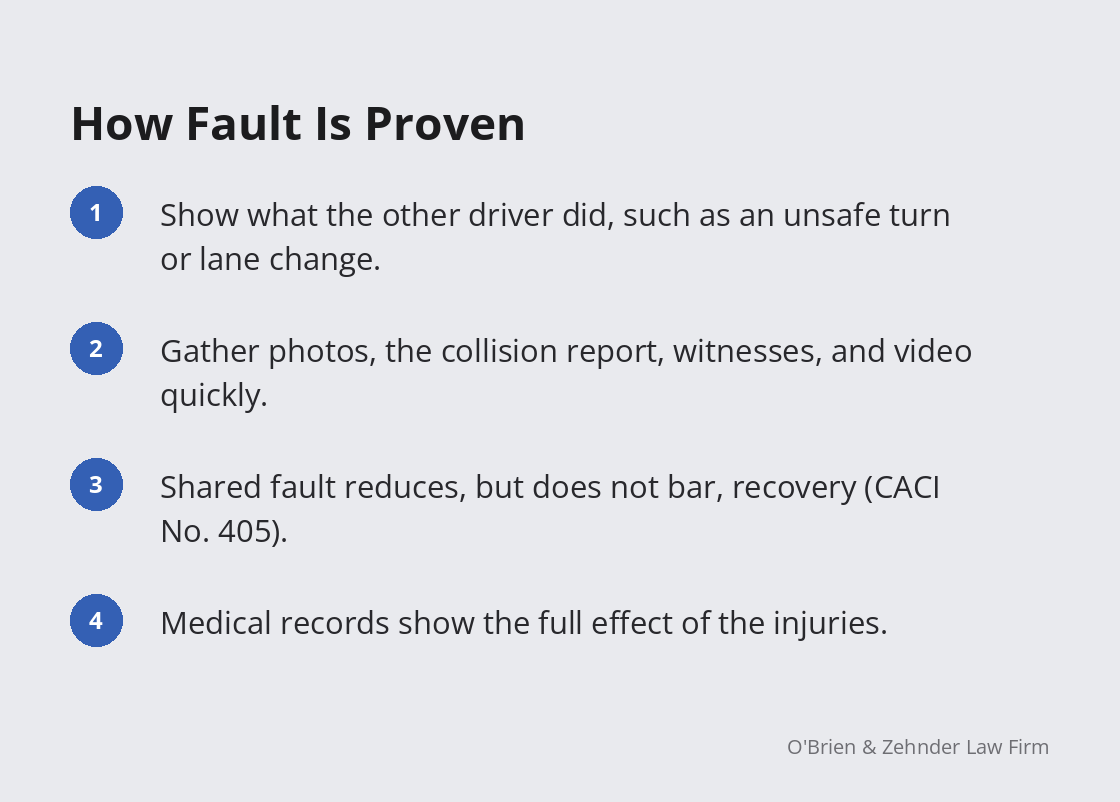
Many motorcycle collisions in Sacramento County begin with a driver who did not see the rider or misjudged the rider’s speed. A driver turning left across the rider’s path at an intersection, a driver changing lanes without checking mirrors and blind spots, and a driver opening a car door into traffic are familiar examples. Distracted driving and following too closely can also leave a rider with nowhere to go. Showing exactly what the other driver did, and when, is the foundation of the claim.
Evidence That Supports the Rider
Useful evidence can include photographs of the scene and the vehicles, the location of debris, the traffic collision report, statements from witnesses, and video from nearby businesses, traffic cameras, or dash cameras. Riders who use helmet cameras may have footage that shows the moments before the crash. Damage to the motorcycle and the other vehicle can also help reconstruct how the collision occurred. Because video is often recorded over quickly, requesting it promptly can make a meaningful difference.
How Shared Fault Is Handled
California uses comparative fault, which means a rider who was partly at fault can still recover for harm caused by someone else. Under California Civil Jury Instruction (CACI) No. 405, if the defendant proves that the injured person was negligent and that the person’s negligence was a substantial factor in causing the harm, the injured person’s damages are reduced by the jury’s determination of the percentage of the injured person’s responsibility. The defendant carries the burden of proving the rider’s share of fault, and arguments about lane splitting or helmet use must still connect to how the harm actually occurred.
Documenting Injuries and Losses
Motorcycle crashes often cause serious injuries because riders have little physical protection. Medical records, treatment plans, and notes from follow-up care show the nature of the injuries and how recovery is progressing. Records showing time missed from work, changes in daily activities, and the need for ongoing care help show the full effect of the crash. Keeping a simple journal of symptoms and limitations can also help capture details that are easy to forget months later.
Mistakes That Can Weaken a Motorcycle Accident Claim
Even a strong claim can be weakened by early missteps. These are some of the most common mistakes injured riders make.
Accepting Blame Based on Assumptions
Some riders apologize at the scene or assume they are at fault simply because they were on a motorcycle or were moving between lanes. Lane splitting is defined in the Vehicle Code, and the question in a claim is whether everyone involved acted with reasonable care. Avoid guessing about fault at the scene or in conversations with insurers, and let the evidence show what happened.
Missing Filing Deadlines
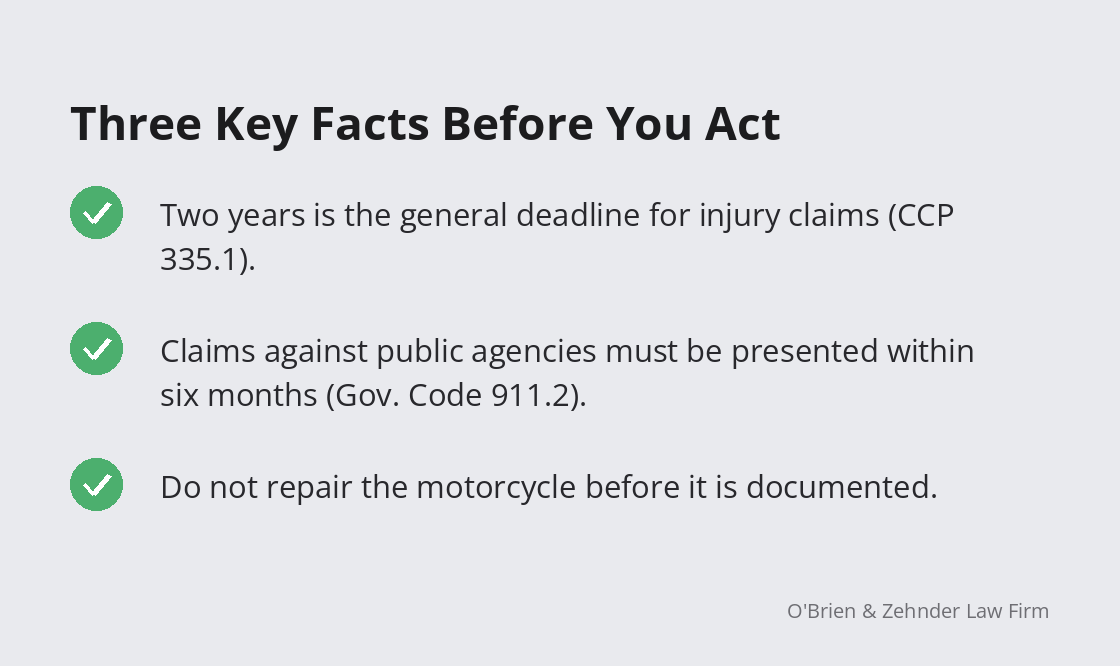
California sets firm time limits for injury claims. Code of Civil Procedure section 335.1 generally requires an action for injury to, or for the death of, an individual caused by the wrongful act or neglect of another to be filed within two years. When a public agency may share responsibility, such as for a dangerous road condition, the timeline is much shorter: Government Code section 911.2 requires a claim relating to a cause of action for death or for injury to person to be presented not later than six months after the cause of action accrues. Waiting can permanently end the right to pursue a claim.
Repairing the Motorcycle Too Soon
It is natural to want your motorcycle repaired or replaced quickly, but the bike itself can be important evidence. Damage patterns can show the angle and force of impact, and a quick repair may erase that information. Photographing the motorcycle thoroughly, and keeping damaged gear such as a helmet or jacket, preserves evidence that can support your account of the crash.
Giving Recorded Statements Too Early
The other driver’s insurer may call soon after the crash and ask for a recorded statement. Comments made while you are in pain, on medication, or still unsure of the full extent of your injuries can be taken out of context later, especially on questions about speed, lane position, and visibility. It is usually wise to understand your rights and review the facts before giving a detailed statement to the other side’s insurer. Keeping your own notes of every conversation, including the date, the person you spoke with, and what was said, also helps protect your account of what happened.
Final Thoughts
Sacramento County motorcycle accident claims often involve questions about lane splitting, helmet use, and shared fault. California’s Vehicle Code defines lane splitting and requires riders and passengers to wear compliant helmets, while comparative fault rules allow an injured rider to recover even when fault is shared. Strong evidence and attention to the two-year general deadline, and the much shorter six-month claim period for public entities, protect your ability to pursue full accountability.
Recovering from a motorcycle crash takes time and energy. Having a team handle the evidence, the insurance companies, and the deadlines lets you focus on healing.
If you were injured in a motorcycle crash caused by someone else, contact O’Brien & Zehnder Law Firm to speak with our team in Sacramento County. We will review what happened, explain your options, and help you take the next step with confidence.