

Sacramento County wrongful death claims arise in the hardest moments a family can face. When a loved one dies because of a careless driver, an unsafe property, or another person’s negligence, the grief is overwhelming, and questions about legal rights can feel impossible to think about. Yet California law sets clear rules about who may bring a claim, what losses can be recovered, and how long families have to act. Understanding those rules early gives you real control over protecting your family’s future while you focus on healing.
At O’Brien & Zehnder Law Firm, we help families throughout Sacramento County hold negligent parties accountable after a preventable loss, so you can move forward with confidence. This guide explains how a wrongful death claim actually works in California, the steps involved in building one, and the mistakes that can put a family’s claim at risk.
What a Wrongful Death Claim Actually Is in California
A wrongful death claim is a civil action brought by surviving family members when a person’s death is caused by the wrongful act or neglect of another. California’s wrongful death statute is Code of Civil Procedure Section 377.60, which states that a cause of action for the death of a person caused by the wrongful act or neglect of another may be asserted by certain family members or by the decedent’s personal representative on their behalf. The claim belongs to the survivors and focuses on what they have lost, rather than on the injuries the decedent suffered before passing.
Who May Bring the Claim
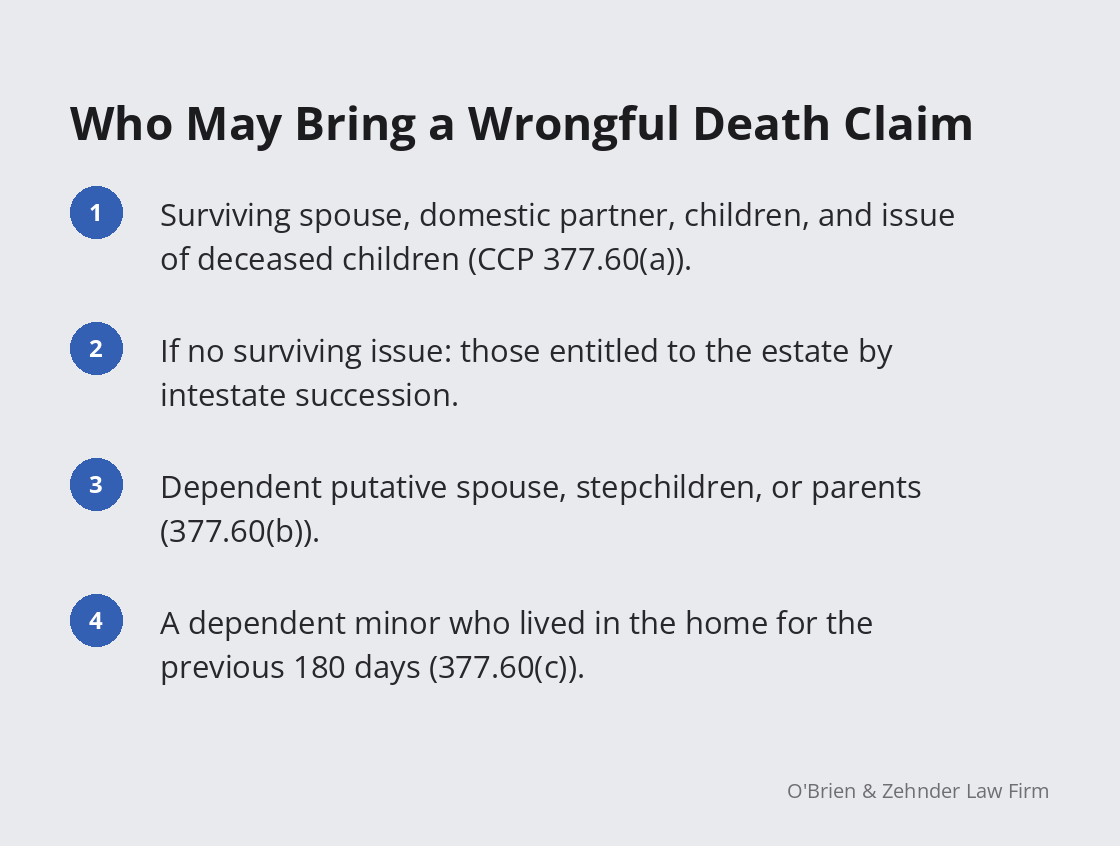
Section 377.60(a) gives the first right to the decedent’s surviving spouse, domestic partner, children, and issue of deceased children. If there is no surviving issue, the persons who would be entitled to the decedent’s property by intestate succession may bring the claim, which can include the surviving spouse or domestic partner and, in some families, parents or siblings. Under Section 377.60(b), certain people may also sue if they were dependent on the decedent, including a putative spouse, children of a putative spouse, stepchildren, or parents. Section 377.60(c) adds a minor who, at the time of death, had lived in the decedent’s household for the previous 180 days and depended on the decedent for one-half or more of the minor’s support.
Wrongful Death Compared With a Survival Action
A wrongful death claim is often paired with a separate claim called a survival action. Under Code of Civil Procedure Section 377.30, a cause of action that the decedent could have brought survives death and passes to the decedent’s successor in interest, and the action may be commenced by the decedent’s personal representative or, if none, by the successor in interest. Section 377.62 allows a survival action to be joined with a wrongful death action arising out of the same wrongful act or neglect. The two claims seek different losses, and understanding the difference helps families avoid leaving part of their case unclaimed.
The survival action focuses on the decedent’s own claim. Under Section 377.34, the damages in that action are generally limited to the loss or damage the decedent sustained or incurred before death. When no personal representative has been appointed through the probate process, a successor in interest who wants to bring or continue the survival claim must file an affidavit or declaration under Section 377.32. That document states facts such as the decedent’s name, the date and place of death, and that no proceeding is pending in California to administer the estate, and a certified copy of the death certificate must be attached.
What Losses the Family May Recover
Section 377.61 provides that damages may be awarded that, under all the circumstances of the case, may be just, but may not include damages recoverable in a survival action under Section 377.34. California’s official civil jury instructions, CACI No. 3921, describe the categories a jury may consider when an adult dies. Economic losses can include the financial support the decedent would have contributed, gifts or benefits the family would have expected to receive, and the reasonable value of household services the decedent would have provided. Noneconomic losses can include the loss of the decedent’s love, companionship, comfort, care, assistance, protection, affection, society, and moral support. The same instruction tells jurors not to consider the family’s grief, sorrow, or mental anguish, or the decedent’s pain and suffering.
How Sacramento County Families Build a Wrongful Death Case
Wrongful death cases are built on evidence that explains how the death happened and what it has meant for the family. Because the person who could best describe events is no longer here, early investigation often carries even more weight than in an ordinary injury claim. Taking organized steps soon after the loss protects information that can disappear quickly.
Establishing Fault
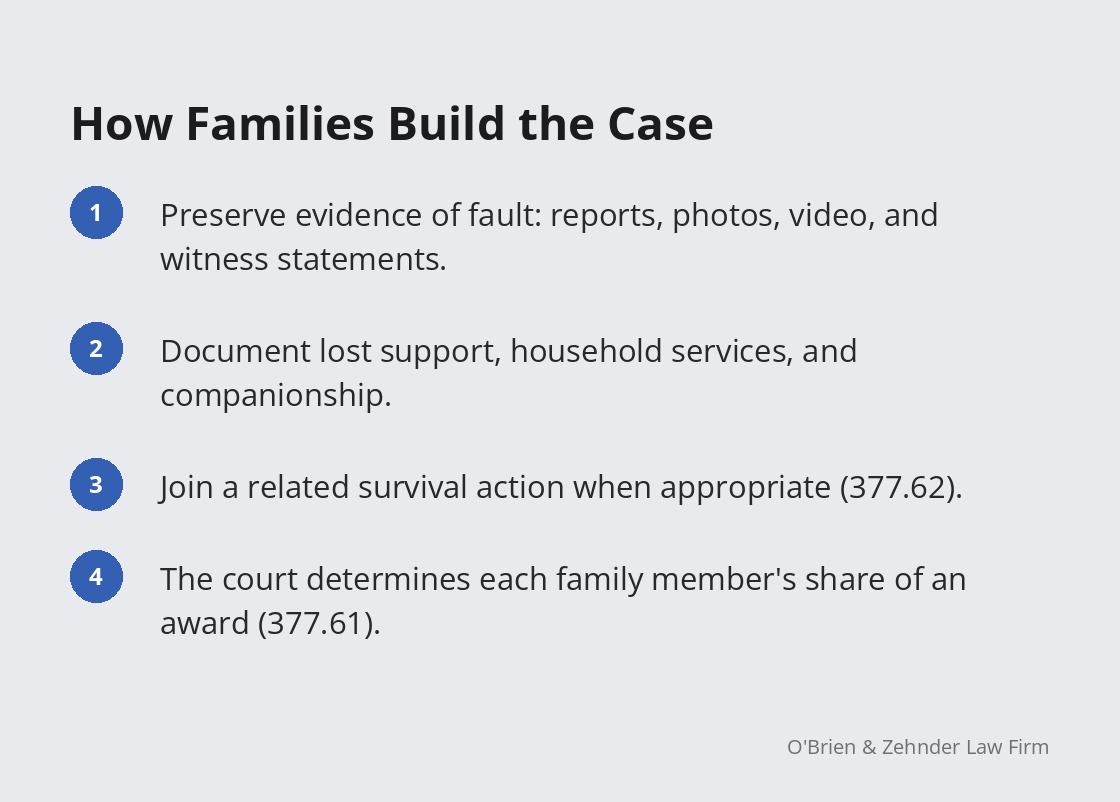
Most wrongful death claims arising from vehicle crashes, falls, and other incidents rest on negligence, meaning a person or company failed to use reasonable care and that failure caused the death. Proof may come from police and collision reports, scene photographs, witness statements, vehicle data, surveillance video, maintenance records, and the opinions of qualified professionals such as accident reconstructionists or physicians. Gathering these materials early, before video is overwritten or witnesses become difficult to locate, strengthens the family’s ability to show exactly what went wrong.
Documenting the Family’s Losses
Because recovery focuses on what survivors have lost, families should collect records that show the decedent’s role in their lives. Employment and income records can help show financial support. Evidence of household responsibilities, such as caring for children, maintaining the home, or helping aging parents, can support a claim for the value of those services. Photographs, letters, and testimony from friends and relatives can help a jury understand the relationship and the companionship that was lost. This kind of documentation turns a family’s experience into evidence a court can weigh.
Coordinating Claims Among Family Members
A wrongful death case often involves several eligible family members, such as a spouse and adult children, or children from different relationships. Section 377.61 states that the court shall determine the respective rights in an award of the persons entitled to assert the cause of action. CACI No. 3921 likewise allows a jury to return a single verdict amount for all plaintiffs that the court then divides. Bringing all eligible family members together early helps prevent conflicts and keeps the case moving in one direction.
Mistakes That Put Wrongful Death Claims at Risk
Grieving families understandably need time, but certain delays and missteps can permanently limit their options. Insurance companies begin building their defense right away, and the law sets deadlines that do not pause for grief. Knowing the most common problems helps families protect their claim without rushing important decisions.
Missing the Filing Deadline
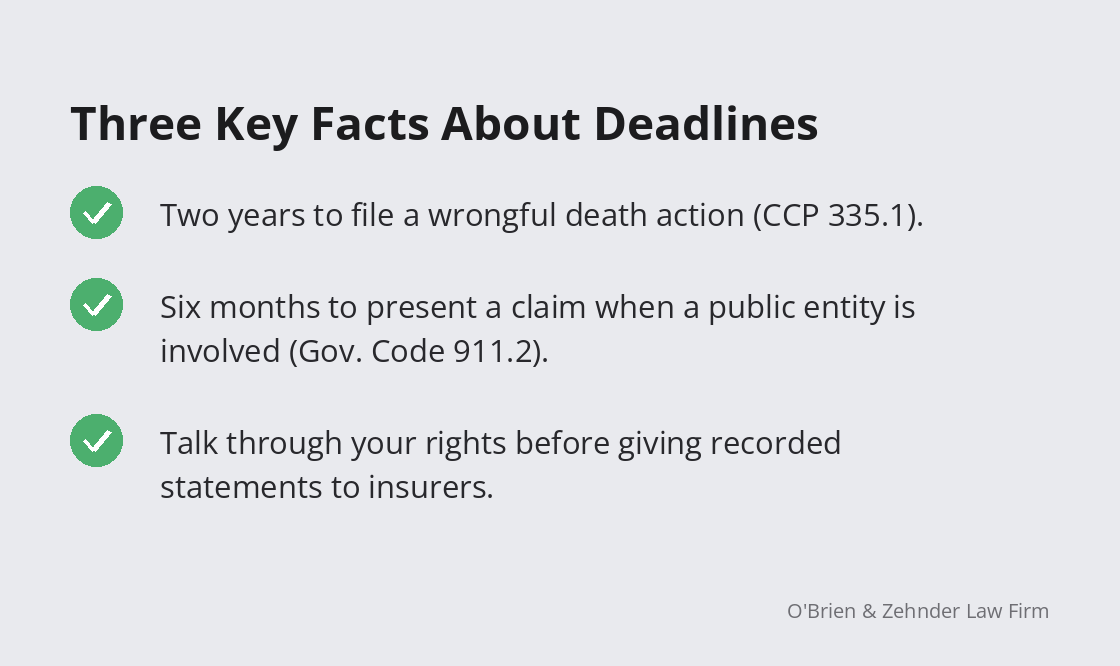
Code of Civil Procedure Section 335.1 sets a two-year period for an action for injury to, or for the death of, an individual caused by the wrongful act or neglect of another. Certain circumstances can affect how that period is calculated, so families should not assume they have more time than the statute allows. Waiting until the deadline is near can also leave too little time to investigate properly, locate witnesses, and prepare the claim.
Overlooking a Public Agency Claim
When a city, county, transit agency, or other public entity may share responsibility, a much shorter deadline applies first. Under Government Code Section 911.2, a claim relating to a cause of action for death or for injury to a person must be presented to the public entity not later than six months after the cause of action accrues. Dangerous road conditions, government vehicles, and public property can all raise this issue. Our article on Sacramento County government claims explains this process in more detail.
Speaking With Insurers Too Soon
Insurance adjusters may contact family members shortly after a death, sometimes expressing sympathy while also asking for recorded statements or quick agreements. Statements made in the early days of grief can be taken out of context, and an early agreement may not account for the full scope of the family’s losses. Families are generally better protected when they understand their rights before discussing the details of the claim with an insurer.
Final Thoughts
Sacramento County wrongful death claims give surviving family members a way to hold negligent parties accountable and to recover for the support, services, and companionship they have lost. California law defines who may bring the claim, allows a related survival action to be joined, and sets firm deadlines, including a two-year statute of limitations and a six-month claim requirement when a public entity is involved.
No legal process can undo a loss, but taking informed steps can protect your family’s stability and bring a measure of accountability. Preserving evidence, documenting the role your loved one played in your family’s life, and acting within the deadlines all help keep your options open.
If you have lost a loved one because of someone else’s negligence, contact O’Brien & Zehnder Law Firm to speak with our team in Sacramento County. We will listen to your family’s story, explain your rights under California law, and help you decide on the next step with care.