

Getting a fair settlement after a personal injury requires understanding how negotiations work and what mistakes to avoid. We at O’Brien & Zehnder Law Firm help Sacramento County residents navigate these critical decisions every day.
California settlement considerations often come down to timing, documentation, and knowing your rights. This guide walks you through the negotiation process and shows you how to protect your interests.
How Settlement Negotiations Work in Sacramento County
Settlement negotiations in California personal injury cases follow a structured but often unpredictable path. Insurance adjusters contact you within days or weeks of filing a claim, armed with a damage assessment that almost always undervalues your case. The adjuster’s goal is straightforward: close the file quickly and cheaply. Defense attorneys enter later if negotiations stall, and their role shifts the dynamic considerably. They have authority to make higher offers than adjusters, but they also prepare for litigation, which means they test your resolve. This power dynamic affects every decision you make during talks.
Insurance Adjusters and Defense Attorneys Play Different Roles
Adjusters operate under strict cost-containment mandates. They answer to insurance companies that measure their performance by how much they save on payouts. Defense attorneys, by contrast, answer to the insurance company’s legal department and carry different incentives. They can authorize higher settlements because they understand litigation risk and jury unpredictability. When an adjuster hits a wall during negotiations, the case moves to defense counsel, and the conversation changes entirely. Defense attorneys know that taking weak cases to trial costs money and creates exposure. This shift in authority often produces movement in settlement talks that seemed frozen weeks earlier.
The First Offer Reveals the Insurer’s Strategy
Adjusters open with lowball figures, typically 20 to 40 percent below what cases actually settle for in Sacramento County. This isn’t negotiation theater; it’s standard practice. According to research from the American Association for Justice, initial settlement offers average 35 percent lower than final settlements in personal injury cases.
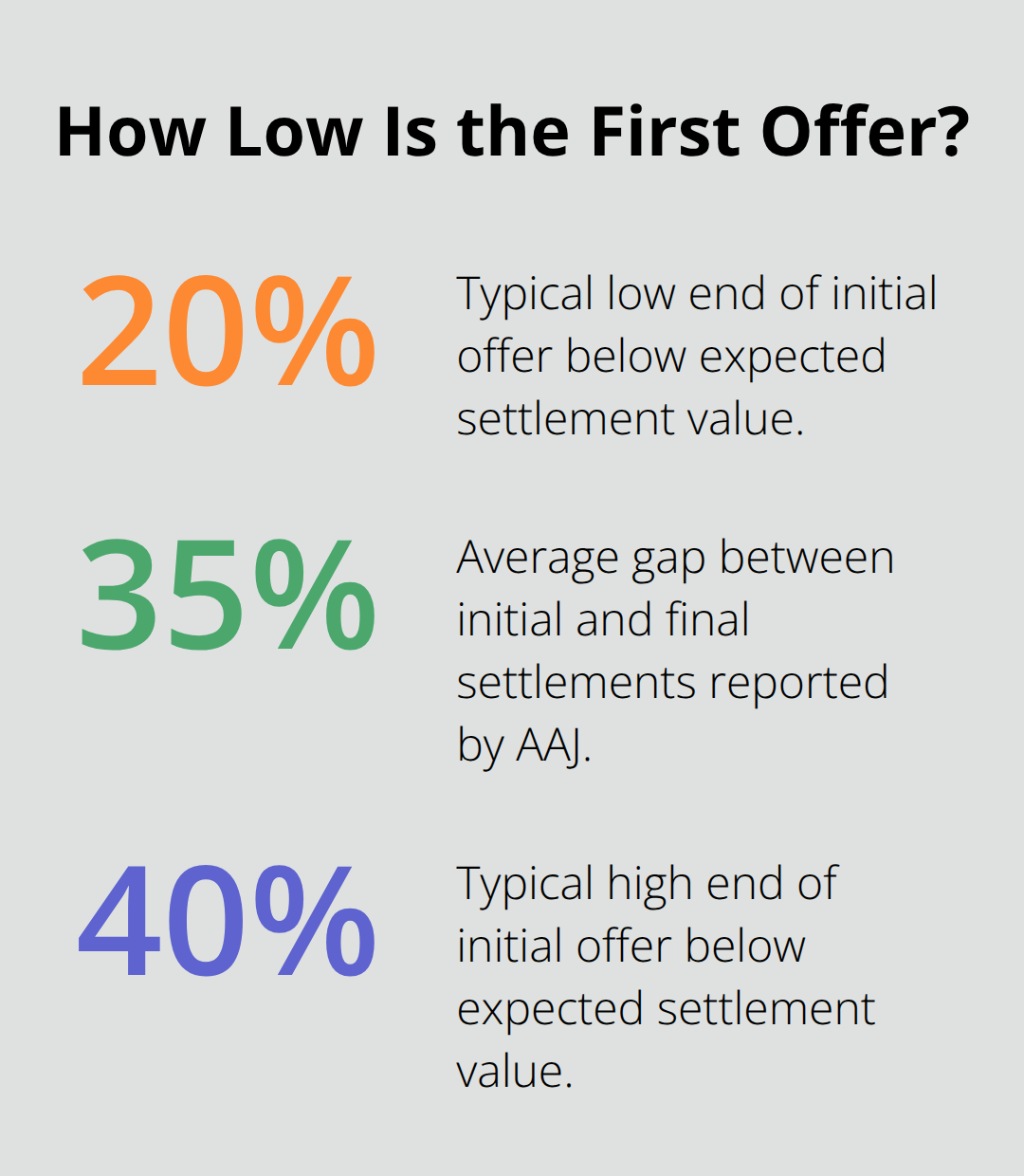
Your response to that first offer determines much of what follows. Rejecting it immediately signals you understand your case’s value and won’t accept pressure tactics. Accepting it ends negotiations permanently. Countering with documentation and evidence is where leverage lives. Preparation before any conversation with an adjuster changes outcomes significantly.
Timing Creates Pressure That Works Against You
The negotiation timeline typically spans three to nine months, though some cases move faster and others take longer. Insurance companies know most injury victims face mounting medical bills and lost income, which creates pressure to settle quickly. This becomes their advantage, not yours. Courts in California currently experience a backlog, with average civil case timelines extending 18 to 24 months from filing to trial. This delay actually strengthens your negotiating position because the insurer faces uncertainty about litigation costs and jury verdicts. The worst time to settle is immediately after injury when documentation remains incomplete and long-term effects stay unclear. Medical providers often don’t finalize treatment plans for weeks or months after the initial incident. Settling before you understand your full medical picture means accepting permanent compensation for ongoing injuries-a mistake that haunts many Sacramento County residents long after the paperwork is signed.
Factors That Affect Your Settlement Value in Sacramento County
Medical Expenses Form Your Settlement Foundation
Medical costs create the baseline for any settlement calculation, yet Sacramento County residents frequently overlook what belongs in this category. Direct medical expenses cover emergency room visits, surgeries, hospital stays, and imaging-these items are straightforward to document. Future care costs catch people off guard because they extend far beyond the initial treatment phase. If your injury requires ongoing physical therapy, medications, or specialist appointments for years after settlement, those expenses must appear in your claim now. Insurance companies count on injured people forgetting to include long-term treatment when they settle quickly.
The National Center for Injury Prevention and Control reports that serious injury survivors average 18 months of ongoing medical care post-incident, yet most people settle within 6 months of injury. That gap represents thousands of dollars in uncompensated expenses. Request written treatment plans from your providers that project future care needs. Ask your doctor specifically what ongoing treatment looks like over the next two, five, and ten years.
Lost Wages and Earning Capacity Multiply Settlement Value
Lost income substantially multiplies your settlement value because it includes both wages you’ve already lost and future earning capacity. If you earned $60,000 annually and missed four months of work, that amounts to $20,000 in direct lost wages. But if your injury prevents you from returning to physically demanding work, and your new job pays 30 percent less, you’ve lost earning capacity for decades. California courts recognize this loss, and insurers calculate it using life expectancy tables and vocational assessments.
The Bureau of Labor Statistics data shows that injury-related job changes typically result in 15 to 25 percent wage reduction across industries. Document every day missed from work with pay stubs or employer statements. If your injury affects your career trajectory, hire a vocational rehabilitation specialist to quantify long-term earning loss-the cost of that assessment typically returns five to ten times its value in settlement increases.
Pain and Suffering Calculations Follow Predictable Patterns
Pain and suffering calculations frustrate people because they appear subjective, yet insurers apply rigid formulas to calculate them. Many use a multiplier method: they take your total medical expenses and multiply by a number between one and five, depending on injury severity. A broken leg with $15,000 in medical costs might generate $30,000 to $75,000 in pain and suffering damages using this method. California doesn’t cap pain and suffering awards in personal injury cases, which means your actual damages can exceed what insurance companies initially suggest.
Documentation of how your injury affected daily life carries significant weight. Medical records noting your pain levels, mobility restrictions, and treatment responses strengthen your claim. Photographs showing physical changes, journal entries describing daily struggles, and testimony from people who witnessed your limitations all support pain and suffering claims.
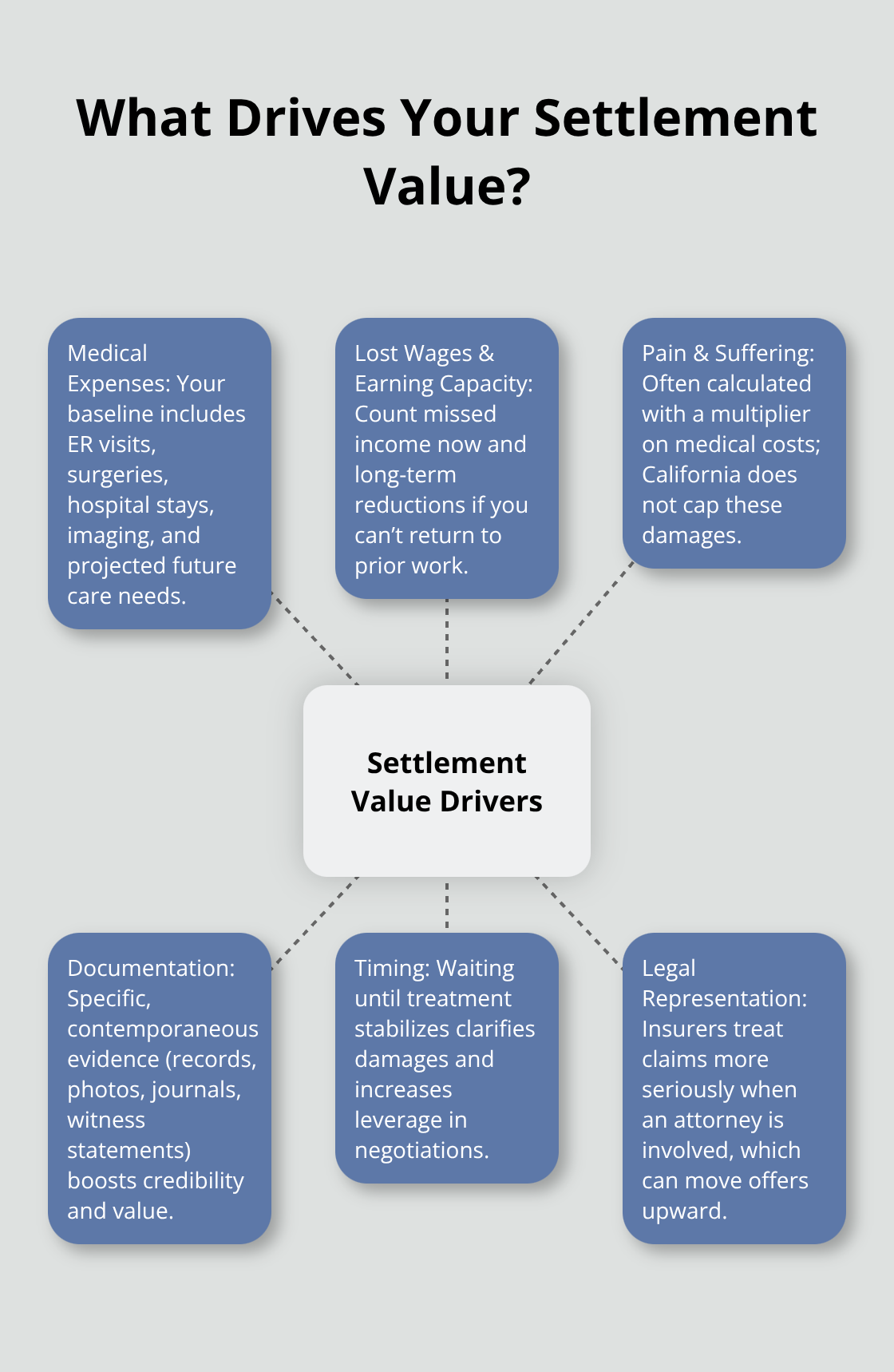
Insurance adjusters dismiss vague complaints but respond to specific evidence.
Instead of stating you experienced significant pain, document that you couldn’t sleep more than two hours nightly for six weeks, couldn’t dress yourself for three months, or couldn’t work your job for four months. Those concrete details produce higher valuations than general statements about suffering. The specificity transforms abstract pain into measurable impact on your life, which adjusters must address in their calculations. This precision in documentation often determines whether your settlement reflects your actual losses or falls short of what your case truly warrants.
Common Mistakes That Reduce Settlement Amounts in Sacramento County
Settlement negotiations collapse or produce inadequate payouts when Sacramento County residents make preventable errors that undermine their position. The first mistake happens almost immediately: accepting the adjuster’s opening offer within weeks of injury. Insurance adjusters deliberately lowball initial proposals, knowing that injured people face financial pressure and incomplete medical information. Accepting that first offer eliminates all negotiating leverage permanently. The American Association for Justice found that claimants who reject initial offers and negotiate receive settlements 60 percent higher on average than those accepting first proposals. Your response to that opening number determines your financial outcome for years.
Waiting Costs Nothing; Settling Too Fast Costs Everything
Waiting until your medical treatment stabilizes gives you concrete data about actual injury severity, which strengthens your counteroffer significantly. Most Sacramento County residents should expect to spend at least three to six months gathering documentation before responding to settlement proposals with authority. This delay works in your favor because insurers face uncertainty about litigation costs and jury verdicts. The longer you wait, the more pressure builds on the insurance company to resolve the case rather than risk trial expenses.
Social Media Posts Destroy Your Settlement Value
The second major mistake involves social media activity that insurers weaponize against injury claims. Insurance companies employ investigators who monitor Facebook, Instagram, and TikTok accounts of claimants, looking for posts that contradict injury claims. A photograph showing you hiking, playing sports, or appearing active gets presented to juries as evidence that your injuries aren’t as severe as claimed, potentially reducing your settlement by 25 to 50 percent depending on the discrepancy. The National Law Review documented cases where social media posts resulted in settlement reductions averaging $40,000 across personal injury claims. Avoid posting about your activities, physical condition, or emotional state during negotiations.
Documentation Transforms Vague Claims Into Undeniable Evidence
The third mistake undermines your entire claim: failing to document damages thoroughly before settling. Insurance adjusters rely on incomplete records to justify lower offers. Maintain detailed records of every medical appointment, prescription, physical therapy session, and treatment expense. Request itemized bills from all providers rather than accepting summary statements. Photograph any visible injuries, mobility aids, or home modifications you’ve made to accommodate your injury.
Keep a daily journal documenting pain levels, medication side effects, and activity limitations. Collect written statements from employers about missed work days and job performance changes. These documents transform vague claims into undeniable evidence that forces adjusters to increase their offers substantially.
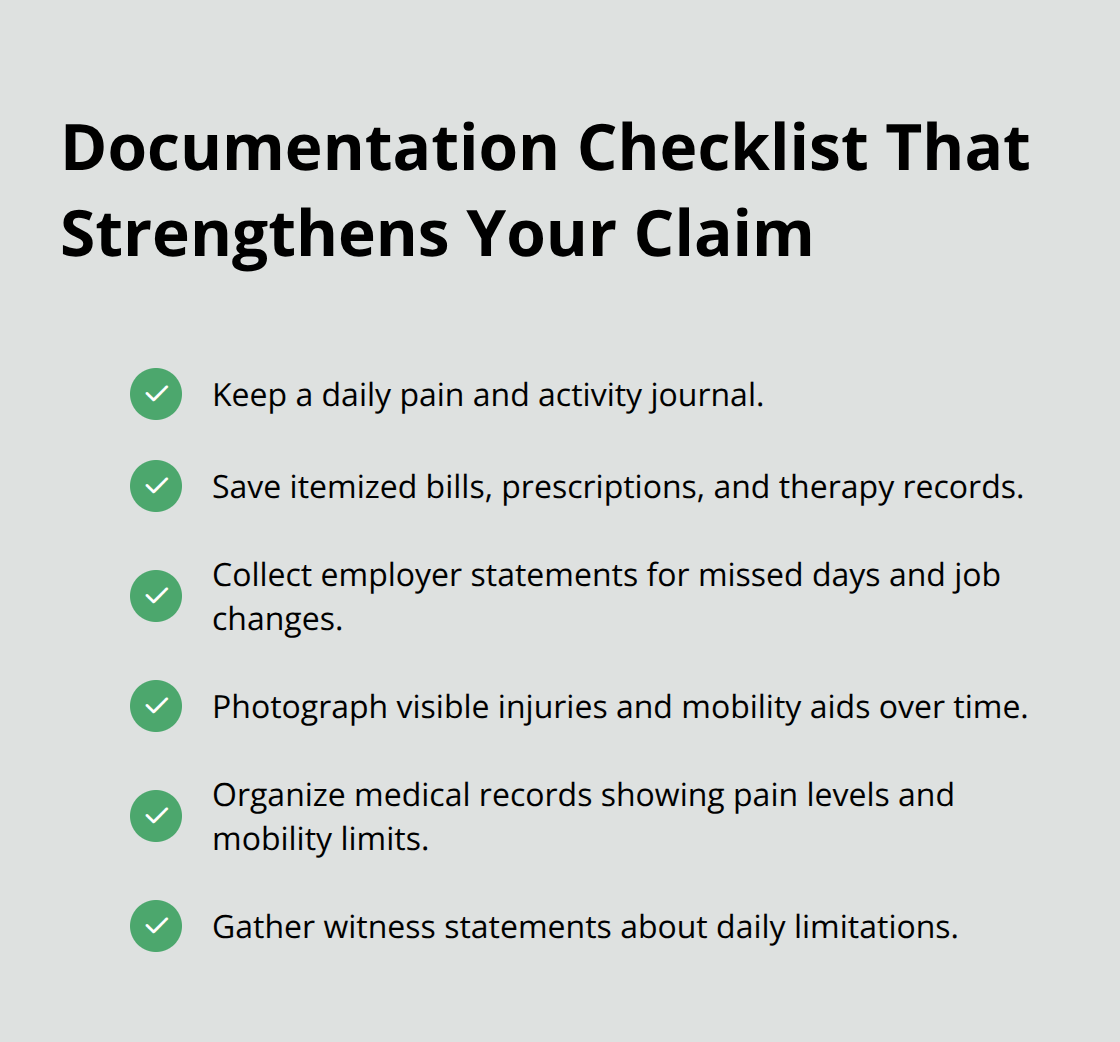
Thorough documentation produces settlement increases of 30 to 60 percent compared to cases with sparse records (based on patterns we observe at O’Brien & Zehnder Law Firm). Your settlement value lives in the details you collect today, not in conversations you have months later when memories fade and documentation becomes difficult to reconstruct.
Final Thoughts
Settlement negotiations in Sacramento County demand preparation, patience, and clear understanding of what your claim actually costs. The mistakes that reduce settlement amounts-accepting early offers, posting on social media, and skipping documentation-are entirely preventable. You control whether your settlement reflects your true losses or falls short of what you deserve.
California settlement considerations ultimately rest on one principle: information creates leverage. The more you document about your medical treatment, lost income, and daily limitations, the harder it becomes for insurance adjusters to justify lowball offers. Waiting three to six months while gathering this documentation costs nothing but produces settlements 60 percent higher than rushing to accept initial proposals.
Many Sacramento County residents benefit from legal representation during settlement negotiations, particularly when injuries involve ongoing medical care or significant earning capacity loss (insurance companies take cases more seriously when they know an attorney is involved). If your case involves multiple injuries, long-term treatment needs, or substantial lost wages, contact O’Brien & Zehnder Law Firm to discuss your claim and learn what your specific situation warrants.