
A personal injury can happen in seconds-a car crash, a slip on someone’s property, or a defective product. If you’ve been hurt due to someone else’s negligence, understanding California personal injury basics is the first step toward protecting your rights.
We at O’Brien & Zehnder Law Firm help Sacramento County residents navigate these claims every day. This guide walks you through what you need to know about liability, damages, and the path forward.
What Makes a Personal Injury Claim Valid
The Four Elements You Must Prove
A personal injury claim in California requires proving four specific elements, and missing any one of them kills your case. First, the defendant owed you a legal duty-drivers must follow traffic laws, property owners must maintain safe premises, and manufacturers must produce non-defective products. Second, they breached that duty through negligence or intentional conduct. Third, their breach directly caused your injury. Fourth, you suffered actual damages. California courts won’t award anything without all four pieces in place.
Why Documentation Matters from Day One
Documentation from the start matters enormously. Photographs of accident scenes, medical records dated immediately after the incident, and witness statements create the foundation that proves causation and damages. Many people wait weeks or months to gather evidence, and by then memories fade, scenes change, and photographs become useless. Delayed evidence collection costs thousands in recoverable compensation because proof deteriorates over time.
Understanding Your Damage Categories
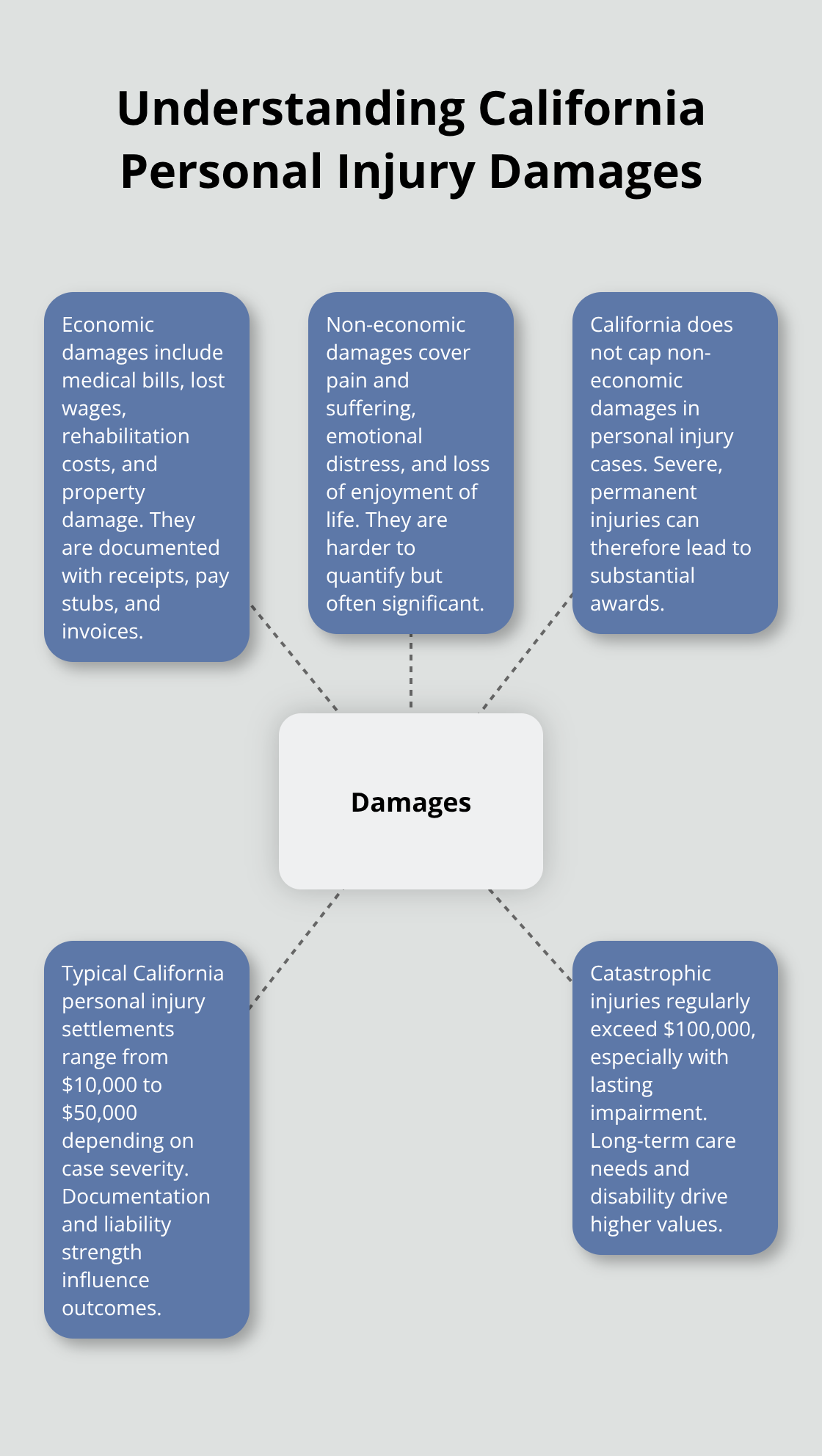
Damages fall into two categories: economic and non-economic. Economic damages include medical bills, lost wages, rehabilitation costs, and property damage-these are straightforward and based on receipts and pay stubs. Non-economic damages cover pain and suffering, emotional distress, and loss of enjoyment of life, and they’re harder to quantify but often represent the largest portion of settlements. California doesn’t cap non-economic damages in personal injury cases, meaning a severe injury with permanent disability can result in substantial awards. The Insurance Information Institute reports that the average personal injury settlement in California ranges from $10,000 to $50,000 depending on case severity, though catastrophic injuries regularly exceed $100,000.
The Critical Deadline You Cannot Miss
California gives you two years from the injury date to file a personal injury lawsuit, according to California Code of Civil Procedure Section 335.1. Miss that deadline and your claim dies, regardless of merit. For premises liability cases involving government entities like cities or counties, the timeline is even shorter-you must file a claim within six months. Your job isn’t to guess what your claim is worth-it’s to gather evidence that proves liability and documents every loss you’ve experienced. Understanding these deadlines and damage categories sets the stage for navigating the insurance claims process, which begins immediately after your injury.
How to File and Negotiate Your Insurance Claim
Report Your Claim Immediately
Contact the at-fault party’s insurance company within days of your injury, not weeks. Most insurers operate claims hotlines and online portals that accept initial reports 24/7. When you call, provide only basic facts: date, time, location, and that you were injured. Do not admit fault, speculate about what happened, or accept any settlement offer on the spot. Insurance adjusters are trained to minimize payouts, and anything you say can be used against you later. Request a claim number immediately and ask for written confirmation of your claim via email. The National Association of Insurance Commissioners reports that delays in reporting claims can result in denials or reduced settlements, so speed matters here.
Build Your Evidence File
Medical records form the backbone of your claim value. Obtain complete records from every healthcare provider you visit, including emergency room notes, imaging reports, physical therapy progress notes, and prescriptions. Insurers scrutinize gaps in treatment, so if you stop seeing doctors for weeks or months, they’ll argue your injuries weren’t serious. Photograph your injuries at multiple stages of healing, document missed work days with pay stubs or employer letters confirming lost income, and keep receipts for all medical expenses (including copays and transportation costs). Gather written statements from anyone who witnessed the incident or saw your injuries immediately after. Insurance companies pay for what they can verify, so incomplete documentation directly reduces your settlement amount. Organize all documents chronologically in a single folder before any settlement discussion begins.
Counter Initial Settlement Offers
Initial settlement offers from insurers typically fall 40 to 60 percent below what cases ultimately settle for, according to data from the American Association for Justice. Reject the first offer in writing and provide a detailed counter-demand with supporting documentation attached. Calculate your economic damages precisely: add all medical bills, lost wages, and out-of-pocket costs, then multiply by a reasonable factor for non-economic damages based on injury severity and permanence.

For minor injuries, multiply by two to three; for moderate injuries, multiply by four to six; for severe injuries with lasting effects, multiply by eight or higher. Submit your counter-demand in writing with your evidence attached, then wait for their response. Most insurers expect negotiation and budget for it.
Recognize When Legal Help Becomes Necessary
If the gap between your demand and their offer remains wide after two or three exchanges, that signals their willingness to litigate. At that point, you should seriously consider legal representation before proceeding further. An attorney can evaluate whether your case warrants a lawsuit and handle negotiations on your behalf. The decision to pursue litigation versus continued settlement talks depends on factors like injury severity, available insurance coverage, and the strength of liability evidence. Understanding where your case stands in the negotiation process positions you to make informed decisions about the next steps in your claim.
Common Personal Injury Cases We Handle
Motor Vehicle Accidents and Liability
Motor vehicle accidents dominate personal injury claims in Sacramento County. The California Highway Patrol reports over 3,600 injury collisions annually in Sacramento County alone, with rear-end crashes accounting for roughly 30 percent of all incidents. These cases hinge on proving the other driver violated traffic laws or acted negligently-running red lights, speeding, distracted driving, or failure to yield.
Your evidence must show the defendant’s specific action that caused the collision. Police reports help, but witness statements and vehicle damage patterns often prove more valuable since they corroborate negligence. Insurance companies scrutinize vehicle damage severity against claimed injuries, so if your car sustained minor damage but you claim serious injuries, adjusters will push back hard.
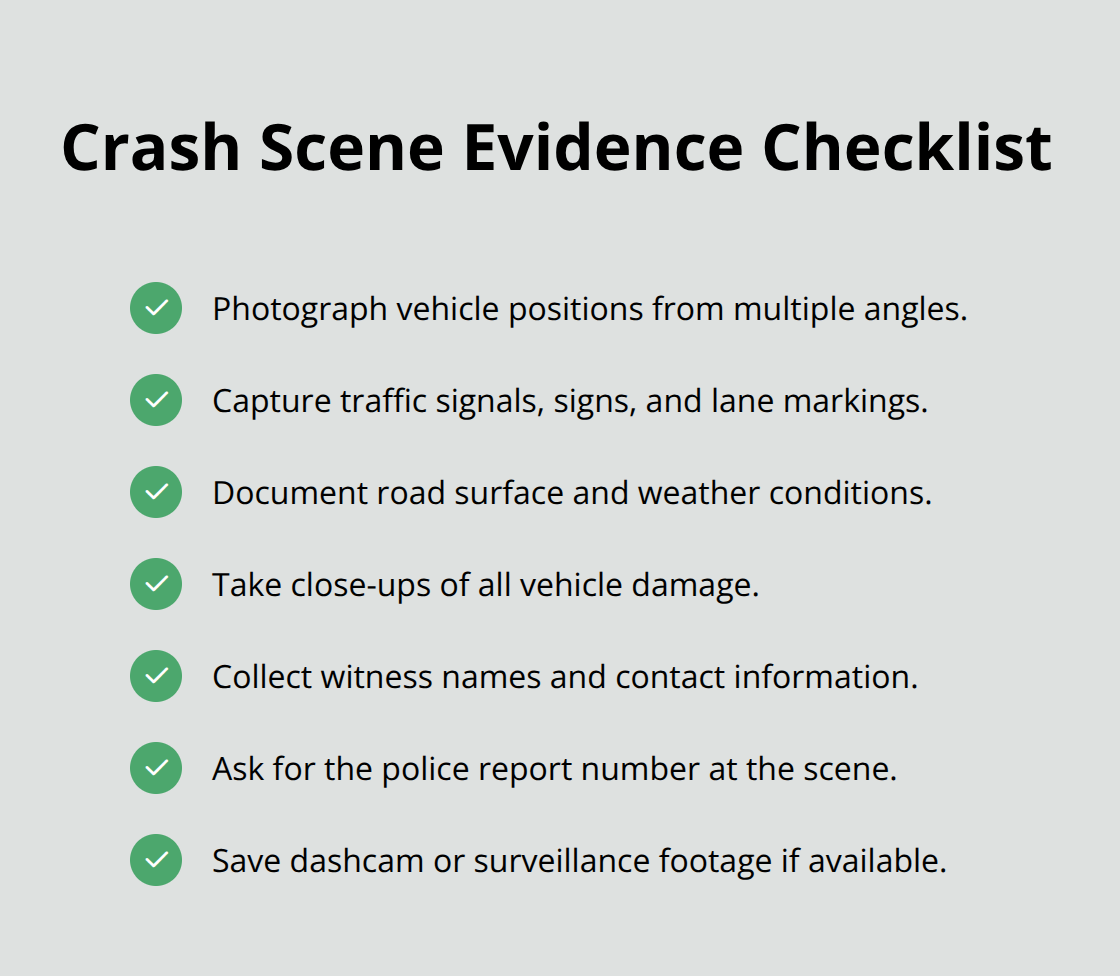
Photograph everything at the scene: vehicle positions, traffic signals, road conditions, and your vehicle’s damage from multiple angles. Many drivers skip this step and regret it later when memory becomes unreliable evidence.
Premises Liability and Unsafe Conditions
Premises liability cases involve injuries on someone else’s property-slip-and-falls in grocery stores, injuries from broken stairs, or inadequate lighting that causes harm. Property owners must maintain reasonably safe conditions or warn visitors of known hazards. The challenge here is proving the owner knew or should have known about the dangerous condition.
A grocery store’s wet floor without warning signs creates liability; a wet floor that appeared seconds before your fall does not. California courts require evidence that the hazard existed long enough for the property owner to discover it. Obtain incident reports from the property owner immediately, photograph the hazard with timestamps, and identify any surveillance cameras that may have recorded the incident.
Dog Bite Incidents
Dog bite claims are more straightforward than other premises liability cases. California’s dog bite statute holds owners strictly liable regardless of the dog’s prior behavior, meaning you need only prove the dog bit you and caused injury. Medical records showing the bite and any resulting infection or scarring strengthen your claim substantially.
Product Liability Cases
Product liability cases occur when defective products cause injury-faulty brakes, contaminated food, or malfunctioning machinery. You must prove the product was defective when it left the manufacturer, not damaged afterward through misuse. Retain the product and packaging if possible, document exactly how it failed, and obtain medical records linking the product defect to your injuries.
These injury categories-motor vehicle, premises, dog bite, and product liability-require different evidence strategies. All of them demand immediate documentation and precise proof of how the defendant’s actions or negligence directly caused your harm.
Final Thoughts
You’ve covered the fundamentals of California personal injury basics, from proving liability to negotiating with insurers. The real question is whether you should handle your claim alone or bring in legal representation. Contact an attorney if the insurance company denies your claim, refuses to acknowledge liability, or their settlement offer falls significantly below your documented damages.
Your rights in California are substantial, but they expire quickly (the two-year statute of limitations applies to most personal injury cases). Evidence deteriorates over time-photographs fade, witness memories blur, and medical records become harder to obtain. Acting within weeks of your injury, not months, positions your claim for maximum recovery.
We at O’Brien & Zehnder Law Firm help Sacramento County residents navigate personal injury claims involving car accidents, premises liability, product defects, and dog bites. Contact O’Brien & Zehnder Law Firm for a consultation about your specific situation, and we’ll review your case and explain your options honestly.