

Getting a fair California personal injury settlement requires understanding how insurance companies evaluate your claim and knowing how to push back on lowball offers. We at O’Brien & Zehnder Law Firm have helped Sacramento County residents navigate this process successfully.
This guide walks you through the tactics insurers use, the strategies that actually work, and the mistakes that cost people thousands in lost compensation.
What Insurance Adjusters Actually Look For
Insurance adjusters evaluate your claim through three concrete lenses: the completeness of your medical records, the documentation of your financial losses, and their assessment of pain and suffering damages. Each category carries different weight in their calculations, and understanding how adjusters score these elements helps you anticipate their initial offer and build counterarguments.
The Investigation Phase Reveals What Adjusters Prioritize
Adjusters typically spend 30 to 90 days investigating straightforward cases, reviewing medical records, accident reports, witness statements, and liability evidence before making their first move. During this investigation phase, they actively look for gaps-missing treatment records, lapses in care, or unclear causation between the injury and your medical expenses. A gap of more than two weeks between your injury and first medical visit gives adjusters ammunition to argue that your injuries weren’t serious.
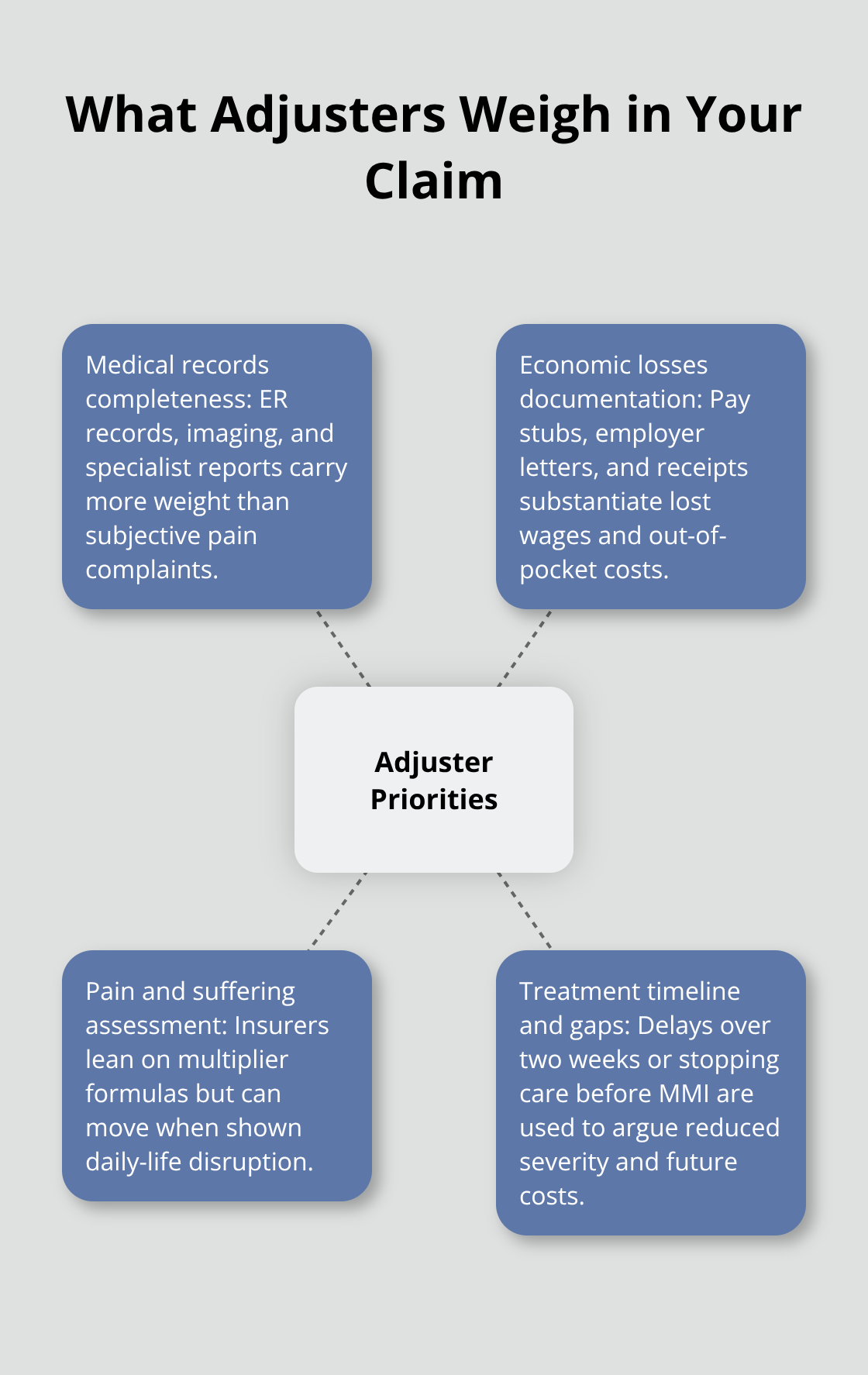
Similarly, if you stop treatment abruptly without reaching Maximum Medical Improvement, they use that to minimize future medical cost projections and reduce their settlement offer.
Medical Documentation Forms Your Claim’s Foundation
Medical documentation forms the foundation of your claim’s value because it is objective and verifiable. Adjusters assign higher credibility to emergency room records, imaging reports (X-rays, MRIs, CT scans), and specialist evaluations than to subjective pain complaints alone. You should organize every medical bill, doctor’s note, physical therapy invoice, and prescription receipt chronologically. This organization demonstrates that you took your recovery seriously and makes the adjuster’s job harder when they try to inflate your fault percentage or downplay injury severity.
Economic Damages Require Solid Documentation
Lost wages are the easiest damages for adjusters to accept because they are backed by pay stubs and employer statements. You should collect recent pay stubs covering at least the three months before your injury, then obtain a letter from your employer stating the dates you missed work and your hourly rate or salary. If you are self-employed, you should gather tax returns and bank statements showing your typical income, then document every day you could not work due to your injury.
Adjusters also evaluate property repair costs, medical equipment expenses, and transportation costs related to treatment. You should keep receipts for everything-Uber rides to physical therapy, over-the-counter pain medication, medical equipment rentals. These smaller expenses accumulate and strengthen your damages narrative.
Pain and Suffering Demands Strategic Presentation
Pain and suffering is where adjusters become aggressive because it is subjective and defensible in court. California law allows recovery for pain and suffering under negligence claims, but adjusters use formulas to cap these damages artificially. Many insurers apply a multiplier of 1.5 to 5 times your economic damages, depending on injury severity. A straightforward soft-tissue injury might receive a 1.5 multiplier, while a permanent disability could justify 4 or 5 times. You should not accept their multiplier math as final-it is a negotiation anchor, not gospel.
The key to inflating pain and suffering damages is demonstrating how the injury disrupted your daily life: missed family events, inability to exercise, sleep disruption, or lost career opportunities. A detailed injury journal (documenting daily pain levels, activity restrictions, and emotional impact) carries weight in negotiations. Adjusters who see evidence of genuine suffering are more likely to move beyond their mechanical multiplier calculations and toward a settlement that reflects your actual losses.
Understanding these evaluation methods positions you to challenge lowball offers in the next phase of settlement negotiations.
How to Build Leverage Before Negotiations Begin
Organize Documentation to Signal Strength
Adjusters count on you to accept their initial offer without pushback, which is why your first move should be assembling documentation so complete that they cannot dismiss your claim. Organize medical records chronologically-every ER visit, specialist appointment, imaging report, and therapy session-then add pharmacy receipts, medical equipment purchases, and transportation costs to treatment. This completeness signals that you tracked your recovery meticulously and will not fold under pressure.
Adjusters working hundreds of claims simultaneously offer lower amounts to disorganized claimants because they know these cases settle faster and cheaper. Your documentation also reveals liability vulnerabilities in their position. If police reports, witness statements, or traffic camera footage clearly establish that the other driver violated a traffic law or created an obvious hazard, you have concrete ammunition to reject their comparative negligence arguments.
Gather Liability Evidence to Strengthen Your Position
Sacramento County courts apply pure comparative negligence under California Civil Code Section 1714, meaning you can recover damages even if partially at fault-but only if you prove the other party’s negligence first. Collect these liability pieces before your initial settlement demand: police accident reports, witness contact information and statements, photos of vehicle damage and accident scene conditions, and any traffic citations issued.
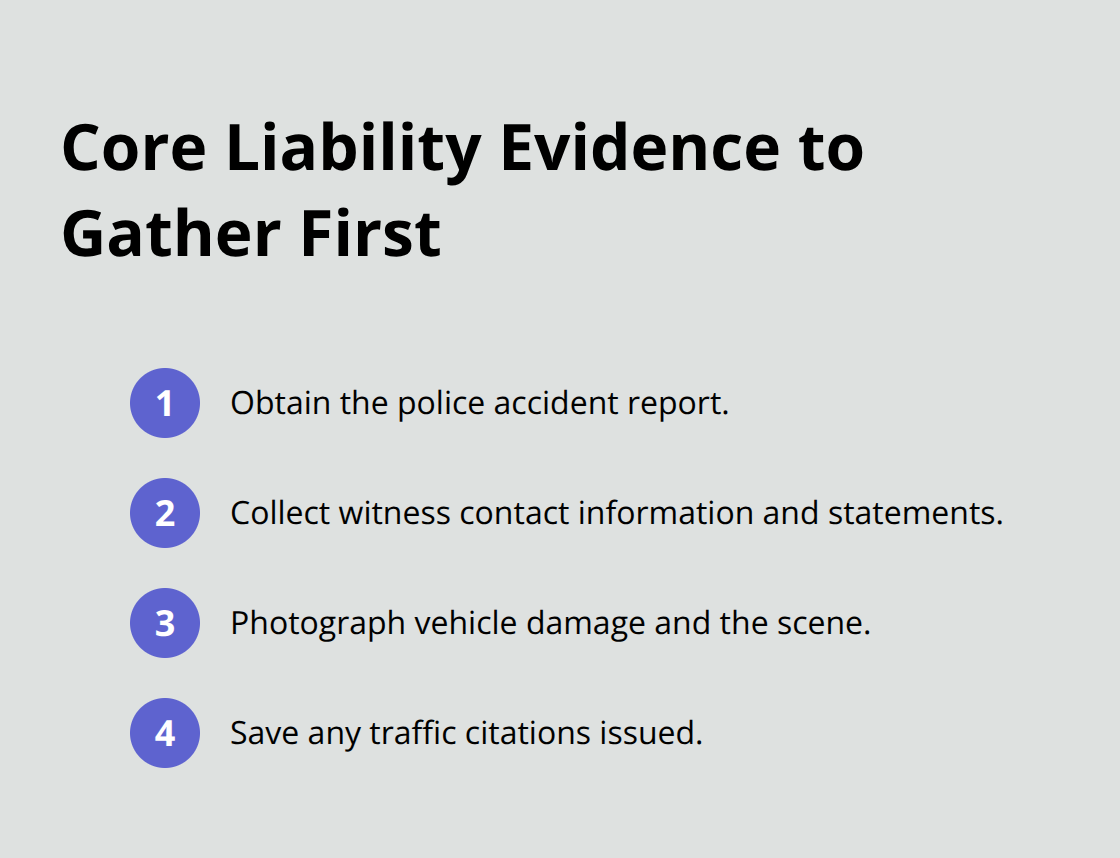
When you present this evidence early, adjusters understand that you will litigate if settlement talks stall, which pushes them toward higher offers. This evidence transforms your negotiating position from reactive to proactive.
Counter Initial Offers With Strategic Demands
The initial offer from an insurer is almost always below what your claim truly warrants, which means rejecting it outright and countering aggressively is standard strategy. Most insurers deliberately undervalue claims in the first round because they profit when claimants accept lowball numbers out of frustration or financial desperation.
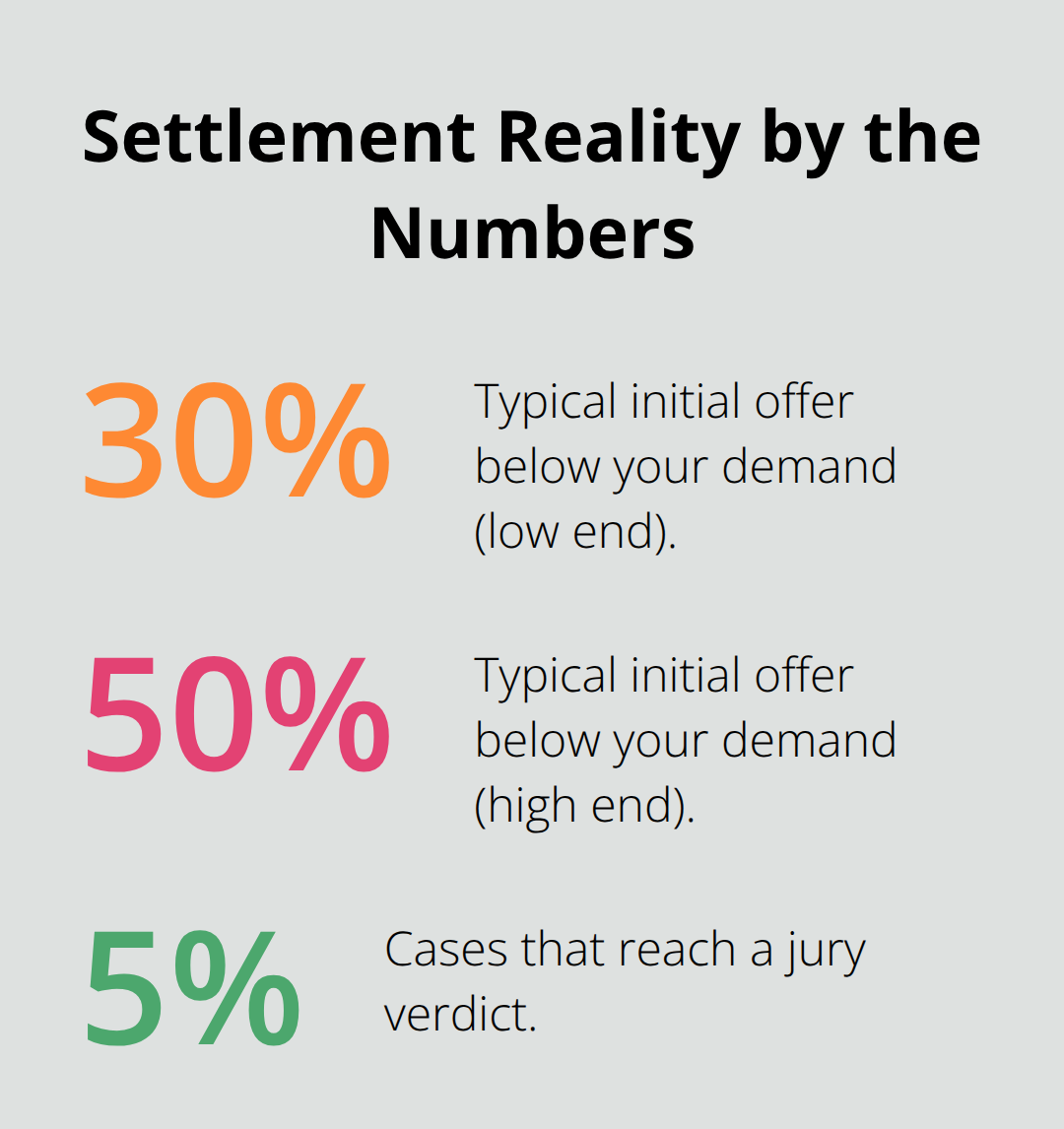
California law requires insurers to acknowledge your claim within 10 days and decide within 40 days after you submit proof of claim under California Insurance Code Section 790.03, but this timeline does not mean they will offer fairly within that window. After your demand letter, expect the insurer to respond with an offer typically 30 to 50 percent below your stated amount. Do not interpret this gap as negotiable middle ground-it reflects their opening position, not their final one.
Present Evidence That Defeats Mechanical Formulas
Counter with a revised demand that explains why their offer undervalues pain and suffering, ignores future medical costs, or mischaracterizes fault. If the case involves permanent injury, ongoing treatment, or diminished earning capacity, present a detailed care plan showing long-term medical expenses; this concrete projection defeats their mechanical multiplier approach.
The back-and-forth phase typically runs 3 to 5 rounds of offers and counteroffers, and each round should include new evidence or expert analysis that strengthens your position. If the insurer refuses to move meaningfully after two counteroffers, filing a lawsuit shifts the dynamic because litigation costs them money and forces their legal team to prepare for trial.
Use Litigation as a Negotiation Tool
Most California personal injury cases settle without trial, and fewer than 5 percent reach jury verdict, but insurers take settlement more seriously once a lawsuit is filed and trial preparation begins. Accepting a low offer early leaves thousands on the table; walking toward the courthouse changes the entire negotiation. This shift in leverage often produces the movement you need to reach a fair settlement-or positions you to take your case to trial if the insurer continues to lowball your claim.
Common Mistakes That Cost You Thousands in Settlement Negotiations
Rejecting the First Offer Separates Winners From Losers
Claimants routinely leave substantial money on the table by accepting the initial offer without mounting a serious counteroffer. Adjusters structure their opening bid deliberately low-typically 30 to 50 percent below what your claim actually warrants-because roughly 40 percent of claimants accept the first number out of fatigue or financial pressure. When you counter aggressively with detailed evidence of liability, medical severity, and future damages, you signal that you understand your claim’s value and will not fold easily.
The difference between accepting that first offer and pushing back through 3 to 5 rounds of negotiation often exceeds $10,000 to $50,000 on moderate claims, depending on injury type and economic losses. Sacramento County claimants frequently underestimate their negotiating leverage. Once you file a lawsuit, litigation costs the insurer money and forces their legal team to prepare for trial, which shifts the entire dynamic toward higher settlement numbers.
Social Media Posts Destroy Your Credibility
The second critical mistake is discussing your claim publicly on social media or in conversations that reach the other party’s insurance company. Adjusters routinely monitor claimants’ social media profiles and use any posted content-photos of you at social events, vacation pictures, or comments minimizing your injuries-to argue that your damages claims are exaggerated.
A single photo showing you hiking, working out, or appearing active can justify a 20 to 40 percent reduction in pain and suffering damages, even if that activity occurred before your injury or caused you genuine suffering. Treat your social media accounts as evidence that the insurer will scrutinize. Avoid posting anything that contradicts your injury narrative, and consider restricting your privacy settings until your case resolves.
Signing Without Legal Review Locks You Into Inadequate Settlements
The third mistake is signing settlement documents without independent legal review. Settlement agreements and release forms contain language that permanently bars you from pursuing additional claims, even if new medical complications emerge months or years later. If you have not reached Maximum Medical Improvement-the point at which your medical condition stabilizes and further recovery is unlikely-signing a release prematurely locks you into a settlement that fails to account for future treatment costs.
Adjusters deliberately pressure claimants to sign quickly, but California law does not require you to accept their timeline. An attorney can review any settlement agreement before you sign, particularly when long-term medical needs remain uncertain or when the claim involves permanent injury. This review protects you from language that waives rights you should retain.
Final Thoughts
Negotiating a California personal injury settlement in Sacramento County requires you to document everything meticulously, treat initial offers as negotiation anchors rather than final numbers, and recognize when professional guidance becomes necessary. Adjusters are trained to minimize payouts, and they count on claimants accepting lowball offers without pushback. Your documentation, liability evidence, and willingness to counter aggressively separate successful claims from those that settle for far less than they deserve.
The gap between accepting a first offer and pushing through multiple rounds of negotiation often exceeds $10,000 to $50,000 on moderate claims. Sacramento County claimants who organize their medical records chronologically, gather police reports and witness statements, and present detailed evidence of future medical costs consistently achieve higher settlements than those who rush to sign. Filing a lawsuit when settlement talks stall is not a failure-it is a negotiation tool that forces insurers to take your claim seriously and move toward fair compensation.
Working with an attorney becomes particularly valuable when your injury is severe or long-lasting, when damages are substantial, when fault is unclear, or when multiple parties may share responsibility. An attorney reviews settlement agreements before you sign, protecting you from language that waives rights you should retain, particularly if you have not yet reached Maximum Medical Improvement. We at O’Brien & Zehnder Law Firm help Sacramento County residents navigate car crashes, premises liability, product liability, dog bites, and other personal injury incidents-contact us for a consultation to discuss your specific situation.