
Sacramento County distracted driving accident claims often begin with a single glance at a phone. A driver checks a text at a red light on Watt Avenue, scrolls through a map on Interstate 80, or reaches for a device on Highway 50, and in that moment another person’s life changes. These crashes can cause serious injuries, but proving that the other driver was distracted takes more than suspicion. It requires an understanding of California’s phone laws, the evidence that shows what a driver was doing, and the deadlines that apply to every injury claim.
At O’Brien & Zehnder Law Firm, we help people across Sacramento County who have been hurt in car, truck, and motorcycle collisions so you can move forward with confidence. This guide explains how California’s distracted driving laws work, how distraction is proven after a crash, when an employer may share responsibility, and the mistakes that most often weaken an injured person’s claim.
How California Phone Laws Shape Sacramento County Distracted Driving Accident Claims
Every driver in California owes others a basic duty of care. Civil Code section 1714(a) provides that everyone is responsible for an injury caused to another by a want of ordinary care or skill in the management of his or her property or person. Distracted driving cases build on that duty, and California’s Vehicle Code adds specific rules about phones and electronic devices that often play a central role in proving what went wrong.
The Hands-Free Rule for Phone Calls
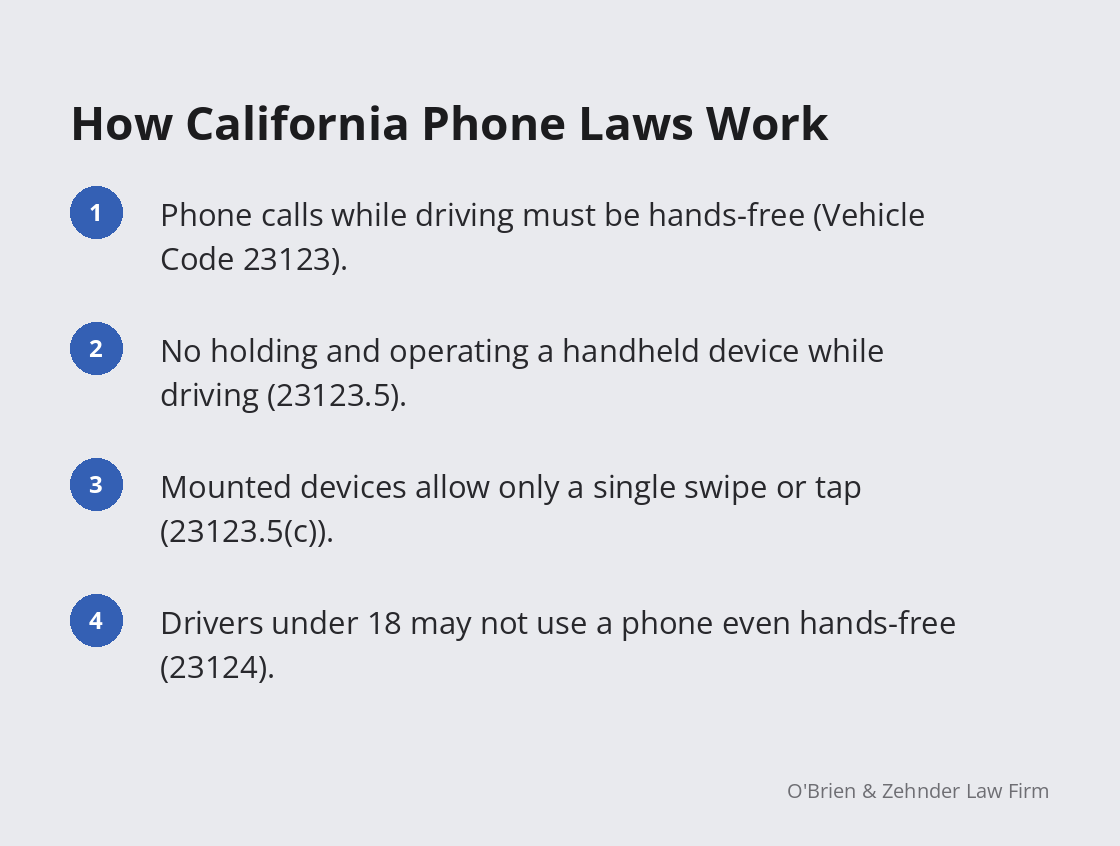
Vehicle Code section 23123(a) provides that a person shall not drive a motor vehicle while using a wireless telephone unless that telephone is specifically designed and configured to allow hands-free listening and talking, and is used in that manner while driving. The statute contains limited exceptions, including use of a wireless telephone for emergency purposes such as a call to law enforcement, a health care provider, a fire department, or other emergency services.
The Handheld Device Rule and Mounted Phones
Vehicle Code section 23123.5(a) goes further, prohibiting driving while holding and operating a handheld wireless telephone or electronic wireless communications device unless it is designed and configured for voice-operated and hands-free operation and is used that way. Under section 23123.5(c), a driver may use a hand to operate a device only if it is mounted on the windshield, dashboard, or center console in a way that does not hinder the driver’s view of the road, and the driver activates or deactivates a feature with a single swipe or tap of a finger. Typing a message, scrolling through an app, or holding a phone to watch a video falls outside those narrow allowances.
Stricter Rules for Drivers Under 18
Young drivers face an even tighter rule. Vehicle Code section 23124 provides that a person under the age of 18 shall not drive a motor vehicle while using a wireless telephone or an electronic wireless communications device, even if it is equipped with a hands-free device. When a teen driver causes a crash in Sacramento County, this statute can be an important part of the analysis.
Proving Distraction After a Sacramento County Crash
Drivers rarely admit they were looking at a phone. Proving distraction usually depends on combining the law with physical evidence, records, and witness accounts, and the sooner that evidence is gathered, the more reliable it tends to be. Understanding how California treats violations of traffic statutes helps explain why this evidence matters so much.
When a Traffic Law Violation Creates a Presumption
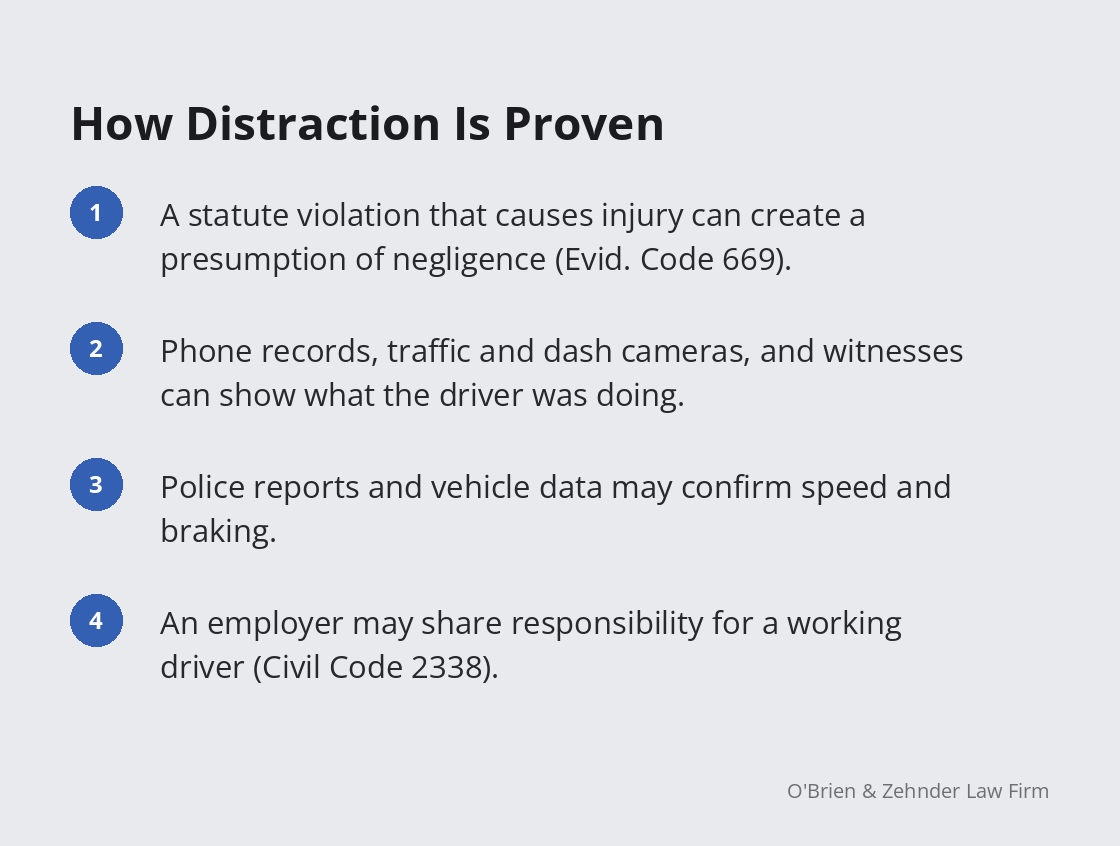
California Evidence Code section 669(a) provides that a failure to exercise due care is presumed if a person violated a statute, the violation proximately caused death or injury, the injury resulted from an occurrence of the nature the statute was designed to prevent, and the injured person was one of the class of persons the statute was meant to protect. Under section 669(b), the presumption may be rebutted by proof that the person did what might reasonably be expected of a person of ordinary prudence acting under similar circumstances who desired to comply with the law. When a driver violated a phone statute and that violation caused the crash, this presumption can be a significant tool.
Phone Records, Video, and Witnesses
Evidence of distraction can come from many places. Phone records may show calls, texts, or data activity around the time of the collision. Traffic and business security cameras, dashboard cameras, and doorbell cameras may capture a driver looking down or drifting out of a lane. Witnesses may have seen the driver holding a device. Physical evidence, such as a lack of braking before impact, can also support the conclusion that the driver was not paying attention. Police reports prepared by the California Highway Patrol or a local agency may note statements the driver made at the scene, and the vehicles themselves may hold data about speed and braking. Because much of this information is controlled by the other driver, their insurer, or third parties, a prompt written request to preserve it can prevent important proof from being lost before anyone has a chance to review it.
Distraction Beyond the Phone
Not every distraction involves a device. Eating, adjusting a navigation screen, reaching into the back seat, or turning to talk with passengers can all take a driver’s eyes or attention off the road. Even when no specific phone statute applies, the general duty of ordinary care under Civil Code section 1714(a) still governs, and evidence of any form of inattention can help show that the driver failed to meet that standard.
When an Employer May Share Responsibility
Many distracted drivers are on the job, answering a dispatcher, checking a delivery route, or responding to a work message. Civil Code section 2338 provides that a principal is responsible to third persons for the negligence of its agent in the transaction of the business of the agency. When a driver was working at the time of a crash, the employer may share legal responsibility, which can affect who is named in a claim and what insurance coverage may be available.
Mistakes That Weaken Sacramento County Distracted Driving Claims
Even strong claims can be undermined by avoidable missteps in the days and months after a crash. Knowing these pitfalls ahead of time helps you protect your health, your evidence, and your legal rights while you focus on recovery.
Waiting to Preserve Evidence
Video footage is often recorded over quickly, and witnesses become harder to locate as time passes. Phone records and vehicle data may also become more difficult to obtain the longer a claim sits idle. Taking photos at the scene, collecting witness contact information, and seeking legal guidance early can help ensure that the proof of distraction is preserved while it still exists.
Assuming Your Own Role Ends the Claim
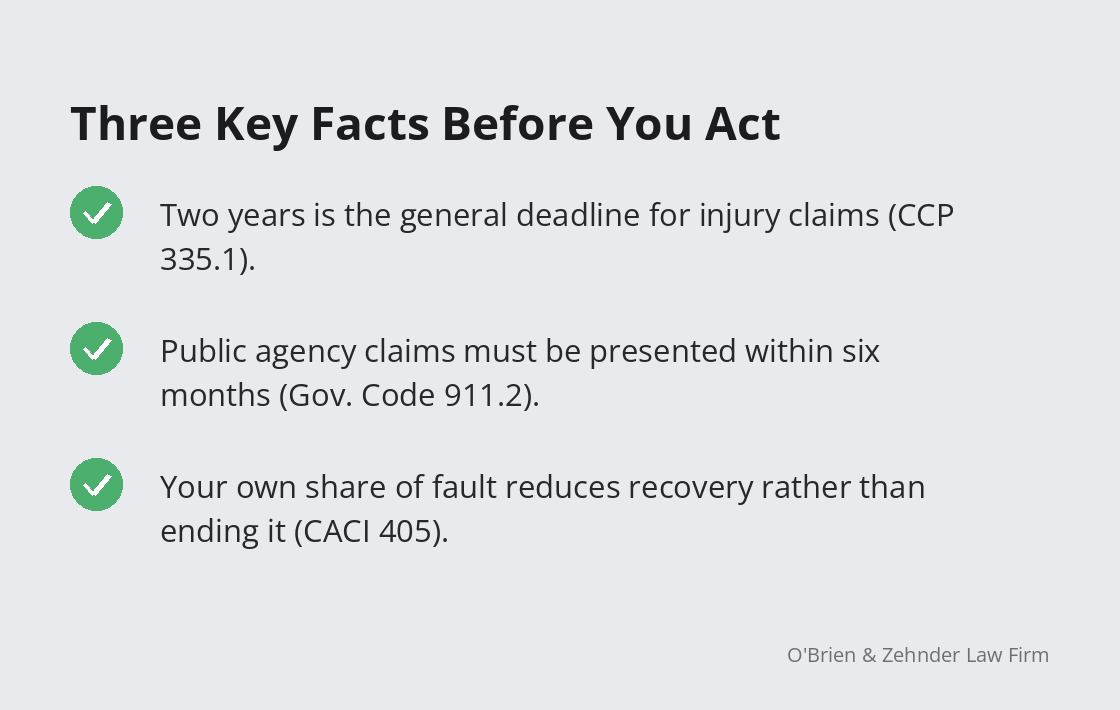
Some injured people assume they cannot recover if they made any mistake themselves. California uses a comparative fault approach. Under the Judicial Council’s civil jury instruction CACI No. 405, if the defendant proves that the plaintiff was negligent and that this negligence was a substantial factor in causing the harm, the plaintiff’s damages are reduced by the percentage of the plaintiff’s responsibility. In other words, a share of fault reduces recovery rather than automatically eliminating it.
Missing Filing Deadlines
Code of Civil Procedure section 335.1 sets a two-year period for an action for injury to, or for the death of, an individual caused by the wrongful act or neglect of another. If a government vehicle or employee was involved, the timeline is much shorter. Government Code section 911.2 generally requires a claim relating to death or injury to person to be presented not later than six months after the cause of action accrues. Missing either deadline can seriously limit your ability to recover.
Talking to the Other Driver’s Insurer Too Soon
Insurance adjusters may call within days asking for a recorded statement. Comments made while you are still in pain or unsure of the full extent of your injuries can later be used to downplay your claim. It is usually wise to get medical care, document your injuries, and speak with an attorney before giving any detailed statement to the other driver’s insurer. Keep copies of medical records, missed work documentation, and any letters you receive so that the full impact of the crash on your daily life is clearly recorded.
Final Thoughts
Sacramento County distracted driving accident claims depend on showing what the other driver was doing in the moments before the crash. California’s hands-free and handheld device laws, the stricter rule for drivers under 18, the negligence presumption in Evidence Code section 669, and employer responsibility can all play a role in building a strong claim.
The steps you take early, including getting medical care, preserving video and phone evidence, and keeping track of filing deadlines, can make a real difference in the outcome. Acting promptly gives you the best chance to hold a distracted driver accountable.
If you or someone you love was hurt by a distracted driver, contact O’Brien & Zehnder Law Firm to speak with our team in Sacramento County. We’ll review what happened, explain your options, and help you move forward with confidence.