After a car crash in Sacramento County, most people focus on immediate concerns like injuries and vehicle repairs. What they often overlook is Sacramento car crash documentation-the records that can make or break your insurance claim or legal case.
We at O’Brien & Zehnder Law Firm have seen how proper documentation transforms weak claims into strong ones. This guide walks you through exactly what to collect, how to organize it, and the mistakes that could undermine your position.
What to Document at the Scene of a Sacramento County Car Crash
Photograph Vehicle Damage and Scene Conditions
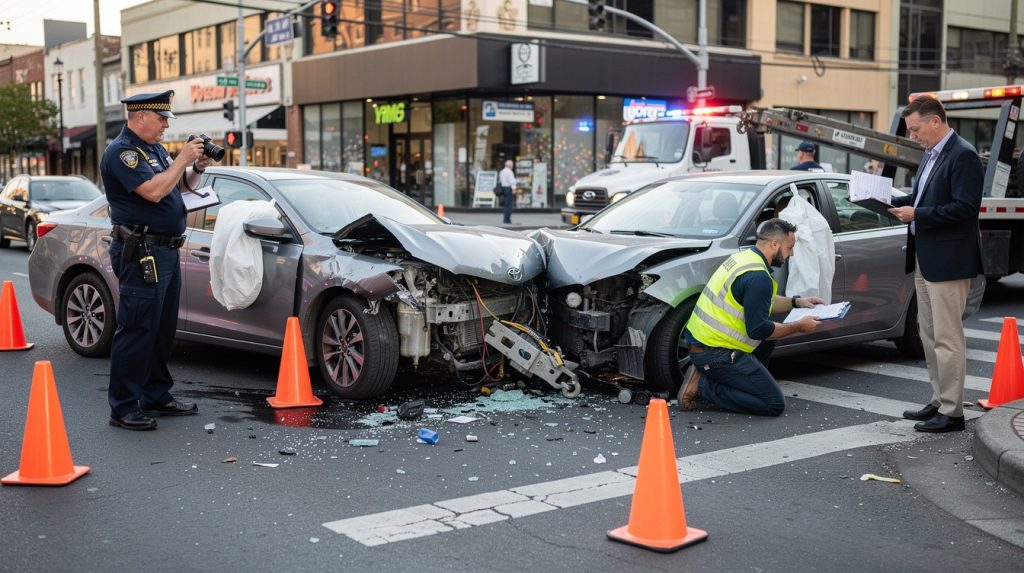
The first moments after a crash are chaotic, but what you photograph and record during those minutes directly affects your claim’s strength. Many people grab their phone and take random shots of their vehicle, then wonder why insurers later question their account of what happened. You need a systematic approach that captures three specific layers of information: the vehicles involved, the surrounding environment, and the people present.
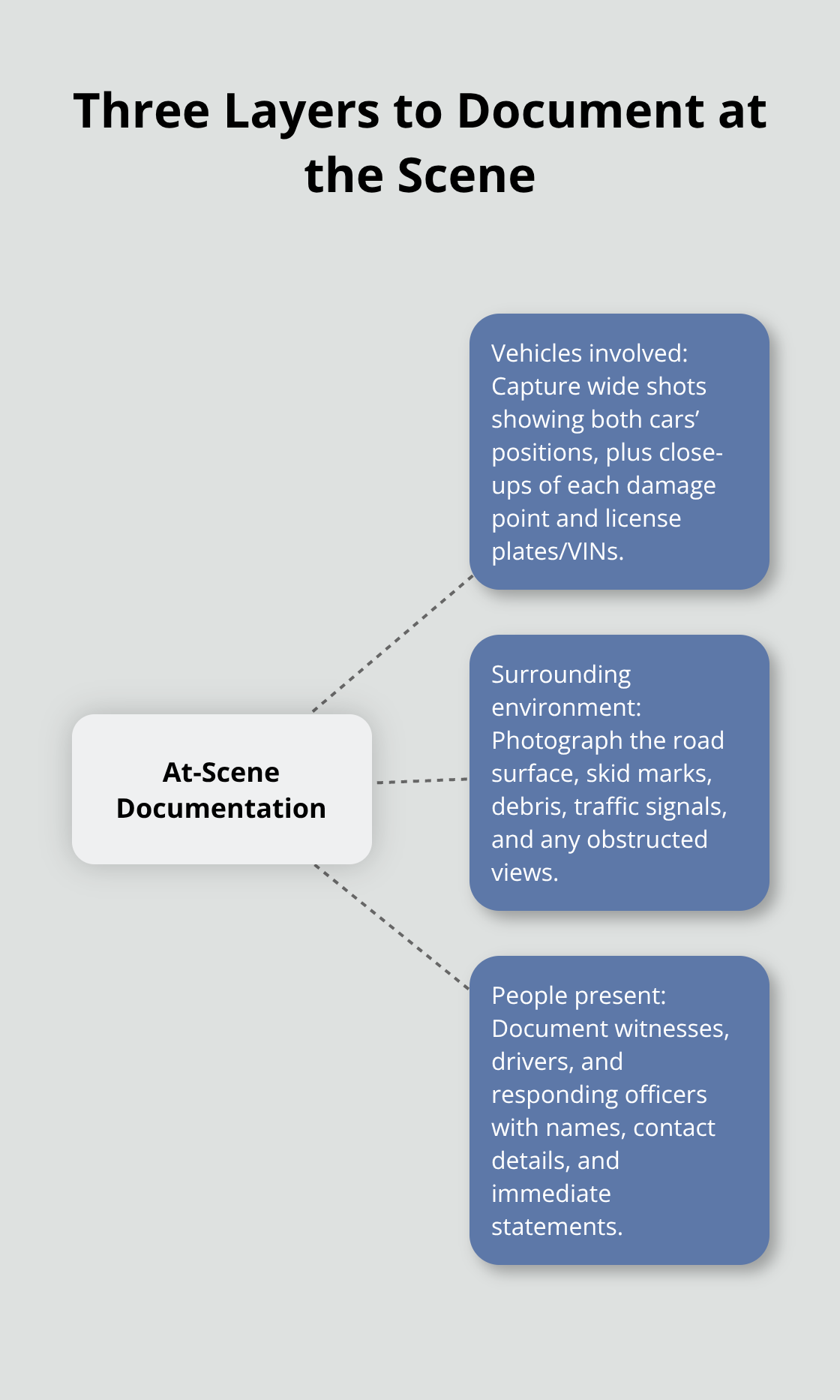
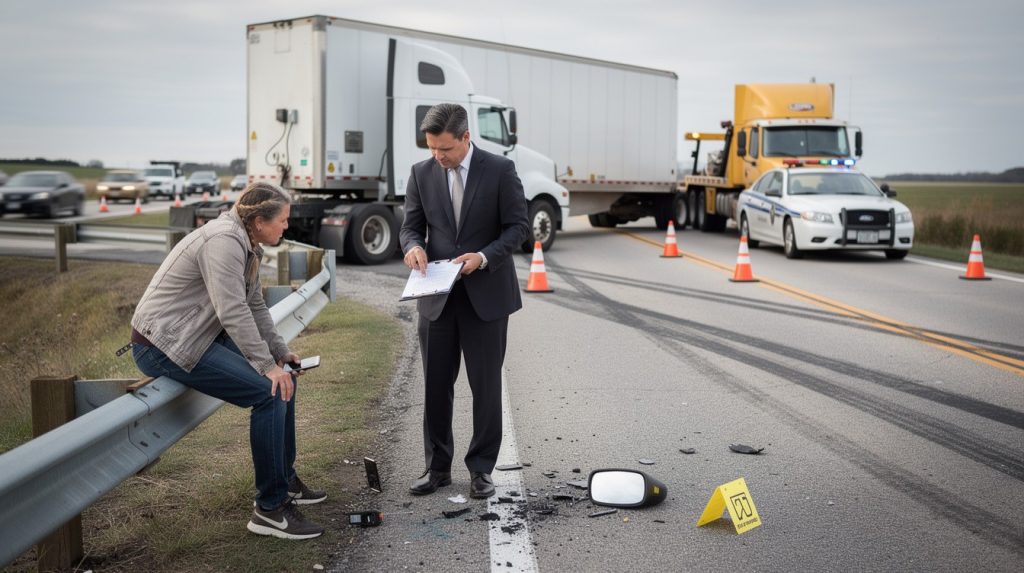
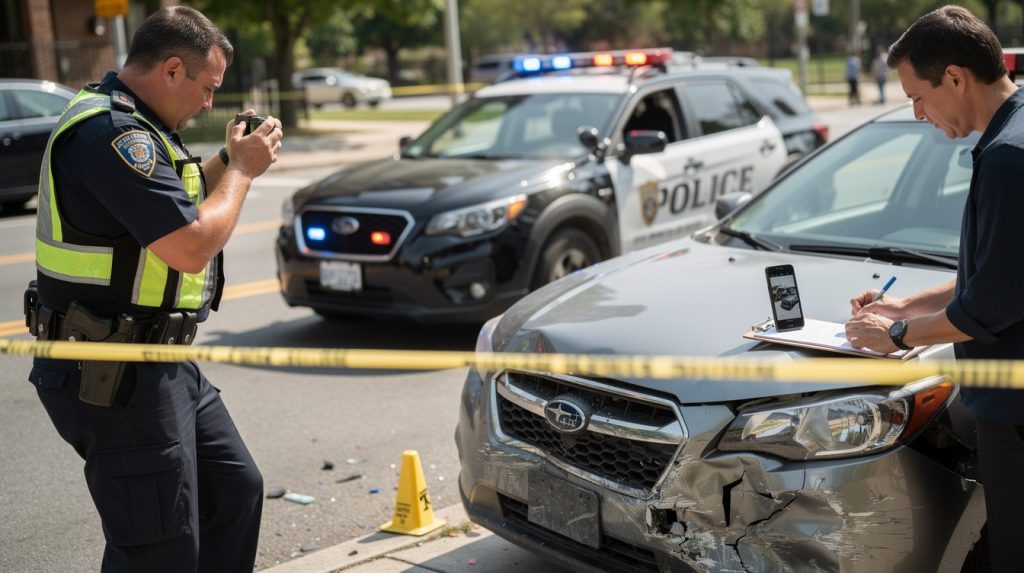
Start with vehicle damage from multiple angles. Take wide shots showing both vehicles in relation to each other, then close-ups of specific damage points on each vehicle. Photograph the license plates, VINs visible through windows, and odometer readings if accessible. Get shots of the road surface where impact occurred, skid marks if present, and debris scattered across the pavement.
Record Weather and Road Conditions
Weather matters enormously in Sacramento County crashes. If it’s raining, photograph wet conditions and reduced visibility. If sun glare is intense, capture that too. Document road conditions honestly-are there potholes, loose gravel, or faded lane markings? Take photos of traffic signals, stop signs, and any obstructed views that contributed to the crash. These environmental details often disappear from memory within days, yet they become critical when insurance adjusters or opposing counsel question liability months later.
Collect Contact Information from Witnesses and Other Drivers
Collect names, phone numbers, addresses, and insurance information from every witness and the other driver. Ask witnesses directly what they saw, then write down their exact words immediately-not your interpretation of their account. Get their driver’s license numbers, vehicle identification numbers, and policy numbers from the other driver. Take photos of their documents rather than relying on handwritten notes.
If police arrive, get the officer’s name and badge number, plus the report number. Ask when and where you can obtain the full police report. Contact information becomes worthless if you cannot reach people later, so verify phone numbers work before leaving the scene. Many Sacramento County residents underestimate witness value, assuming the insurance company will find them independently. They won’t. You’re responsible for preserving those contacts, and witnesses grow harder to locate as weeks pass.
Once you’ve gathered this documentation at the scene, the next challenge involves organizing everything systematically so you can locate specific records when your insurance company or legal counsel requests them.
How to Organize and Preserve Your Documentation
Create a Dedicated Folder for All Records
The photographs and contact information you gathered at the scene mean nothing if you cannot locate them when your insurance company requests specific records or when legal action becomes necessary. Most people store crash documentation haphazardly across their phone, email, and scattered folders, then waste hours searching for a single piece of information when deadlines approach. You need a centralized system that makes every document instantly retrievable.
Create a dedicated digital folder on your computer or cloud storage service like Google Drive or Dropbox specifically for this crash. Inside that main folder, create subfolders for photographs, police reports, witness statements, insurance correspondence, and medical records. Name files with dates and descriptions rather than generic names like Photo1 or Document. For example, use 2026-10-15-vehicle-damage-front-end or 2026-10-15-witness-statement-john-smith instead.
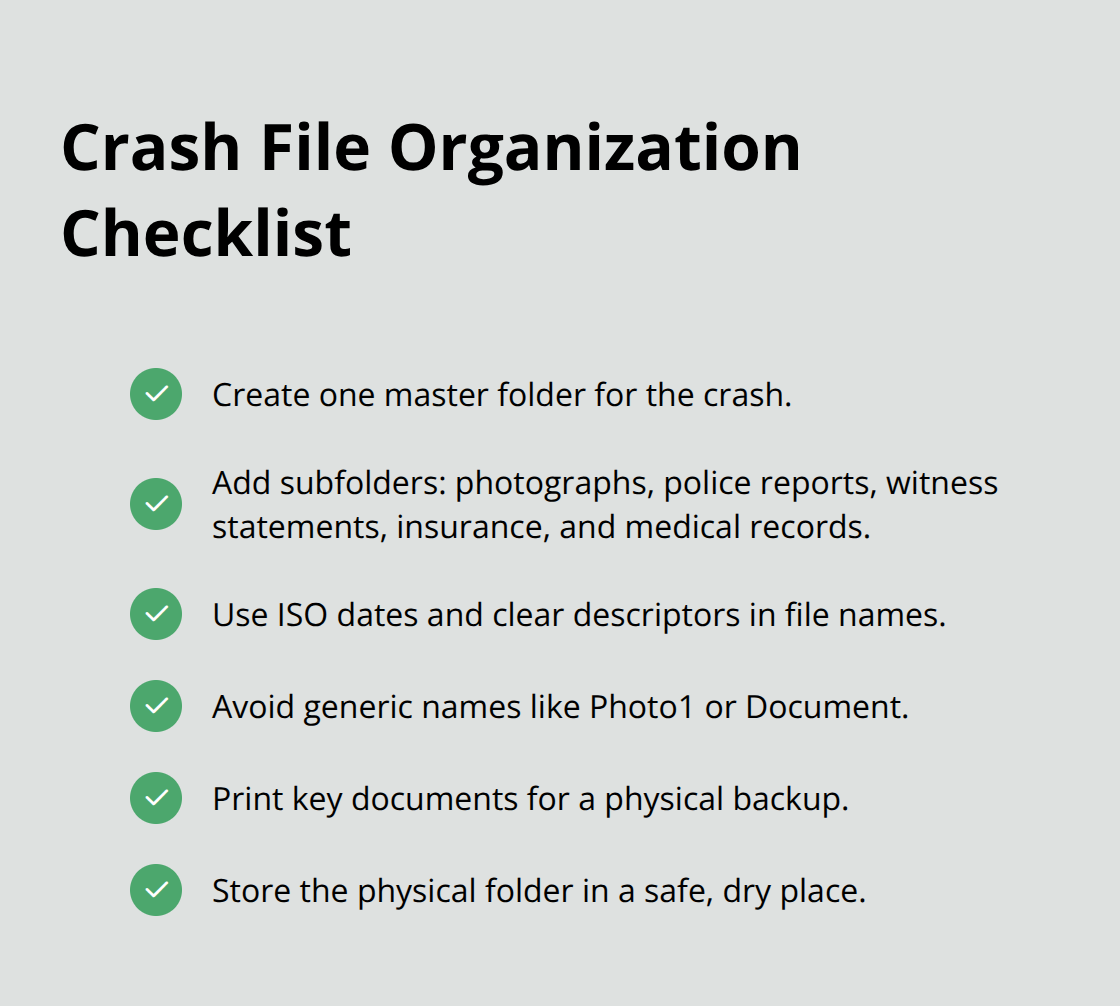
This naming convention saves you from opening dozens of files to find what you need.
Print important documents and store physical copies in a labeled folder kept in a safe, dry location. Insurance companies occasionally request original documents, and digital copies sometimes get lost in email chains or cloud service glitches.
Keep Medical Records and Treatment Documentation Together
Medical records accumulate quickly and carry tremendous weight in your claim. Request records from every healthcare provider you visit following the crash, including emergency rooms, urgent care clinics, physical therapists, and specialists. Store these chronologically within your medical subfolder, and maintain a separate document listing every treatment date, provider name, type of treatment, and cost.
This timeline prevents gaps in your medical narrative that insurers exploit to minimize injury severity. You should update this list within days of each appointment while details remain fresh, not weeks later when accuracy fades. Missing treatment records create opportunities for insurance adjusters to question the legitimacy of your injuries.
Maintain a Timeline of Events and Communications
Document all communications with insurance adjusters, other drivers’ counsel, and medical providers in a master communication log. Write down the date, time, person’s name, their title, what was discussed, and any promises or commitments made. This log protects you from disputes about who said what and when.
Insurance adjusters rely on vague memories and selective recall to undervalue claims, but your detailed log creates accountability. Update this log within hours of each conversation while details remain fresh (not days later when accuracy fades). You should also track every email, text message, and voicemail related to your crash in this same system. This comprehensive record becomes invaluable if your claim moves forward and you need to reference previous statements or agreements made during the claims process.
Common Documentation Mistakes to Avoid After a Sacramento County Car Crash
Posting About the Accident on Social Media
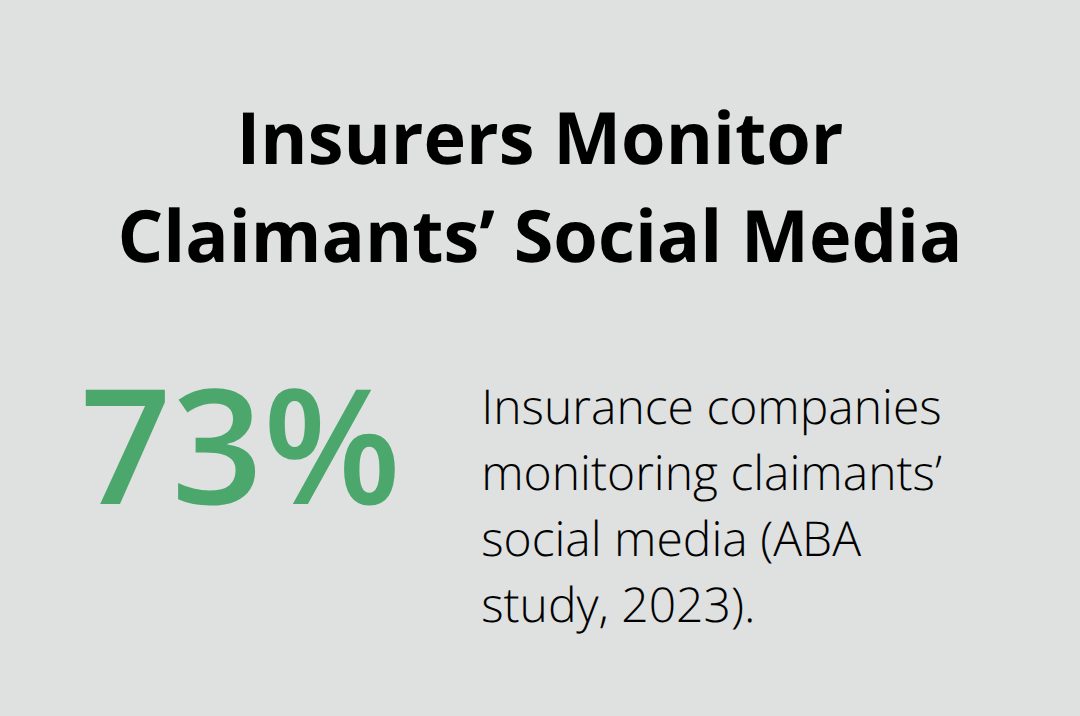
Social media posts about your accident create permanent evidence that insurance adjusters use against you. A 2023 American Bar Association study found that 73% of insurance companies actively monitor claimants’ social media accounts to identify statements contradicting their injury claims.
Even innocent posts describing the crash casually or mentioning you feel fine can be weaponized months later when you claim ongoing pain or disability. Adjusters screenshot these posts and attach them to their claim files, then use them to argue your injuries are exaggerated.
Do not post about the accident, do not comment on friends’ posts about it, and do not share photographs. Your insurance company does not need your social media activity to process your claim, and opposing counsel will use it to undermine your credibility. Deletion of posts after you’ve made them looks suspicious and technically constitutes destruction of evidence in some cases. The safest approach is silence from the moment the crash occurs.
Making Statements to the Other Driver’s Insurance Company
Accepting blame or making statements directly to the other driver’s insurance company is equally damaging and happens far more frequently than most people realize. Insurance adjusters are trained negotiators who phrase questions to elicit admissions of liability without you realizing what you’ve said. Statements like “I didn’t see the other car” or “I was distracted for a moment” get recorded, transcribed, and used to prove comparative negligence in Sacramento County courts.
California operates under comparative negligence rules, meaning your settlement amount gets reduced by your percentage of fault. A single careless statement can shift liability from 20% your fault to 50% your fault, cutting your recovery in half. Do not speak with the other driver’s insurance company without representation from an attorney. Your own insurance company has a duty to defend you, but their adjuster may also pressure you to admit partial fault to settle quickly and reduce their payout. Politely decline all recorded statements and direct all inquiries to your attorney.
Delaying Medical Evaluation and Treatment Records
Delaying medical evaluation and treatment after a crash is perhaps the most common and costly mistake we see. Insurance companies argue that crash-related injuries appear days or weeks later because they were pre-existing conditions, not caused by the accident. Seek medical attention immediately, even if you feel fine-adrenaline masks injuries that become apparent hours later.
Document this first visit thoroughly and attend all recommended follow-up appointments, even if symptoms improve. Missing appointments creates gaps in your medical narrative that adjusters exploit to minimize your claim’s value. Request complete medical records from every provider within 30 days of each visit while documentation is fresh and detailed. A treatment gap of two weeks or more gives adjusters ammunition to claim your injuries resolved, undermining your claim’s value regardless of your actual condition.
Final Thoughts
Thorough Sacramento car crash documentation transforms how insurance companies and courts evaluate your claim. The photographs, witness statements, medical records, and communication logs you gather create an objective record that contradicts the narrative adjusters try to construct. Without this documentation, your word becomes one person’s account against another’s, and insurance companies predictably side with their financial interests over your credibility.
The documentation mistakes discussed throughout this guide cost Sacramento County residents thousands of dollars annually. Social media posts, statements to opposing insurers, and delayed medical treatment create gaps that adjusters exploit systematically. Organized, comprehensive documentation makes your claim harder to undervalue because the evidence speaks for itself (and adjusters cannot dismiss what they cannot dispute).
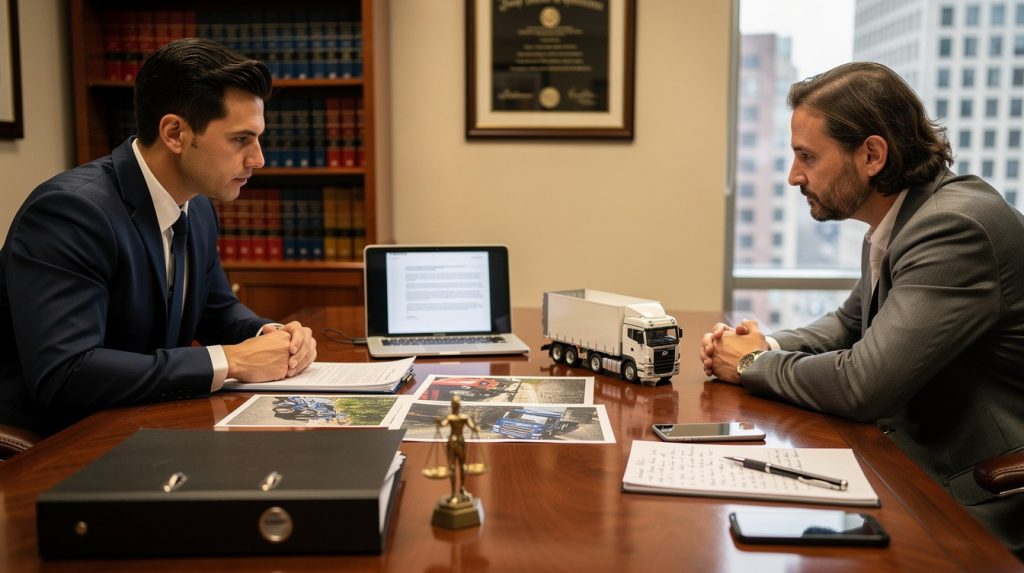
We at O’Brien & Zehnder Law Firm help clients navigate this situation when insurance companies dispute liability, minimize injuries, or offer inadequate settlements. We review your Sacramento car crash documentation, identify gaps that need filling, and communicate with insurance companies on your behalf. Contact us to discuss your specific circumstances and determine whether your claim warrants legal representation.