
Sacramento County rideshare accident claims raise questions that ordinary car crash cases do not. If you were hurt as a passenger in an Uber or Lyft, or struck by a driver who was working for one of these platforms, the answer to “whose insurance pays?” can depend on something as small as whether the driver’s app was on, whether a ride had been accepted, and whether you were already inside the car. This guide explains how California’s rideshare rules work and how those rules shape your injury claim.
At O’Brien & Zehnder Law Firm, we help injured people across Sacramento County understand their rights after collisions involving rideshare vehicles. This guide walks you through how these claims actually work, how a strong claim is built step by step, and the mistakes that most often weaken a rideshare case, so you can move forward with confidence.
How Rideshare Accident Claims Actually Work in Sacramento County
A rideshare crash is still a negligence case at its core. Someone failed to use reasonable care behind the wheel, and that failure caused injuries. What makes these cases different is the business relationship in the background. The driver is usually using a personal vehicle, the trip was arranged through a smartphone platform, and California has written a separate set of insurance rules for exactly this situation in the Public Utilities Code. Understanding those rules early helps you avoid chasing the wrong insurer and losing valuable time.
What California Law Calls a Rideshare Company
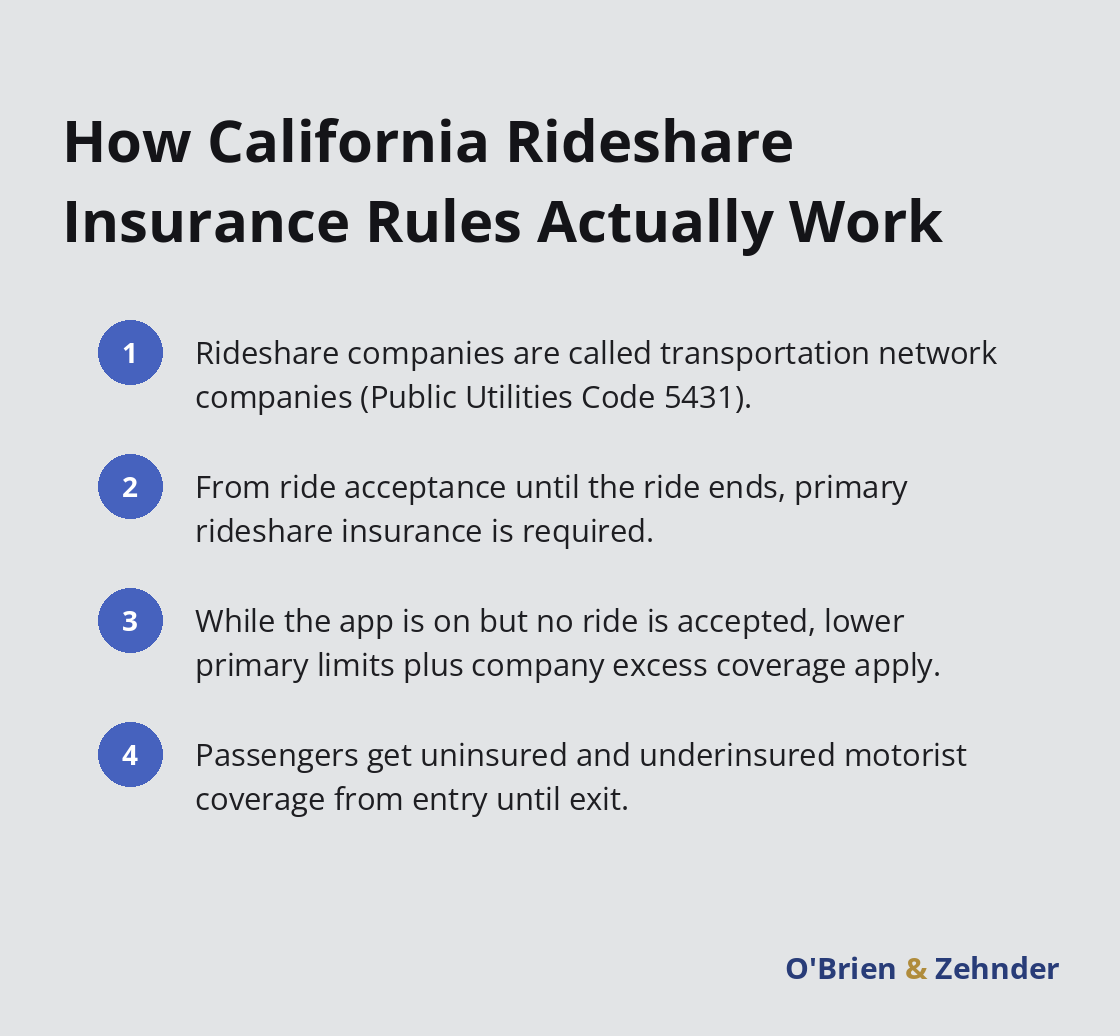
California law uses the term “transportation network company” for services like Uber and Lyft. Public Utilities Code section 5431 defines it as an organization operating in California that provides prearranged transportation services using an online-enabled application or platform to connect passengers with drivers using a personal vehicle. The same section defines a “participating driver” as any person who uses a vehicle in connection with the company’s app to connect with passengers. These definitions matter because the special insurance requirements in section 5433 apply only to transportation network companies and their participating drivers, not to every person who happens to give someone a ride.
Why the Driver’s App Status Matters
Public Utilities Code section 5433 divides a rideshare driver’s time into periods, and the required insurance changes with each one. From the moment a driver accepts a ride request until the ride is complete, the law requires primary transportation network company insurance at a high level for death, personal injury, and property damage. During the period when a driver is logged on to the app but has not yet accepted a request, the law still requires primary coverage, but at lower minimum levels, along with excess coverage maintained by the company. When the app is off, the section 5433 requirements do not apply, and the driver’s own personal auto policy is usually where a claim begins. Knowing which period you fall into is often the first thing an insurer will look at.
Protection for Passengers Inside the Vehicle
Passengers have an added layer of protection. Section 5433 requires the transportation network company to provide uninsured motorist and underinsured motorist coverage from the moment a passenger enters the vehicle of a participating driver until the passenger exits. That coverage is primary over any other uninsured or underinsured motorist coverage that might apply, and it is solely the obligation of the company. In practical terms, if you were riding in an Uber or Lyft and another driver with no insurance, or too little insurance, caused the crash, you may still have a path to recovery through the rideshare company’s required coverage.
Building a Sacramento County Rideshare Accident Claim Step by Step
Strong rideshare claims are built on early, organized evidence. Because several insurers may be involved, each one will look for reasons to point at someone else. Your goal in the first days and weeks is to document what happened, who was involved, and what the rideshare app showed at the time, while getting the medical care you need. The steps below reflect how these cases tend to come together in practice.
Get Care and Make Sure the Crash Is Reported
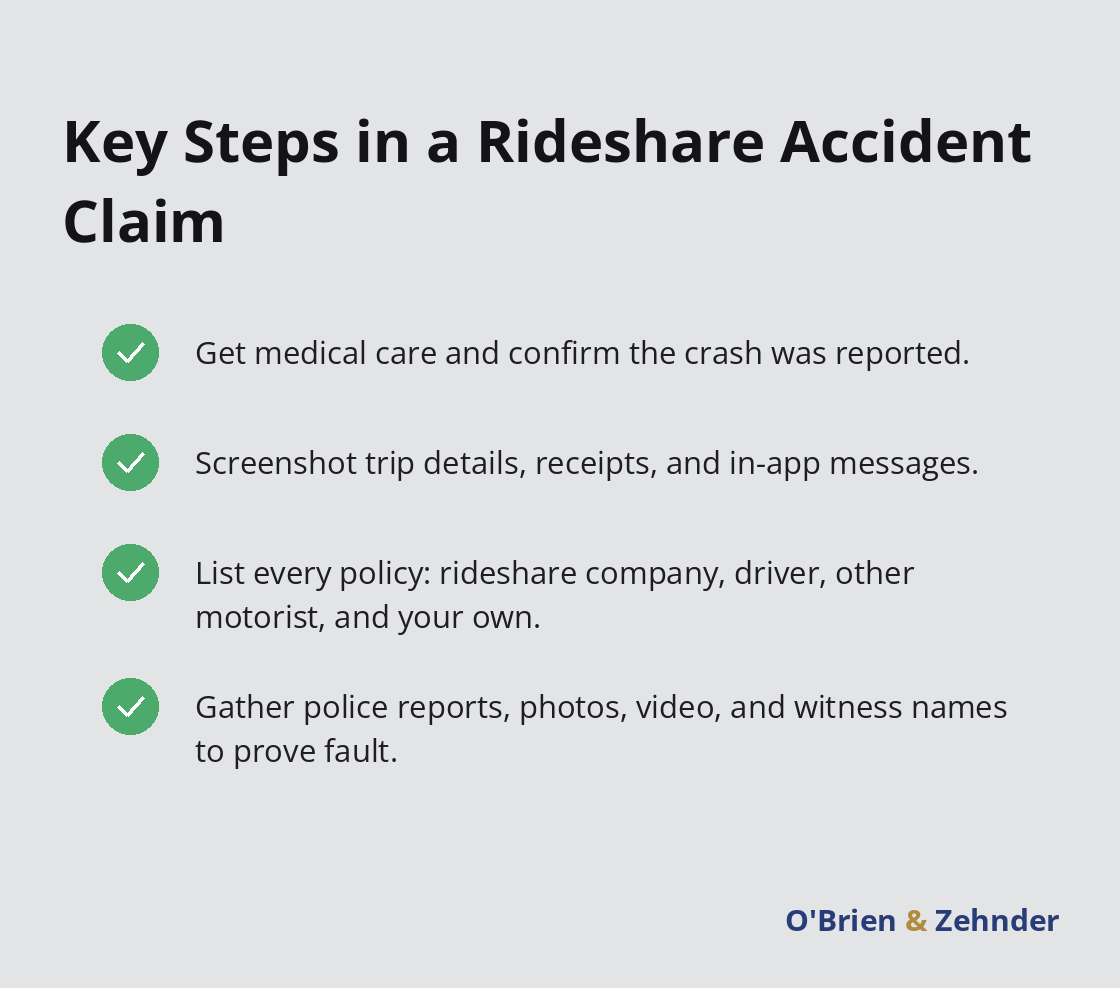
Your health comes first. Getting evaluated promptly creates a medical record that links your injuries to the collision, which insurers will scrutinize closely. California law also places duties on the drivers involved. Vehicle Code section 20001 requires the driver of a vehicle involved in an accident resulting in injury to another person to immediately stop at the scene and fulfill the requirements of the sections that follow, which include exchanging information and rendering reasonable assistance. Vehicle Code section 16000 requires a driver involved in an accident that results in bodily injury or death to report it to the Department of Motor Vehicles within 10 days. If you were a passenger, those duties fall on the drivers, but asking whether a report was made helps you track down the official record later.
Preserve the Rideshare Trip Records
Your phone may hold some of the most important evidence in the case. Take screenshots of the trip details as soon as you can, including the driver’s name, the vehicle, the pickup and drop-off points, and the time the ride was requested and accepted. Save any receipts, in-app messages, and reports you submit through the app. These records help establish which insurance period applies under section 5433, and they are much easier to collect right away than months later. Photographs of the vehicles, the intersection, traffic signals, and your visible injuries round out the picture, along with names and contact details for any witnesses.
Identify Every Policy That May Apply
A single rideshare crash can involve the rideshare driver’s personal policy, the transportation network company’s policy, the other driver’s insurance, and sometimes your own auto policy. Section 5433 also states that coverage under a transportation network company insurance policy shall not be dependent on a personal automobile insurance policy first denying a claim. That means you should not be told to wait for one insurer to deny you before another will even look at your claim. Mapping out each potential policy early prevents delays and helps make sure no source of recovery is overlooked.
Prove Who Was at Fault
Insurance rules decide where coverage comes from, but you still have to show that someone was careless. Civil Code section 1714 provides that everyone is responsible for an injury caused to another by a want of ordinary care or skill in the management of his or her property or person. Proof often comes from police reports, witness statements, photographs, video from nearby businesses or dash cameras, and the physical damage to the vehicles. If you were a passenger, fault may rest with the rideshare driver, another motorist, or both, and the evidence you preserve helps sort that out.
Mistakes That Weaken a Rideshare Injury Claim
Rideshare claims can be strong, but they are also easy to damage with a few avoidable missteps. Many of the problems we see arise in the first few weeks, when injured people are trying to recover and are fielding calls from more than one insurer. Knowing the common pitfalls ahead of time helps you protect both your health and your claim.
Giving Recorded Statements Too Soon
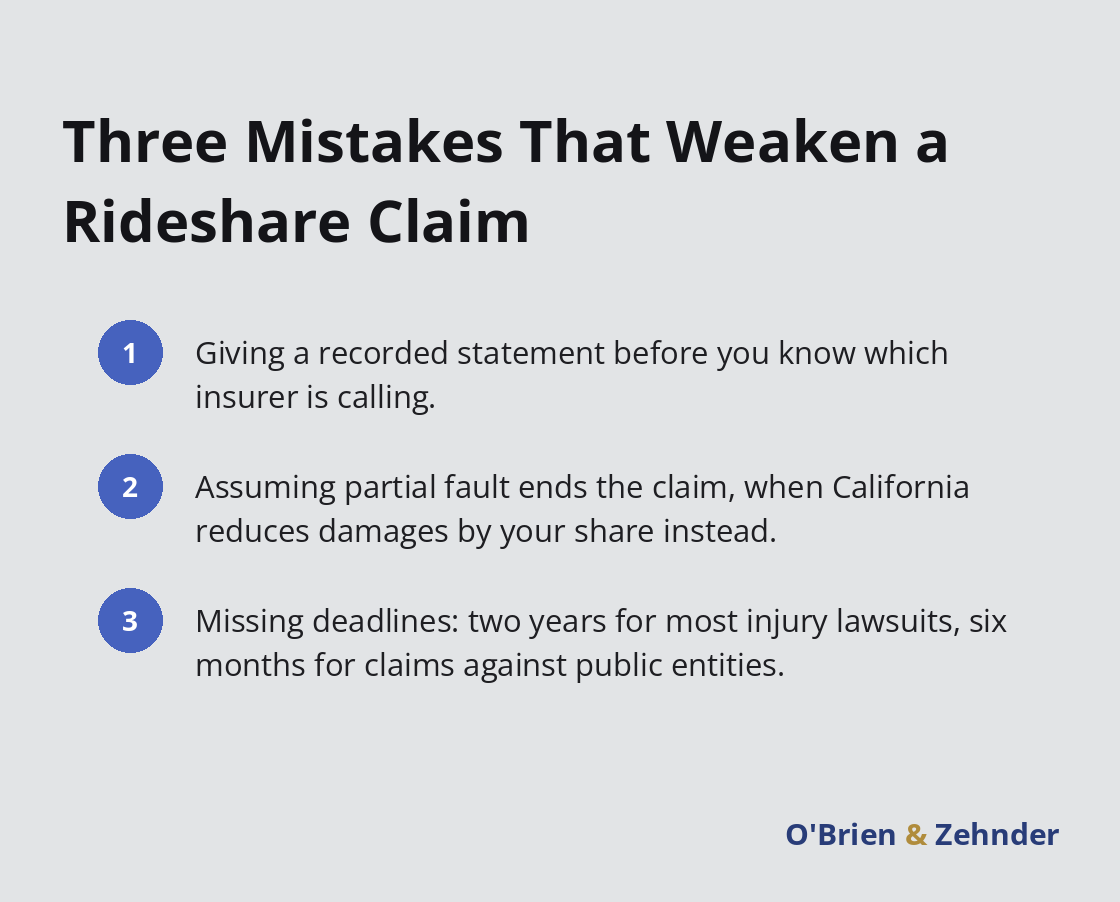
Adjusters for the rideshare company, the drivers, and other insurers may contact you quickly and ask for a recorded statement. Offhand remarks about how you feel or what you saw can be taken out of context later, and an early statement may not reflect injuries that become clearer over time. It is wise to understand which insurer you are speaking with, what period of coverage applies, and what information they actually need before you agree to answer detailed questions on the record.
Assuming Your Own Choices End the Claim
Some injured people assume that if they were partly at fault, for example as a driver or pedestrian hit by a rideshare vehicle, they cannot recover anything. California follows a comparative fault approach. Under the Judicial Council’s civil jury instruction CACI 405, a plaintiff’s damages are reduced by the jury’s determination of the percentage of the plaintiff’s responsibility, rather than being barred altogether. That makes it important to present the full story of what happened instead of accepting an insurer’s early version of events.
Missing Filing Deadlines
Time limits apply no matter how clear the facts seem. Code of Civil Procedure section 335.1 sets a two-year period for an action for injury to, or for the death of, an individual caused by the wrongful act or neglect of another. If a government vehicle or a public roadway condition played a role, Government Code section 911.2 requires a claim relating to injury to a person to be presented no later than six months after the cause of action accrues. Waiting also allows trip data, video, and witness memories to fade, so acting early protects both your deadlines and your evidence.
Wrapping Up Before the Full Picture Is Clear
An early offer can be tempting when medical appointments and missed work are piling up. Resolving a claim before you understand the full extent of your injuries, your future treatment needs, and every insurance policy that may apply can leave you without a way to address problems that appear later. Taking time to complete treatment, gather records, and confirm the available coverage gives you a far clearer view of what a fair resolution looks like.
Final Thoughts
Rideshare collisions can be confusing because the insurance picture changes depending on whether the driver’s app was on, whether a ride had been accepted, and whether you were already in the vehicle. California’s Public Utilities Code sets clear coverage rules for transportation network companies, including added protection for passengers, and the usual rules of negligence, comparative fault, and filing deadlines still apply.
You do not have to sort through multiple insurers and app records on your own. Learning how car accident claims work in California is a strong first step, and having a team that knows the local roads and courts can make the next steps far easier.
If you or someone you love was hurt in an Uber or Lyft crash, contact O’Brien & Zehnder Law Firm to speak with our team serving Sacramento County. We’ll review what happened, explain your options in plain terms, and help you take the next step with confidence.