Truck accidents in Sacramento County leave victims facing medical bills, lost wages, and uncertainty about their legal rights. We at O’Brien & Zehnder Law Firm know that building a strong claim requires specific steps taken immediately after the collision.
This truck accident guidance Sacramento covers what you need to do right now and how to protect your case for the future.
Immediate Steps After a Truck Accident in Sacramento County
The first minutes after a truck collision determine whether your claim succeeds or fails. Photography matters more than most people realize. The National Highway Traffic Safety Administration reports that commercial truck accidents result in an average of 15 fatalities per day on U.S. roads, and the severity of these collisions means evidence disappears quickly.
Document the Scene with Photos and Videos
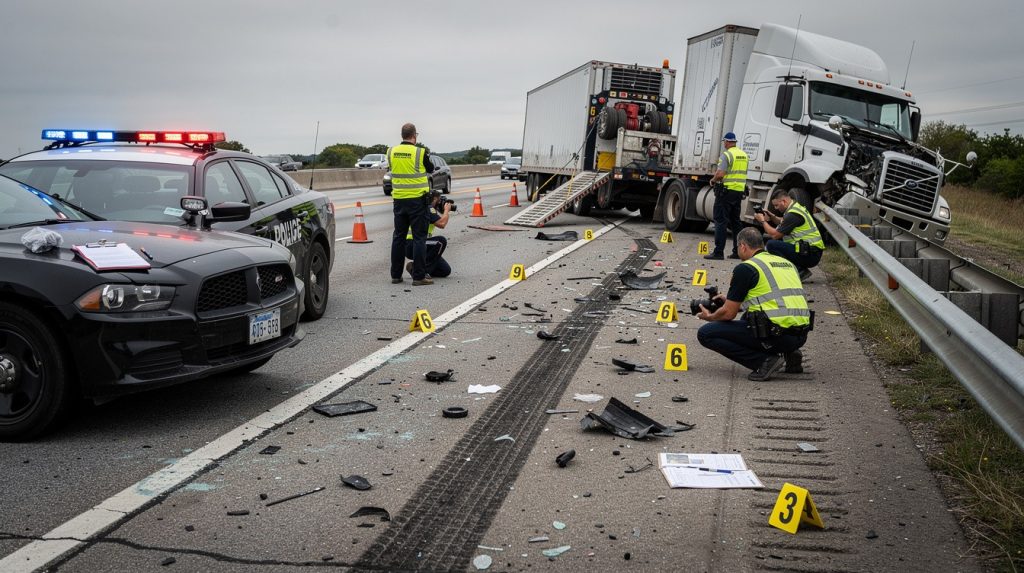
Photograph the entire accident scene from multiple angles, including the truck’s position, vehicle damage, road conditions, skid marks, traffic signals, and any visible cargo spillage. Capture close-ups of license plates, vehicle identification numbers, and the truck’s commercial markings. If you can safely record video, walk around both vehicles to establish the scene’s layout. Weather conditions, time of day, and lighting matter for your claim, so include these details in your photos too. Most smartphones timestamp photos automatically, which creates a record courts recognize.
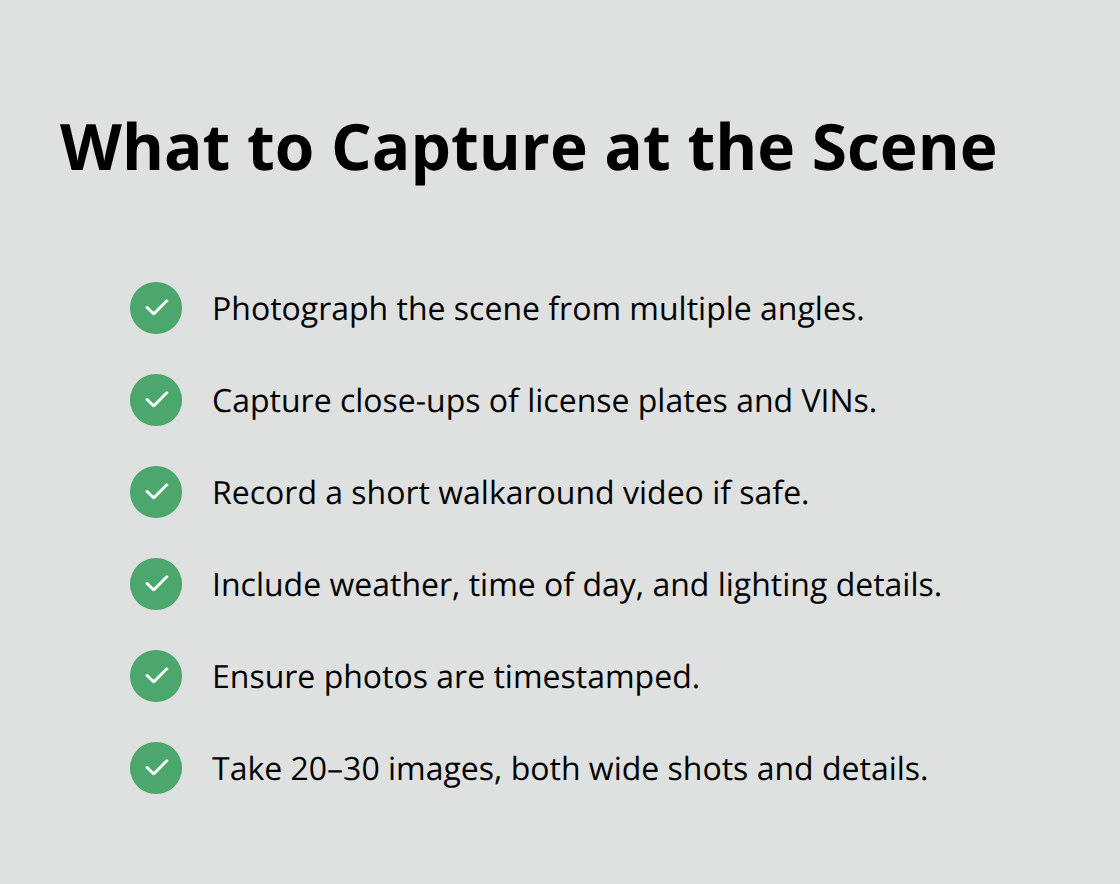
Take at least 20 to 30 images if possible, covering wide shots and details that show how the accident occurred.
Gather Contact Information from Witnesses
Witnesses vanish within hours of accidents, and their statements often prove decisive in truck cases. Speak with anyone who saw the collision and ask for their full name, phone number, email address, and home address. Request their account of what they observed before, during, and after the crash. If they hesitate to stay, explain that their information helps establish what actually happened. Obtain statements while memories remain fresh, as courts value immediate witness accounts over recollections gathered weeks later.
Obtain the Truck Driver’s Information and Insurance Details
Get the truck driver’s full name, commercial driver’s license number, company name, phone number, and address from their license and insurance card. The driver’s employer information appears on company documentation or uniforms. Request the truck’s vehicle identification number, license plate, and insurance policy details. California law requires drivers to provide this information at accident scenes, so do not accept refusals or incomplete responses. Write down whether the driver admitted fault, seemed impaired, or made statements about what caused the collision (these details strengthen your claim significantly). If the driver becomes hostile or refuses to cooperate, photograph their license and insurance card instead of prolonging the interaction. Once you have gathered this information, the next phase involves collecting medical records and preserving additional evidence that supports your case.
Building Your Truck Accident Claim in Sacramento County
Collect Medical Records and Treatment Documentation
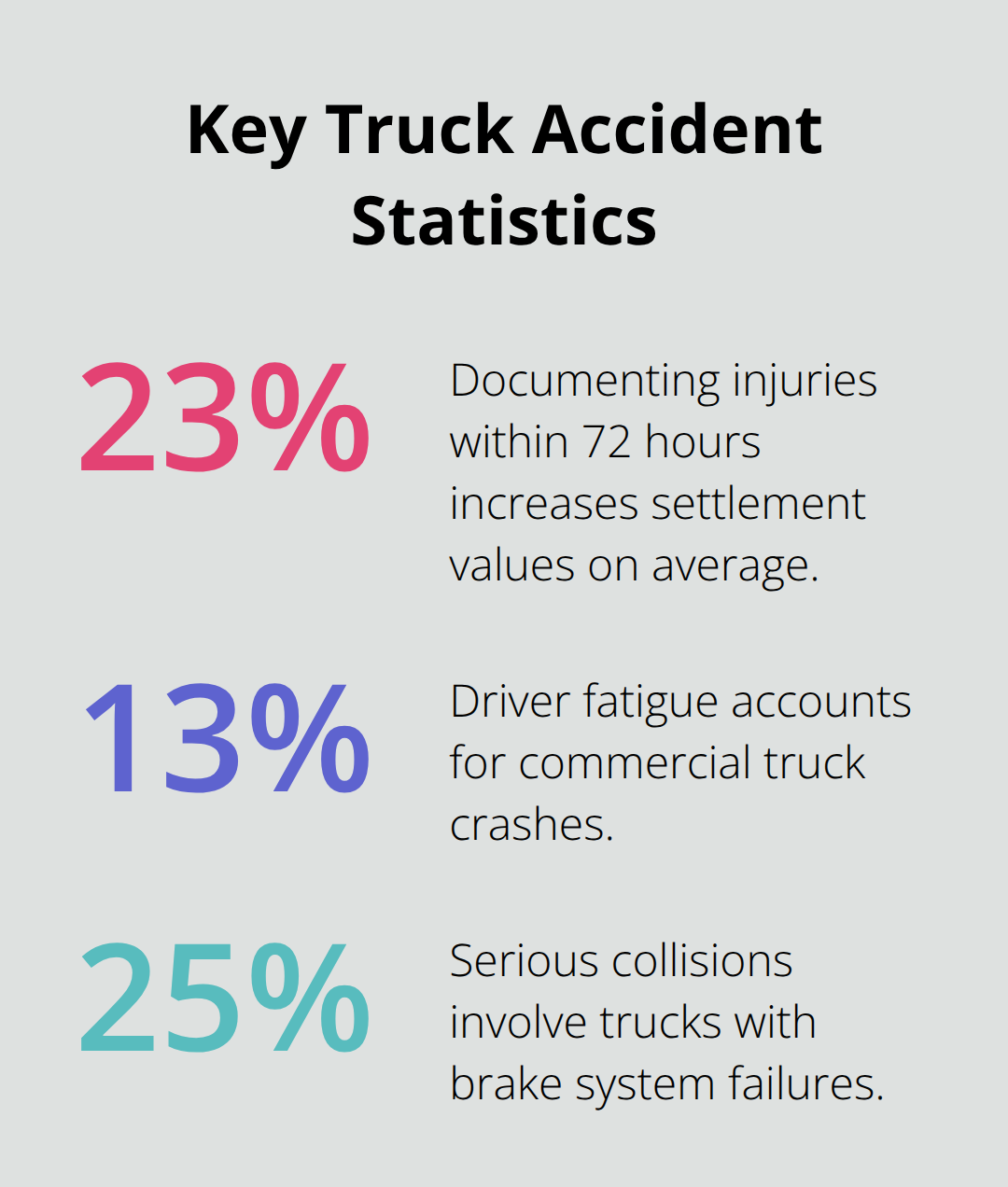
Medical documentation forms the foundation of every successful truck accident claim, and delays in collecting these records cost money and credibility. Start requesting your medical records within 48 hours of treatment, not weeks later. Your healthcare providers can release records faster when you submit written authorization forms immediately rather than waiting. The American Journal of Public Health found that accident victims who document injuries within 72 hours see settlement values increase by an average of 23 percent compared to those who delay.
Request records from emergency rooms, hospitals, physical therapists, and any follow-up care providers. Include imaging reports like CT scans and X-rays, surgical notes if applicable, and prescription documentation. Insurance adjusters scrutinize gaps between the accident date and first medical treatment, so continuous documentation throughout your recovery strengthens your position significantly.
Maintain a personal injury journal that records pain levels, medication side effects, and how injuries affect your daily activities. This contemporaneous record carries substantial weight because it reflects your actual experience rather than recollections made months later during settlement negotiations.
Preserve Evidence from the Accident Scene
Physical evidence disappears quickly once repair work begins. Contact the truck‘s insurance company and formally request that they preserve all evidence, including the vehicle, maintenance records, electronic logging device data, and dashcam footage. Send this preservation demand in writing via email or certified mail to create a documented record. California courts penalize parties who destroy evidence relevant to pending claims, so your written demand establishes that the truck company knew evidence mattered.
Photograph your own vehicle damage thoroughly, showing how impact patterns correlate with the truck’s position and size. Request police reports from the California Highway Patrol or local Sacramento law enforcement within one week, as these documents contain officer observations and preliminary fault assessments.
Report the Incident to Your Insurance Company Promptly
Report the incident to your insurance company within 24 hours while details remain fresh, providing factual information about what happened without admitting fault. Never speculate about causes or agree with statements like “both parties share responsibility” when speaking with insurance representatives. Insurance companies record these conversations, and your words can limit your recovery later.
The information you provide during these initial reports sets the tone for your entire claim. Stick to observable facts: vehicle positions, weather conditions, traffic signals, and what you directly witnessed. Avoid interpretations or assumptions about fault, as insurance adjusters use these statements to minimize payouts. Once you have completed these documentation steps, understanding the common causes of truck accidents helps you identify liability and strengthen your position further.
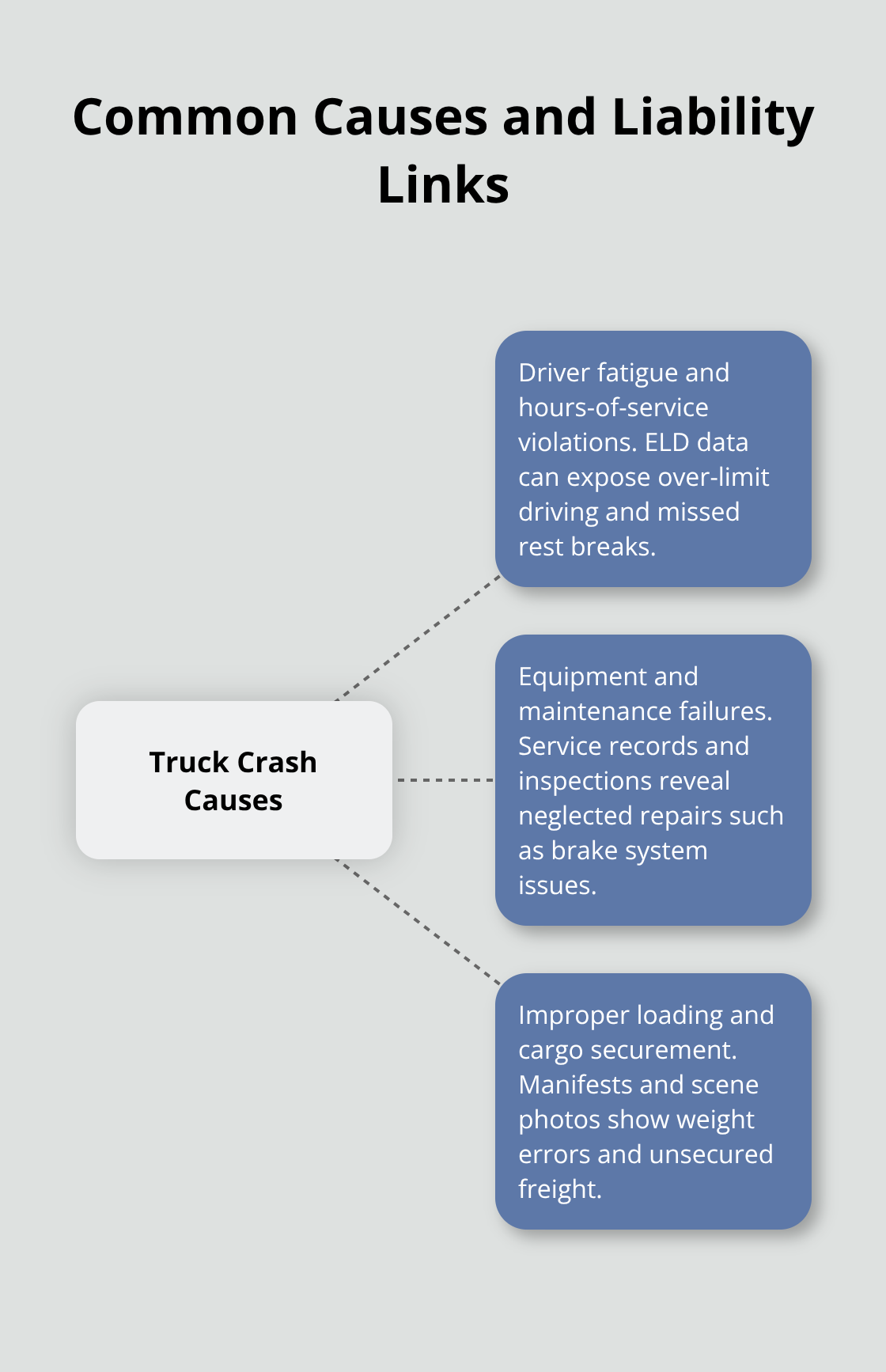
Common Causes of Truck Accidents and Liability in Sacramento County
Driver Fatigue and Hours of Service Violations
The Federal Motor Carrier Safety Administration reports that driver fatigue causes approximately 13 percent of all commercial truck crashes, making it the leading preventable cause. Fatigued drivers operate vehicles with impaired judgment comparable to intoxicated drivers, yet this violation remains common because trucking companies prioritize speed over safety. Hours of service violations occur when drivers exceed the federally mandated 11-hour daily driving limit or fail to take required 10-hour rest breaks.
Electronic logging devices installed in most commercial trucks track these violations automatically, which means hard evidence of fatigue exists in the truck’s onboard computer system. When you request the truck driver’s electronic logging device data through discovery, this information exposes whether the company forced unrealistic schedules that caused the crash.
Equipment Failure and Maintenance Issues
Maintenance failures represent the second major cause of truck accidents, with the National Transportation Safety Board identifying brake system failures in approximately 25 percent of trucks involved in serious collisions. Trucking companies must perform regular inspections and maintenance according to federal regulations, but cost-cutting operations skip inspections or ignore repair needs.
Request the truck’s maintenance records immediately because gaps in service schedules demonstrate negligence. These records reveal whether the company neglected safety obligations that directly led to your accident. Brake fluid leaks, worn brake pads, and faulty air brake systems all appear in maintenance documentation and prove the company acted recklessly.
Improper Loading and Cargo Securement
Improper cargo loading causes the truck to become unstable during turns or sudden braking, leading to rollovers and jackknife accidents that devastate other vehicles. The truck’s weight distribution and cargo securement must comply with Department of Transportation standards, yet overloading remains widespread because shippers pay less when companies cram extra freight into trailers.
Photographic evidence of cargo spillage at the accident scene, combined with the truck’s manifest showing weight discrepancies, proves the loading violation directly caused the collision. These violations establish that the truck company or driver acted recklessly rather than making an honest mistake, which strengthens your liability claim substantially.
Final Thoughts
Strong truck accident claims rest on three foundational elements: immediate documentation that captures the scene before evidence vanishes, medical records that establish the full scope of your injuries, and preserved evidence that proves negligence. The photographs you take within minutes, the witness statements you gather before people leave, and the medical treatment you seek within 72 hours directly determine whether your claim succeeds or fails. Courts recognize that victims who act quickly demonstrate credibility, while those who delay raise questions about injury severity and accident causation.
If you have not yet reported the accident to your insurance company, do that immediately while details remain fresh. If you have already reported the incident, start requesting medical records and send preservation demands to the truck company’s insurance carrier in writing. Document everything in emails or certified letters so you have proof of your actions, and contact the California Highway Patrol or local Sacramento law enforcement if you have not already obtained the police report.
The truck accident guidance Sacramento you need extends beyond what you can accomplish alone, as insurance companies employ adjusters trained to minimize payouts and trucking companies have legal teams protecting their interests. We at O’Brien & Zehnder Law Firm help clients understand their rights and navigate the claims process from start to finish. Contact us today to discuss your case and learn how we can help you build the strongest possible claim.