
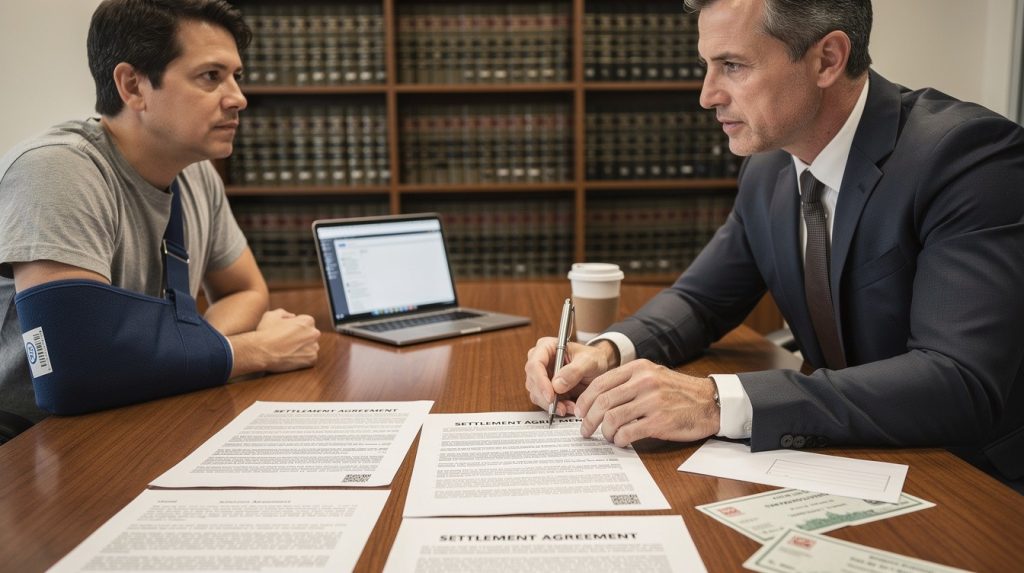
A California injury claim settlement can feel overwhelming when you’re recovering from an accident. Insurance companies have teams of adjusters working to minimize what they pay, and understanding the process puts you in a stronger position.
We at O’Brien & Zehnder Law Firm walk clients through each stage-from initial claims to final negotiations. This guide breaks down what actually happens in your case and how to protect your rights.
How the Settlement Process Actually Works in Sacramento County
The Investigation Phase Controls Your Timeline
California injury claims follow a predictable path, though the speed varies significantly based on case complexity and insurance company responsiveness. After you report your accident to the insurance company, an adjuster gets assigned within 24 to 48 hours for most claims. That adjuster investigates liability, reviews medical records, and calculates damages. Insurance companies don’t move quickly by accident-data from the American Association for Justice shows that insurers delay settlements to pressure claimants into accepting lower amounts.
The process typically spans 3 to 6 months for straightforward cases, but serious injuries stretch to 12 to 18 months or longer. Medical treatment completion matters enormously because insurers won’t finalize settlement negotiations until your doctors confirm you’ve reached maximum medical improvement. During this investigation phase, the insurance company controls the timeline, not you. They’ll request medical records, wage statements, and accident reports.
How Insurers Use Your Documentation Against You
Many claimants hand over documentation without understanding how insurers weaponize details against them. A single medical record mentioning a pre-existing condition gets amplified to reduce your payout. Insurance adjusters scrutinize every document you provide, looking for language that suggests your injuries weren’t as severe as you claim or that prior conditions contributed to your current damages.
The adjuster also uses your statements to find inconsistencies. If you tell the adjuster you can’t work but then post photos of yourself at a restaurant, they’ll use that against you. Documentation cuts both ways-it protects you when it’s accurate and complete, but it harms you when insurers misinterpret or selectively present it.
Economic Damages: What Insurers Calculate Mechanistically
Recoverable damages in California fall into two categories: economic and non-economic. Economic damages include past and future medical expenses, lost wages, and costs for ongoing care or assistive equipment. Insurance adjusters calculate economic damages mechanistically using medical bills and pay stubs, applying straightforward math to reach a number.
Non-economic damages cover pain and suffering, emotional distress, and loss of enjoyment of life. California doesn’t cap non-economic damages for personal injury claims, unlike some states, which means a severe case can result in substantial awards beyond medical bills. However, insurers dramatically undervalue non-economic damages because they lack objective metrics.
Non-Economic Damages and the Multiplier Method
A broken arm with $50,000 in medical bills might generate a settlement offer of $75,000 to $100,000 if the injury healed cleanly, but a similar injury with chronic pain increases non-economic damages substantially. The multiplier method-applying 2 to 5 times medical expenses depending on severity-is what insurers actually use internally, though they’ll never admit this approach.
Lost earning capacity for permanent injuries requires calculating future income loss over your remaining work years, which adjusters often minimize by using conservative wage projections. These calculations directly impact your settlement amount, yet many claimants never see the formulas insurers apply. Understanding how insurers value your specific damages positions you to challenge their initial offers and negotiate more effectively.
What Actually Determines Your Settlement Amount in Sacramento County
Medical Expenses Form the Foundation-But Insurers Challenge Them
Medical expenses anchor the settlement calculation, but insurers weaponize how they count them. A $100,000 medical bill doesn’t automatically mean a $100,000 settlement-insurers often challenge charges as excessive or unnecessary, reducing your economic damages claim before they even calculate non-economic damages. They argue that certain treatments weren’t medically required or that you could have recovered with less intensive care. Request itemized billing statements and have your treating physician document why each procedure was necessary. Insurance adjusters frequently reduce settlements by 20 to 40 percent when claimants can’t justify every medical charge with clear clinical documentation.

Injury Severity Controls the Multiplier Insurers Apply
Severity of injury directly impacts the multiplier insurers apply to your medical expenses. A broken leg with straightforward healing receives a 2 to 3 times multiplier on medical costs, while a traumatic brain injury or spinal cord damage triggers 4 to 5 times multipliers or higher. The National Highway Traffic Safety Administration reports that severe injuries resulting in permanent disability command substantially higher settlements because future medical care and ongoing treatment needs are substantial and documented. Document every symptom, limitation, and treatment consequence in writing immediately after your accident and consistently throughout your recovery. Insurers discount vague pain complaints but respect detailed medical records showing specific functional losses like inability to return to work or reduced range of motion.
Fault Determination Shifts Your Entire Settlement Range
California follows pure comparative negligence, meaning you can recover damages even if you’re 99 percent at fault-but your settlement reduces proportionally. If you’re determined 20 percent at fault, your $100,000 settlement becomes $80,000. Insurers aggressively assign fault percentages to injured claimants because reducing your fault percentage is their most effective cost-cutting tool. They argue you didn’t maintain proper lookout, failed to brake in time, or contributed to the accident in ways that aren’t supported by evidence. Obtain the police accident report immediately, as this document significantly influences fault determination. Insurance adjusters rarely assign you more than 5 to 10 percent fault if the police report clearly identifies the other driver as at-fault, but if the report is ambiguous, insurers will exploit that ambiguity to reduce your settlement.
Witness statements carry enormous weight in fault determination because they provide independent corroboration of what happened. If you have three credible witnesses confirming the other driver ran a red light, insurers can’t credibly argue comparative negligence. Photograph the accident scene, traffic signals, road conditions, and vehicle damage immediately if you’re physically able. Collect contact information from all witnesses before leaving the scene. Insurance adjusters know that most claimants won’t gather thorough evidence, so they push aggressive fault arguments against claimants who lack documentation. The more objective evidence you compile proving the other party’s negligence, the higher your settlement because insurers face greater litigation risk if they deny your claim.
Lost Wages and Future Earning Capacity Require Precise Documentation
Calculating lost wages sounds straightforward-multiply your daily rate by days missed-but insurers manipulate this calculation in multiple ways. They argue you could have worked from home, that sick leave covered your absence, or that you exaggerated how long you couldn’t work. Obtain written confirmation from your employer stating the exact dates you missed work and whether you used paid leave or unpaid leave. Provide pay stubs from the six months before your accident and after your return to establish your normal earning pattern. If you’re self-employed, tax returns and business income records become critical because insurers will challenge income figures without documentation.
Future earning capacity for permanent injuries is where settlements dramatically increase or decrease based on your documentation. If your injury prevents you from returning to your previous occupation, you’re entitled to recover the difference between what you earned before and what you can earn now, projected across your remaining work years. A 35-year-old construction worker with a permanent back injury that limits him to sedentary work might lose $500,000 to $1,000,000 in future earning capacity over 30 remaining work years. Vocational rehabilitation specialists can calculate realistic earning capacity in alternative occupations, and this documentation forces insurers to acknowledge long-term financial impact. Without professional vocational assessment, insurers will minimally value future earning loss by claiming you could work in any job, regardless of your actual limitations. Quantifying these losses with professional documentation shifts settlement negotiations substantially in your favor because insurers routinely dismiss future earning capacity claims without objective evidence.
Turning Evidence Into Settlement Leverage in Sacramento County
Collect Evidence Immediately After Your Accident
Insurance adjusters count on claimants presenting weak documentation, which is why your evidence collection directly determines your settlement range. Start collecting evidence the moment your accident occurs by photographing the scene, vehicle damage, traffic signals, road conditions, and any visible injuries. Request the police report within days because insurers reference this document throughout negotiations, and delays in obtaining it signal disorganization. Obtain written statements from witnesses while their memories are fresh, including their full names, phone numbers, and email addresses.

Medical records must be complete and chronological, showing every treatment, symptom, and functional limitation from your first appointment forward. Insurance adjusters systematically challenge incomplete medical records by claiming gaps indicate recovery or that you exaggerated symptoms. Request itemized billing statements from all healthcare providers because insurers exploit vague charges to reduce your economic damages.
Document Your Financial Losses With Precision
Pay stubs from six months before and after your accident establish your lost wages baseline, and written confirmation from your employer stating exact dates missed strengthens this claim. For permanent injuries, obtain a vocational rehabilitation assessment that calculates realistic earning capacity in alternative occupations, which forces insurers to acknowledge long-term financial impact rather than dismissing future losses. Keep a detailed symptom journal documenting pain levels, medications, missed activities, and how your injury affects daily function because adjusters discount vague complaints but respect specific, dated entries. Organize all documentation chronologically in a single file that you can reference during settlement negotiations.
Understand How Adjusters Manipulate Your Statements
When adjusters contact you, understand that every statement you make gets documented and used against you later. Insurance companies employ adjusters specifically trained to minimize payouts, and they use your own words to reduce settlement offers. Never accept initial settlement proposals during these first conversations because opening offers are intentionally low to test your knowledge of your case’s value. Adjusters will pressure you with statements like your case is worth exactly X amount or that they cannot negotiate beyond their initial offer, both of which are false tactics designed to rush settlement.
Reject Lowball Offers and Demand Transparency
If you lack documentation proving economic damages, adjusters will aggressively reduce offers by 30 to 50 percent because they know litigation risk drops substantially without objective evidence. Defense attorneys representing the insurance company follow similar playbooks, requesting endless medical records and depositions to delay settlement while hoping you will accept lower amounts due to financial pressure. Reject lowball offers in writing and explain specifically why the settlement fails to account for your documented damages, your injury severity, and your future earning capacity. Request written settlement proposals with itemized breakdowns showing how the adjuster calculated economic and non-economic damages, which forces transparency and reveals where their valuation diverges from your actual losses.
Work With Legal Representation During Negotiations
Settlement negotiations require understanding insurance company tactics and responding strategically to pressure. We at O’Brien & Zehnder Law Firm help clients navigate these conversations by handling adjuster communications and ensuring settlement offers reflect documented damages rather than insurance company guesswork. Our Sacramento-area practice guides clients through the insurance and legal claims process, protecting your rights when adjusters attempt to minimize what they pay.
Final Thoughts
California injury claim settlements reward claimants who document thoroughly and negotiate strategically. Insurers follow predictable patterns to minimize payouts, which means understanding their tactics directly increases what you recover. Your settlement amount depends on medical expenses, injury severity, fault determination, and lost wages-all of which require precise documentation to defend against insurance company challenges.

The most common mistake claimants make is accepting initial settlement offers without understanding how adjusters calculated them. Opening proposals are intentionally low because insurers test whether you know your case’s actual value. Reject lowball offers in writing, request itemized breakdowns showing their damage calculations, and demand transparency about how they valued your non-economic damages.
We at O’Brien & Zehnder Law Firm help Sacramento-area clients navigate settlement negotiations by handling adjuster communications and ensuring offers reflect your actual losses rather than insurance company guesswork. Contact O’Brien & Zehnder Law Firm to discuss your California injury claim settlement and understand what your case is actually worth.