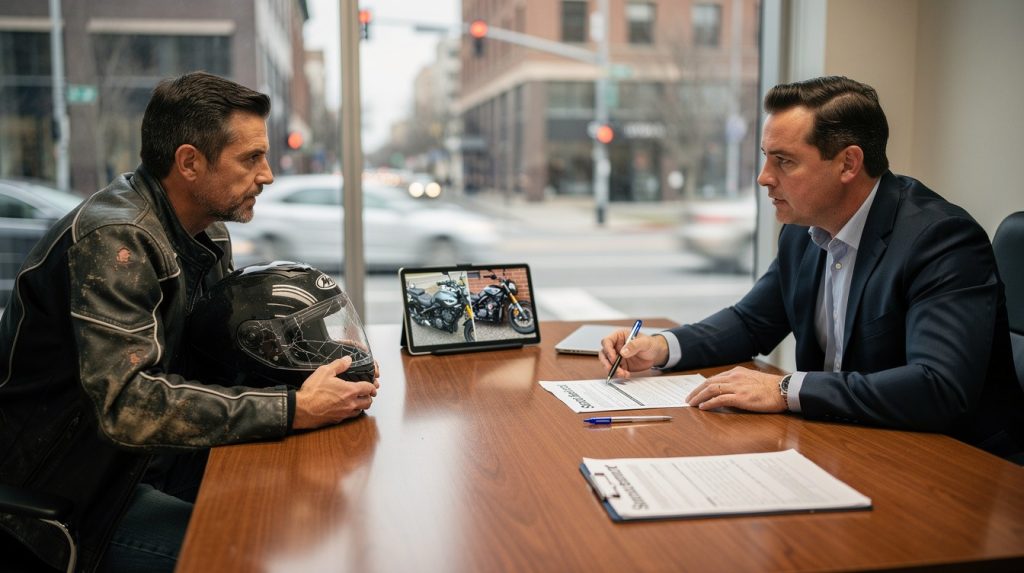

Motorcycle accidents in Sacramento County often result in serious injuries and complex insurance negotiations. Insurance companies frequently offer settlements far below what injured riders actually deserve.
We at O’Brien & Zehnder Law Firm help riders understand their rights and fight for fair compensation. This guide walks you through Sacramento motorcycle settlement considerations and proven negotiation strategies.
Sacramento County Motorcycle Accidents Demand Different Settlement Approaches
Motorcycle Injuries Exceed Car Accident Trauma
Motorcycle accidents in Sacramento County produce injuries that insurance adjusters routinely undervalue. A rider thrown from a bike at 40 miles per hour experiences trauma that a passenger in a sedan simply does not. The National Highway Traffic Safety Administration reports that motorcyclists are 28 times more likely to die in a crash than passenger vehicle occupants, and five times more likely to be injured. Insurance companies know this statistical reality, yet they often use it against injured riders by claiming pre-existing conditions or exaggerating comparative fault. Motorcycle accidents also involve unique liability questions because many drivers in Sacramento County fail to see motorcycles, creating “left-turn” scenarios where the at-fault driver claims they never saw the rider. California’s comparative negligence law allows riders to recover damages even if they are partially at fault, but only if they prove they were less than 50 percent responsible. Your settlement negotiations must address visibility issues, road conditions, and the other driver’s failure to exercise reasonable care, not just the physical injuries themselves.
Road Rash and Fractures Create Compounding Costs
Motorcycle accident injuries differ fundamentally from car accident injuries because riders lack the protective shell of a vehicle. Road rash involves severe abrasion and embedded debris, leading to infection risks and scarring that requires multiple surgical interventions and ongoing dermatological treatment. Fractures in motorcycle accidents tend to be more severe because riders often experience high-velocity impacts with pavement or other vehicles. A broken femur from a motorcycle accident frequently requires surgical plates, pins, and months of physical therapy, whereas similar injuries in car accidents may heal with casting alone. Long-term consequences include chronic pain, reduced range of motion, and permanent nerve damage that affects your ability to work. Insurance companies often settle these cases based on initial medical bills, ignoring the fact that soft tissue injuries and nerve damage may not manifest fully for six to twelve months after the accident. You should document all medical appointments and treatment plans extending at least one year forward, because your settlement must account for future medical expenses, not just past ones.
Fault Percentages Directly Impact Settlement Amounts
California’s pure comparative negligence rule means that fault percentages directly impact your settlement amount. If you are found 20 percent at fault, you can recover 80 percent of your total damages.
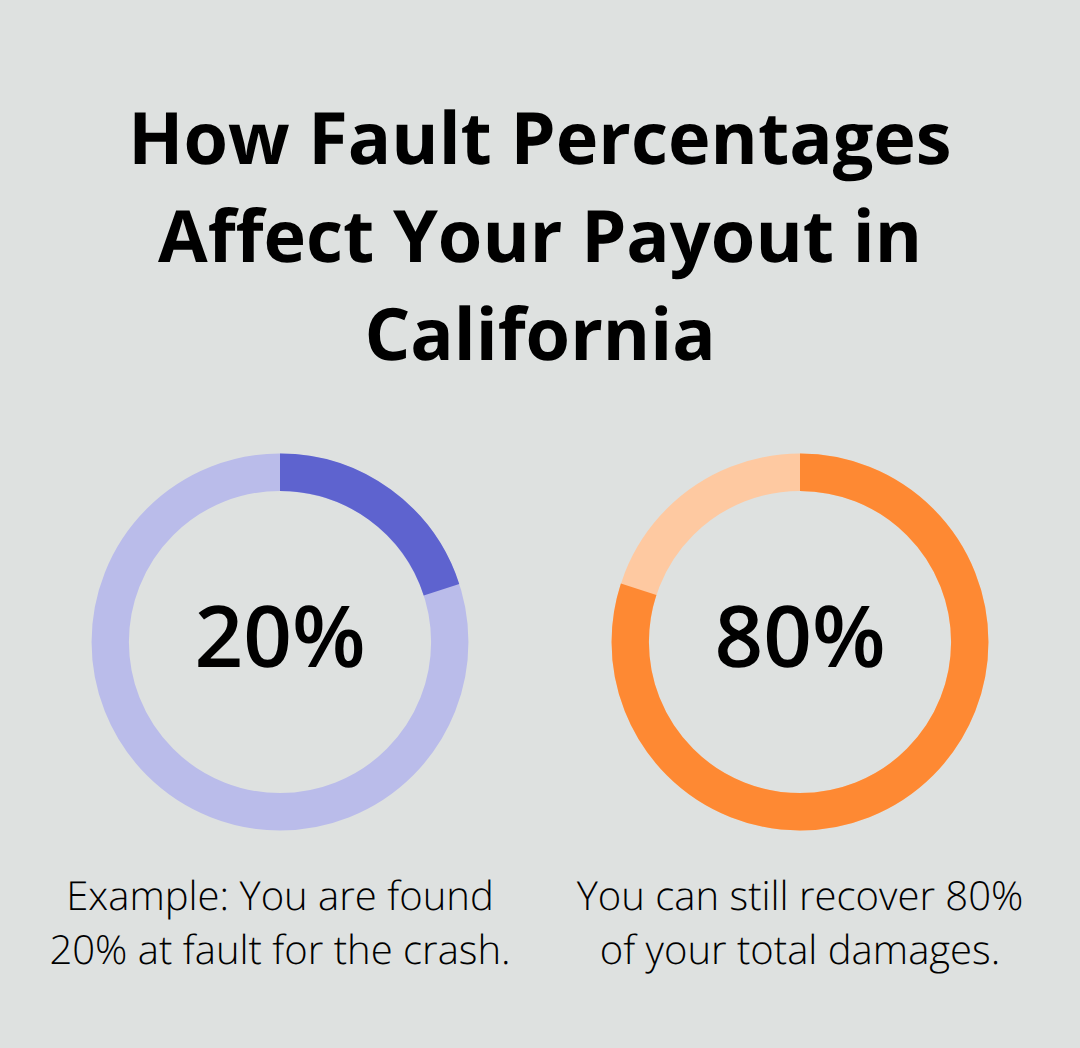
However, insurance adjusters frequently misrepresent fault percentages in initial settlement offers, claiming the motorcyclist was speeding or failed to signal when no evidence supports this. You must gather police reports, witness statements, and photographs of the accident scene within the first 48 hours because memories fade and physical evidence disappears. If the at-fault driver received a traffic citation, that citation strengthens your liability position significantly during settlement negotiations. Understanding how fault percentages translate directly to settlement dollars prevents you from accepting lowball offers based on inflated fault assessments. This foundation of liability evidence becomes your strongest tool when evaluating whether an insurance company’s initial offer reflects your actual damages.
What Your Settlement Offer Should Actually Include
Medical Expenses Form Your Settlement Foundation
Insurance companies in Sacramento County calculate settlement offers using formulas that systematically undervalue motorcycle accident claims. Most adjusters multiply medical expenses by 1.5 to 3, then add a modest amount for pain and suffering-a method that ignores the reality of your injuries and long-term costs. Your settlement offer should account for every medical expense you’ve incurred and will incur, plus compensation for pain, suffering, lost wages, and permanent disability.
Gather all medical bills, hospital records, prescription receipts, and physical therapy invoices from the accident date forward. The American Hospital Association reports that emergency room visits for motorcycle injuries average between $8,000 and $15,000, yet insurance companies frequently try to settle cases for amounts that barely cover these initial costs.
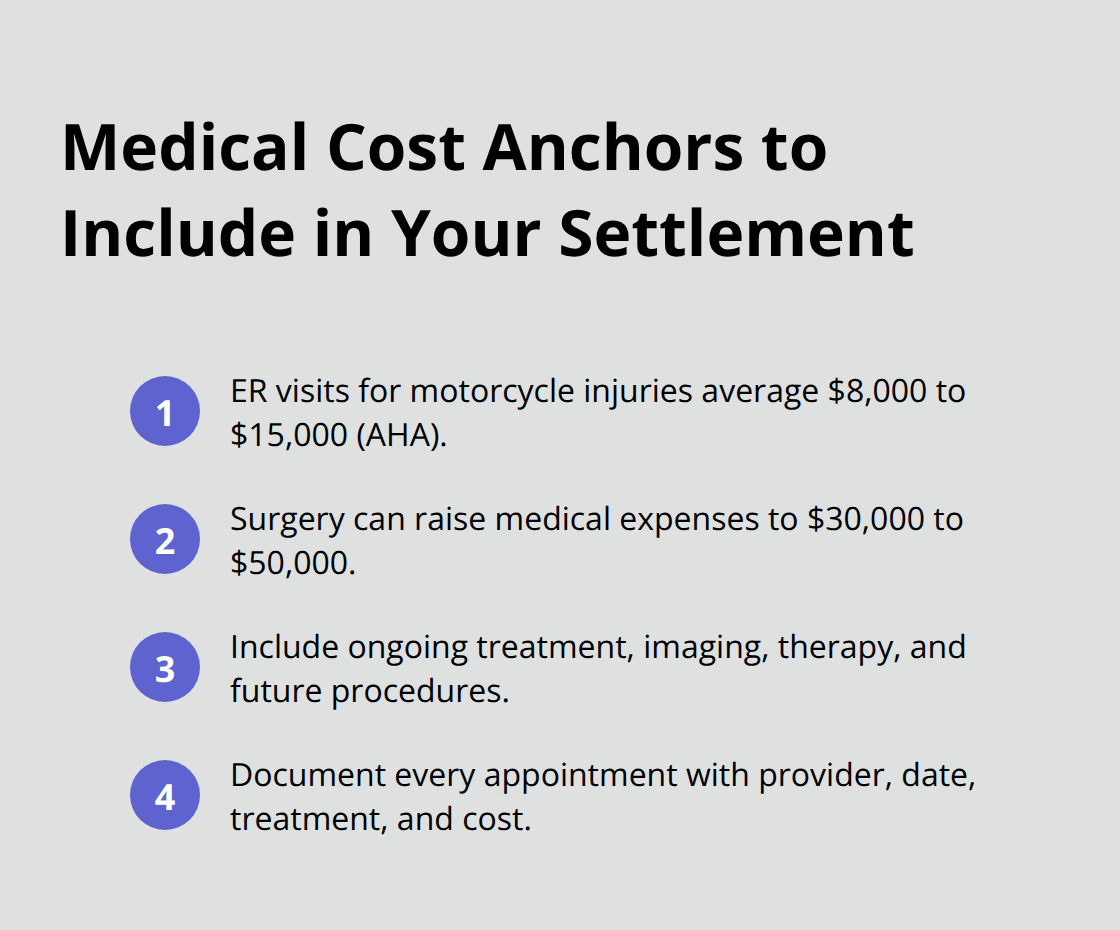
Add to this figure any ongoing treatment, specialist consultations, imaging studies, and anticipated future procedures. If you required surgery, your medical expenses likely exceed $30,000 to $50,000 before considering physical therapy or mental health treatment for trauma.
Motorcycle accident victims often develop complications months after the crash when scarring restricts movement or nerve damage becomes apparent. Insurance adjusters will argue that some injuries resolve quickly, but this claim ignores the documented timeline of soft tissue healing. Document every medical appointment in writing, including the provider’s name, date, type of treatment, and cost. This creates an undeniable record that proves your damages are real and substantial, not inflated guesses.
Pain and Suffering Demands Real Compensation
Non-economic damages-pain, suffering, emotional distress, and loss of enjoyment-represent the largest portion of most motorcycle settlement offers, yet insurance companies assign the lowest value to these categories. An adjuster might offer $5,000 for pain and suffering on a claim involving $40,000 in medical expenses, which is insulting and unacceptable. California courts recognize that permanent scarring, chronic pain, and reduced quality of life warrant real compensation.
If your injuries prevent you from returning to your occupation, that lost earning capacity must reflect your actual income, not an industry average. A Sacramento County construction worker earning $65,000 annually who suffers permanent nerve damage affecting hand function has lost far more than someone working a desk job with similar injuries. Request that the insurance company provide a written explanation of how they calculated their settlement offer, including their assigned value for each damage category. If they refuse or provide vague responses, this signals that their offer lacks justification and can be challenged aggressively.
Identify Red Flags in Initial Offers
Red flags appear when adjusters claim pre-existing conditions caused your current symptoms without medical evidence, when they pressure you to accept an offer within days, or when their offer is substantially lower than the medical expenses alone. Insurance companies banking on your financial desperation will lowball initial offers expecting you to accept without negotiation. Adjusters who avoid providing written calculations or who dismiss your medical documentation are signaling weakness in their position.
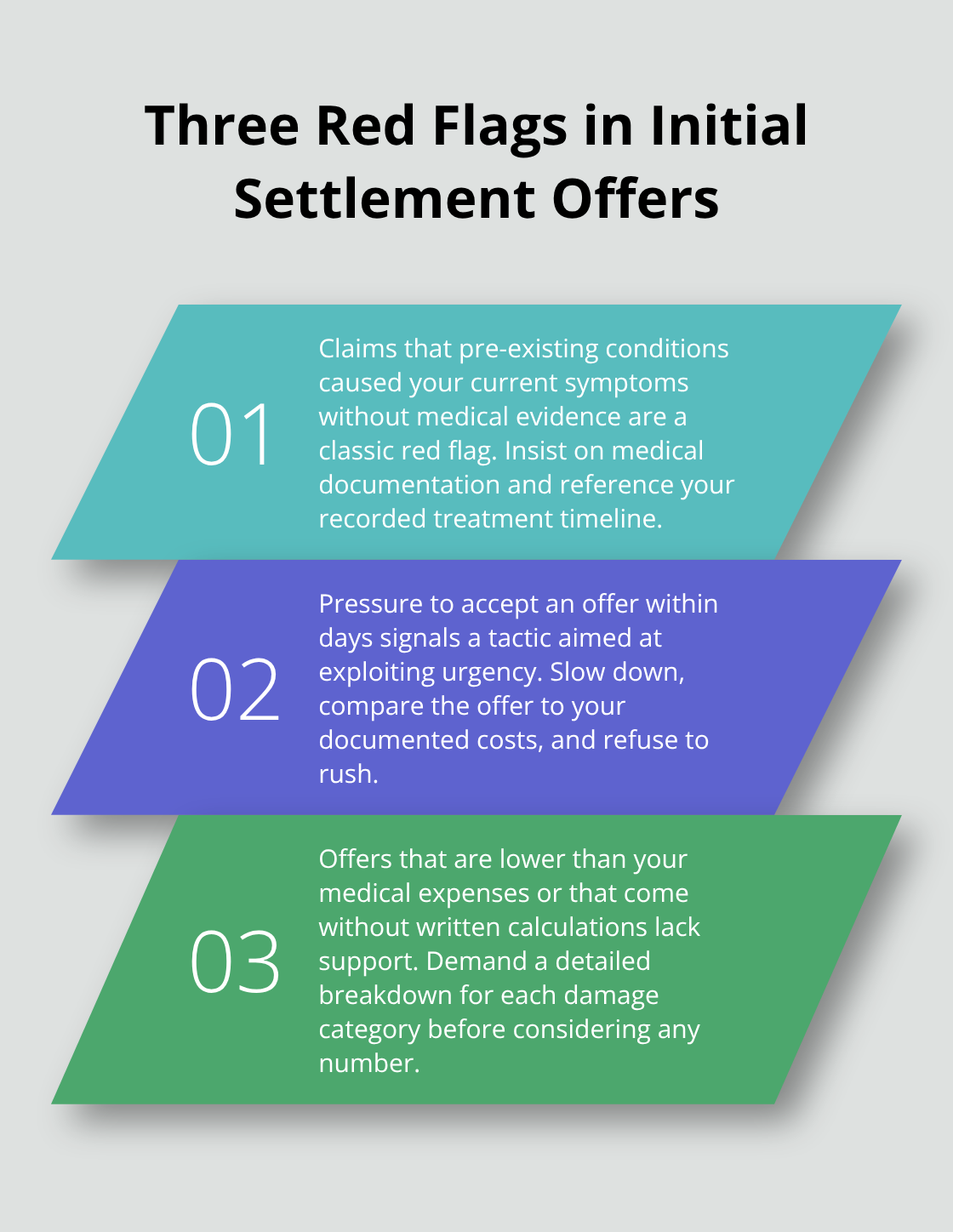
Counter any first offer with a detailed breakdown of your actual damages. This positions you as informed and serious about fair compensation rather than desperate for quick cash. The negotiation process begins when you reject the initial offer and demonstrate that you understand your claim’s true value. Your response to that first offer determines whether the insurance company takes you seriously or continues with lowball tactics.
Building Your Case and Countering Insurance Offers
Collect Evidence Immediately After Your Accident
Physical evidence collected immediately after your motorcycle accident determines whether you win or lose during settlement negotiations. Photograph the accident scene from multiple angles, including road conditions, skid marks, traffic signals, and vehicle damage patterns. Take close-up images of your injuries within the first week while visible trauma remains apparent, then photograph them again at two-week intervals to document healing progression.
Request the police report within five business days and verify that the officer documented visibility conditions, weather, and road hazards. If the police report contains errors about how the accident occurred, file a supplemental report immediately with the Sacramento County Sheriff or local police department. Insurance adjusters will cite inaccurate police reports as justification for denying liability, so correcting errors early prevents this tactic from derailing your settlement.
Secure Witness Statements That Support Your Claim
Witness statements carry tremendous weight because they come from neutral third parties with no financial interest in the outcome. Contact anyone who saw the accident and ask them to provide written statements describing what they observed about vehicle speeds, traffic signals, and the other driver’s actions. Request their full names, phone numbers, and addresses so the insurance company cannot dismiss them as anonymous or unreliable.
If a witness is unwilling to provide a written statement, ask permission to record a phone conversation where they describe the accident. Most states, including California, allow one-party consent recording, meaning you can record conversations where you are a participant. This creates documentation that prevents witnesses from later changing their stories or becoming unavailable.
Recognize and Resist Insurance Company Pressure Tactics
Insurance companies deploy specific psychological tactics designed to pressure injured riders into accepting inadequate settlements quickly. Adjusters will claim they have limited settlement authority and suggest that rejecting their current offer means the case will take years to resolve. This is false. Settlement negotiations typically last two to four months when you respond professionally with documented evidence.
Adjusters will also create artificial urgency by stating that their offer expires in five to seven days, hoping you will panic and accept without proper analysis. Respond to this tactic by requesting the expiration deadline in writing and then ignoring it. If they withdraw their offer, they will make another one because insurance companies want to avoid litigation costs far more than they want to avoid reasonable settlements.
Calculate Your Settlement Value and Counter Strategically
When you receive an insurance offer, calculate whether it covers your documented medical expenses plus a reasonable multiplier for pain and suffering. If your medical bills total forty thousand dollars and you suffered permanent scarring or chronic pain, your settlement should range from eighty thousand to one hundred twenty thousand dollars depending on injury severity and long-term consequences. Any offer below the medical expense total is automatically rejected without counter-negotiation.
Respond to lowball offers with a detailed written counter-proposal that itemizes your medical costs, future treatment expenses, lost wages, and pain and suffering calculations. State your counter-offer amount clearly and explain the reasoning behind each damage category. This written response demonstrates that you understand your claim’s value and will not accept dismissive treatment. Insurance adjusters respect clients who respond with documentation rather than emotion, and they increase their offers significantly when they recognize you will not settle for inadequate compensation.
Final Thoughts
Sacramento motorcycle settlement considerations demand that you act decisively and refuse inadequate offers from insurance companies. You must build your case methodically, document every injury and expense, and respond to lowball offers with confidence backed by evidence. Fault percentages, long-term medical costs, and permanent disability all factor into your settlement value, and accepting an offer that ignores these realities means leaving thousands of dollars on the table.
Most motorcycle accident victims settle their claims within two to four months when they approach negotiations professionally and reject initial offers without challenge. Your documented medical expenses, photographs of injuries, and written witness statements create leverage that forces insurance adjusters to increase their offers substantially. Professional legal guidance becomes necessary when insurance companies deny liability entirely, when your injuries require ongoing treatment beyond one year, or when the at-fault driver’s insurance policy limits may not cover your full damages.
We at O’Brien & Zehnder Law Firm help Sacramento County residents navigate motorcycle accident claims and pursue fair settlements without the stress of handling negotiations alone (our team guides you through the insurance claims process and protects your rights when adjusters deploy unfair tactics). Contact O’Brien & Zehnder Law Firm for a consultation about your motorcycle accident claim.