

Truck accidents in Sacramento County leave victims facing medical bills, lost income, and overwhelming stress. A Sacramento truck accident attorney can guide you through the claim process and fight for the compensation you deserve.
We at O’Brien & Zehnder Law Firm understand how different these cases are from regular car accidents. This guide walks you through each step of your claim journey.
Understanding Truck Accidents in Sacramento County
How Truck Accidents Differ from Regular Car Accidents
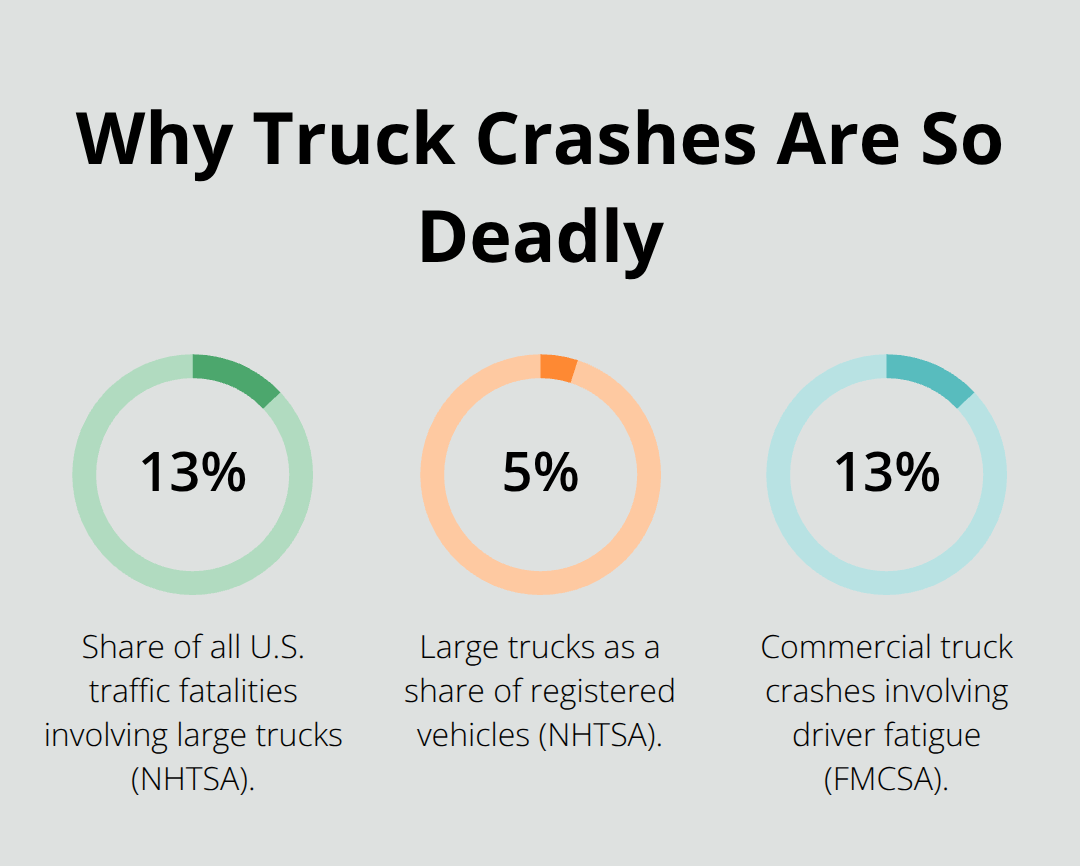
Truck accidents in Sacramento County create fundamentally different liability situations than regular car collisions. A fully loaded semi-truck weighs up to 80,000 pounds compared to a passenger vehicle’s 4,000 pounds, which means the physics of impact causes exponentially greater damage and injury severity. The National Highway Traffic Safety Administration reports that large trucks are involved in approximately 13% of all traffic fatalities despite representing only 5% of registered vehicles. This disparity exists because truck operators face strict federal regulations governing hours of service, vehicle maintenance, and cargo loading that don’t apply to regular drivers. When violations occur, they create legal liability pathways that personal injury claims against regular drivers simply don’t have. Federal Motor Carrier Safety Administration records show that driver fatigue contributes to roughly 13% of commercial truck accidents, a factor that generates distinct evidence requirements and defendant accountability compared to standard vehicle accidents.
What Happens Immediately After Impact
The first hours following a truck accident determine the strength of your potential claim. Police reports for truck accidents must document specific details about the truck’s logbook, which records how many hours the driver worked before the collision. Request this logbook immediately through your attorney, as trucking companies often alter records within days. Photograph the truck’s condition, cargo configuration, and any visible maintenance issues like worn tires or brake damage. Obtain contact information for all witnesses, particularly other drivers who observed the truck’s behavior before impact. Medical treatment should start within 24 hours because insurance companies scrutinize delays as evidence that injuries weren’t severe. Medical records that establish the connection between the accident and your injuries before settlement discussions begin matter significantly, since insurance adjusters use documentation gaps to reduce payouts.
Why Truck Company Tactics Differ from Regular Insurance Claims
Trucking companies employ specialized insurance defense strategies that standard auto insurers don’t use. Large carriers maintain dedicated legal teams and immediately assign investigators to accident scenes, often arriving before police finish their reports. They conduct recorded statements with witnesses and photograph evidence from angles favorable to their defense. Commercial trucking insurance policies typically include higher liability limits than personal auto policies, which means these companies have greater resources to fight claims aggressively. The Federal Motor Carrier Safety Administration maintains violation histories for every trucking company, and these records show patterns that strengthen negligence arguments. California law allows victims to recover damages from both the truck driver and the trucking company under vicarious liability principles, but only when your claim properly documents the company’s role in creating dangerous conditions. This requires specialized knowledge of commercial transportation regulations that general personal injury attorneys often lack.
The claim process itself demands attention to details that most accident victims overlook, starting with the evidence you collect and how you present it to insurance companies.
Building Your Truck Accident Claim
Collect Evidence That Insurance Companies Cannot Ignore
Collecting the right evidence immediately after a truck accident determines whether insurance companies take your claim seriously or dismiss it outright. Photograph the truck’s license plate, VIN number on the door, and any visible company branding, then request the truck driver’s commercial driver’s license information from the police report.
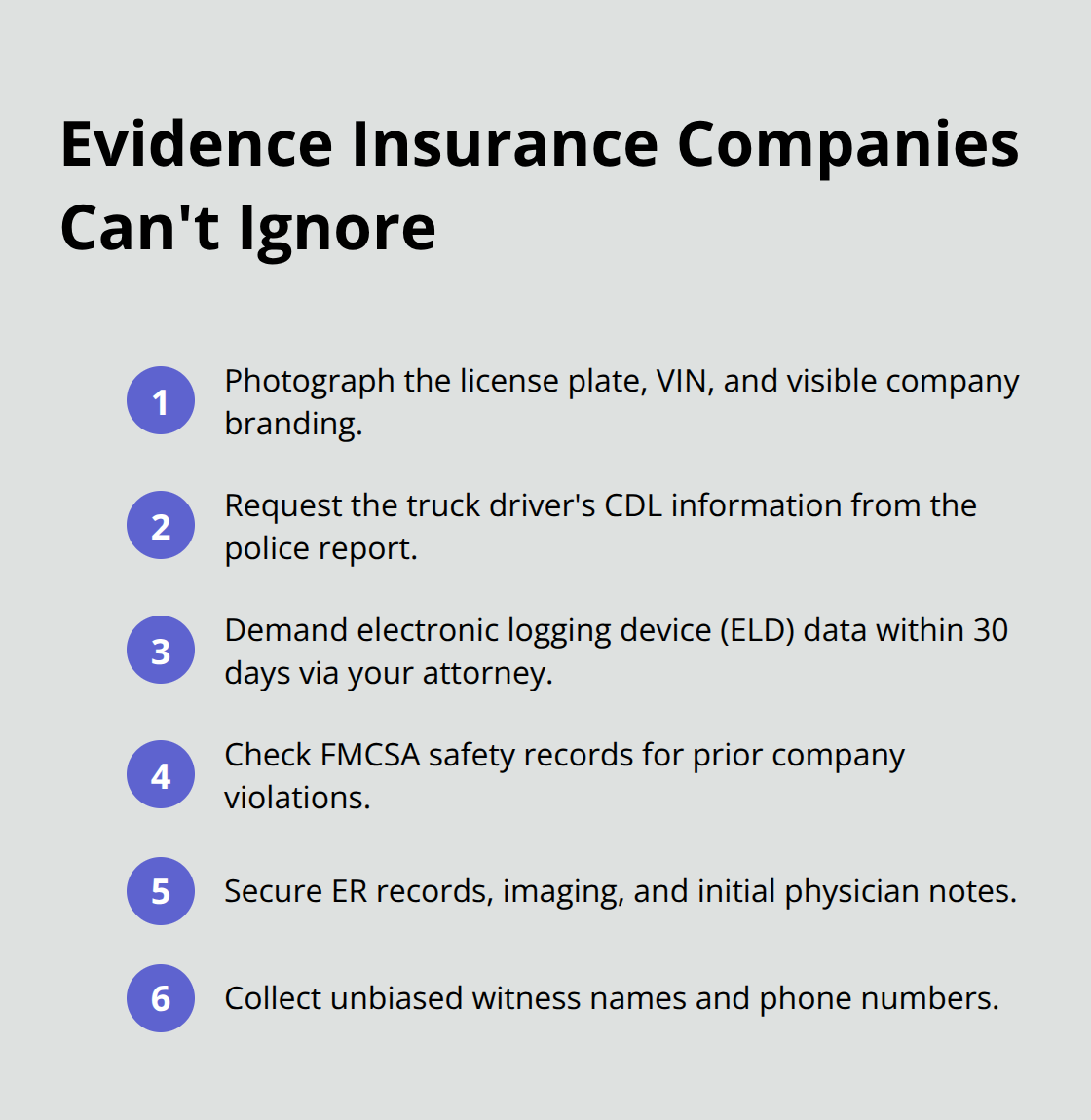
California law requires trucking companies to maintain electronic logging devices that record driver hours, and you need to request these records through your attorney within 30 days because companies routinely delete them after that period. The Federal Motor Carrier Safety Administration database shows whether the trucking company has previous safety violations, which strengthens your negligence argument significantly.
Medical documentation matters more in truck cases than regular accidents because insurance adjusters expect catastrophic injuries given the weight differential. Obtain copies of your emergency room records, imaging results, and initial physician notes before any settlement discussions begin, since these establish injury causation that adjusters cannot later dispute. Witness statements carry substantial weight when those witnesses have no connection to either party, so collect names and phone numbers from other drivers, bystanders, and nearby business owners who saw the collision.
Understand How Insurance Carriers Attack High-Value Claims
Trucking companies’ insurance carriers employ aggressive tactics specifically designed to minimize payouts on high-value claims. They often contact victims directly within hours, requesting recorded statements that lock your account of events into a version that may change as you remember additional details or receive medical diagnoses. Insurance adjusters routinely offer settlements within the first 30 days that represent 30 to 40 percent of actual damages because many victims accept quickly without understanding their full injury extent.
Document every expense related to the accident including transportation to medical appointments, prescription costs, and lost work hours, since these damages accumulate and support higher settlement demands. California’s statute of limitations allows two years from the accident date to file a personal injury lawsuit, but this deadline approaches faster than most accident victims realize, and waiting beyond 18 months significantly weakens your negotiating position since defendants know you’re running out of time.
Know When to Pursue Court Action
If the trucking company denies liability or offers inadequate compensation, California law allows you to pursue damages through civil court, where juries typically assign greater fault to commercial operators who violate safety regulations than to individual drivers. A Sacramento-area personal injury attorney can guide you through the insurance and legal claims process, handling all communication with insurance companies and preventing statements that undermine your position. The damages you can recover extend far beyond immediate medical bills, encompassing lost income, future treatment costs, and compensation for pain and suffering that settlement offers frequently undervalue.
What Damages Can You Actually Recover
Truck accident victims in Sacramento County can recover far more than most realize, but only if they document losses properly and refuse inadequate settlement offers.
Medical Expenses and Future Treatment Costs
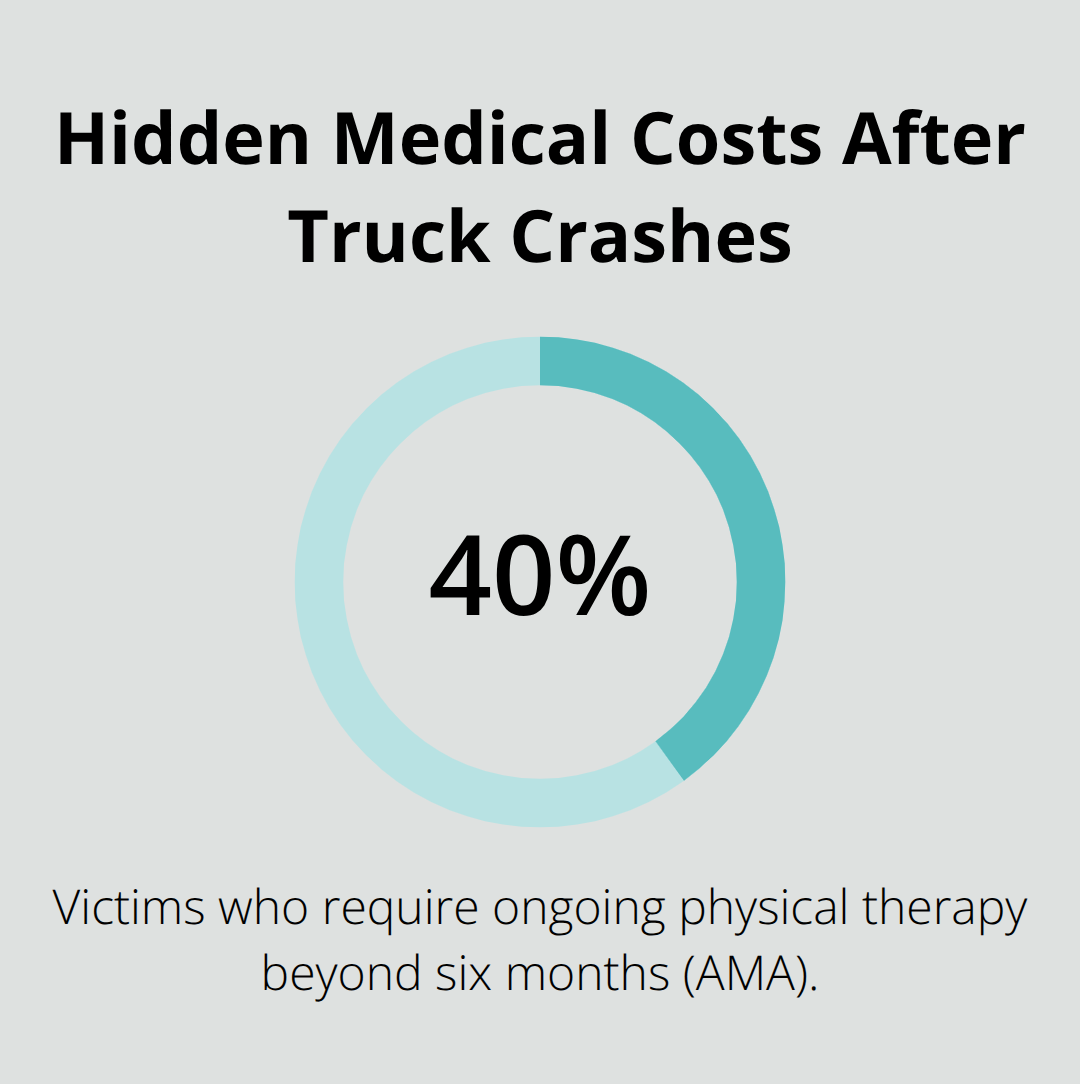
Medical expenses represent the most straightforward damage category, yet insurance companies consistently undervalue future treatment costs by ignoring long-term complications that emerge months after the accident. The American Medical Association reports that 40 percent of truck accident victims require ongoing physical therapy beyond their initial six-month recovery window, meaning your settlement must account for this extended treatment timeline.
Request itemized medical bills from every provider involved in your care, including emergency room charges, surgeon fees, hospital stays, imaging costs, and rehabilitation expenses. Future medical damages deserve particular attention since trucking companies’ insurance carriers routinely ignore orthopedic follow-ups, pain management appointments, and surgical revisions that become necessary years after the collision.
Calculate these projected costs through medical opinions from your treating physicians about anticipated future care. Incorporate these projections into settlement demands before any negotiations begin.
Lost Wages and Earning Capacity
Lost wages and earning capacity losses often exceed medical expenses in truck accident cases, particularly when injuries prevent you from returning to your previous occupation. Document your gross income for the past three years through tax returns and recent pay stubs, then calculate lost wages from the accident date through your anticipated return-to-work date.
The Bureau of Labor Statistics indicates that workers with permanent injuries experience average earning reductions of 25 to 35 percent over their remaining work years compared to uninjured peers in identical positions. If your injuries prevent you from performing your previous job, you can recover damages for the difference between your former earnings and what you can realistically earn in a modified capacity.
Gather employment records, job descriptions, and statements from your employer about your work status and income history. These documents establish the financial impact of your injuries on your career trajectory.
Pain and Suffering Compensation
Pain and suffering compensation requires different documentation since no receipts or invoices exist for this category. Insurance companies typically assign pain and suffering values between 1.5 to 5 times your documented medical expenses, but this multiplier increases substantially when your injuries involved permanent disability, disfigurement, or chronic pain conditions.
Keep a detailed journal that documents daily pain levels, medications taken, activities you cannot perform, and how the injuries affect your quality of life. This contemporaneous documentation carries significantly more weight in settlement negotiations than retrospective descriptions. Your journal becomes powerful evidence that demonstrates the true impact of your injuries on your daily existence.
Conclusion
Truck accident claims in Sacramento County demand more than standard personal injury knowledge. The federal regulations governing commercial trucking, the aggressive defense tactics insurance companies deploy, and the documentation requirements that strengthen your position all require someone who understands these specific complexities. Insurance adjusters count on victims accepting inadequate settlements because they lack guidance on what their claims are actually worth.
We at O’Brien & Zehnder Law Firm guide clients through every stage of the claim process, from gathering evidence that insurance companies cannot dismiss to negotiating settlements that reflect your true damages. Your next step matters significantly-contact a Sacramento truck accident attorney immediately after your accident to preserve evidence, obtain critical records like electronic logging devices before they’re deleted, and prevent insurance adjusters from obtaining statements that undermine your claim. The two-year statute of limitations creates urgency, but waiting beyond 18 months weakens your negotiating position substantially since defendants know your legal deadline approaches.
Reach out to O’Brien & Zehnder Law Firm today to discuss your accident and learn how we can help you recover the compensation you deserve.